
TL;DR: VisionQuest Episodes 3 and 4 give Paul Bettany’s cold White Vision a convincing path back to humanity, with Ultron and the household AIs stealing scenes. A clumsy villain handoff aside, Marvel’s Disney+ series is finally firing on all circuits.
I went into Marvel’s VisionQuest half expecting a box-ticking epilogue, the kind of Disney+ series that exists mostly to tidy up a dangling thread from WandaVision. Two weeks in, that cynicism is losing ground fast. Episodes 3 and 4, “Reboot” and “Malware,” are where the series stops feeling like a curiosity and starts feeling like it has something to say about memory, identity and what actually makes a person. The premise is still simple on paper: White Vision has every memory of the hero we lost but none of the warmth that made him the MCU’s most quietly human character. My hesitation after the premiere was that a hollow Vision is, by design, hard to love. These episodes tackle that problem directly, and the result is a show that suddenly knows where it is going.
What impresses me most is how deliberate the thaw feels. White Vision isn’t flipped back to factory settings with a convenient plot device. Instead, he is allowed to fumble through feelings he can’t fully process, which reminds me of Data’s long, awkward pursuit of humanity on Star Trek: The Next Generation, or the slow awakening of the androids in Detroit: Become Human. By the end of Episode 4, he has stopped treating the old Vision as a separate person whose life he merely has access to, and that small shift in self-perception carries real weight. It turns WandaVision’s Ship of Theseus debate from a clever philosophical riddle into an actual emotional arc.
Paul Bettany gets to be funny, broken and human again
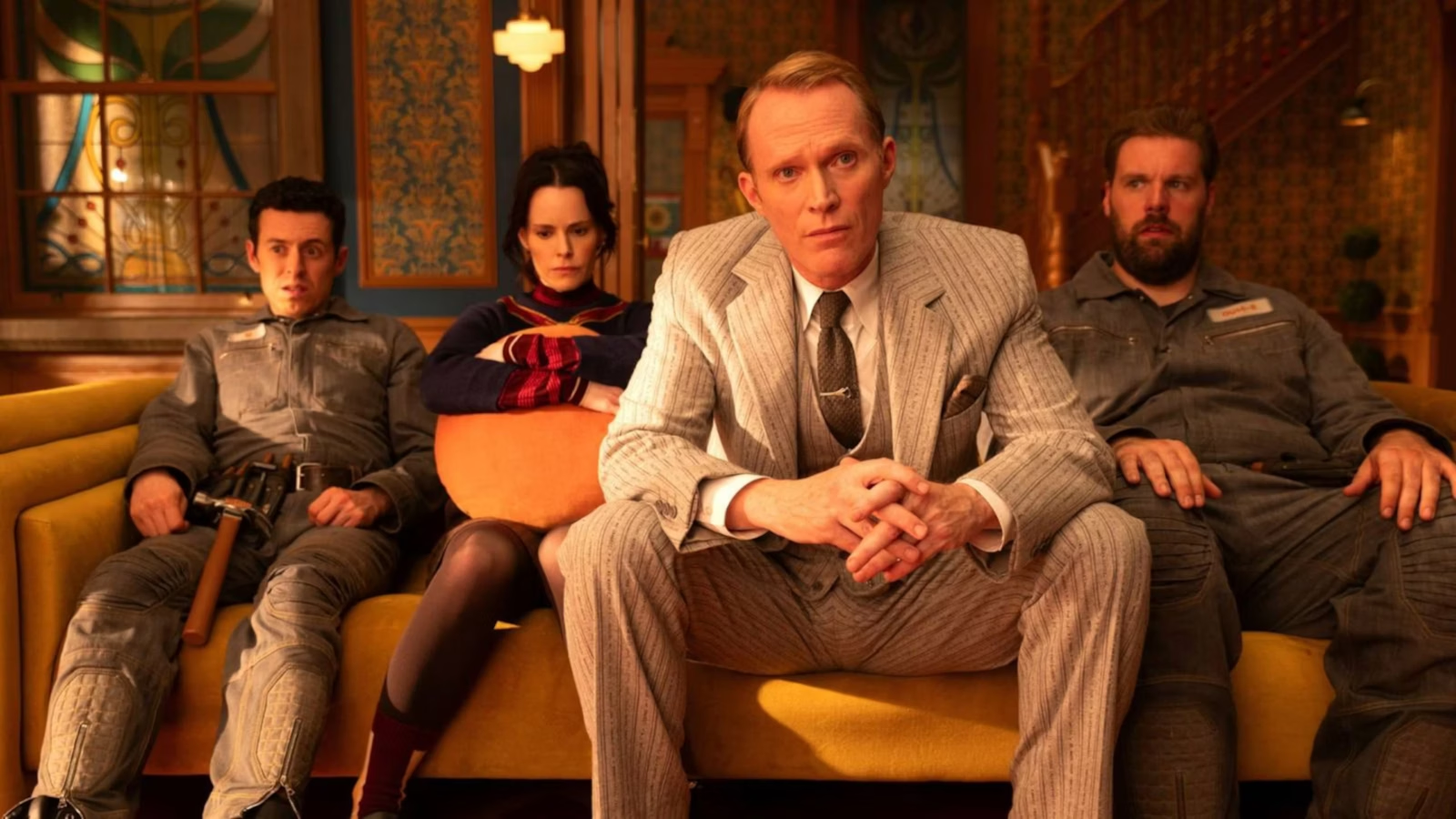
Paul Bettany has been playing variations of this character for over a decade, and it is a genuine pleasure to see him given room to stretch. In Episode 3, Vision’s processors start malfunctioning, and Bettany leans into it with physical comedy that I didn’t know I’d missed from him. It’s goofy without being cheap, and it cleverly uses the glitches as a crack in White Vision’s composed exterior. You can see the character becoming less of a machine precisely when his machinery stops cooperating. That’s smart writing, and Bettany sells both the slapstick and the vulnerability underneath it.
The dramatic beats land just as well. Bettany plays this version with a subtle stiffness that slowly loosens across both episodes, so the change feels earned rather than announced. He doesn’t suddenly become the Vision we knew in the Avengers films, and the show is wiser for resisting that shortcut. Instead, he feels like someone rebuilding a personality from a blueprint, recognising pieces as he goes. If the second half of the season sticks the landing, this could be some of Bettany’s best work in the role.
Tommy turns a rushed father-son bond into the show’s emotional core
The relationship between Vision and Tommy, played by Ruaridh Mollica, should not work as well as it does. On paper, it moves far too quickly for a bond between a father with borrowed memories and a son who exists through sheer reality-bending weirdness. Yet the chemistry between Bettany and Mollica papers over the pacing, and the show finds tenderness in strange places. A scene in a hotel swimming pool, with Tommy talking his father through a reboot, is both absurd and touching, which is basically the MCU’s comfort zone at its best. It is also the clearest sign that this Vision is drifting back toward the man Wanda loved.
I also appreciate how the series handles its homework problem. You really should have watched WandaVision before diving in, but Agatha All Along is not mandatory viewing. The show explains Tommy’s unusual existence clearly enough, without forcing Billy’s parallel journey, played by Joe Locke, into the spotlight as required reading. That makes VisionQuest feel like its own story rather than the third chapter of a trilogy you have to cram for, which is a welcome change for a franchise that often treats its audience like they’re preparing for an exam.
Ultron and the household AIs steal scenes all over the house
James Spader’s Ultron remains a delight, even if he is slightly less dominant here than in the opening episodes. He operates like a sarcastic GLaDOS who has read too much philosophy, delivering sharp commentary on human nature that once belonged to Vision himself. Late in Episode 4, Ultron makes a far more active move, and without spoiling the specifics, it puts him in a position that makes the second half of the season look much more dangerous. Anyone who knows the character will not be shocked by his choices, but Spader’s silky menace makes predictable feel thrilling. An Ultron with real leverage is exactly the jolt this series needs.
The real surprise is how much I care about the supporting AIs. F.R.I.D.A.Y. (Orla Brady), E.D.I.T.H. (Emily Hampshire), D.U.M.-E. (Henry Lewis) and U (Jonathan Sayer) were once background voices and lab furniture in Tony Stark’s world. VisionQuest gives them personalities, insecurities and emotional journeys that echo Vision’s own, especially in Episode 4. It’s a little like watching the Toy Story gang if they had been written by Isaac Asimov, and it adds unexpected warmth to the show’s world-building.
The Paladin-to-Jocasta handoff is where the seams show
Not everything is running smoothly. The shift in antagonists, from Todd Stashwick’s Paladin to T’Nia Miller’s Jocasta, is clunky, and Paladin’s exit from the main conflict feels abrupt for a character who had been framed as a central threat. It creates the impression that the writers redirected the story halfway through a sentence. That’s a shame, because Stashwick deserved more to chew on. The transition does its job, but you can see the gears turning.
Thankfully, Jocasta is compelling enough to soften the blow. Miller plays her with a sympathetic edge that makes her more than a standard villain, and her connection to Ultron adds a potentially fascinating dynamic for the back half. If the show develops her as carefully as it has developed Vision, the clumsy handoff will be forgiven quickly.
Verdict
VisionQuest Episodes 3 and 4 transform the series from a promising curiosity into one of the more thoughtful Marvel shows on Disney+. Paul Bettany is excellent as a Vision clawing his way back toward humanity, the bond with Tommy gives the show its heart, and James Spader’s Ultron leads a terrific cast of AI characters. The awkward villain transition stops it from being flawless, but it isn’t enough to derail the momentum. If you loved WandaVision or have a soft spot for stories about machines learning to feel, this is well worth your time.