TL;DR: VisionQuest episode 6 stalls in Madripoor with MCU callbacks, a returning Iron Man villain and heavy exposition. Paul Bettany’s chilling White Vision moment saves it from total filler.
VisionQuest has spent five episodes earning a lot of goodwill. It took a synthetic Avenger most people had mentally filed under “finished business” and turned him into the centre of a moody, surprisingly strange AI thriller. Episode 6, “Deadlock,” directed by Vincenzo Natali, is the first instalment where that momentum sputters, and the reason is frustratingly familiar to anyone who has watched Marvel Studios for the past decade. The episode keeps stopping to point at the wider universe, dropping callbacks and comic nods as if it’s ticking off a checklist, when it should be pushing its own characters forward. By the time it ends, I felt like I’d watched a well-produced hour that was more interested in connecting dots than in telling me anything new.
The setup is simple enough. Vision heads to Madripoor after Ultron hands Thomas over to Paladin, who plans to use the kid as leverage to finally deliver Vision to a buyer on behalf of a mysterious client. Thomas, played by Ruaridh Mollica, now has an explosive implanted in his arm that will go off if he moves too fast, a setup the show plays for a meta wink at a certain Keanu Reeves bus movie and at Thomas’s future superhero codename. That gag is a decent snapshot of the whole episode’s problem: it’s clever in a trivia-night way, but it’s built for the audience’s knowledge of Marvel rather than for the scene itself.
Madripoor and a returning villain feel like set dressing, not story
Madripoor has always been a better idea on the comic page than on screen. It’s the lawless island where Wolverine used to brood in a bar, a place built for noir mood and back-alley deals. The Falcon and the Winter Soldier already visited, and VisionQuest’s version doesn’t make a stronger case for it as a real location with texture of its own. Then the episode brings back Raza, the Ten Rings leader from the very first Iron Man, a character who’d effectively been retired after the franchise rewrote its Mandarin lore several times over. His return mostly amounts to a shootout, and while it’s a fun “wait, him?” moment for completists, it adds almost nothing to Vision’s journey.
To be fair, the action itself is competent. Natali keeps the geography clean, so you always know who is shooting at whom, and Paul Bettany and Todd Stashwick remain a reliably watchable pairing. Stashwick in particular brings a weary professionalism to Paladin that makes him feel like a mercenary with real mileage on him. But competent isn’t the same as compelling, and these sequences play like a mid-game side quest in an open-world RPG, the kind you complete for an achievement rather than because the main campaign needs it.
James Spader and T’Nia Miller get stuck in an exposition room
The bigger letdown is what happens to the villains. James Spader and T’Nia Miller had been one of the season’s best weapons, with a sharp, almost theatrical chemistry that made every scene between them crackle. Here they’re parked in a sterile white space and asked to explain the series’ mythology at length, filling in Carrington’s origin and how her work connects to the AI lineage running through Stark Industries. It’s genuinely interesting lore on paper, and long-time readers will appreciate where some of it leads. The trouble is that it arrives as a lecture rather than drama, and two of the show’s liveliest performers end up reciting backstory instead of playing off each other.
There are flashes of the old spark. A comic-accurate name finally gets spoken aloud, and the mythological baggage attached to it gets a knowing acknowledgement that lands nicely. Once the exposition is done, the pair also lay out a properly old-school supervillain scheme involving nanobots and human control, the sort of grand, slightly unhinged plan the MCU often shies away from. Meanwhile, the unseen client finally addresses Vision through a distorted voice on a television screen, which advances the plot while keeping the mystery intact. These pieces suggest the back half of the season has somewhere exciting to go, even if this episode takes the scenic route to get there.
White Vision’s cold turn is the episode’s one truly great scene
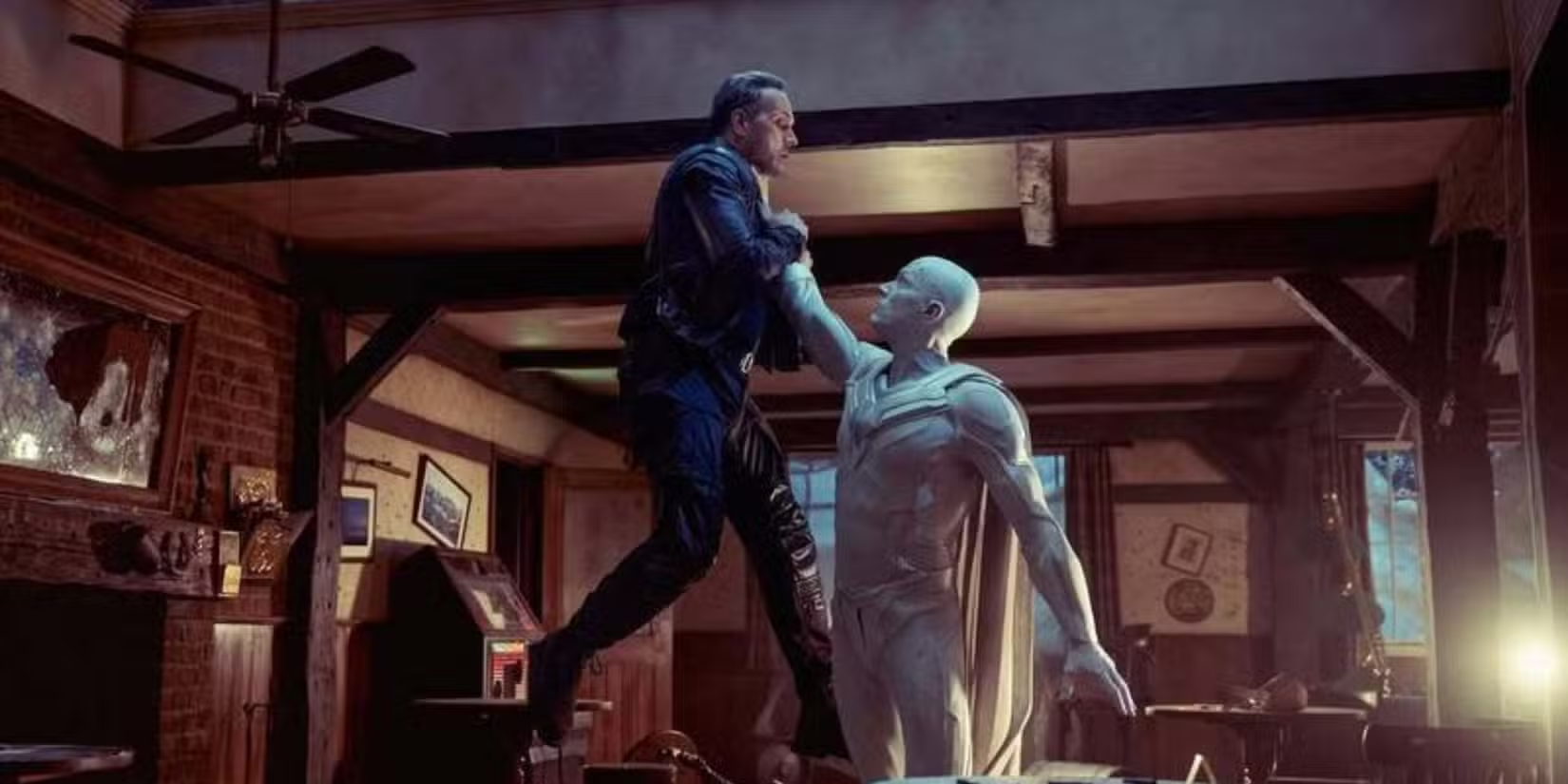
The standout moment belongs to Bettany. During a standoff with Paladin, White Vision’s eyes empty out, his voice goes flat, and he calmly lists intimate details about the assassin’s life, including where his daughter is and what she’s called. It’s chilling precisely because it’s so quiet, closer to the unsettling stillness of a HAL 9000 than to any punch-up the MCU usually stages. The scene does double duty, too, giving Paladin real stakes and reminding us that this Vision is not the gentle synthezoid from the Avengers films. It also, perhaps unintentionally, raises the uncomfortable fact that the franchise’s friendly AI helpers have always been surveillance machines with good manners.
The show doesn’t follow that thread into any real moral territory, which feels like a missed opportunity for a series literally about artificial intelligence. Elsewhere, Diane Morgan’s obsolete AI walks out on Paladin and appears to exit the series, which stings because her deadpan presence was one of the show’s more distinctive flavours. Emily Hampshire’s E.D.I.T.H. gets a charming compensation prize, appearing as an 8-bit sprite chatting with Thomas and Laura like a talkative NPC from a Game Boy Color cartridge. It’s delightful, but it’s also another small bit of whimsy decorating an episode short on forward motion.
Verdict
“Deadlock” isn’t a disaster, and it contains the single most unnerving Vision scene of the season so far. Bettany is excellent, Stashwick keeps Paladin grounded, and the setup for Ultron’s endgame promises a more ambitious final stretch. But the hour leans far too hard on franchise callbacks, a recycled villain, and a comics-flavoured location that never feels lived-in. Worse, it sidelines Spader and Miller’s electric dynamic in favour of exposition, and quietly loses Diane Morgan along the way. Hardcore MCU archaeologists will enjoy spotting the references, while viewers who came for VisionQuest’s moody AI drama will likely feel the brakes. It’s worth watching for the White Vision scene and for setup, but it’s the weakest episode of the season to date.