
TL;DR: UGREEN’s 25W Qi2 Cooling Wireless Charging Stand combines fast magnetic charging with TEC active cooling, a useful status display and a secondary 5W charging pad. It’s clever, technically interesting and particularly appealing for compatible 25W Qi2 phones, but the $79.99 price, 45W adapter requirement and lack of Apple Watch charging keep it firmly in enthusiast territory.
Wireless charging has spent years selling convenience while quietly asking us to accept its biggest weakness: heat. Push more power through an inductive charger and physics inevitably turns up like an uninvited boss battle, converting some of that energy into warmth rather than useful battery percentage. With Qi2 now pushing compatible phones to 25W, thermal management matters considerably more than it did when 7.5W and 15W charging were considered quick.
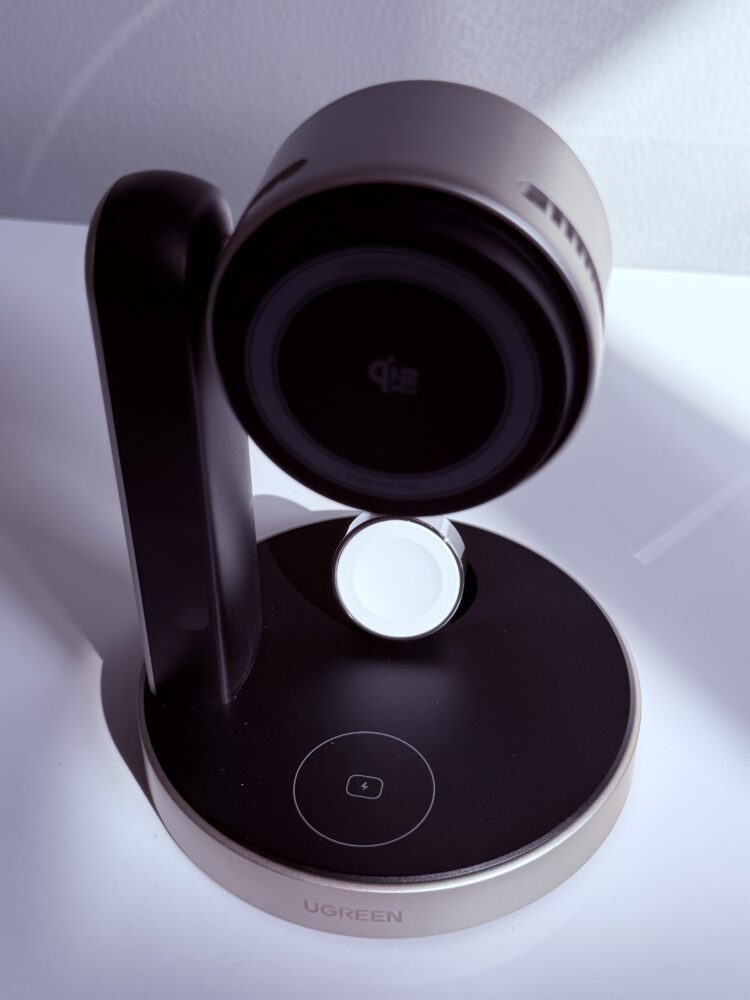
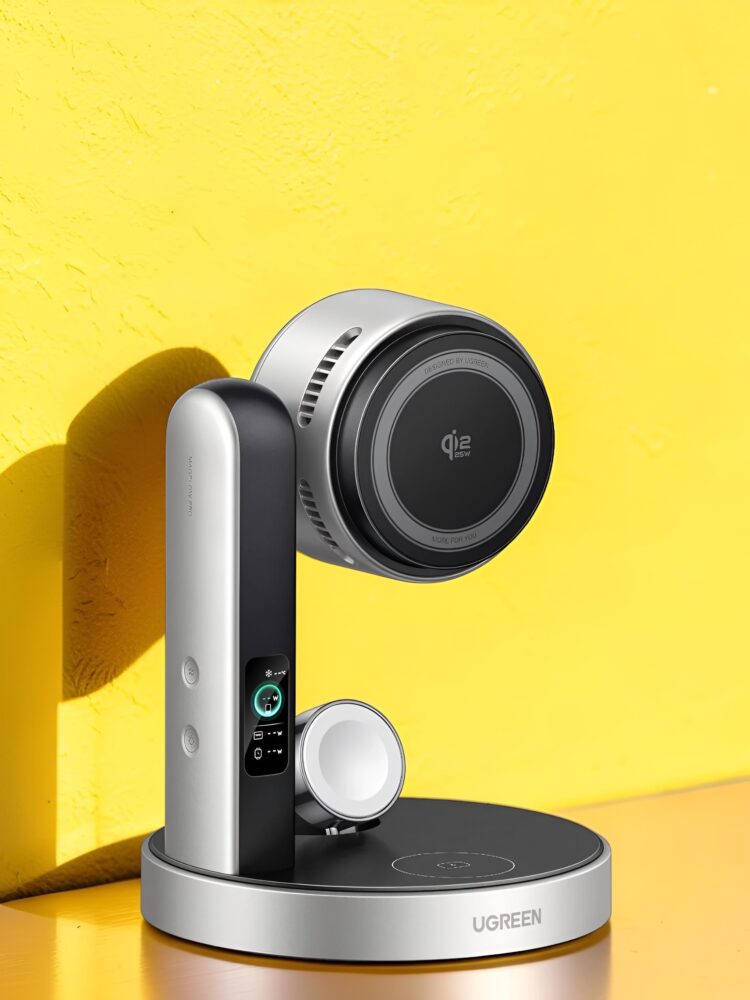
The UGREEN 25W Qi2 Cooling Wireless Charging Stand, model W776, attacks that problem with considerably more hardware than the average magnetic charging puck. It combines 25W Qi2 magnetic charging with a thermoelectric cooling system, active fan, secondary 5W charging pad and an integrated display showing charging information. It is essentially what happens when someone looks at a wireless charger and decides it needs its own cooling solution and dashboard.
That sounds gloriously excessive. More importantly, though, there is some solid logic behind it.
25W wireless charging makes cooling more than a party trick
The headline feature is support for up to 25W Qi2 wireless charging on compatible devices, including supported iPhone 16 and iPhone 17 models. Older MagSafe-compatible iPhones from the iPhone 12 through iPhone 15 generation are limited to 15W, so buying a 25W charger does not magically unlock additional charging performance on hardware that cannot accept it. Qi2’s magnetic alignment is equally important because keeping the transmitter and receiver coils correctly positioned improves efficiency instead of leaving you playing wireless-charging Tetris every time you put the phone down.
UGREEN recommends a power adapter capable of supplying at least 45W when you want maximum charging performance alongside active cooling. That requirement makes sense because the charger isn’t merely feeding the phone; it also has to power its cooling hardware, display and secondary charging surface. The wall adapter therefore becomes part of the performance equation, and anyone pairing this stand with an ancient low-wattage USB-C brick is leaving much of its capability sitting in the garage.
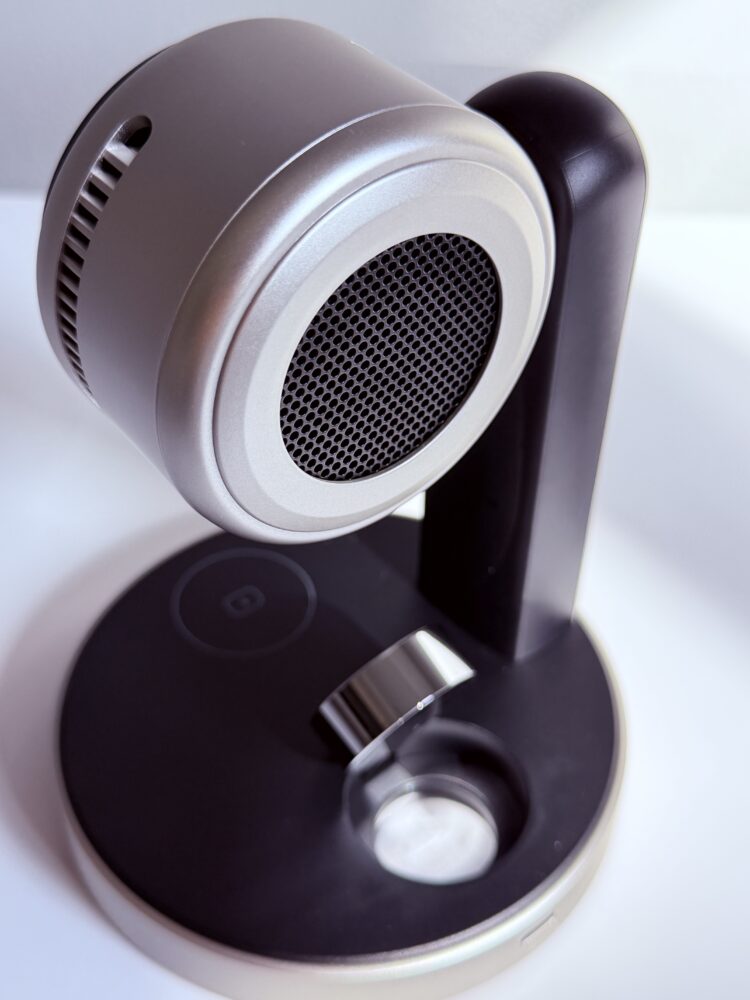
The interesting part is what happens after charging begins. Higher wireless charging speeds make thermal management increasingly important because excess heat can cause charging systems to reduce power. Instead of relying purely on passive heat dissipation and software-controlled power reductions, UGREEN has put a TEC thermoelectric cooling system and fan behind the magnetic charging surface.
That’s a much more aggressive solution than the temperature sensors commonly found inside wireless chargers. Rather than simply watching the thermometer and backing away when things become uncomfortable, the W776 is designed to actively pull heat away from the phone. UGREEN claims the cooling system can bring the phone below 20°C under its specified conditions, although that is a manufacturer claim rather than a temperature result I independently measured.
Conceptually, however, active cooling is exactly the direction high-powered wireless charging should be exploring. Making wireless charging faster while ignoring its thermal penalty would be like overclocking a gaming PC and deciding airflow is optional.
The little display turns invisible charging data into something useful
Wireless chargers aren’t particularly communicative gadgets. You normally get an LED that translates roughly to “something is happening,” and that’s your lot. UGREEN’s integrated screen makes the W776 substantially more interesting because it can display the current charging power and temperature rather than hiding everything behind a mysterious blinking light.
There is practical value here beyond satisfying the part of my brain that enjoys watching numbers change. Wireless charging performance depends on the phone, battery state, temperature and available input power, so seeing charging wattage gives you some indication of what the system is actually doing. The display can also indicate insufficient input power when the connected adapter isn’t providing the required 45W.
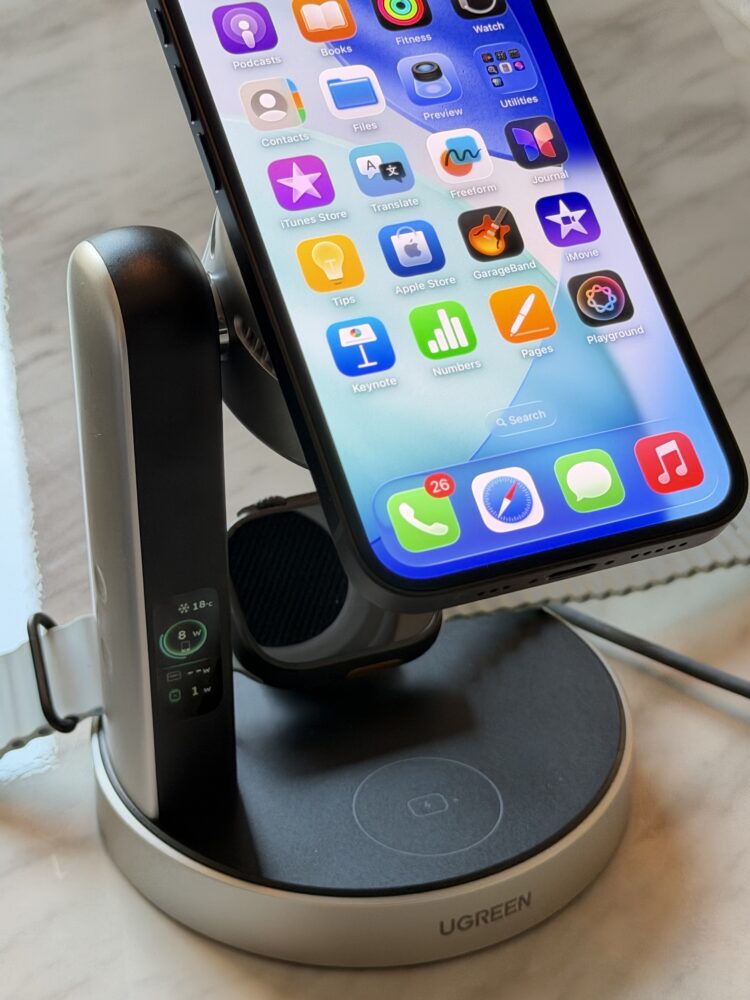
Controls on the base let you switch the displayed information, while a long press adjusts screen brightness. That’s particularly useful if the stand ends up next to a bed, where even a tiny display can transform into the Eye of Sauron at 2am. UGREEN also allows the active cooling system to be disabled by double-tapping its dedicated control.
That last option matters because active cooling introduces something ordinary charging pads don’t have: a fan. Fans create noise, however small, and not everyone will want one spinning beside their head overnight. Giving users control over cooling makes the stand considerably more flexible than permanently tying the fan to every charging session.
A charging stand first, miniature cooling rig second
UGREEN hasn’t allowed all that additional engineering to completely overwhelm the basic job of holding a phone. The magnetic charging surface can tilt vertically through as much as 90 degrees, while the attached phone can rotate through 360 degrees. That allows portrait and landscape positioning without disconnecting from power.
Landscape positioning is particularly useful for Apple’s StandBy feature, turning a charging iPhone into a bedside clock, photo display or information panel. On a desk, adjustable positioning also makes notifications, video calls and media easier to see without picking up the phone every five minutes. Magnetic charging stands have always had this ergonomic advantage over flat pads, and adding active cooling doesn’t change that.
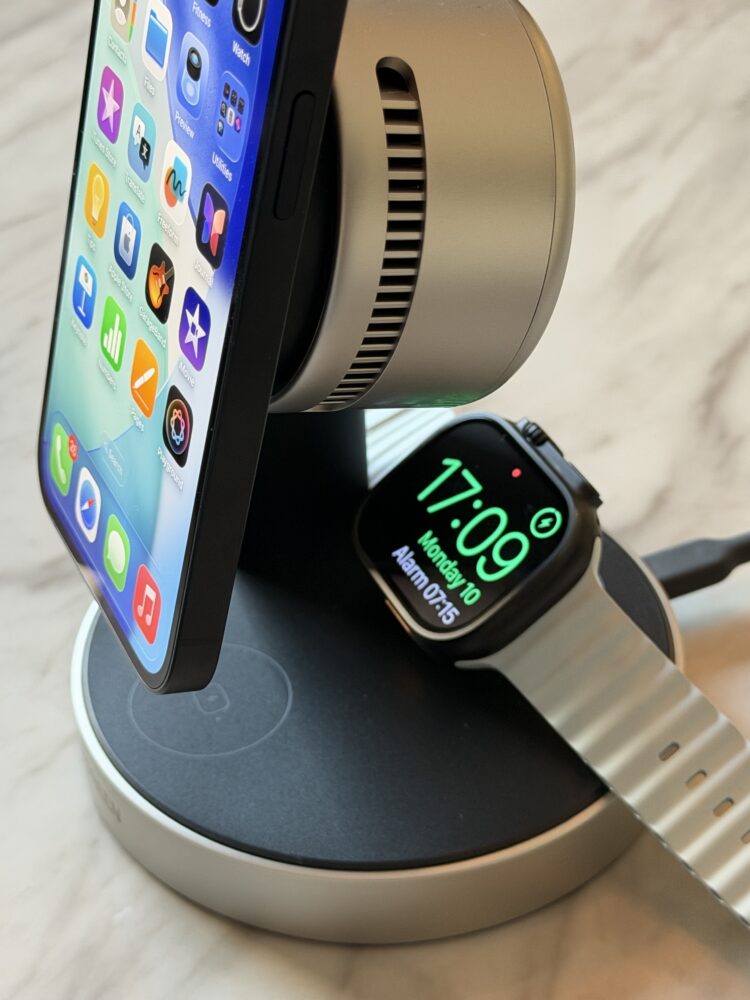
The base contains another wireless charging surface delivering up to 5W, intended for devices such as AirPods. This makes the W776 a 2-in-1 solution rather than an Apple-everything charging shrine. Apple Watch owners will therefore still need another charging connection rather than consolidating all three devices onto this stand.
Whether that’s a disadvantage depends on what actually lives on your desk. For someone carrying an iPhone and wireless earbuds, two charging surfaces are enough and avoid making the stand unnecessarily large. Someone deeply embedded in the Apple Watch ecosystem may reasonably prefer a 3-in-1 Qi2 station, even if that means giving up some of the W776’s more unusual cooling hardware.
The cooling system is the reason this charger exists
There are already plenty of Qi2 charging stands, including several from UGREEN itself. That makes active cooling the feature that needs to justify the W776’s existence, and on paper it addresses one of the most stubborn compromises associated with fast wireless power.
Traditional wireless charging is inherently less efficient than connecting a cable directly to the phone. Some energy becomes heat, and pushing charging rates higher makes managing that heat increasingly important. Temperature can also influence how aggressively a phone is willing to accept power, which means a charger capable of delivering 25W doesn’t guarantee the phone will continuously request 25W throughout a charging session.
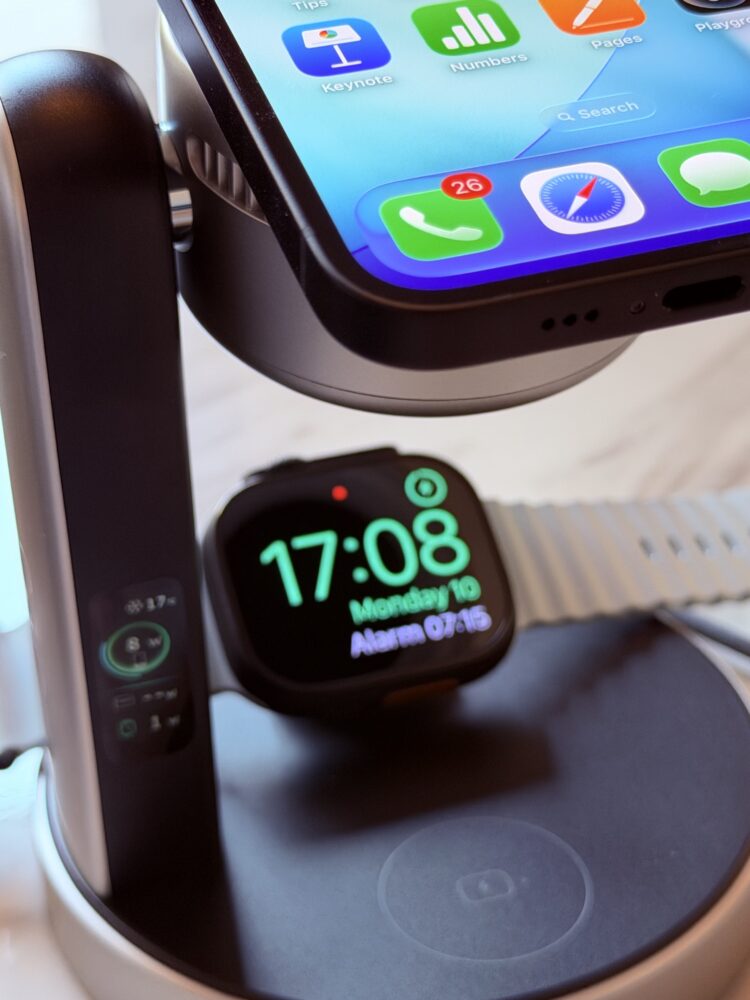
The TEC cooler therefore isn’t there simply to make the specification sheet look as though it escaped from a gaming laptop. By actively moving heat away from the phone and exhausting it with a fan, the system is designed to create better thermal conditions for sustained fast charging. That is a more technically interesting approach than simply advertising a maximum wattage and ignoring what happens after the first few minutes.
There are trade-offs. Active cooling requires additional power, adds mechanical complexity and introduces fan noise into something that would otherwise operate silently. It also helps explain the 45W input recommendation despite the phone itself receiving a maximum of 25W wirelessly. This is less elegant than a passive charging puck, but engineering often involves choosing which compromise annoys you least.
The $79.99 price puts the W776 into enthusiast territory
The UGREEN W776 launched at $79.99, which immediately separates it from basic Qi2 charging pads. You’re paying for more than the coil and magnets here: the additional cost buys the TEC cooling hardware, fan, display, adjustable stand mechanism and second charging surface.
That makes the value proposition unusually dependent on how you charge. If your phone spends every night leisurely charging while you sleep, paying extra for active cooling and a wattage display is difficult to justify. A simpler Qi2 stand can accomplish the fundamental task with fewer components and less money.
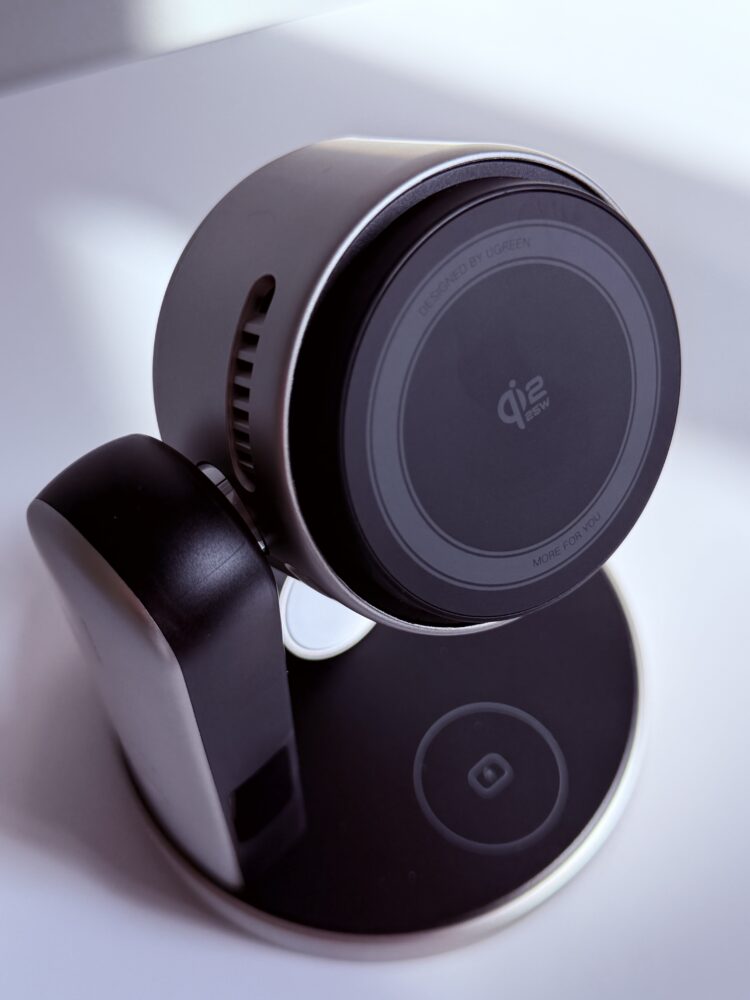
The argument becomes stronger for people who regularly need substantial battery recovery during shorter charging windows. That’s where faster Qi2 charging and thermal management make more sense together. Someone topping up a phone between meetings, gaming sessions or trips is more likely to appreciate hardware designed around maintaining better charging conditions than someone whose handset has eight uninterrupted hours to reach 100%.
There is also an undeniable enthusiast appeal. Watching real-time charging information while a thermoelectric cooler works behind your iPhone is magnificently nerdy for a product whose ancestors were essentially plastic circles with cables attached. Not everyone needs that, but then nobody needed RGB RAM either, and look how that turned out.
Compatibility matters before you spend the money
The biggest reason not to buy the UGREEN 25W Qi2 Cooling Wireless Charging Stand is simple: your phone may not benefit from its headline charging speed. Compatible newer devices can take advantage of the 25W Qi2 capability, while older MagSafe iPhones remain limited to 15W. The charger is backward compatible, but backward compatibility isn’t the same thing as a free performance upgrade.
You’ll also need suitable magnetic alignment or an appropriate compatible case where required. Qi2’s magnetic system is one of its biggest advantages because proper coil positioning reduces the uncertainty traditionally associated with wireless charging, but cases can still affect the experience when they aren’t designed for magnetic charging.
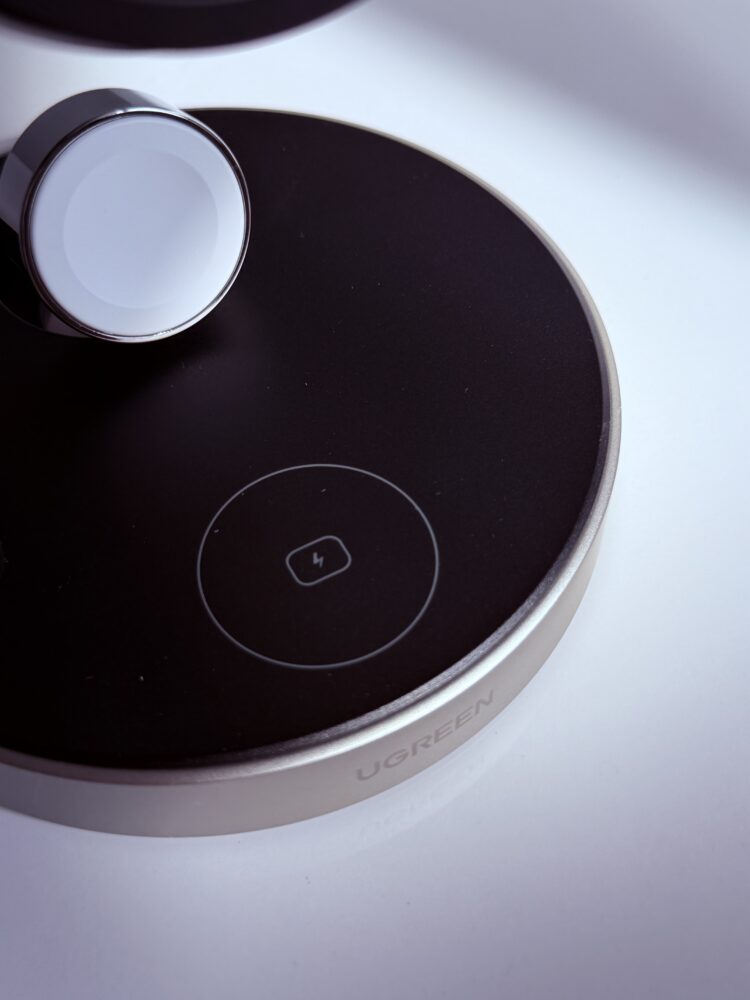
Then there is the power adapter. The stand requires at least a 45W-capable supply for its maximum charging-and-cooling configuration, making the adapter specification something worth checking before blaming the charger for disappointing performance. High-speed wireless charging has reached the point where the entire power chain matters.
This isn’t unique to UGREEN. As wireless charging becomes more powerful, the days of plugging an advanced charger into whatever forgotten USB brick happens to be lurking behind the sofa are increasingly over.
Verdict
The UGREEN 25W Qi2 Cooling Wireless Charging Stand takes a genuinely interesting approach to the thermal problem created by faster wireless charging. Combining 25W Qi2 support with TEC cooling and an active fan gives the hardware a technical purpose beyond simply adding another number to the box, while the real-time power and temperature display provides useful visibility into what is normally an invisible process.
Its adjustable magnetic mount, 360-degree phone rotation and secondary 5W pad make it practical as a desktop or bedside charger, although the lack of integrated Apple Watch charging means it isn’t the complete Apple-device docking station some buyers will want. The requirement for a 45W power adapter also needs to be factored into the setup, and active cooling inevitably makes this more complicated than a silent passive stand.
At $79.99, this is enthusiast charging hardware rather than an essential upgrade for everyone. Owners of compatible 25W Qi2 devices who frequently rely on quick wireless top-ups have the strongest reason to consider it, particularly if heat has been a frustration with previous chargers. Owners of older 15W devices, overnight-only chargers and anyone simply looking for the cheapest route to magnetic wireless power can comfortably spend less.
UGREEN hasn’t reinvented wireless charging here. It has simply confronted one of its oldest enemies with a fan, a thermoelectric cooler and a tiny screen, which is an appropriately geeky solution to a very real problem.