

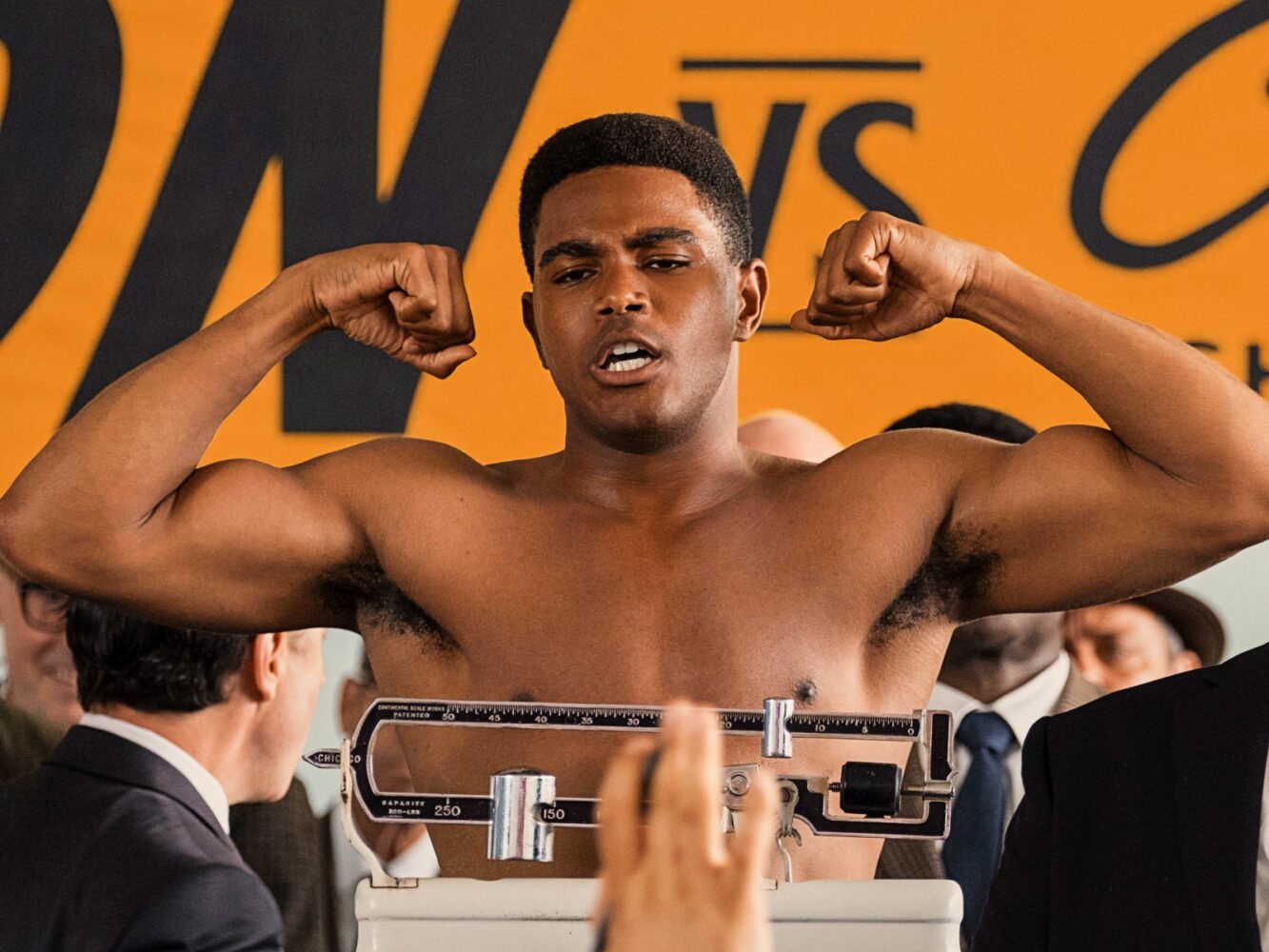
TL;DR: Prime Video’s The Greatest looks the part, with a solid Jaalen Best and well-staged fights, but its authorized, play-it-safe script never gets under Muhammad Ali’s skin. It’s a respectful highlight reel when it should have been a knockout.
There’s a specific kind of dread that settles in when a biopic arrives wearing the words “fully authorized” like a championship belt. Prime Video’s The Greatest is the first scripted series made with the full blessing of Muhammad Ali’s estate. His widow Lonnie Ali is an executive producer alongside Michael B. Jordan, and Ben Watkins, the showrunner behind Cross, created it. On paper, that’s a heavyweight lineup. In practice, the official stamp seems to have acted less like a key to Ali’s inner world and more like a referee stepping in every time the story threatens to get messy, risky or genuinely surprising.
The series covers a tight window: Cassius Clay’s Olympic gold in Rome in 1960 through his title fight against Sonny Liston in 1964. That’s a smart slice of history in theory, because it’s the origin story before the myth fully took shape. You get the cocky kid from Louisville, the father who wanted that greatness for himself, the slow pull toward Malcolm X and the Nation of Islam, and a country that cheered his medal while refusing him a seat at the counter. It’s all here. The problem is that “all here” is exactly how it feels, like a checklist being worked through rather than a life being lived.
Jaalen Best nails the swagger, but the script never lets him past the press conference
Jaalen Best has one of the most thankless jobs in prestige TV right now. Playing Ali means competing with roughly sixty years of footage in which the real man was louder, funnier and more magnetic than anyone could reasonably script. Best does a lot right. The physical transformation is convincing, the cadence and bravado land, and he finds a quieter, almost shy register for the moments when the cameras inside the story are off. Those private beats are where I saw the most promise, because they hint at a young man performing confidence before he fully owned it.
What holds the performance back is the material around it. The writing tends to break Clay’s life into confrontations and montages, so Best keeps getting set up for the next big moment instead of being allowed to sit in a feeling. We see what Clay does and says, but rarely why, and the series almost never takes the risk of letting us inside his head. It’s the difference between a character and a highlight reel. Best has the tools for something deeper, and watching the show keep him in the shallow end is genuinely frustrating.
The fights hit hard, and the soundtrack swings wildly
Credit where it’s due: the boxing sequences are well choreographed and properly dramatic. When the show steps into the ring, it finally finds the rhythm it’s missing elsewhere, and you can feel how the canvas became Clay’s natural stage. The build toward Liston has real weight, partly because the fights understand that boxing is theatre as much as sport. If the whole series had the confidence of its fight scenes, this would be a very different review.
The other bold swing is the use of contemporary music across many scenes. It’s a choice I respect more than I enjoyed. Over training and fight sequences, modern tracks give the action a punchy, almost sports-anime energy, turning Clay’s rise into something closer to a hype montage than a museum exhibit. Away from the ring, though, the same approach often clashes with 1960s Kentucky and undercuts scenes that need stillness. It’s the one place the show takes a stylistic risk, and the results land about half the time.
The racism storyline matters, even when it’s delivered with a sledgehammer
The series is at its strongest when it shows the fights Clay couldn’t win with his fists. He comes home from Rome to applause from white dignitaries and then, almost immediately, runs into the same segregation and casual contempt as before. Watching that gold medal go from symbol of pride to reminder of hypocrisy is the show’s most important thread. It understands that Ali’s later defiance didn’t come from nowhere.
The execution is less graceful. These scenes often spell out their point so loudly that the subtlety drains away, and a famous moment like the gold medal ending up in the river, which should feel seismic, plays oddly flat. The emotion is described rather than felt. It’s the kind of scene that should leave you angry or wrecked, and instead it ticks past like a historical note.
A strong supporting cast stuck inside a by-the-numbers framework
The ensemble is quietly impressive. Omari Hardwick brings real conflict to Cassius Sr., a man wrestling with watching his son reach heights he once wanted, and that relationship is the closest the show comes to genuine family drama. Dana Gourrier gives the series much of its warmth as Odessa “Bird” Clay. Amin Joseph, best known from Snowfall, is a standout as Sonny Liston, and the decision to give Liston his own arc, including his relationship with wife Geraldine (Erica Tazel), adds welcome dimension to a figure usually reduced to the villain of someone else’s story.
Michael Ealy as Malcolm X and Giovanni Ribisi as trainer Angelo Dundee bring star wattage, but neither is given enough room to turn presence into impact. That’s the recurring pattern of the series: talented people, important history, no real tension. And when your competition includes Michael Mann’s Ali, When We Were Kings and decades of archive footage, plus a 1977 film in which Ali played himself, “accurate and respectful” simply isn’t enough to stand out.
Verdict
The Greatest has the ingredients of a knockout: an iconic subject, a smart early-career focus, a committed lead in Jaalen Best, a strong supporting cast led by Amin Joseph and Omari Hardwick, and boxing sequences with real punch. What it lacks is nerve. The script stays on the surface of Ali’s life, its biggest dramatic moments feel clinical, and its one major stylistic gamble with modern music only works part of the time. Viewers new to Ali’s story, or anyone who wants a polished sports drama to put on in the background, will find enough here to enjoy. Anyone who has already seen the man’s life told with real fire elsewhere will likely feel they’ve watched a well-produced summary. It’s watchable and earnest, but for a story this extraordinary, playing it safe is the biggest loss.