
TL;DR: The iPhone Duo is a stunning first foldable, with a premium titanium build, a superb hinge, brilliant displays and a crease that practically disappears. Performance, multitasking and battery life are excellent, though the iPhone 18 Pro Max is the better camera. It’s AED 3,000 more and Face ID is gone, yet it’s good enough that I’m switching.
Every so often, Apple ships a phone that quietly resets the template for everything that follows. The iPhone X did it nearly a decade ago, and the iPhone Duo feels like the next one, arriving as the first big hardware statement of the John Ternus era. It’s Apple’s first foldable, it starts at AED 8,499, and it lands seven years after Samsung, Google and Motorola started folding, unfolding and occasionally breaking their way through the category. That late arrival turns out to be its secret weapon. The Duo feels like a product from a company that took notes on every rival’s mistakes, then quietly built the thing it actually wanted to ship, which is why this is less The Phantom Menace and more A New Hope.
I love this phone, and I want to be upfront about that before getting into the weeds. It feels expensive in the way only Apple hardware does, the displays are the best I’ve seen on a foldable, and the crease that has haunted every bendy phone since 2019 is effectively gone. It also asks me to give up Face ID, carry a hefty 254g slab and live with apps that aren’t ready for its shape yet. None of those are dealbreakers for me, but they will matter to some buyers.
The iPhone Duo design feels like a premium object first and a phone second
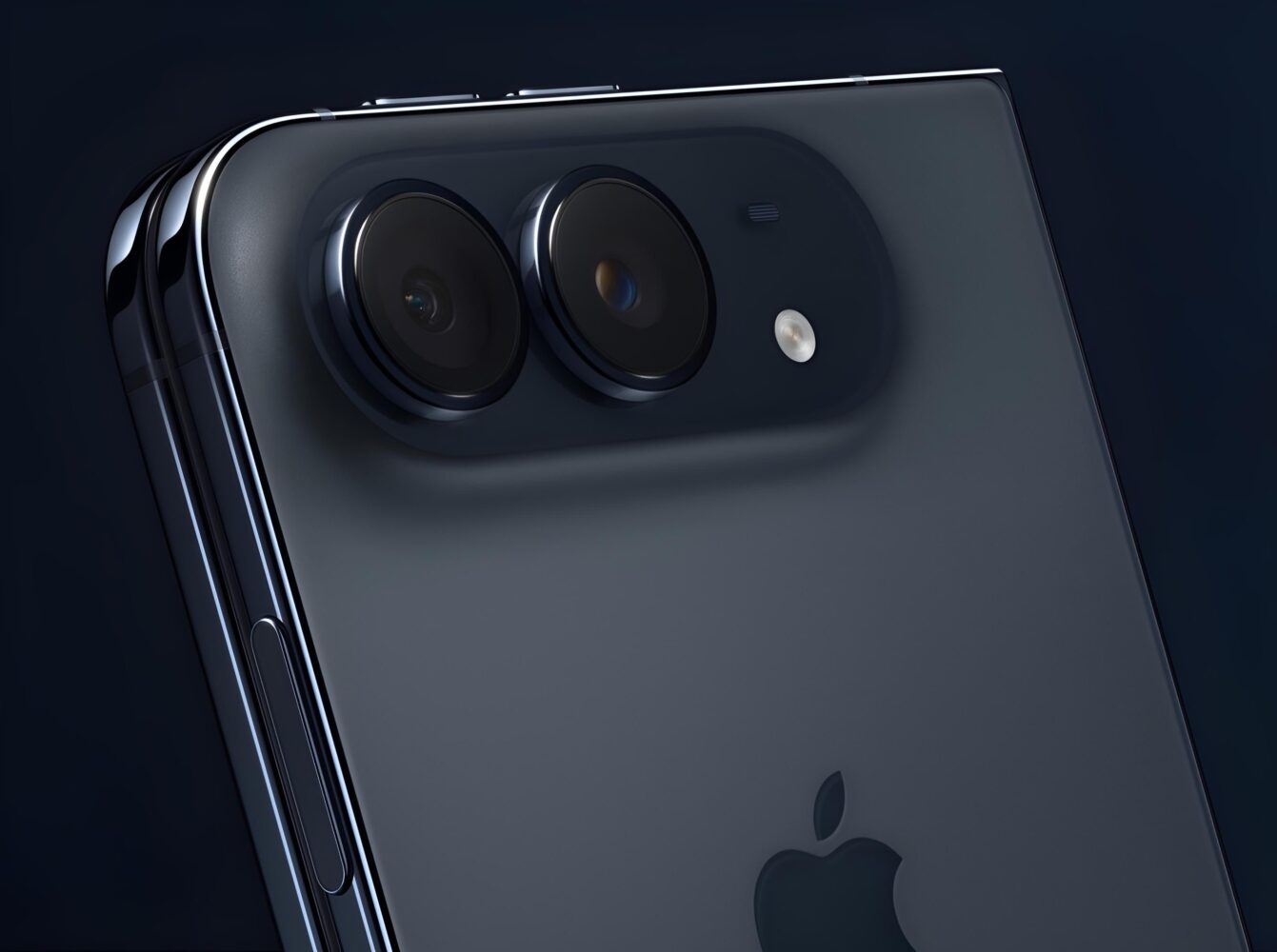
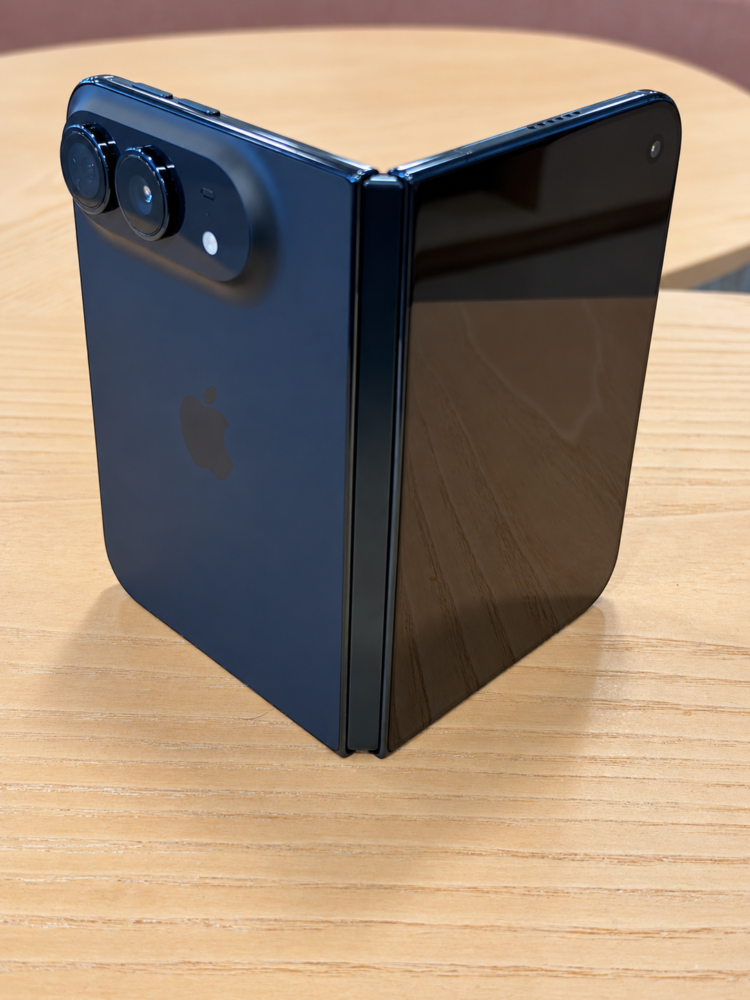
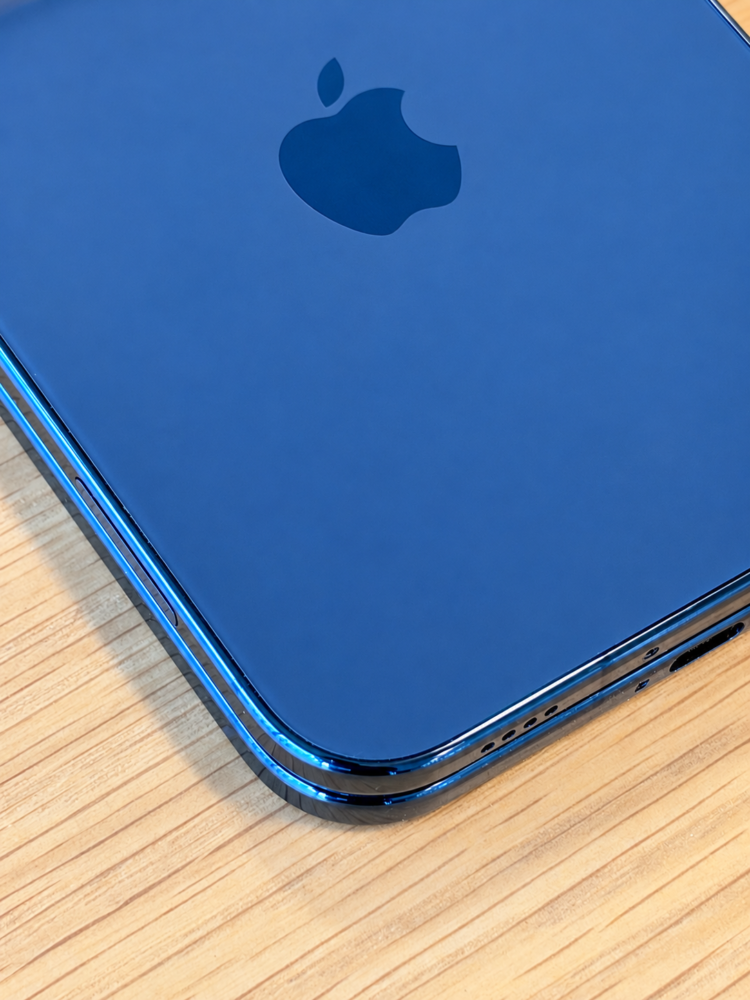
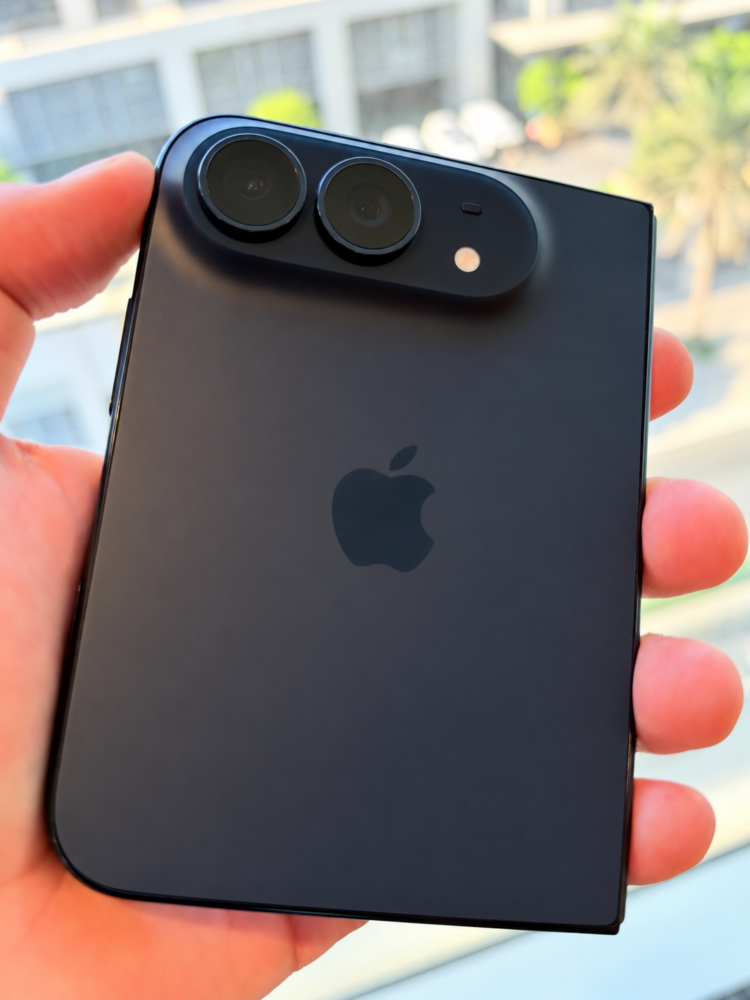
Folded, the Duo is short and wide, roughly passport-shaped at 117.8mm tall and 84.1mm across. That squat footprint is the first thing that sets it apart from the tall, remote-control proportions of most book-style foldables, and it makes the phone feel more like a compact iPhone than a stretched one. It’s 11.3mm thick when closed and an absurdly slim 5.2mm when open, making it the thinnest iPhone ever in its unfolded state. The frame is titanium, the outer screen is protected by Ceramic Shield 2, the back uses Ceramic Shield, and it comes in Night Sky or Star White. Every surface feels deliberate, and that sense of density is a big part of why this phone feels so premium in my hand.
The hinge deserves its own fan club. It’s a titanium-and-aluminium mechanism with more than 100 components under a 3D-printed titanium cover, yet it moves with the dense, expensive smoothness of a watch clasp rather than a phone part. It holds itself open at almost any angle, and the resistance subtly changes the further you open it, which gives the unfolding motion a weighted, mechanical quality. More importantly, the Duo is rated IP68, adding proper dust protection on top of water resistance, while the Galaxy Z Fold 8 sticks with IP48, which handles water but leaves it exposed once fine dust and sand enter the picture. For anyone who spends weekends at the beach or in the desert, that difference matters far more than a spec sheet suggests. The trade-off is weight, as the Duo tips the scales at 254g against the Fold 8’s 201g, and that’s before adding a case.
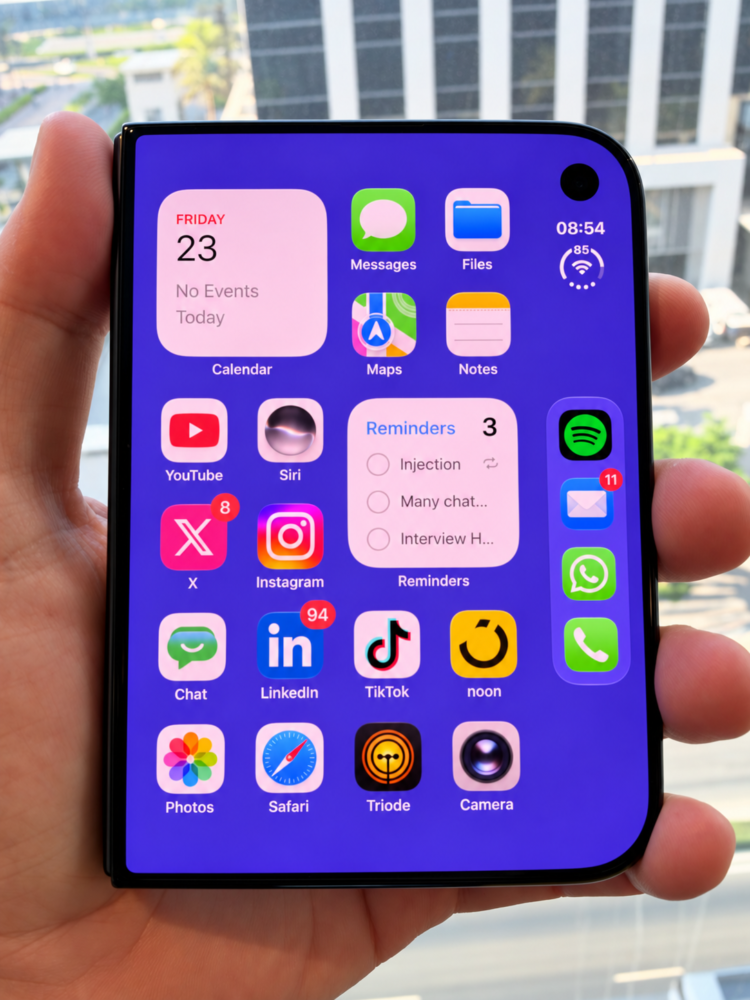
In practice, that heft means I reach for two hands during longer sessions, and in loose trousers it can feel like carrying a small anchor. For me, it reads as solidity rather than burden, but anyone coming from an iPhone Air will notice immediately. The details reward a closer look, too: the Camera Control button for exposure, zoom, depth and style adjustments, stereo speakers, USB-C and a Touch ID-equipped side button are all here, so the Duo never feels like a stripped-down experiment. It’s eSIM-only with two active eSIMs, and the enclosure uses 85 percent recycled titanium, while the hinge cover is fully recycled titanium. It’s the sort of over-engineering that’s easy to dismiss on a spec sheet, but it’s exactly why this feels like a finished product rather than a prototype wearing an Apple logo.
The inner display makes the crease feel like a solved problem
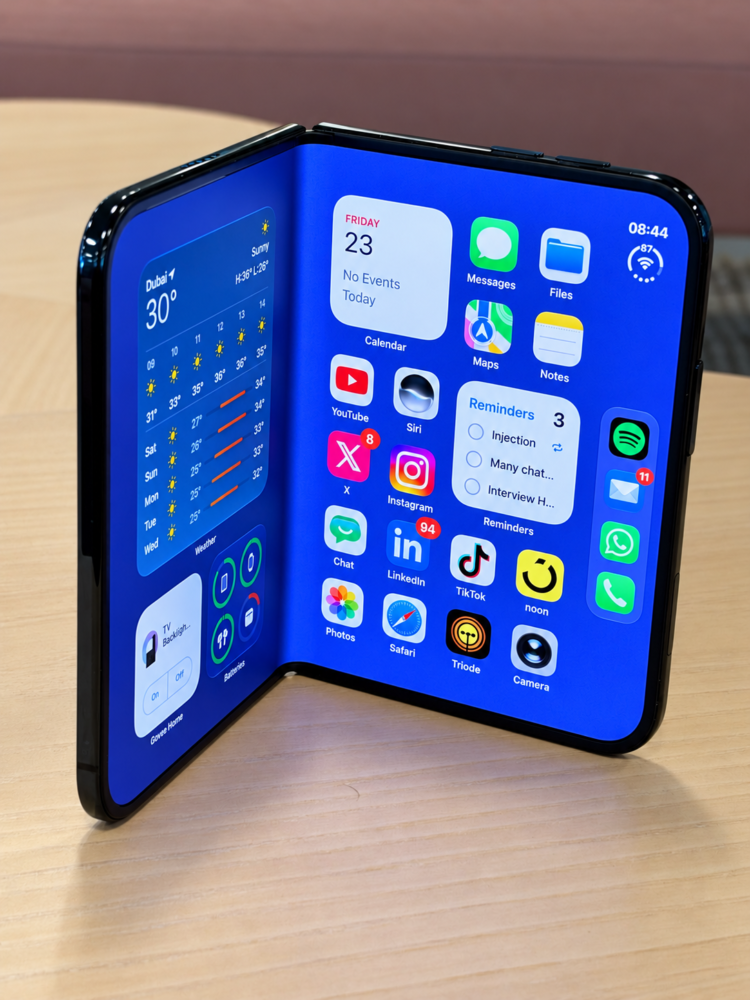
This is the headline act. The 7.6-inch inner panel is an OLED folding display at 1878 x 2670 pixels and 430ppi, with ProMotion up to 120Hz, HDR support, P3 wide color and a 2,000,000:1 contrast ratio. Brightness is serious too, at 1,000 nits typical, 1,600 nits peak for HDR and up to 3,000 nits outdoors, while dropping as low as 1 nit for late-night reading. The real magic is the nano-texture finish on top, a matte layer that pulls triple duty: it protects the flexible panel underneath, kills reflections and scatters the glare that normally gives away a fold. Underneath sits a titanium plate, so the screen feels firm under my finger instead of the slightly squishy, plasticky surface that plagues many foldables.
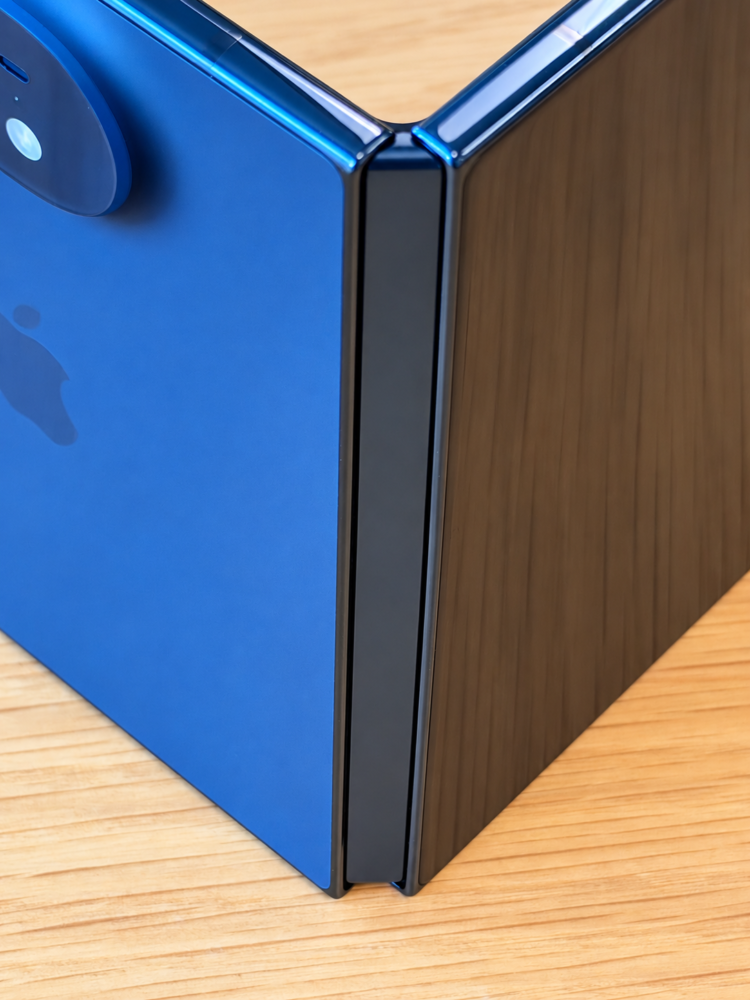
The result is that the crease, for all practical purposes, doesn’t exist. Looking at the screen head-on, it simply vanishes, and running my thumb across the middle, it feels far flatter than any foldable I’ve used, while even Samsung’s excellent Z Fold 8 Ultra still shows a faint seam in certain lighting. Colors pop, and the matte surface makes comics, anime and photos look gorgeous, almost print-like, with only the small saturation trade-off any matte coating brings in brightly lit rooms. Samsung’s anti-reflective treatment does a decent job, but the Duo’s nano-texture takes it a clear step further, and under harsh afternoon sun that’s an edge you feel every single day. With the FaceTime camera hidden beneath the panel, opening the phone reveals pure, uninterrupted screen only about 0.7 inches smaller than an iPad mini’s, which makes films, long reads and photo libraries feel genuinely immersive.
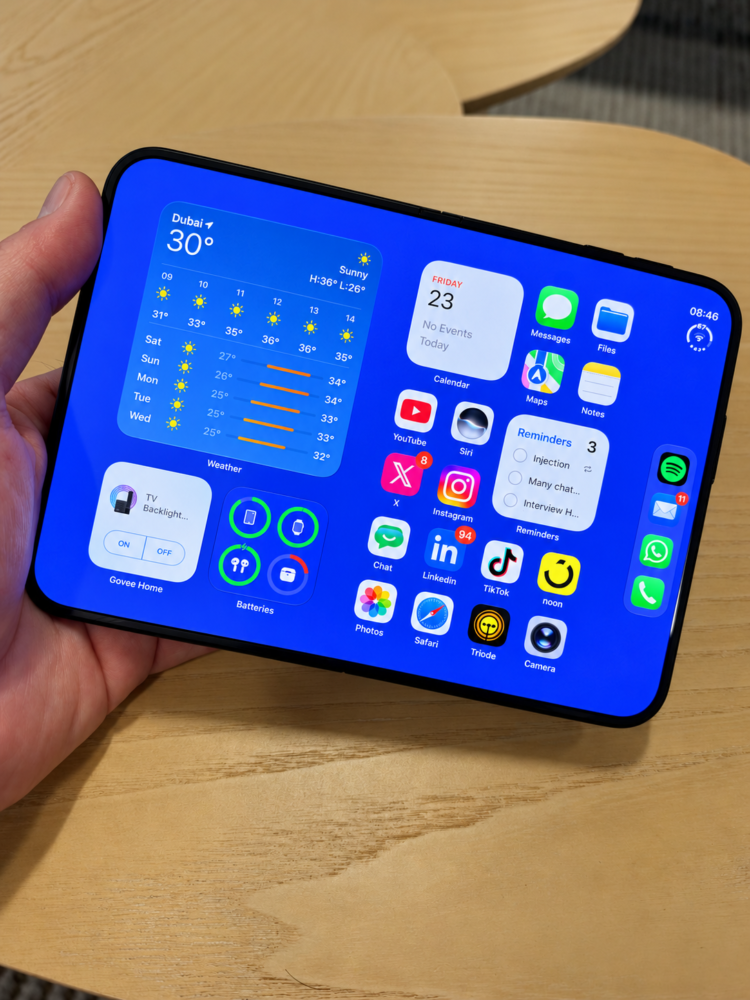
Then there’s the twist I didn’t see coming: the Duo is the first iPhone to support Apple Pencil, working on either display, with support arriving later this year. That textured, paper-like inner surface feels purpose-built for handwriting and sketching, turning the Duo into a pocket notebook as much as a phone. The timing is almost cheeky, because Samsung quietly dropped S Pen support across the entire Fold 8 lineup, abandoning the feature that made its foldables a favorite among note-takers. If you’re a doodler, a student or someone who still thinks better with a pen in hand, the choice between the two just became very easy. One caution: the nano-texture layer can come off if you pick at it, and there’s no setup warning telling you not to, so leave it alone unless you fancy paying for a replacement.
The cover screen is a proper phone, not a glorified notification strip
The 5.4-inch outer display runs at 1398 x 2034 pixels and 460ppi, making it slightly sharper than the big screen, with the same 120Hz ProMotion, 3,000-nit outdoor peak, Always-On support and anti-reflective coating. Unlike the inner panel, it has a glossy finish, which gives it that classic punchy iPhone look. It’s wide enough that the keyboard feels roomy and natural, so replying to messages or scrolling feeds folded never feels like a compromise. This is the screen that keeps the Duo usable as a normal phone, and its size hits a sweet spot for one-handed use that tall slab phones abandoned years ago.
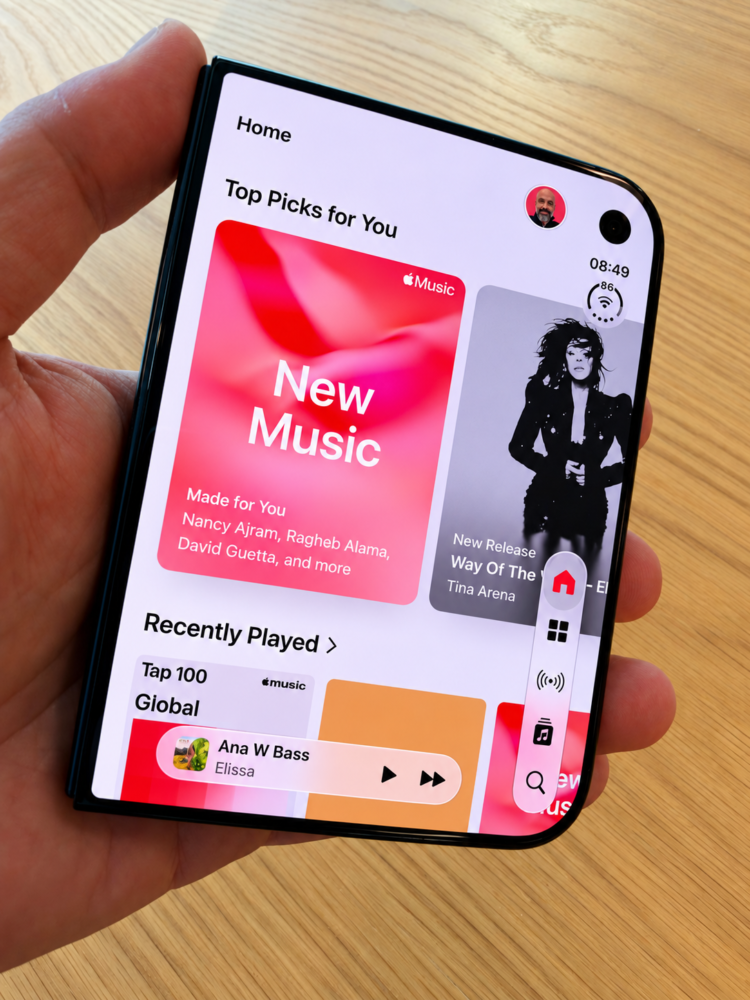
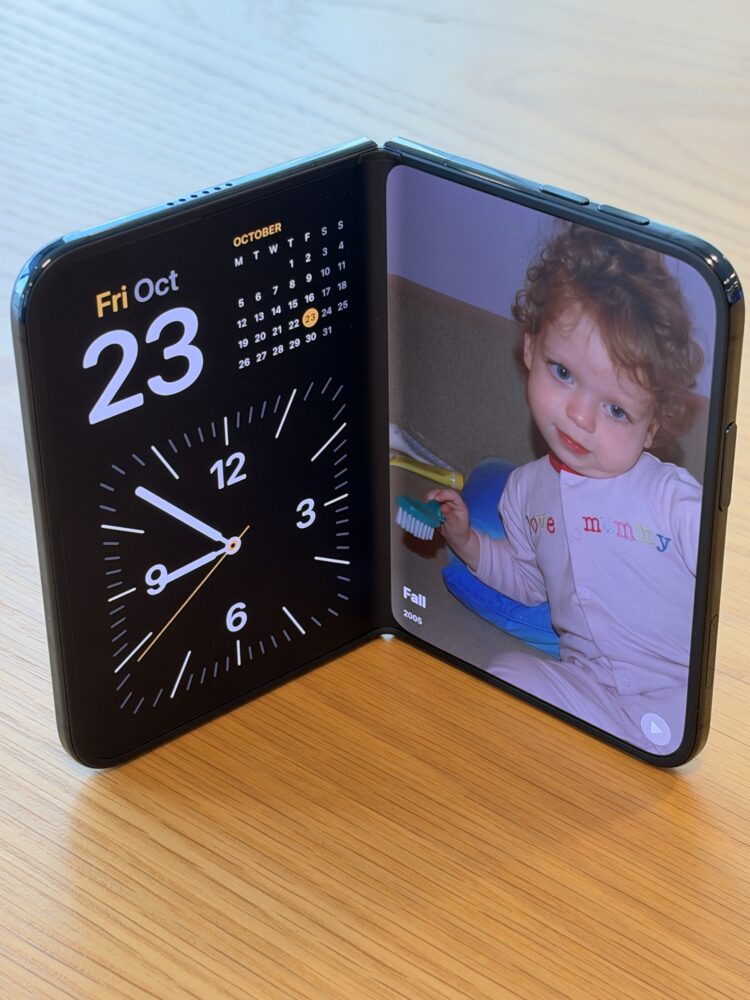
What makes the pairing work is consistency. Both screens share the same 1:1.4 aspect ratio, so opening the phone feels like the cover screen simply grows, keeping my home screen layout and apps exactly where they were, just with double the room. A slick unfolding animation ties the transition together, and the handoff between displays is near-instant, like a Transformers sequence directed by someone who actually cares about continuity. Many Android foldables still pair a cramped outer screen with a squarish inner one that never quite agree with each other. Matching the shapes is a small decision with a huge impact on everyday use.
A20 Pro performance makes two screens feel effortless
Under the hood sits the same A20 Pro chip found in the iPhone 18 Pro, a 2nm part with a 6-core CPU, a 7-core GPU with Neural Accelerators, a dual 16-core Neural Engine and hardware ray tracing. A vapor chamber handles cooling, and the chip’s display engine is built specifically to drive both screens. Performance is super smooth: apps launch instantly, nothing stutters when jumping between displays, and demanding games run at strong frame rates. The numbers back this up, with the Duo outpacing the competition in both CPU and graphics benchmarks.
| Phone | Geekbench 6 (single / multi) | Geekbench 7 (single / multi) | 3DMark Solar Bay Unlimited (fps / score) |
|---|---|---|---|
| iPhone Duo (A20 Pro) | 4,722 / 12,708 | 4,007 / 11,363 | 62.3 / 16,496 |
| Galaxy Z Fold 8 Ultra | 3,733 / 11,457 | 3,110 / 10,578 | 49.24 / 12,950 |
| Galaxy Z Fold 8 | 3,659 / 11,020 | 2,978 / 9,811 | 47.35 / 12,454 |
There are limits. Squeezing a flagship chip into a 5.2mm half-shell driving two large displays means the Duo can run warm, and occasionally hot, under sustained load, and it doesn’t quite reach the 18 Pro’s peak numbers despite sharing the same silicon. That gap won’t matter to most people, because day-to-day the phone never feels anything short of instant. Upgraders from older iPhones will feel a big jump, with the Duo landing around 35 percent ahead of the iPhone 16 Pro Max and roughly 45 percent ahead of the 15 Pro Max. Add the N1 chip with Wi-Fi 7 and Bluetooth 6, plus the in-house C2 modem, and the whole package feels thoroughly current rather than a generation behind the Pro.
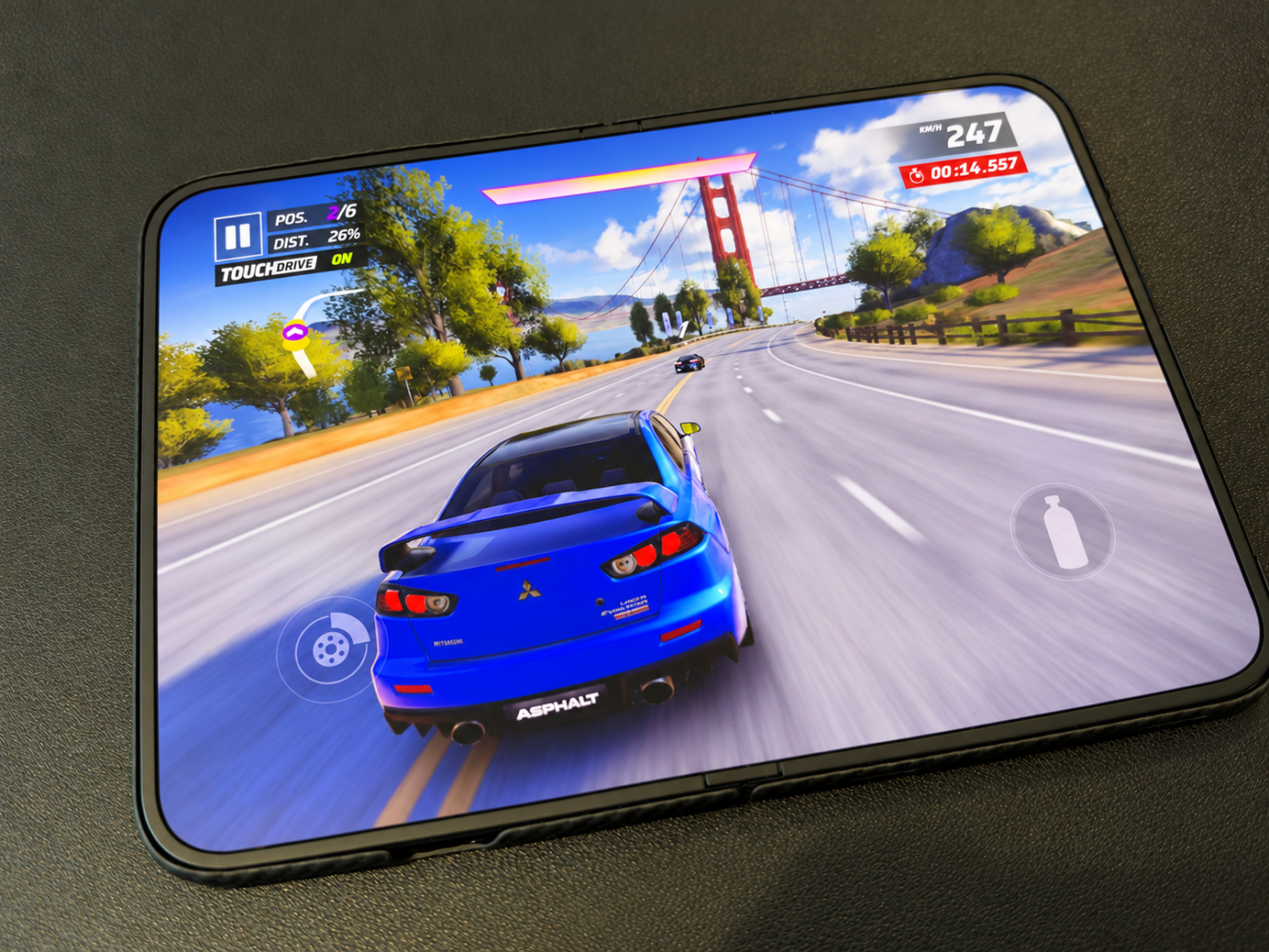
Gaming is where the hardware and the big screen really click. Console-grade titles like Resident Evil 4 and racers like Asphalt Legends run without noticeable slowdown, and hardware ray tracing gives the GPU plenty of headroom for the next wave of mobile ports. Playing on a 7.6-inch, 120Hz panel feels closer to a handheld console than a phone, especially once developers properly support the wider aspect ratio. The matte coating helps here too, cutting reflections during long sessions. It’s the first iPhone that makes me genuinely question whether I need a separate gaming handheld for the commute.
Multitasking turns the iPhone Duo into a pocket productivity machine
This is where the Duo stops being a bigger iPhone and becomes something new. Getting two apps side by side is effortless: I can long-press an app and pick split view, or swipe up, hold and drag apps to the left or right, where they snap into place automatically. Hold the phone upright and the split switches to a top-and-bottom layout, which works nicely for reading in one app while taking notes in another. The best trick is pinning, since tapping the small tab between two apps links them, so opening one brings the other along every time. Email and calendar is my favorite combo, and having both summon together without any setup is the kind of tiny time-saver that adds up fast.
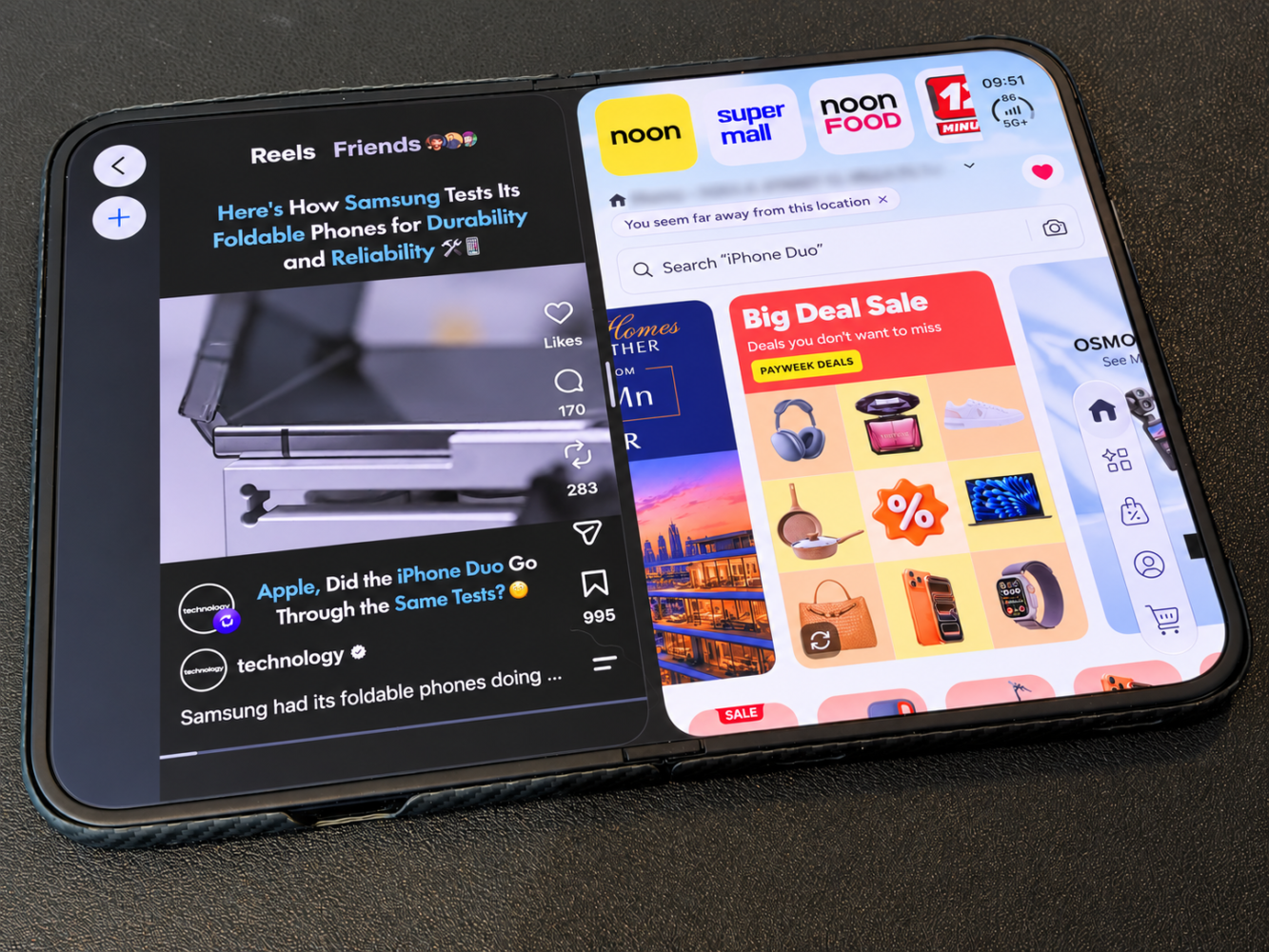
The A20 Pro makes all of this feel weightless. Juggling two heavy apps never causes stutters or reloads, and you can technically even run two games at once, though at that point the real bottleneck becomes your fingers and your brain rather than the chip. Half-folding the phone adds another layer, with apps shifting their controls away from the bend and tabletop modes turning the lower half into a stand or control area. Apple’s own apps lean into this beautifully, with dual-pane layouts that use every pixel of the inner display. It’s the kind of workflow that genuinely reduces how often I reach for a laptop for quick tasks.
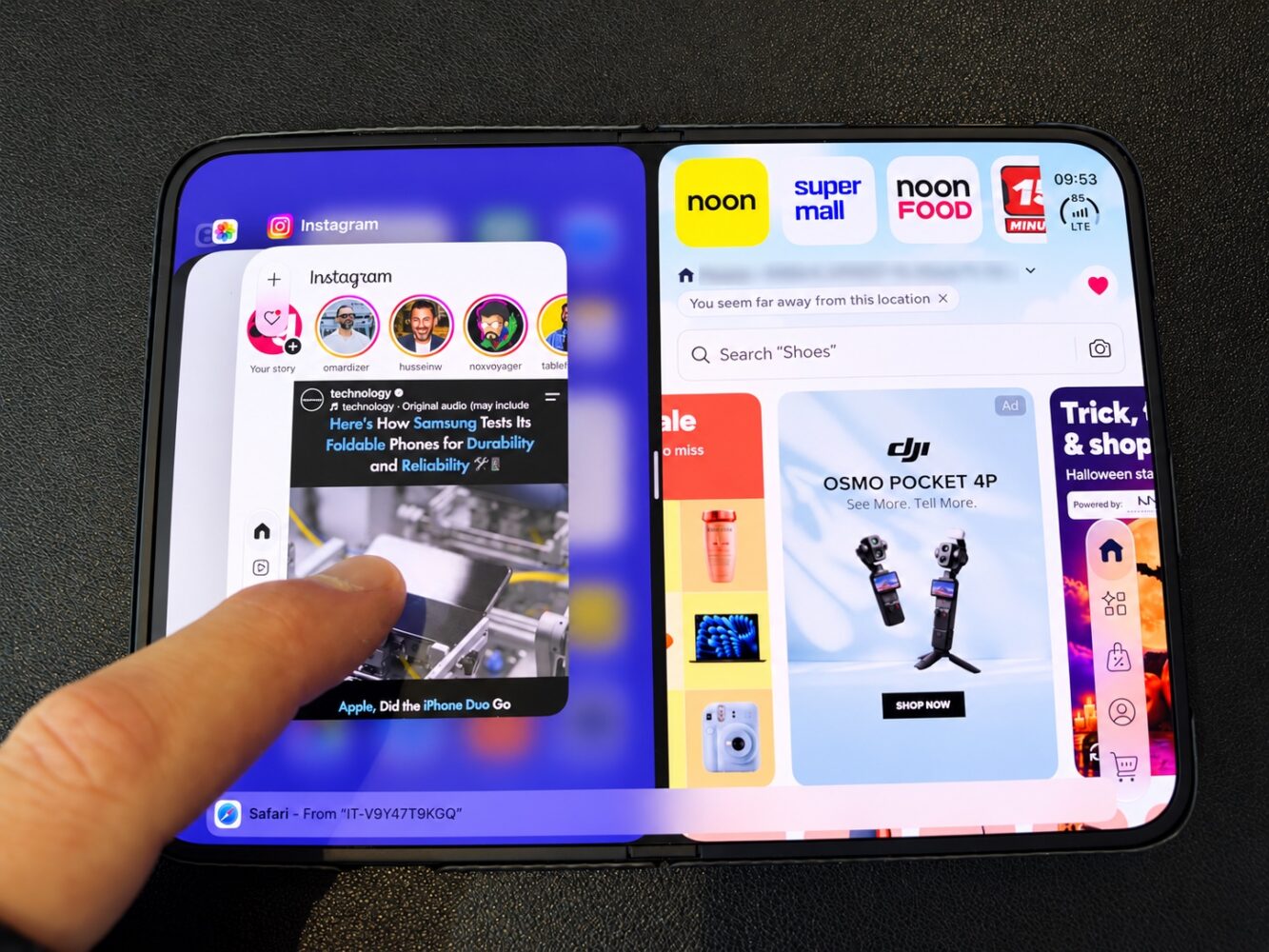
Multitasking is only as good as the apps involved, and right now that’s a work in progress. Optimized apps resize gracefully and feel completely at home in split view, while the ones that haven’t been updated yet show up as narrow portrait windows with some dead space around them. Even then, they remain perfectly usable, and buttons to rotate or expand them into landscape keep things functional in the meantime. The system itself is fast, intuitive and far more polished than early Android foldables managed at launch. As more developers catch up, which is already happening quickly, I fully expect multitasking to become the Duo’s defining feature.
iOS 27 rewires your muscle memory, and app support is catching up fast
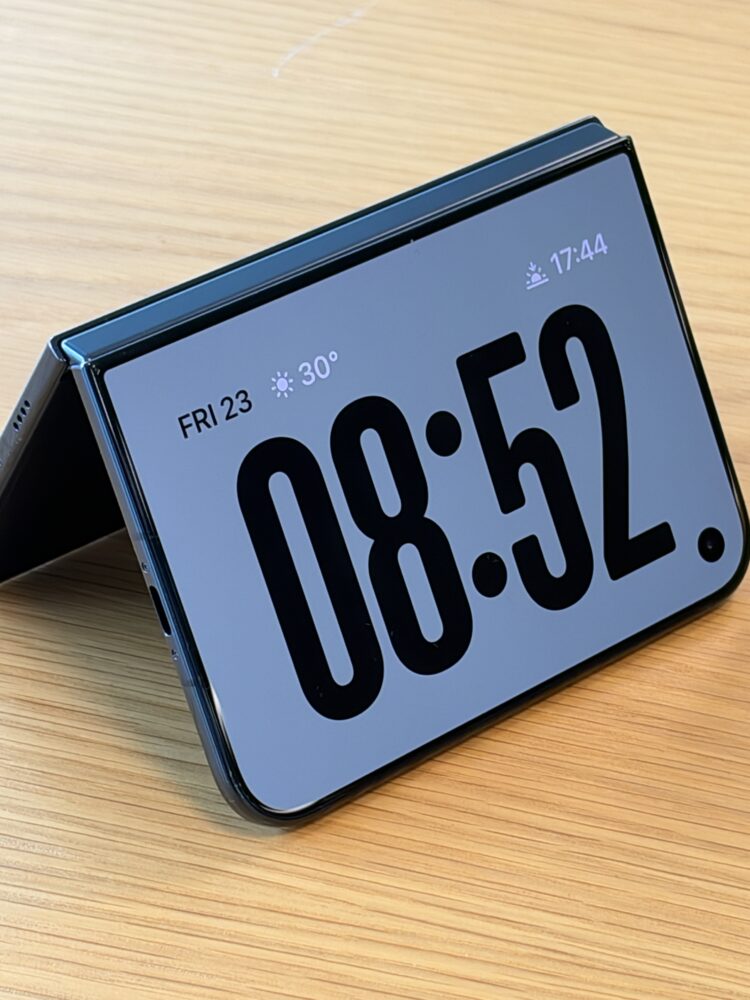
To fit the wider screens, iOS 27 gets its biggest rearrangement in years, moving the dock to the side and shifting battery, Wi-Fi and Dynamic Island elements to the top-right corner. Controls I’ve tapped for a decade suddenly live somewhere else, which takes a few days to get used to, but the logic clicks once you see how much room it frees up for full-size apps. Apple’s own apps are thoroughly optimized, with dual-pane layouts in Contacts and the App Store, buttons that move away from the bend when half-folded, and tabletop modes for video calls, recipes or a bedside clock. Siri AI and the new Apple Intelligence also feel at home on a screen this size, even if they’re still in beta.
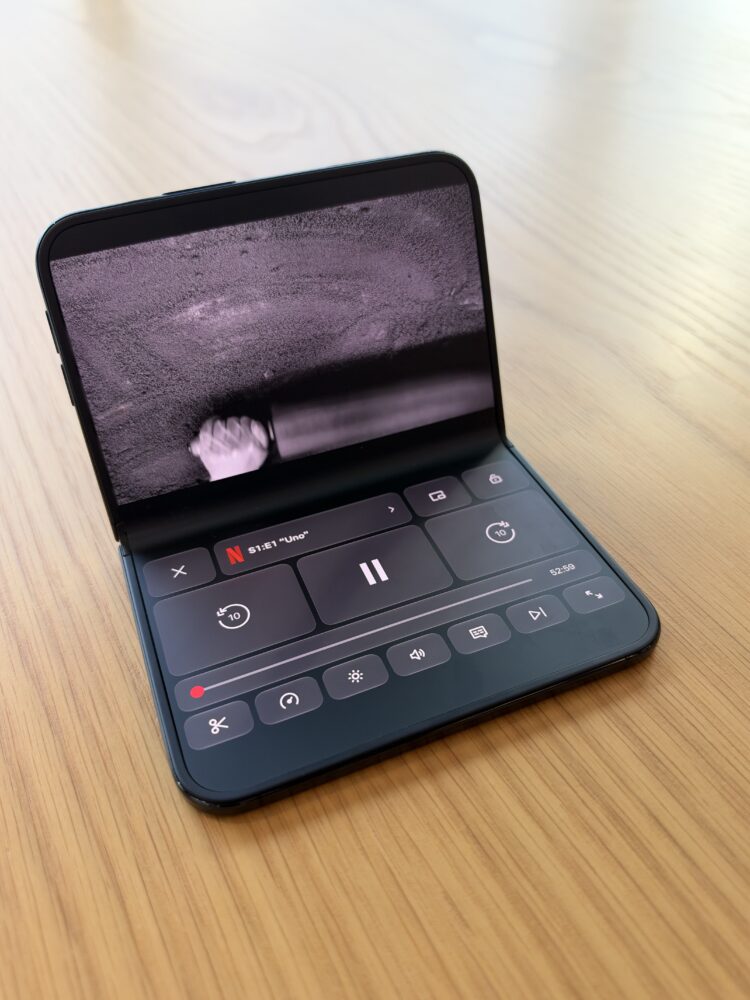
Third-party support is still catching up, but the best examples are excellent. Netflix has done a great job optimizing for the Duo, and films look stunning on that matte panel, while Instagram shows how good things get when an app is built with the Duo in mind. Others (as of this review’s publish date), like Telegram, Gmail and some landscape games, still open with black bars or letterboxing, which is the one area where Android foldables currently have an edge. That will change soon, since full support only requires developers to target the iOS 27.1 SDK, and with the Duo selling out instantly, there’s every incentive to update quickly.
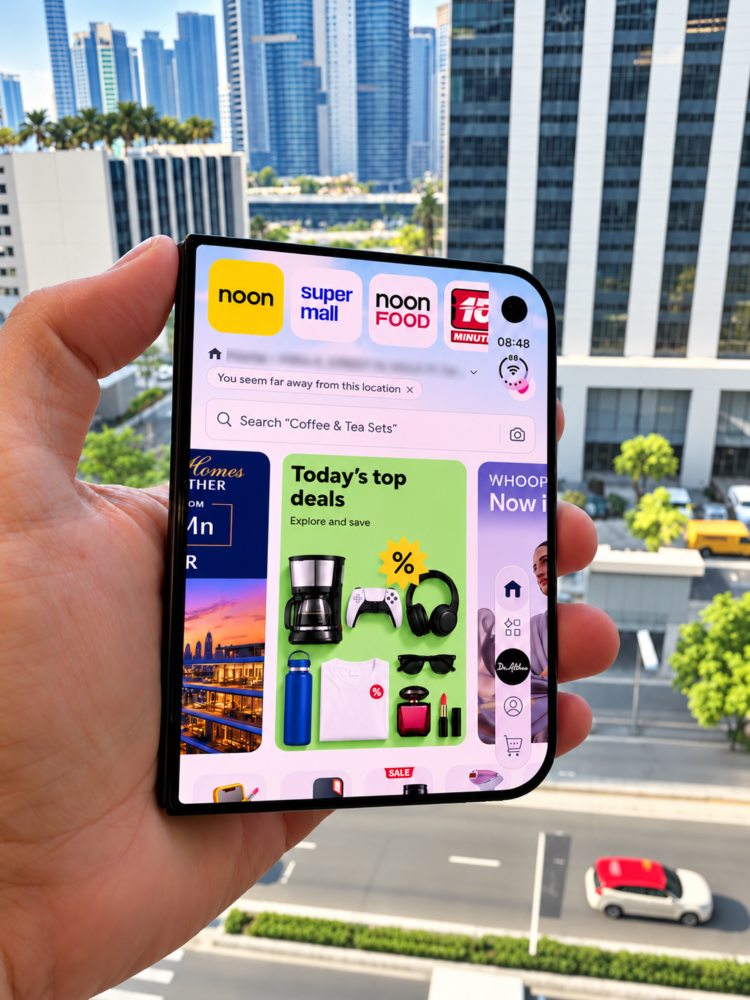
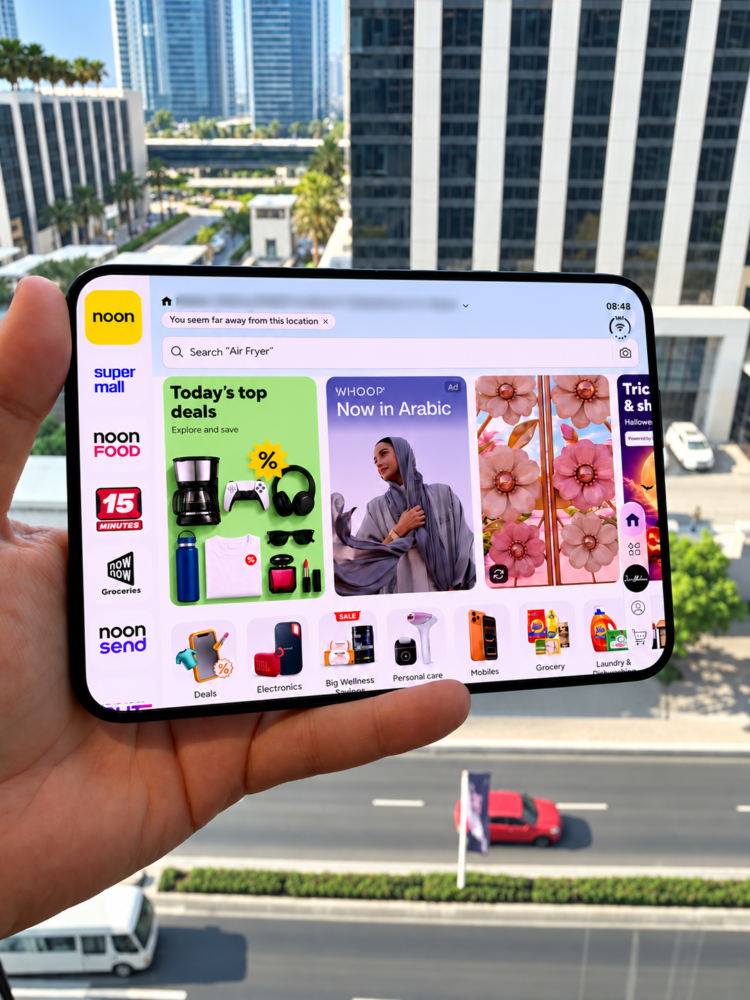
noon is one of the best examples of what that future looks like, having updated its app before the Duo even launched. Rather than a stretched phone layout floating in the middle of the screen, it takes proper advantage of the inner display, giving products, images and listings room to breathe, while still feeling right at home on the cover screen. Moving between the two is seamless, which is exactly how shopping on a foldable should work, with browsing on the big screen and quick checkouts folded. It’s a clear showcase of how apps should look and function on the Duo when developers do the work early.
Touch ID is back, and saying goodbye to Face ID genuinely stings
Let’s not sugarcoat it: losing Face ID hurts. Since the iPhone X, unlocking has been a glance and nothing more, and the Duo swaps that for a Touch ID sensor in the side button that feels like being downgraded to a previous console generation. For the first few days, I caught myself staring at the screen waiting for it to unlock before remembering to go find the button. It’s accurate but a beat slower than expected, and picking it up flat off a table or unlocking with wet fingers adds friction Face ID never had.
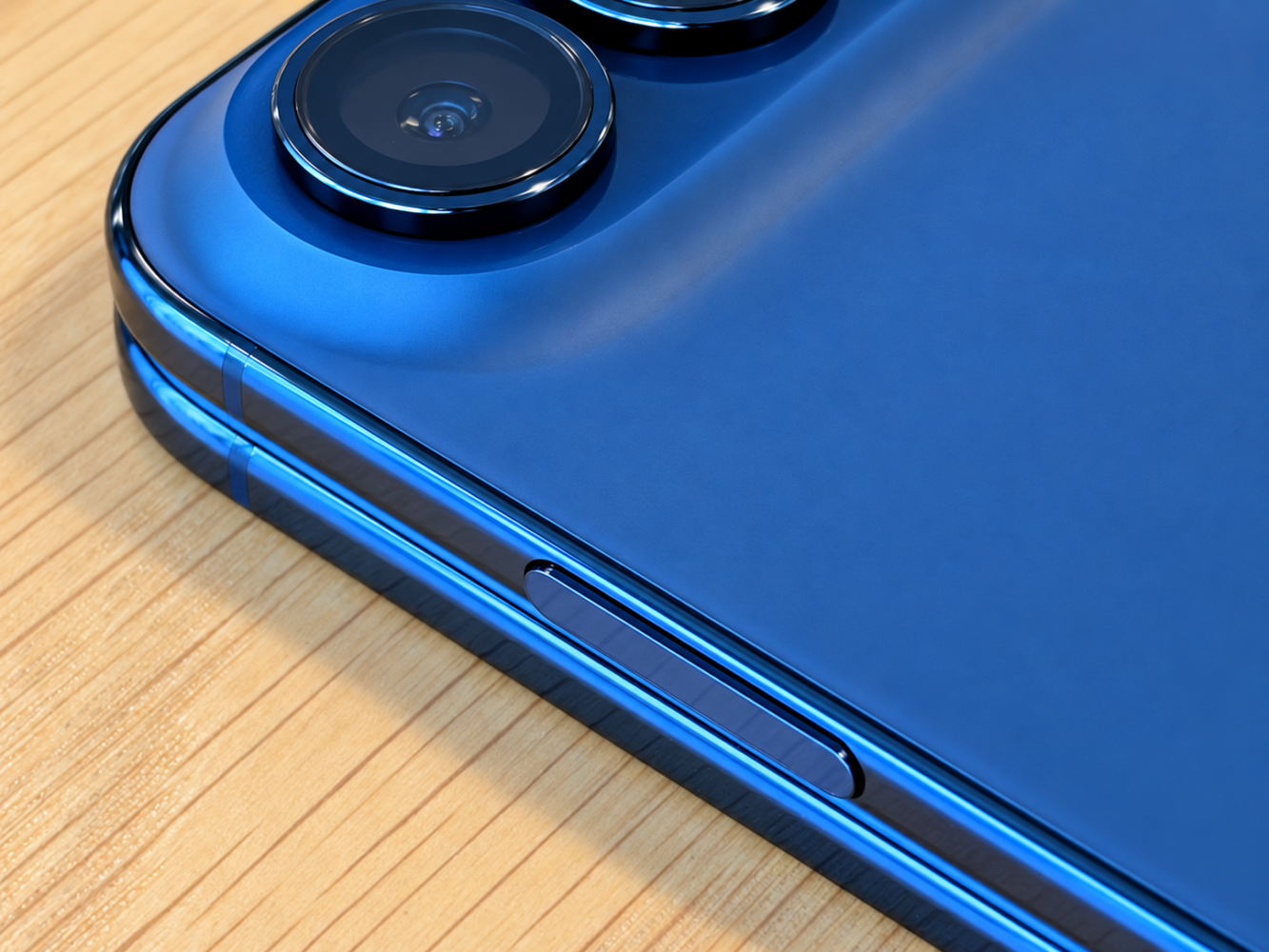
Still, I understand the decision, and it isn’t a dealbreaker. A phone used open, closed and half-folded would need face scanners on both sides, and cramming that into a 5.2mm half-shell would have cost battery or that clean inner screen. On a foldable, my thumb lands on the side button naturally, so after a week the muscle memory adapted, even if the heart didn’t fully follow. It’s the right engineering call, but I’ll be first in line hoping a future Duo brings Face ID back.
Two 48MP cameras that are very good, but the 18 Pro still rules
The Duo lives up to its name with a dual rear setup: a 48MP Fusion Main camera at 26mm with f/1.6 and sensor-shift stabilization, plus a 48MP Fusion Ultra Wide at 13mm. The main sensor delivers a 12MP optical-quality 2x crop, and there’s 4K Dolby Vision video at up to 120fps, Cinematic mode, Action mode, macro and the same adjustable Photographic Styles as the main iPhone line. Up front, the 12MP Center Stage camera on the cover screen handles selfies, while Duo Preview shows the person you’re photographing a live view on the outer screen, and Kid Cue helps coax genuine smiles from children. Samsung has offered its own take on that preview trick for a while, but seeing Apple get it this polished on its very first foldable is impressive. The camera is really good, producing sharp, vibrant shots with accurate colors, and it keeps pace with the Galaxy Z Fold 8, even pulling ahead in low light with better-exposed images and more natural color.
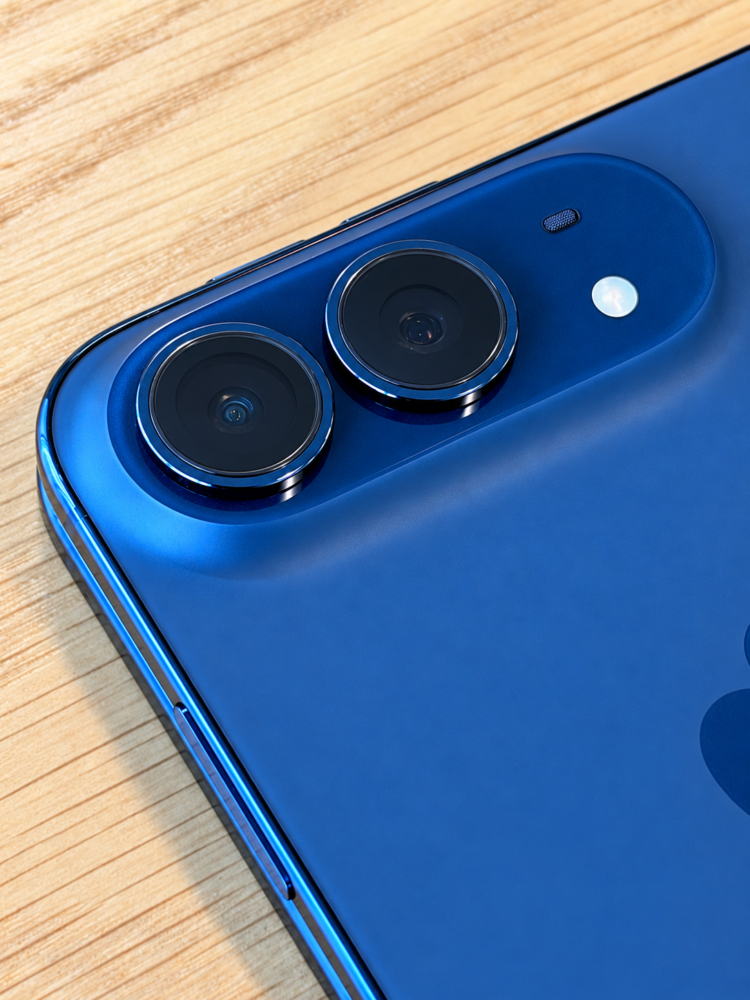
To be clear, the iPhone 18 Pro is the better camera phone, no question. It has a telephoto lens, a variable aperture and a longer zoom range, while the Duo tops out at 10x digital zoom and skips ProRAW and ProRes entirely. Processing can also make fine details look a touch crunchier than on the Pro, especially when zooming. If photography is your main reason for buying an iPhone, the 18 Pro is the one to get. For everyday shooting, travel and social media, though, the Duo is still very good and far more capable than its two lenses suggest.
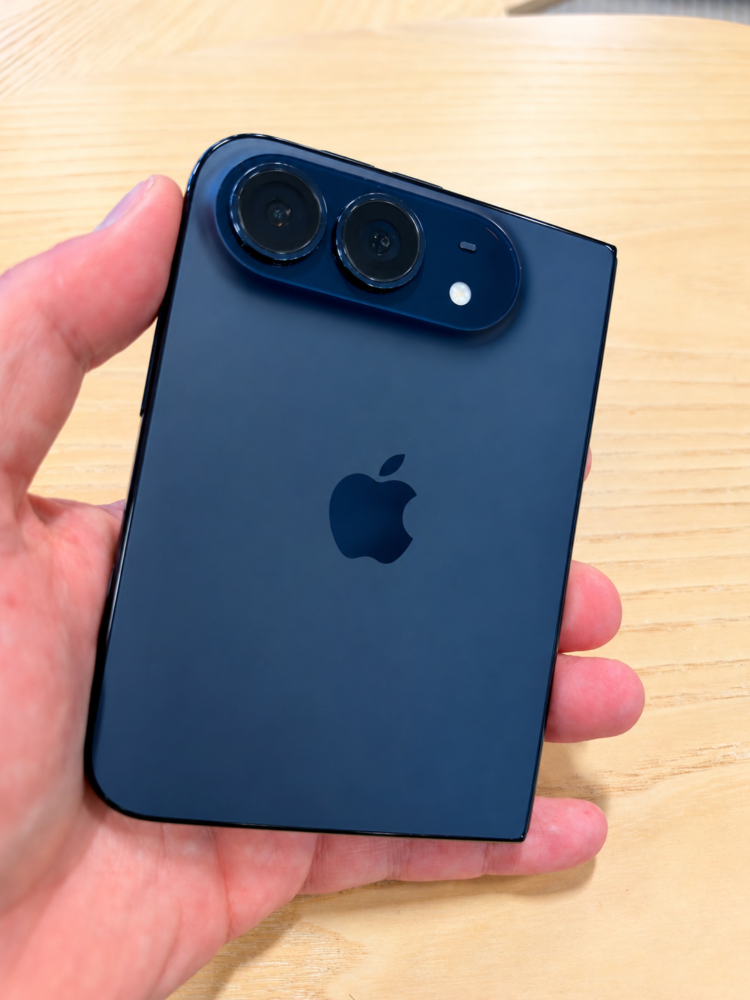
The real star, though, might be the camera you can’t see. Instead of a punch-hole, the inner screen hides its FaceTime camera beneath a reworked sub-pixel layout that lets light pass through, so the lens effectively disappears when it’s not in use. Samsung tried something similar on the Galaxy Z Fold 3 before abandoning it a few generations later, and seeing it revived and refined here is genuinely satisfying, because it keeps the widescreen canvas completely clean. It’s limited to 1080p for FaceTime and quick clips, but it’s the right trade for an uninterrupted display. The hinge adds its own tricks too, letting the phone stand on its own for group shots and time-lapses, while flipping it around lets me shoot selfies with the main 48MP sensor using the cover screen as a viewfinder.
Photo Gallery



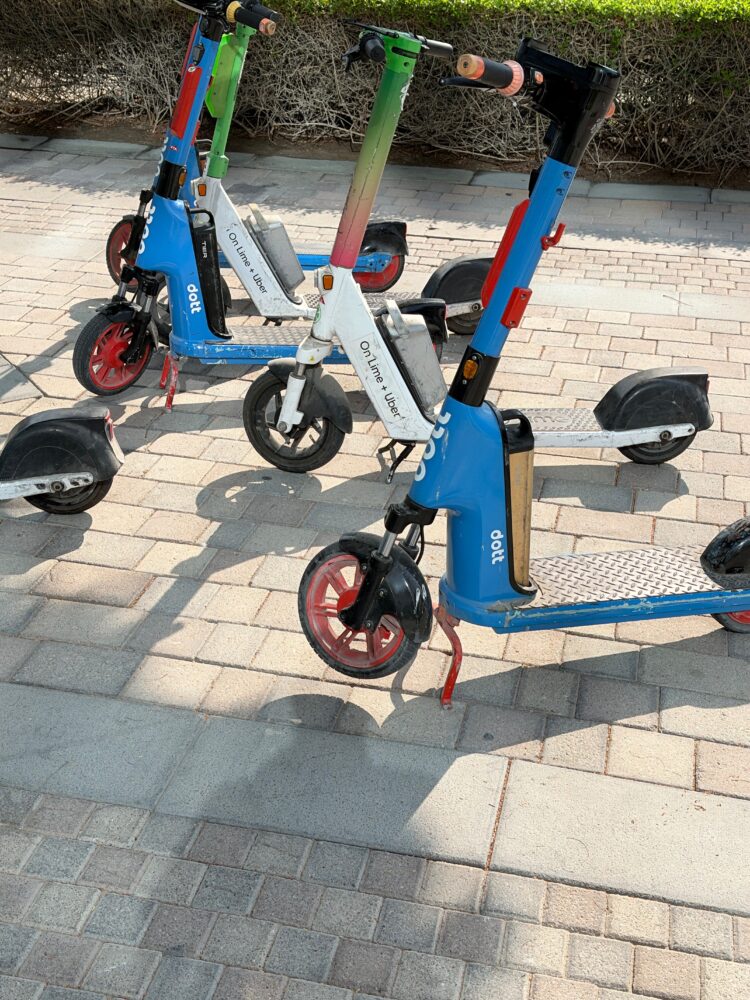
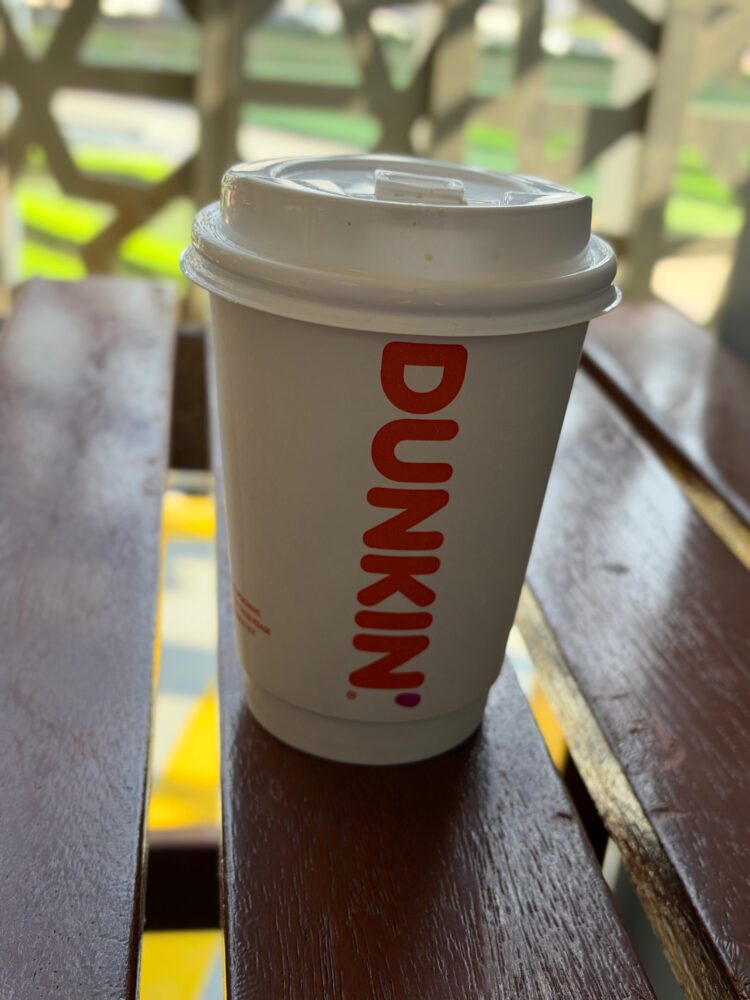






iPhone Duo battery life outlasts the foldable competition
Going eSIM-only freed up valuable internal space, and Apple used it smartly, placing a battery in each half and wiring them to work as one. Together they add up to roughly 4,883mAh, nudging just past the Galaxy Z Fold 8’s 4,800mAh, and they’re rated for up to 24 hours of typical use, 31 hours of video on the inner screen and 44 hours on the cover screen. In a video rundown, the Duo reaches 28 hours and 48 minutes, edging out the Fold 8 and proving that small capacity advantage translates into real endurance. Battery life is solid, comfortably getting me through a full day of heavy use, helped by the efficiency of the 2nm A20 Pro. The split-battery design also balances the weight, so the phone never feels lopsided when open.
Charging is competitive, with up to 50 percent in around 20 minutes from a 60W-capable adapter, though a 45W charger is enough to hit maximum wired speed, and MagSafe and Qi2 wireless run up to 25W. Heavy gaming and constant multitasking on the big screen drain it faster, but the far more efficient cover display makes it easy to stretch by handling quick tasks folded. A demanding day can still end with around 40 percent left, and on lighter days, two days between charges is realistic.
AED 8,499 is a serious ask, and you’re paying for the fold
The Duo starts at AED 8,499 for 256GB, rising to AED 9,349 for 512GB, AED 11,049 for 1TB and a jaw-dropping AED 13,599 for 2TB, making it the most expensive iPhone ever sold here. For context, that’s AED 3,000 more than an iPhone 18 Pro Max at every storage tier, and around AED 1,300 more than the Galaxy Z Fold 8, which starts at AED 7,199 and includes a telephoto camera the Duo lacks. Budget for protection too, with the Duo Case at AED 319 and the Folio with kickstand at AED 529. In return, you get IP68 protection, a titanium build, faster performance than any rival foldable, better battery life and the best display in the category. It’s a premium on top of a premium, and the Duo justifies most of it, but not all of it.
Who should skip it? If you live on your zoom lens, rely on ProRAW, or simply want the best camera in an iPhone, the 18 Pro or 18 Pro Max is the smarter buy and saves you thousands of dirhams. If you prize a light phone above all, the 254g weight will annoy you daily. And if you depend on a specific third-party app that hasn’t been optimized yet, giving developers a few weeks to catch up is perfectly reasonable.
There’s also a broader value case to consider. The old gadget-nerd rule says never buy first-gen hardware, but Apple sidestepped most of the usual growing pains by letting Samsung and Google spend years ironing out the category first. For many people, the Duo can replace both a phone and a small tablet, collapsing two devices, two chargers and two sets of accessories into one pocketable gadget, which softens that AED 8,499 sticker. The 256GB base model is sensible for most buyers, while the 1TB and 2TB tiers really only make sense for heavy video shooters. If you’ve been tempted by foldables but refused to leave iOS, this is the first one that doesn’t ask you to settle.
Why I’m switching from my iPhone 18 Pro Max to the iPhone Duo
On paper, this shouldn’t make sense. The iPhone 18 Pro Max is the better camera phone, it has Face ID, and it costs AED 3,000 less, so trading it in for the Duo looks like paying more to get less. But the more time I spend with the Duo, the more the Pro Max feels like the same great phone I’ve been using for years, just refined again, while the Duo genuinely changes how I use a phone every day. Both run the same A20 Pro, so I’m not giving up any meaningful speed, and battery life is solid enough that I’m not trading endurance for novelty either. What I’m actually gaining is a 7.6-inch screen with practically no crease, real side-by-side multitasking and a matte display that’s a joy to read, watch and work on, all tucked into something shorter than my Pro Max when folded.
That’s the deciding factor for me: the Duo isn’t trying to beat the Pro Max at being a slab phone, it’s doing things the Pro Max simply can’t. Pinning my email and calendar side by side, reading long articles on a screen that feels like a tiny tablet, or propping it up half-folded to watch something over lunch has quickly become part of my routine, and going back to a single screen already feels cramped. I’ll miss Face ID, and I know my photos won’t quite reach 18 Pro Max levels, especially when I need serious zoom, but those are compromises I’m happy to make for everything else the Duo gives me. For someone who lives on their phone for work, content and entertainment, the extra screen matters more than the extra lens. The Pro Max is the safer choice, but the Duo is the one that makes me excited to pick up my phone again.
Verdict
The iPhone Duo is the foldable iPhone fans hoped for and Android fans will quietly envy. The design feels genuinely premium, the hinge is superb, the nano-texture inner display makes the crease practically vanish, and both screens deliver rich, vivid colors. Performance, multitasking and battery life are excellent, and the cameras are very good, though the iPhone 18 Pro is clearly the better camera phone. Losing Face ID stings, it’s heavy, there’s no telephoto, and some apps still need updates, though Netflix and noon already show how good optimized apps can be. At AED 8,499, it’s a serious investment that costs more than both the 18 Pro Max and the Galaxy Z Fold 8, but for iPhone users ready to try something genuinely new, it’s the foldable to get.