

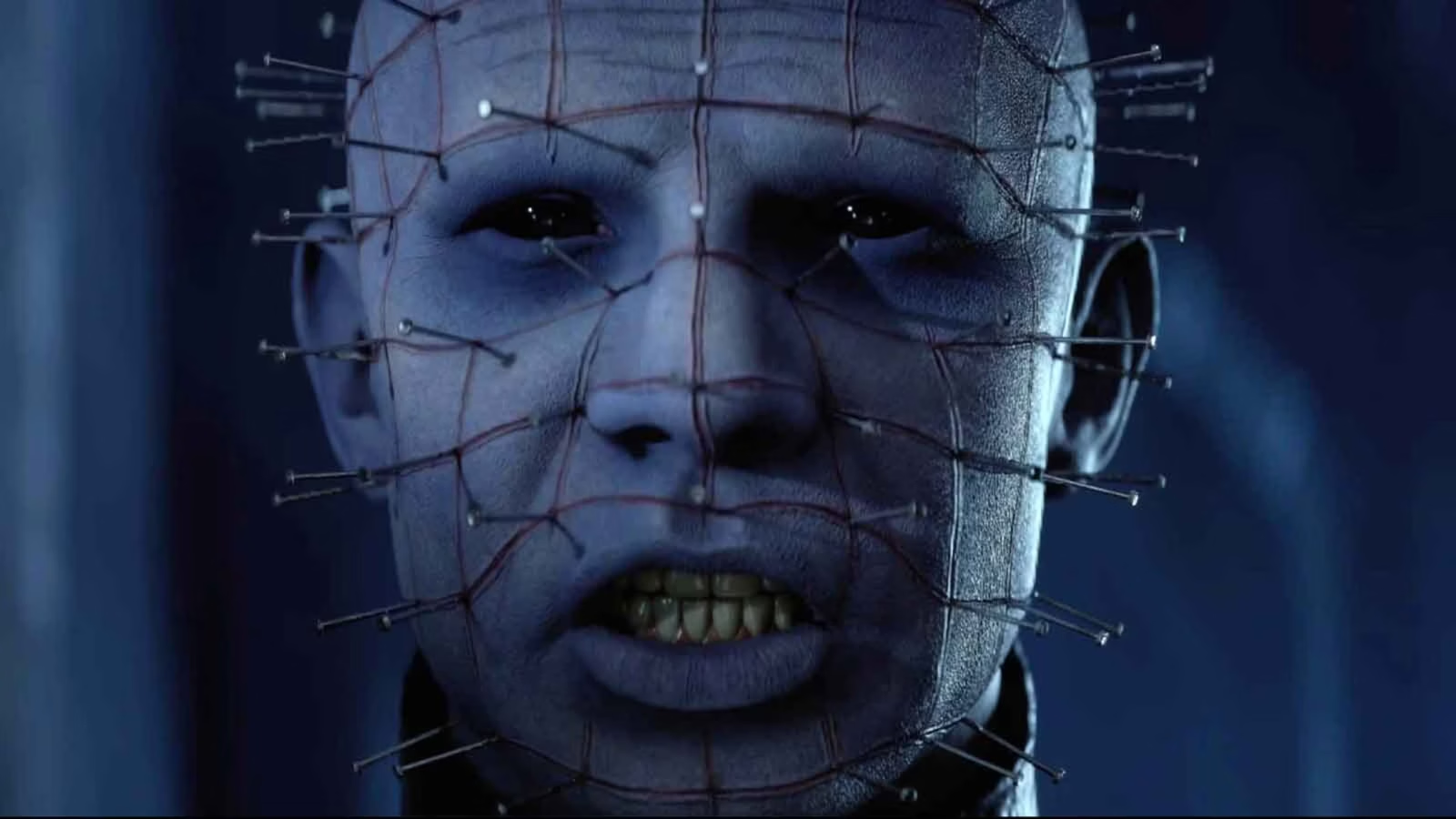
TL;DR: Hellraiser: Revival nails the franchise’s grim, transgressive tone, with a great Pinhead, a striking Labyrinth and a clever telekinesis system, but repetitive bosses, overused chases, thin story delivery, PS5 bugs and zero replay value hold it back. Fine for die-hard fans, forgettable for everyone else.
Hellraiser has always been a hard sell for a video game. Clive Barker’s world doesn’t run on jump scares or monster-of-the-week thrills. It runs on desire, pain and the idea that some doors should stay shut, which is far harder to turn into a controller in your hands than a zombie outbreak. Hellraiser: Revival commits to that tone from its first scene, where a private moment of fetish play between the hero and his partner turns into something far worse, and it rarely lets up afterwards. This is not a horror game that hints at things off-screen. It is explicit, sleazy and drenched in gore, and I respect how little it tries to sanitise the source material. My problem is that once the shock wears off, there’s a fairly ordinary survival horror game underneath.
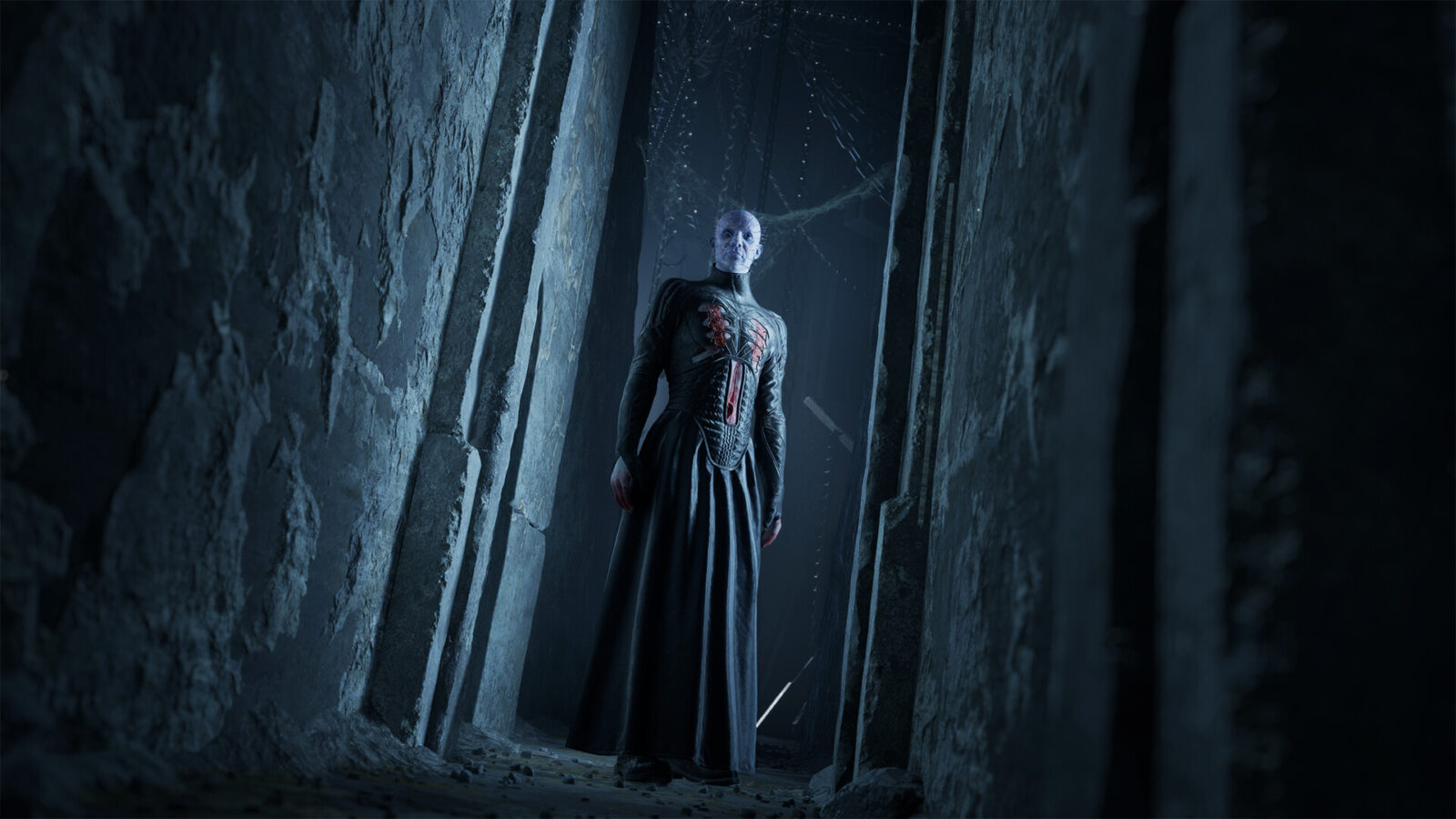
A grieving addict and a deal with the Lead Cenobite
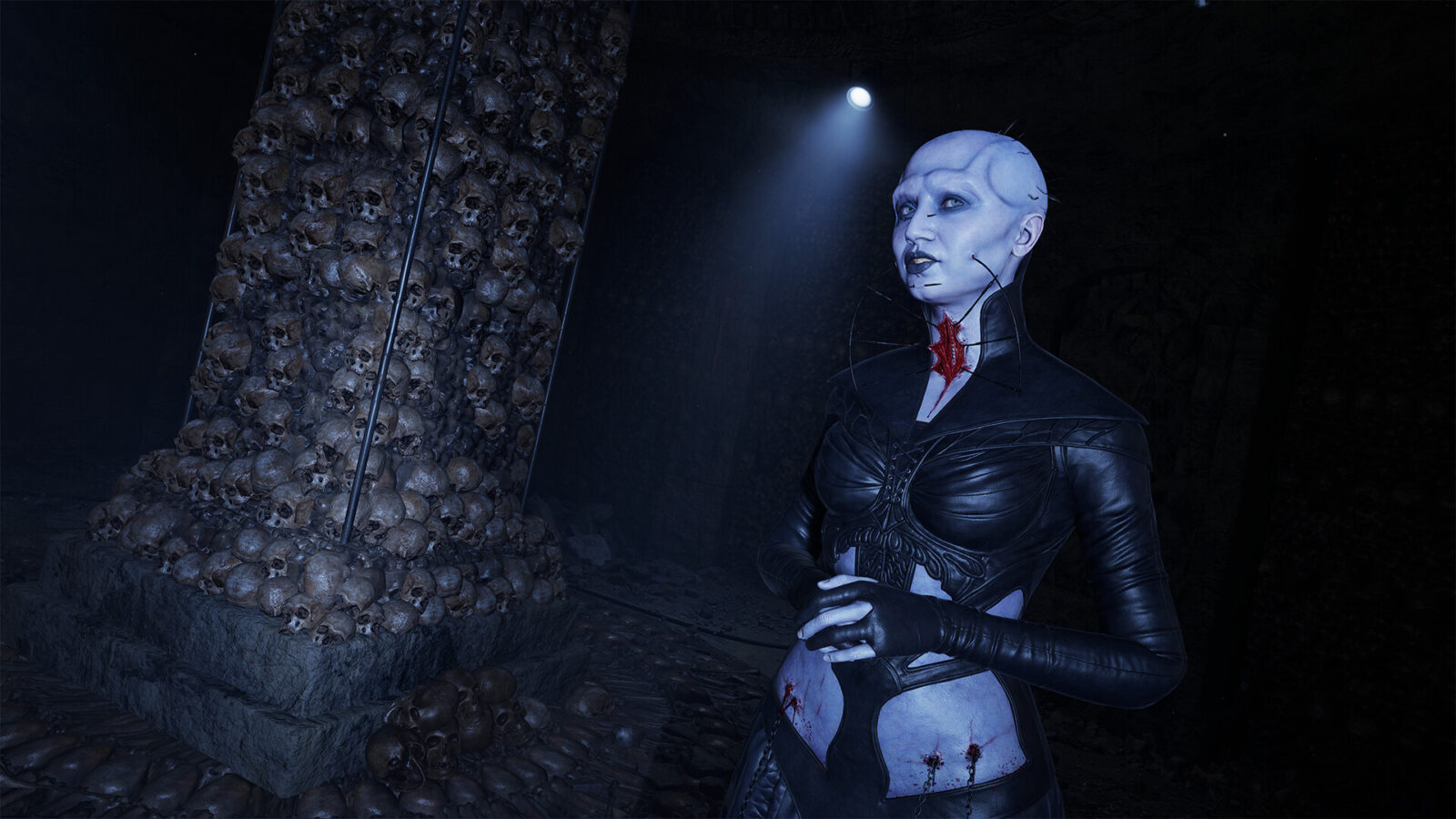
You play as Aiden, a quippy, flawed everyman with addiction problems whose girlfriend has just been murdered. His plan to get her back is pure Hellraiser: strike a bargain with Pinhead, hunt down members of a local death cult, and feed their hearts to her half-revived body. Fans of the first two films will recognise the shape of that bargain immediately, and it’s a premise with real emotional ugliness built into it. Doug Bradley returns to voice Pinhead, and his measured, almost courtly menace is still the best thing about any scene he appears in. The cenobite sequences are where the story genuinely comes alive, with the gore and the theatre that the license demands.
The trouble is everything between those moments. Across a campaign that runs about nine hours, too much of the plot is handed over in long stretches of exposition from supporting characters rather than shown through play or staging. The in-game merchant ends up carrying a surprising amount of the storytelling, which tells you something about how thin the rest of the cast feels. I understood Aiden’s motivation, but I rarely felt the weight of it beyond the obvious beats. For a story about obsession and the lengths someone will go to for love, Revival keeps its audience at arm’s length.
Hellraiser: Revival gameplay borrows the Resident Evil playbook
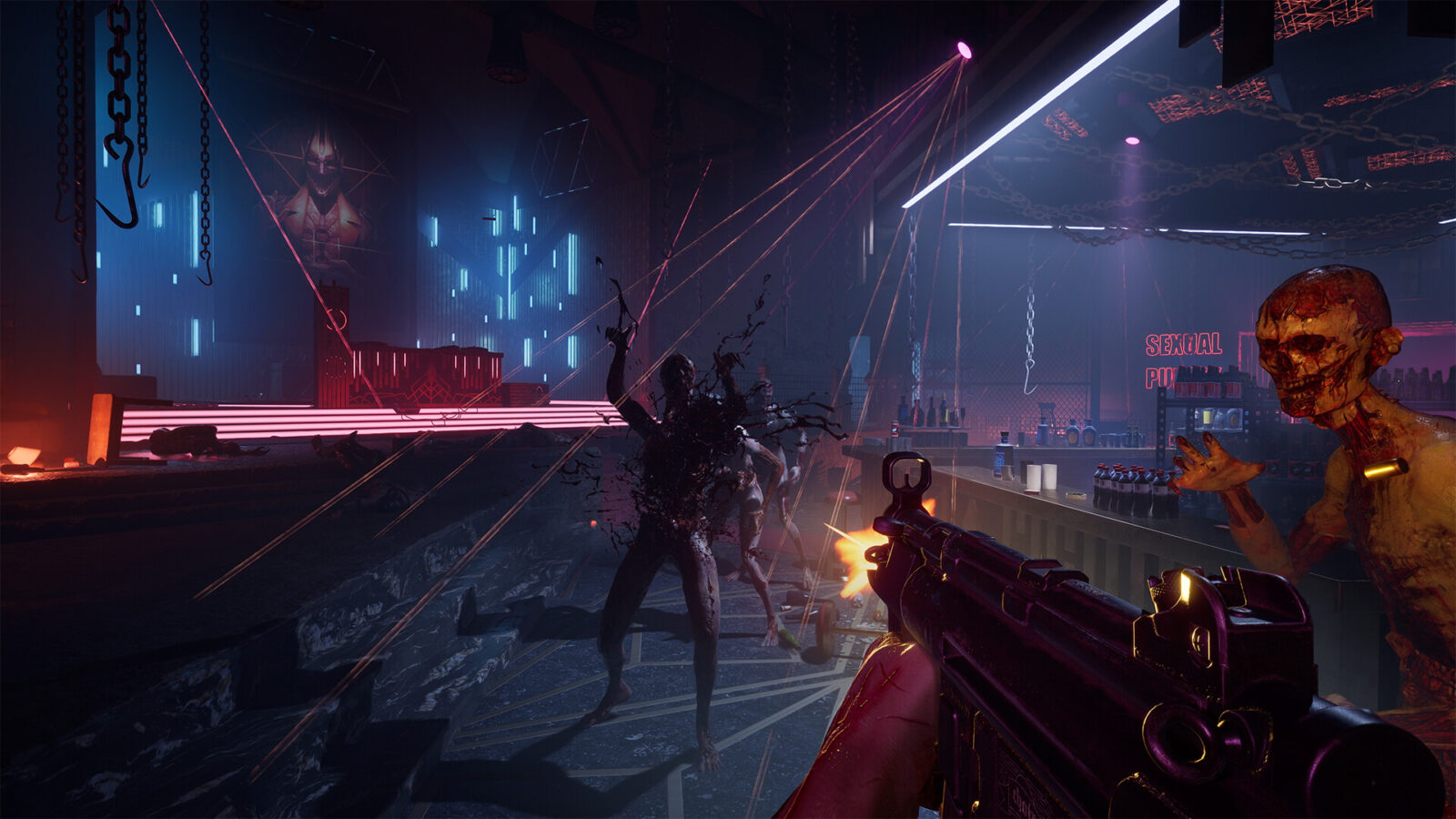
Moment to moment, Revival plays like a modern Resident Evil with a darker wardrobe. The inventory management, weapon upgrades and resource economy all feel very familiar, and anyone who has spent time with Capcom’s remakes will settle in within minutes. Aiden’s arsenal covers upgradeable pistols, shotguns and machine guns, plus breakable melee weapons such as blades and bats. Ammo is scarce enough that you can’t lean on any single tool, which pushes you to rotate between guns and melee and to make every pickup count. That scarcity is the game’s best design decision on the combat side, because it keeps even routine fights from feeling routine.
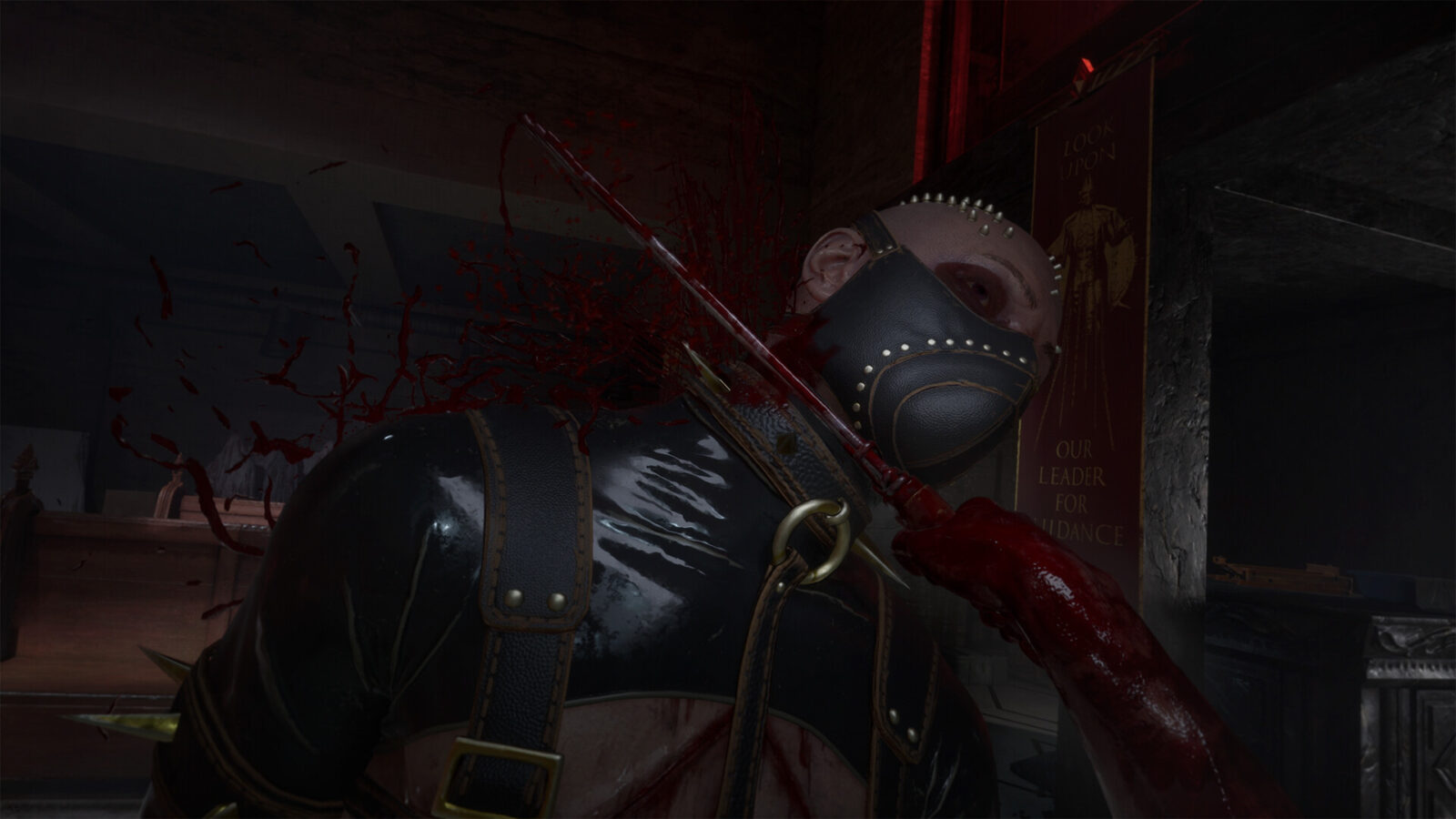
Melee leans on slashing and sidestepping, and pairing that with a close-range shotgun blast produces the kind of grisly dismemberment the license practically requires. Enemy variety, however, is limited. Beyond cultists armed with machetes and guns, you mostly face the same set of lanky ghouls, explosive suicide creatures and legless crawlers. The repetition doesn’t ruin combat, but it does mean the later hours lean heavily on the same threats you mastered early.
A couple of control decisions also get in the way. The default aim assist is aggressive enough to pull your crosshair onto a nearby enemy when you’re aiming for an explosive barrel, which is exactly the kind of shot this resource-starved design encourages, so I’d recommend switching it off. Aiden also can’t vault over obstacles, which leads to some awkward moments where an open window or low barrier is treated as an impassable wall and you’re sent hunting for a key instead. It’s a small thing, but in a game about desperate survival, being blocked by furniture undercuts the fantasy.
Stealth that needs more tools than it gives you
Revival offers plenty of chances to sneak, with throwable bricks and bottles for distraction and brutal stealth takedowns for thinning out groups. In theory this gives you a meaningful choice between conserving ammo quietly and committing to a loud fight. In practice, the lack of any way to lean or peek around corners makes it too easy to be spotted the instant you edge out from cover. Once that happens, the encounter usually becomes a firefight anyway, and your careful approach evaporates.
The instant-fail stealth segments featuring stalker enemies are the weakest version of this. A fail state is only fair when the rules of detection are readable, and here stalkers can sometimes spot Aiden through foliage even when he’s motionless. That inconsistency turns tension into trial and error, which is the opposite of what these sections should achieve. Stealth works best in Revival as an optional opener, not as the main event.
The Genesis Configuration is the game’s sharpest hook
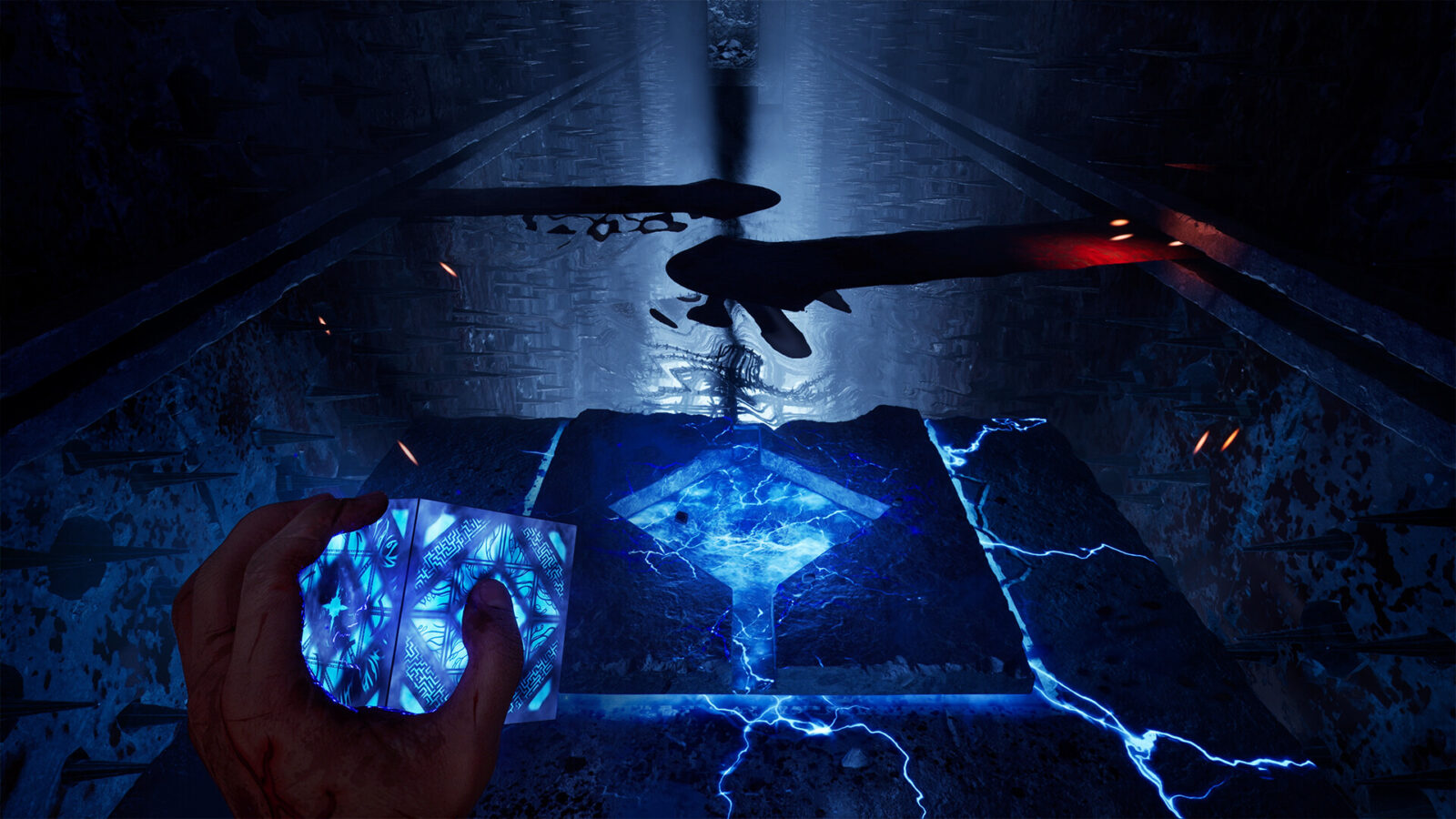
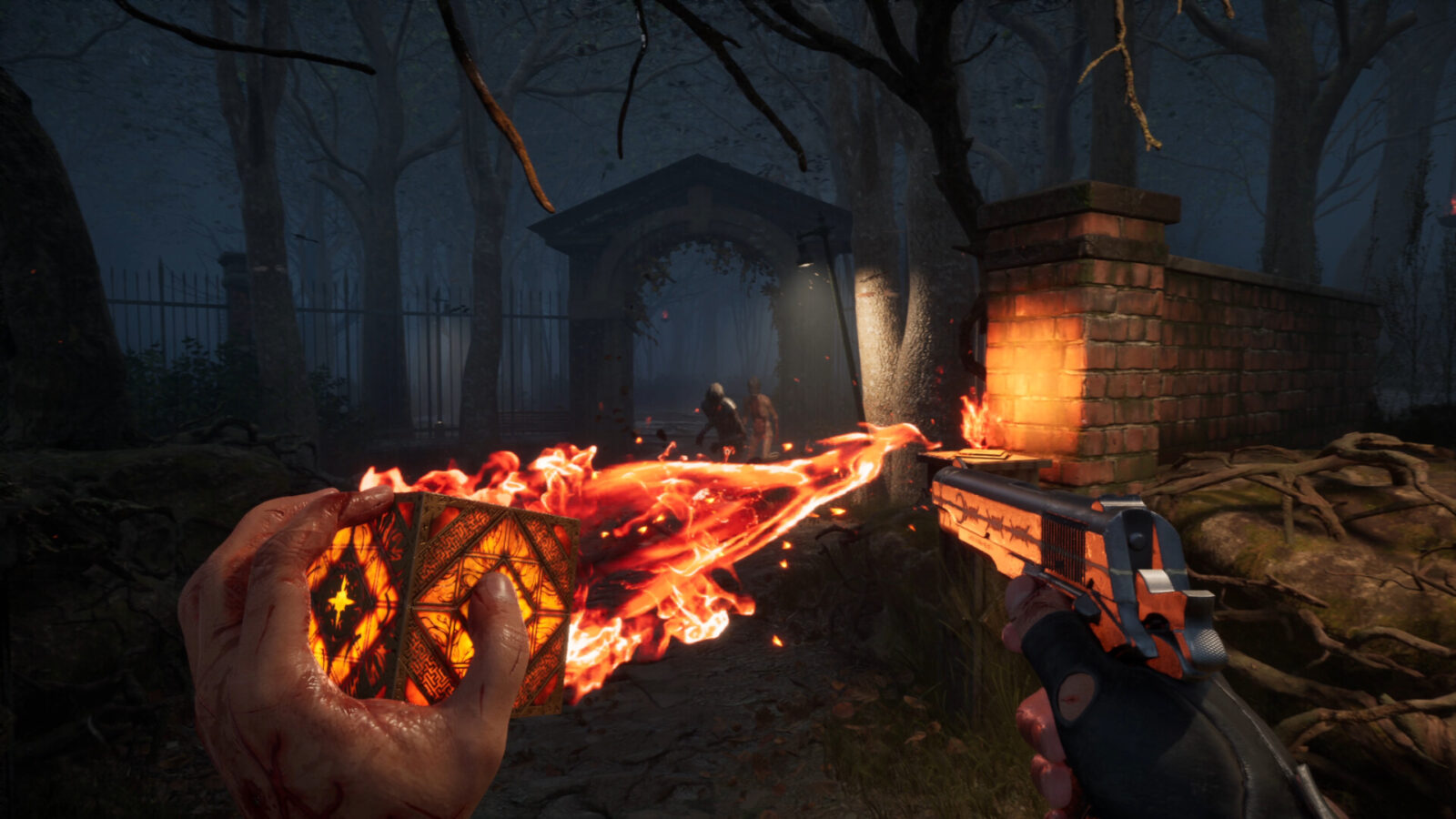
Where Revival actually carves out its own identity is the Genesis Configuration, a reworked take on the franchise’s famous puzzle box. It grants Aiden telekinetic powers, letting him snatch nails, sawblades and other sharp debris from the environment and fling them at enemies. These abilities run on a “suffering” meter, which you fill by staggering enemies and performing a nasty execution that forces the box into a victim’s mouth. It’s a gruesome loop, but a smart one, because it rewards aggressive play rather than letting you hoard power.
What I appreciated most is how tightly the system is restrained. Held objects only stay suspended for a short window, so you can’t stroll around with a sawblade cocked and ready for whatever turns the corner. Later upgrades add fire manipulation, which opens up satisfying combos such as detonating a barrel, then drawing the flames out of the blast and throwing them at a second group. It turns the arena into an ammo supply, which is exactly the right fit for a game where bullets are precious.
The best power, though, arrives too late. A meter-draining super ability binds groups of enemies together with chains before ripping them apart, and it’s both thematically perfect and genuinely useful for crowd control. Because it unlocks so far into the campaign, I barely had room to build it into my approach. Had it arrived even a few hours sooner, combat in the back half would have had a lot more texture.
Boss fights that forget to bring the pain
For a franchise built on unforgettable monster designs, Revival’s bosses are a real letdown. There are a couple of standouts. One, a flying Sister of Mercy, fills the arena with a crimson fog and lunges out of it, which forces you to read the space rather than just shoot. Another creature traps Aiden in a cage hanging from a tree while ghouls climb the bars, turning the fight into a frantic defensive scramble before you can finish the job.
Most of the rest are close-quarters slugfests that ask very little of you. A skinless creature makes a terrific entrance by melting out of a pool of gore, but beating him comes down to strafing in circles and emptying your guns, and you do it twice. Worse, a bloated, many-armed slug-like cenobite returns four separate times across the campaign, with little to distinguish one encounter from the next. Repeating bosses can work when each round escalates or changes the rules. Here it mostly feels like padding.
Puzzles with a filthy sense of humour
Most of Revival’s puzzles stick to genre staples: find the bolt cutters for the chained gate, dig through notes to crack a four-digit code. They’re functional rather than clever, and none of them will hold you up for long. Where the game earns some personality is in the handful of puzzles that lean straight into its kink-heavy setting. One has a latex-clad character sending you on a scavenger hunt for bondage gear inside a fetish club, while another has you solving a combination lock by arranging the positions of couples in an orgy.
These moments are absurd, and I think the game knows it. They’re also the rare times Revival feels like it couldn’t be anything other than a Hellraiser game, which is more than I can say for its combat arenas. They aren’t difficult, but they’re memorable, and in a genre full of crank handles and missing valve wheels, memorable counts for something.
Familiar set pieces, weaker execution
Revival also borrows recognisable set pieces from horror’s greatest hits. There’s a defend-the-building siege that clearly nods to Resident Evil 4’s cabin sequence, but squeezed into a much smaller single-floor space with far less room for improvisation. There’s a looping-corridor section that evokes P.T., without the puzzle layering or psychological dread that made that teaser legendary. Homage is fine, but when you invite comparison with the best moments in the genre, you need to match them.
The encounter design can also be broken by accident. In one sequence, calling an elevator triggers an enemy ambush, a classic survival horror move. However, it’s possible to simply step outside through the building’s front door and pick off enemies as they bottleneck through the exit. When the game’s tensest moments can be defused with a basic retreat, it suggests the arenas weren’t tested against players thinking creatively.
The Labyrinth is where Revival feels truly hellish
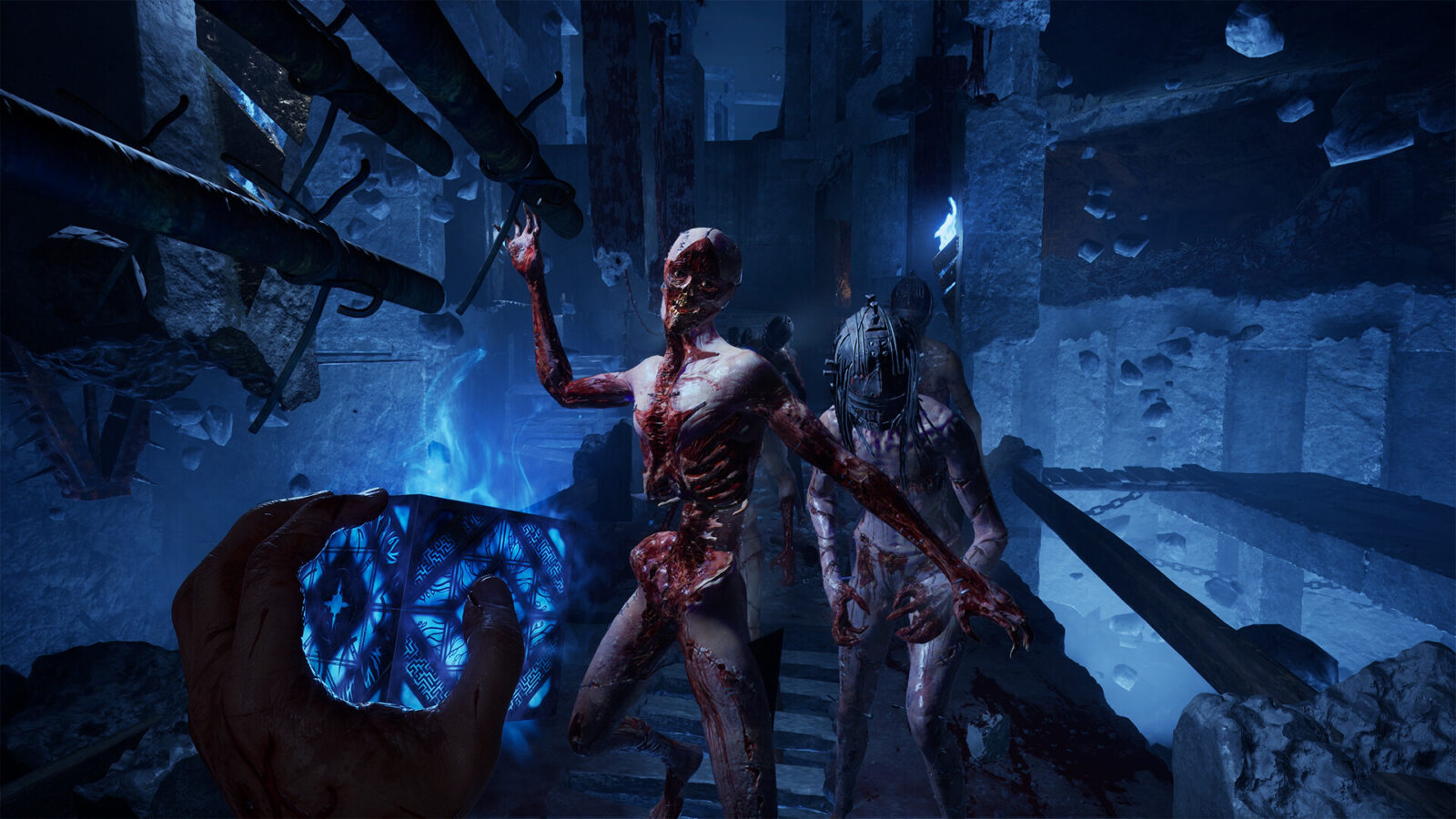
Periodically, Aiden is pulled out of the mortal world and into the Labyrinth, and these combat-free interludes are where the art direction shines. The design takes clear inspiration from M.C. Escher, with impossible concrete corridors stacked at odd angles, and although the paths are more linear than they first appear, the illusion of vastness is very effective. Leviathan looms on the horizon, insectile cenobites skitter along the walls, and the architecture itself rearranges around you to make you feel trapped. Everything has an edge to it, literally and figuratively.
These sections also make good use of the Genesis Configuration outside combat, letting Aiden shift chunks of the environment to create new routes. Optional upgrades to health and the suffering meter are tucked behind spinning death traps, which gives curious players a reason to take risks. It’s the closest Revival comes to feeling like its own thing rather than a reskin.
Unfortunately, the Labyrinth is also home to the game’s most overused idea: chase sequences with the Chatterer. The first pursuit is genuinely stressful, with the iconic cenobite’s grinning jaw clattering behind you. By the time you’ve done several more, sliding under similar chains and dodging similar obstacles, the dread has curdled into routine. A monster chase only works when it feels unpredictable, and repetition is its natural enemy.
Hellraiser: Revival PS5 review: bugs that bite
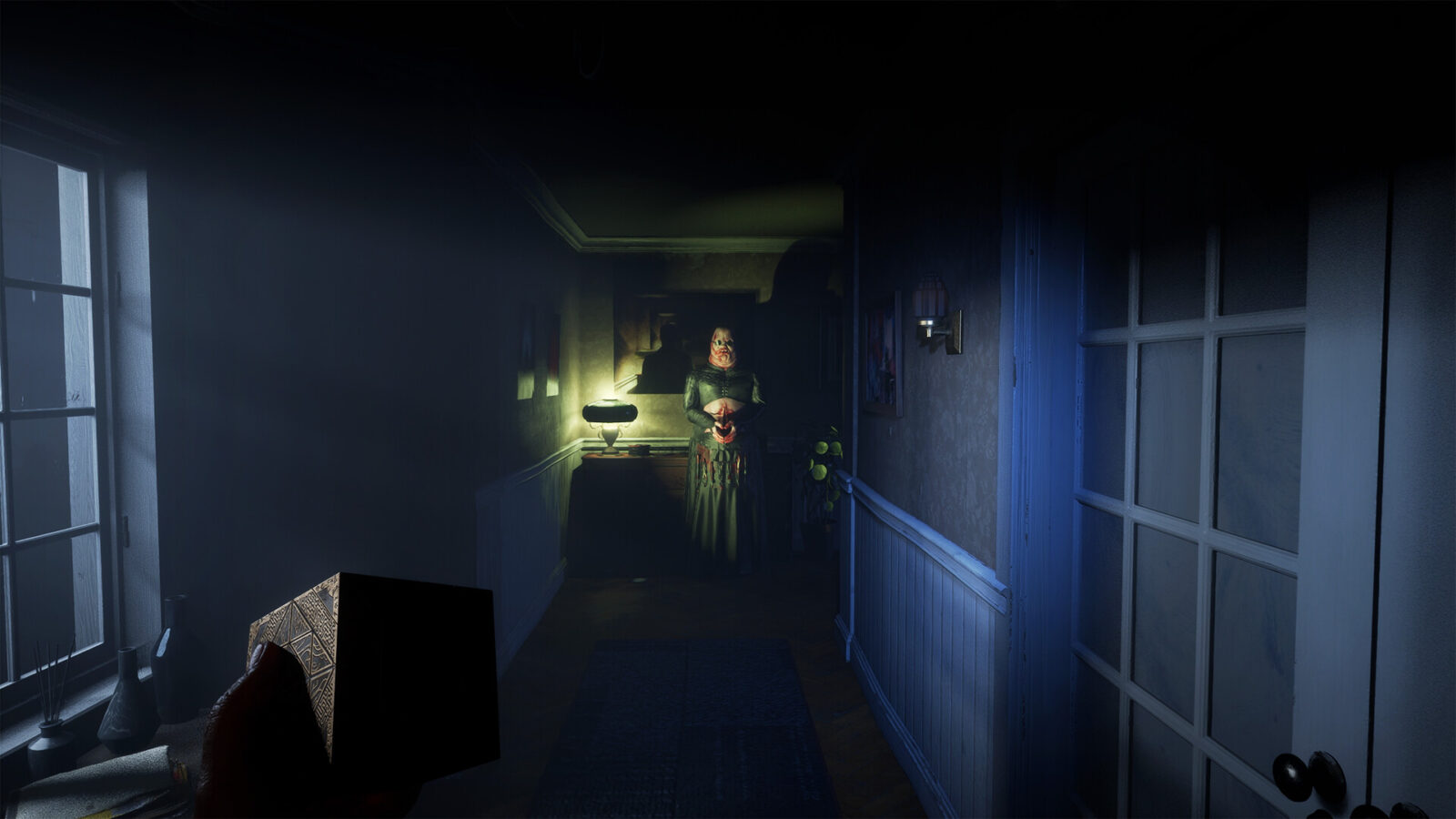
On PS5, Revival has a noticeable layer of rough edges. The smaller issues include enemies clipping through walls and audio cutting out during boss fights, which robs those encounters of much of their impact. More frustrating are progression bugs that, while never fully game-breaking, can cost real time. One reported case involves a safe that relocks with no prompt to reopen it after the player leaves to free up inventory space, effectively locking a weapon upgrade away.
Another bug can jam a safehouse door partially open, leaving the merchant visible but out of reach. Given how much the game’s economy depends on that merchant for ammo, losing access in a combat-heavy stretch turns a scarce-resource design into a genuine grind. These problems may well be patched, but at launch they make an already uneven experience feel less polished than it should.
Two endings, no reason to return
Revival does offer two endings, one bleak and one more hopeful, but both stem from a single choice at the climax. That means you can see the alternate conclusion by reloading your last save rather than replaying the campaign. Beyond that, there’s no New Game+ and no unlockables, and the credits simply return you to the main menu. For a genre whose classics are defined by replayability, from new weapons to harder modes to speedrun incentives, that’s a striking omission. Once you’re done, you’re genuinely done.
Verdict
Hellraiser: Revival gets the hardest part right. It understands the tone of Barker’s world, refuses to water down its sex and violence, and gives Doug Bradley’s Pinhead the stage he deserves. The Labyrinth sequences are atmospheric and inventive, the Genesis Configuration adds a satisfying, well-balanced layer to otherwise familiar combat, and a few gleefully perverse puzzles give the game a personality nothing else in the genre has.
Around those highlights, though, sits a fairly by-the-numbers survival horror shooter. The story relies too heavily on exposition, enemy variety is thin, stealth is undermined by inconsistent detection and missing tools, and too many boss fights are flat encounters you’re asked to repeat. The Chatterer chases wear out their welcome, borrowed set pieces don’t measure up to their inspirations, and PS5 bugs can interrupt progression in frustrating ways. Add the lack of meaningful replay value, and nine hours starts to feel stretched.
This is one for committed Hellraiser fans who want to step inside the films’ world and don’t mind a derivative game to get there. Survival horror veterans looking for the next genre standout should temper expectations, and anyone squeamish about extreme sexual or violent content should steer well clear. If you go in for the atmosphere and Pinhead, there’s enough here to enjoy, ideally after a few patches or at a discount.