
TL;DR: CORSAIR’s VOXARA packs a 25mm condenser capsule, 32-bit/192kHz capture and AI-powered Voice Focus noise removal into a gaming mic that leans hard into onboard controls, an OLED display and customizable RGB. It’s a genuinely capable streaming mic held back slightly by its reliance on Wave Link for its best tricks, but for gamers and streamers who want tactile control and studio-adjacent audio without a full outboard rig, it’s an easy recommendation.
The USB microphone market has gotten weird lately, in the best possible way. What used to be a boring choice between “cheap desk mic” and “actual studio gear you need a mixer for” has splintered into this new category of gadget-mics that want to be the centerpiece of your setup rather than a background utility. CORSAIR’s VOXARA throws its hat firmly into that ring, pairing genuinely serious audio specs with the kind of onboard screen-and-RGB theatrics that would make a starship console blush. It’s a USB gaming condenser microphone built around a 25mm capsule and 32-bit/192kHz capture, backed by Elgato’s Wave Link software for routing, effects and AI-powered noise cleanup.
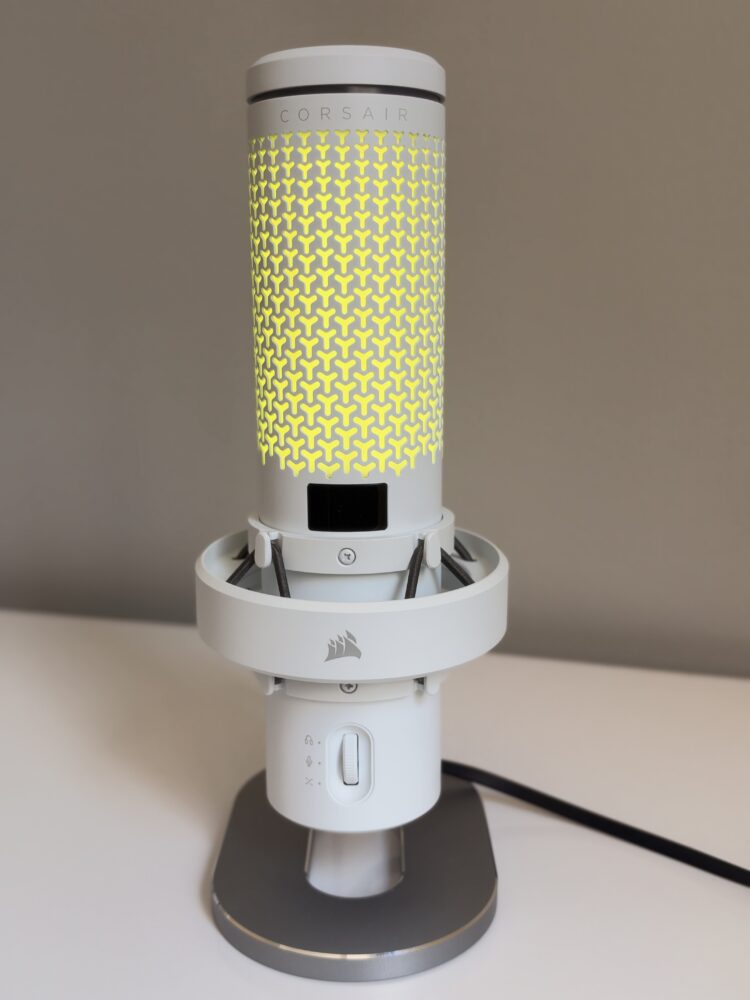
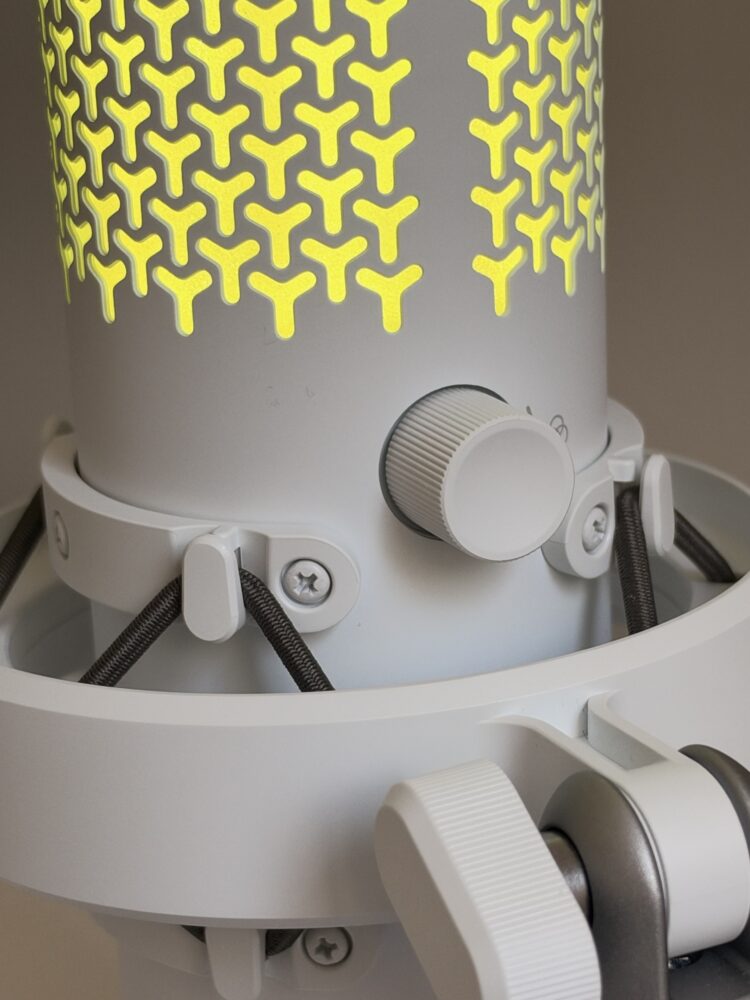
What immediately sets VOXARA apart from the usual suspects is how much control lives directly on the hardware. There’s a multi-purpose OLED display, an infinite-scroll front wheel, a separate RGB mode knob on the back, and a capacitive tap-to-mute sensor up top, all wrapped in a body that looks like it wandered off the set of a cyberpunk radio station. CORSAIR is clearly betting that streamers and gamers don’t just want good audio, they want a desk centerpiece that visibly does things. Whether that bet pays off depends heavily on whether you’re the kind of geek who lights up at physical controls, or whether you’d rather just leave everything in software and forget the hardware exists.
Design and build: a mic that wants to be looked at
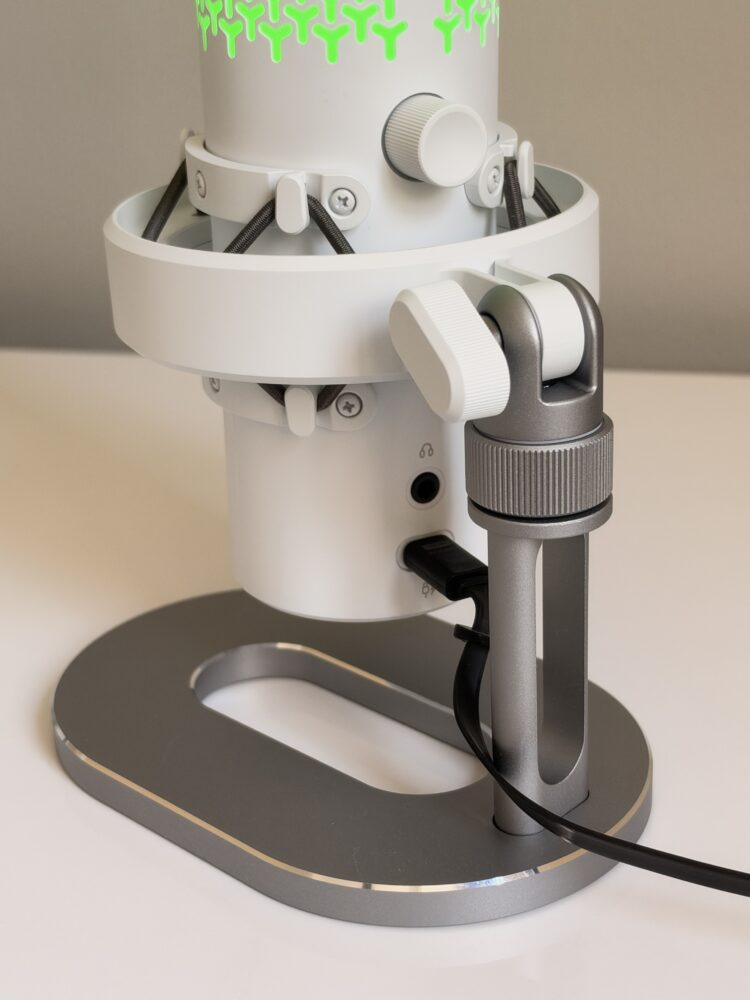
VOXARA’s silhouette is unmistakably CORSAIR, that tall cylindrical body wrapped in a diagonal mesh pattern that doubles as an RGB lightshow canvas. The housing itself is PC+ABS with an aluminum stand underneath, and CORSAIR lists the mic-only weight at 400 grams, with the full desktop package coming in at 619 grams. That’s a reasonably substantial package without tipping into “why do I need a boom arm just to lift this thing” territory. The stand itself offers 360-degree rotation and roughly 30 degrees of tilt, and it detaches cleanly if you’d rather mount VOXARA on a proper boom arm, with CORSAIR including both 1/4-inch and 3/8-inch adapters for the native 5/8-inch thread so you’re not stuck hunting for the right converter.
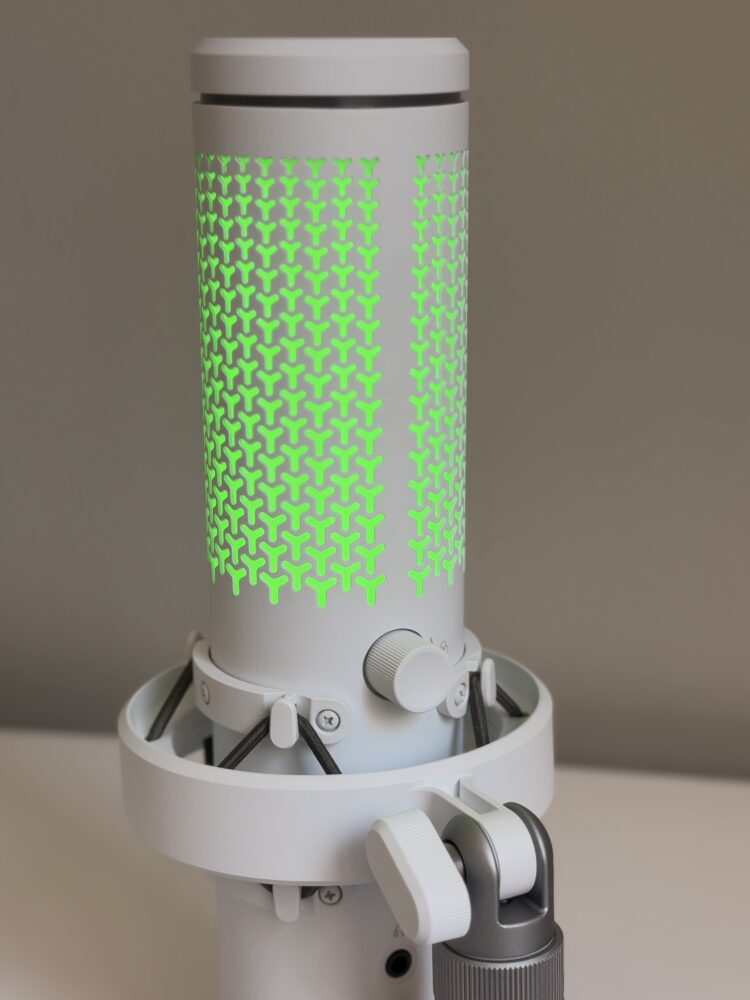
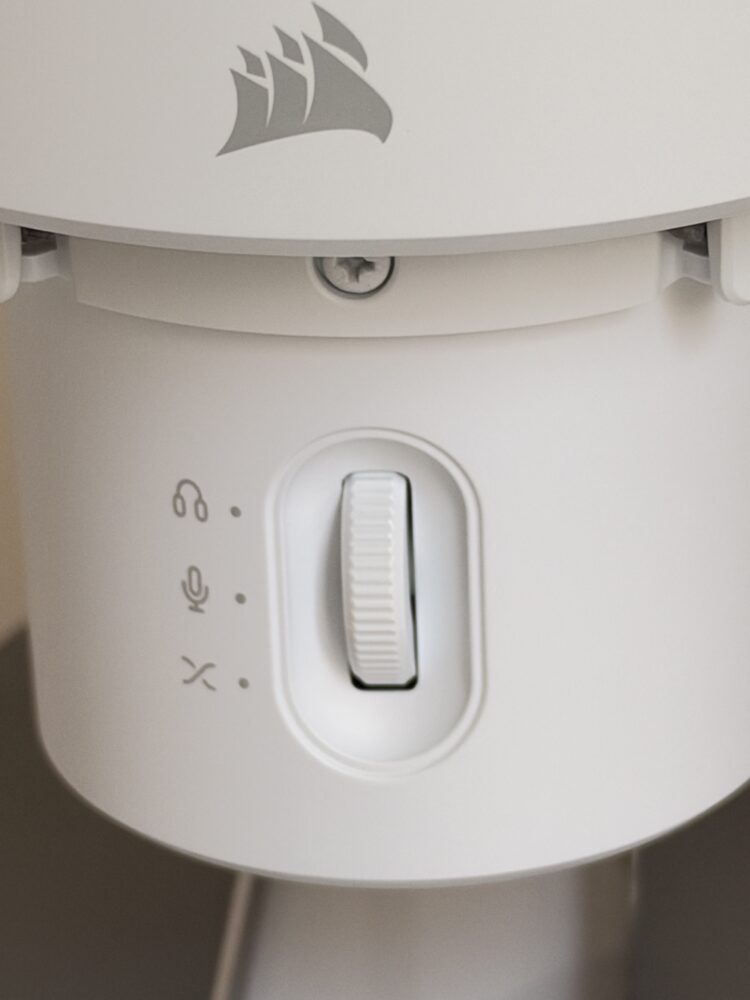
The control layout is where things get genuinely interesting. The front-facing volume and gain wheel cycles through mic gain, playback volume and sidetone balance with a single press, scrolling to adjust whichever mode is active, while the OLED display keeps all of that visible without you needing to alt-tab into software mid-stream. Flip the mic upside down for an inverted boom-arm mount and you can hold that same wheel for two seconds to rotate the display 180 degrees, a small touch that shows someone on the design team has actually mounted a mic on an arm before. The back knob handles RGB mode cycling independently, which means you’re never forced into software just to swap a lighting preset. It’s the kind of layered control scheme that either delights you or feels like overkill, and that really comes down to how hands-on you like your gear.
Audio hardware: specs that actually matter
Underneath the light show sits a 25mm electret condenser capsule with a cardioid polar pattern, paired with a 32-bit/192kHz audio engine, a frequency response spanning 20Hz to 20,000Hz, and a claimed signal-to-noise ratio of 73dB with a maximum SPL of 110dB. On paper, that’s a genuinely capable spec sheet, the kind of numbers you’d expect from mics that don’t try nearly as hard to look interesting on a desk. The cardioid pattern is the right call for a gaming and streaming mic since it’s tuned to reject noise from the sides and rear, which matters a lot more than most people realize until they’ve dealt with a roommate’s keyboard bleeding into a Discord call.
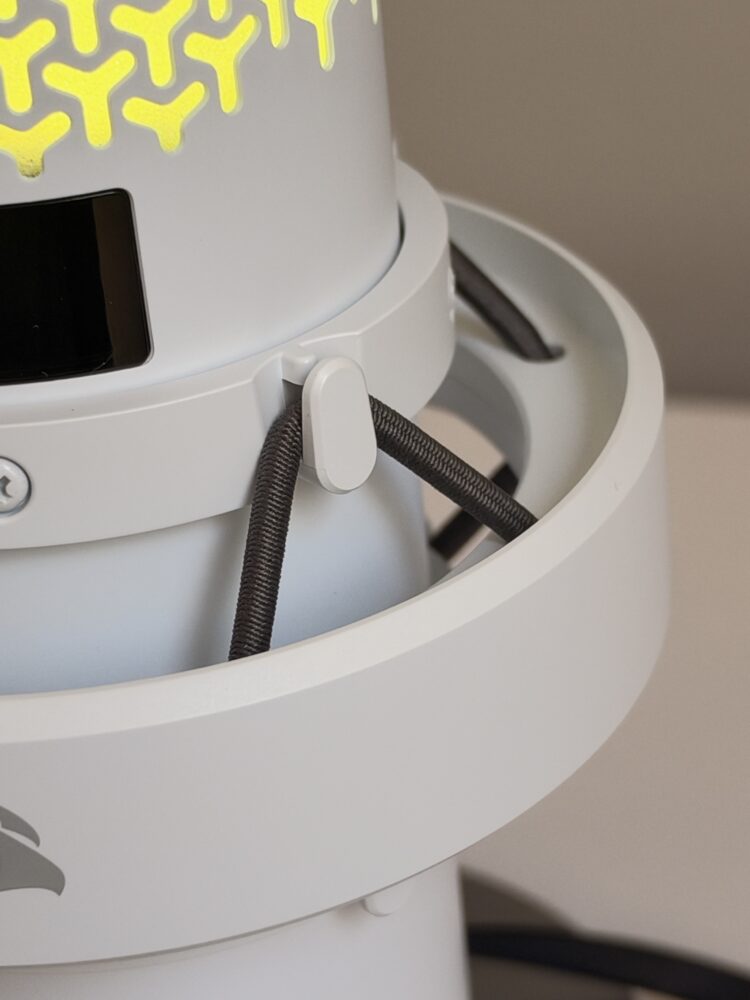
CORSAIR also built in a shock mount and pop filter directly into the housing rather than leaving you to buy a separate foam windscreen or shock cradle, which is a genuinely useful inclusion for anyone setting this up fresh out of the box. Desk vibrations and plosive pops are the two most common ways an otherwise decent mic sounds amateurish, so baking both mitigations into the hardware itself removes a step most first-time streamers skip entirely. Whether the capsule’s real-world warmth lives up to that “studio-grade” framing CORSAIR uses is something you’d want to judge with your own ears, since specs alone don’t tell you how a voice actually sits in the mix, but the underlying numbers put VOXARA solidly in the same conversation as other premium USB condensers rather than the budget tier.
Software and AI: Wave Link does the heavy lifting
Here’s the twist that makes VOXARA different from a typical CORSAIR peripheral: it doesn’t run through iCUE for its core functionality. Instead, it leans on Elgato’s Wave Link, the mixing and routing software Elgato built for streamers who need granular control over multiple audio sources. That’s a smart move on paper, since Wave Link already has a mature reputation for exactly the kind of multi-channel mixing a serious streaming setup demands, letting you create up to five separate mixes and route as many as eight channels, one for what your audience hears, another for your own monitoring, keeping Discord, game audio and your mic level independently balanced without a hardware mixer anywhere in sight.
The headline software feature is Voice Focus, an AI noise-removal engine developed with ai-coustics, that strips out keyboard clatter, fan noise and room reverb while isolating your voice, with a simple weak-to-strong intensity slider rather than a maze of sub-settings. That’s the kind of feature that matters enormously for anyone streaming from a bedroom or a shared space rather than a treated studio, since it tackles the acoustic problems most people can’t solve by just buying a better microphone. There’s a catch worth flagging clearly, though: effects like Voice Focus only apply when your applications pull audio through a Wave Link mix rather than selecting VOXARA directly as the input device, which means Discord, Zoom or your game needs to be pointed at a routed mix like “MicFX” rather than the raw mic. It’s not a difficult setup once you know it, but it’s an extra step that will trip up anyone who plugs in and expects the AI cleanup to just work immediately.
Lighting and customization: this thing loves attention
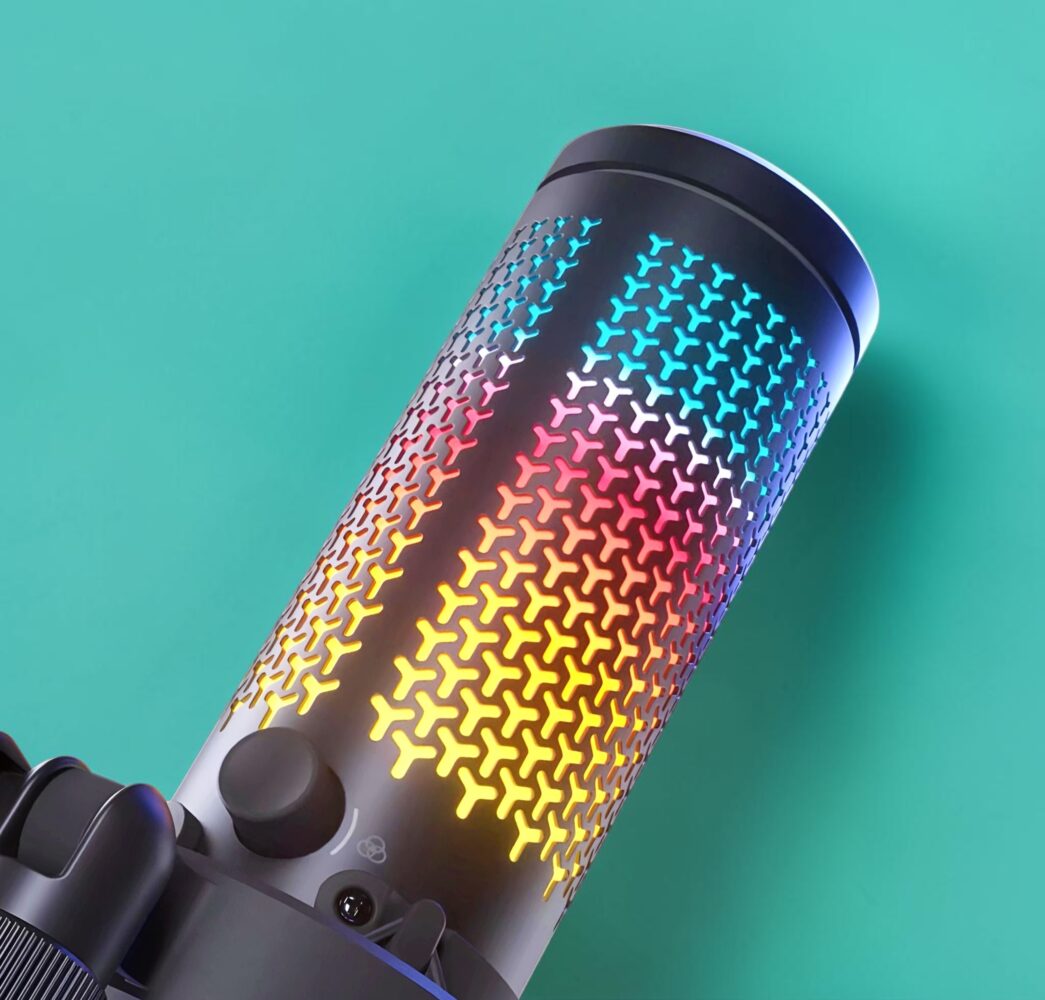
The RGB implementation here goes well beyond a single glowing ring. VOXARA supports a genuine Multi-Color category with five distinct effects, Rainbow, Horizon, Color Shift, Color Pulse and Watercolor, each with their own speed, direction or color-pair controls, alongside a six-slot Static color mode and a functional Level Meter mode that turns the entire lamp into a real-time gain visualizer. That last one is a nice practical touch dressed up as eye candy, since it gives you an at-a-glance read on whether you’re clipping without needing to stare at software. CORSAIR is also promising deeper integration through iCUE Murals for desktop-synced lighting, though that’s arriving as a public beta later in the year rather than shipping fully baked at launch, so early adopters should treat that particular feature as a work in progress.
Mute handling gets the same attention to detail as everything else. Tap the capacitive sensor and the indicator ring turns solid red with the RGB lamp cutting out entirely, an unambiguous visual cue that’s hard to miss even out of the corner of your eye, while unmuting flashes the ring white briefly before restoring your chosen lighting mode. Firmware updates get their own light language too, red flashing during the process and green on success, which sounds like overkill until you’re the streamer who’s accidentally live with a muted mic and desperately needs a signal that’s readable at a glance rather than buried in a settings menu.
Setup, compatibility and everyday use
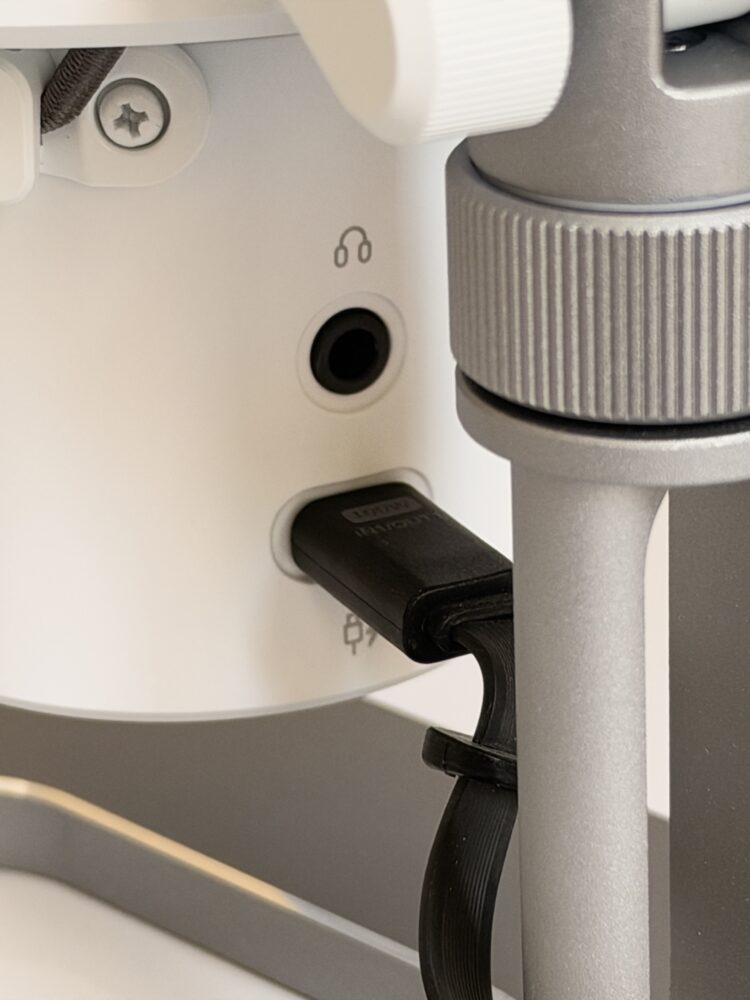
VOXARA connects over USB Type-C with a 3-meter cable and works as a genuine plug-and-play device straight out of the box on both Windows 10/11 and macOS 10.10 and up, no drivers required for basic operation. Wave Link itself is technically optional but effectively mandatory if you want the mic to do anything beyond capture audio, since firmware updates, Voice Focus, lighting customization and mixing all live behind that software layer, and the app itself needs Windows 11 or macOS 15 or newer to run. That’s a reasonable ask for anyone buying a mic this specced-out, though owners on older macOS builds should double-check compatibility before assuming they’ll get the full feature set. A 3.5mm headphone jack on the mic body handles real-time monitoring directly, which is a small but genuinely appreciated inclusion since it means you can check your own levels without routing audio back through your PC first.
Who should buy VOXARA, and who shouldn’t
This is a mic built for streamers and gamers who want serious capture quality without graduating to a full outboard mixer, and who’ll actually use the onboard controls and AI noise cleanup rather than letting them sit idle. If you’re the type who fusses over RGB profiles, wants at-a-glance monitoring without tabbing into an app, and streams from a room that isn’t acoustically treated, VOXARA’s combination of hardware controls and Voice Focus addresses real problems rather than just decorating a spec sheet. It’s a strong fit for anyone stepping up from a headset mic or an entry-level USB condenser who wants a visible, tactile upgrade to their setup.
If your priority is the absolute cleanest, most neutral capture for podcasting or voiceover work, or you’d rather run everything through a dedicated audio interface with XLR flexibility, VOXARA’s gaming-forward design and Wave Link dependency might feel like unnecessary complexity layered onto what could be a simpler signal chain. Anyone allergic to RGB or wary of a mic that leans this heavily on companion software for its best features should also weigh that trade-off before buying in.
Verdict
VOXARA is a confident, feature-dense entry into the premium USB gaming mic space, backing genuinely capable 32-bit/192kHz audio specs with an unusually tactile control scheme and AI-powered noise cleanup through Wave Link’s Voice Focus. The onboard OLED, dual-wheel control layout and built-in shock mount and pop filter show real thought went into everyday usability rather than just chasing a spec sheet. The dependency on Wave Link for the mic’s best features, including the routing quirk where effects require a virtual mix rather than direct selection, is worth understanding before you dive in, and the iCUE Murals integration is still landing as a beta rather than a launch-day feature. For streamers and gamers who want their microphone to be as expressive as the rest of their setup, without stepping up to a full studio rig, VOXARA makes a compelling case.