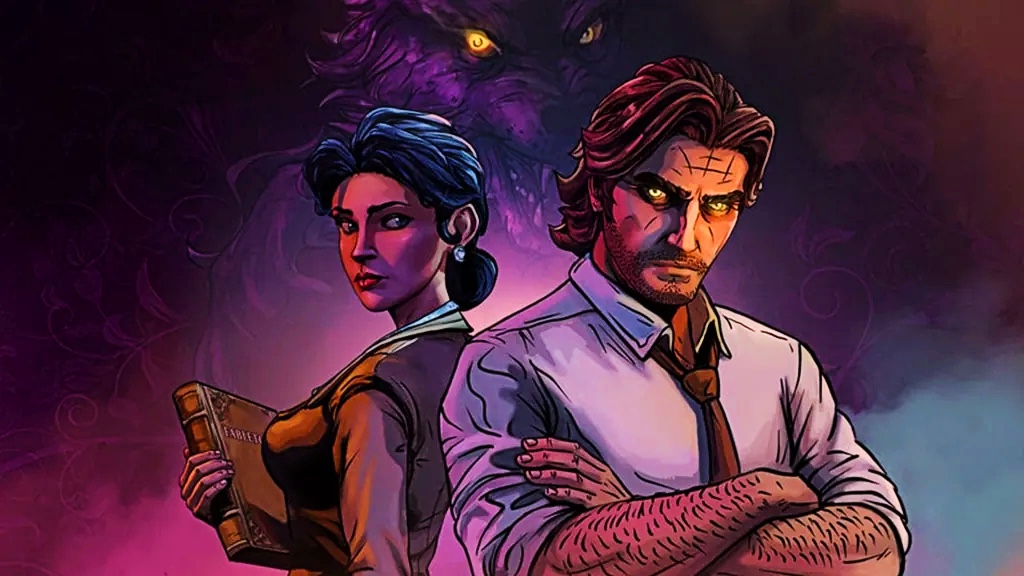
TL;DR: The Wolf Among Us Remastered gives Telltale’s noir fairy tale gorgeous new environments and worthwhile extras, though stiff animations and a saggy fourth episode remain. It’s still the best way to catch up before the sequel.
There’s a particular kind of dread that only good noir can produce: the sense that the city itself is rotten and that the person sent to clean it up isn’t entirely clean either. Telltale nailed that feeling back in 2013, at a time when the studio was flying high and episodic storytelling felt like the future of the medium. Thirteen years later, with a sequel finally on the way, The Wolf Among Us Remastered arrives to remind everyone why this one became a cult favourite. It’s also a chance for anyone who missed it the first time to get the whole story in one package. It succeeds at both, though not without dragging a few of its 2013 bad habits along with it.
Fairy tales, cigarette smoke and a headless body on the doorstep
The Wolf Among Us adapts Bill Willingham’s Fables comics, where characters from folklore and fairy tales live in hiding among regular New Yorkers in an enclave called Fabletown. Telltale’s take is a non-canon prequel set roughly two decades before the comics, which gives it the freedom to tell its own story without stepping on established continuity. You play Bigby Wolf, the Big Bad Wolf himself, now serving as Fabletown’s sheriff in a human-looking body and a trench coat that has clearly seen better days. The story kicks off with a murder grim enough to set the tone immediately, and the clues are frustratingly thin. What makes the case so tense is that the stakes go beyond catching a killer, because if the human world starts paying too much attention, Fabletown’s entire hidden existence could unravel. I found that this dual pressure, solve it fast and solve it quietly, gives the whole investigation a ticking-clock urgency that never lets up.
The real mystery is whether Bigby can change
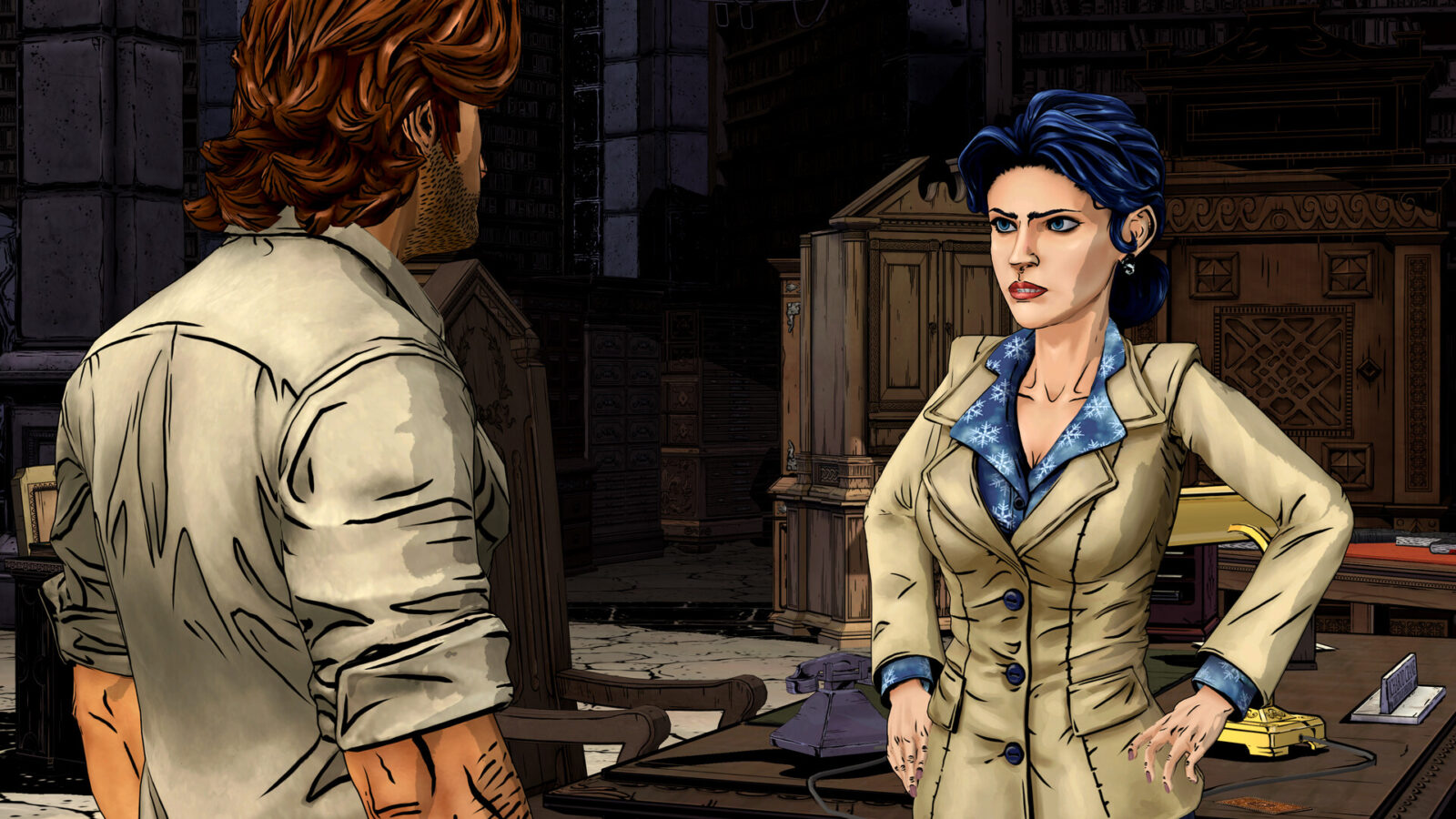
The smartest thing about The Wolf Among Us is that its central question isn’t really “whodunit.” It’s whether a creature with centuries of storybook villainy behind him can be trusted with a badge. The residents of Fabletown remember exactly who Bigby used to be, and they treat him with suspicion, resentment and sometimes outright fear. That tension colours almost every conversation, and it turns your choices into something more interesting than good versus evil. Allies like Snow White, the Little Mermaid and Bufkin, the flying monkey from Oz, help push the case forward, but even they keep a careful eye on how Bigby handles himself. As the investigation widens, it digs into poverty, class resentment and the way power gets abused by people who have it. What worked for me is that the game never lectures about any of this. It lets you see the cracks in Fabletown’s fairy-tale veneer and decide how much sympathy the people falling through them deserve.
Talk, threaten or throw a punch
Most of your time is spent in timed dialogue, picking from a handful of responses before the clock runs out. It’s a familiar Telltale formula, but here it carries real weight because every option is also a statement about who Bigby is becoming. You can be patient and decent with a witness who’s clearly holding back, lean on them with threats, or skip the conversation entirely and let your fists do the talking. The game’s well-known “they will remember that” prompts make those choices feel sticky, and characters genuinely carry grudges or gratitude into later scenes. Break a promise and someone will call you on it down the line, which makes even small decisions feel like part of a running ledger. What surprised me most is how naturally the writing folds fairy-tale vocabulary into hard-boiled dialogue. Magic Mirrors and enchanted glamours should sound ridiculous next to talk of murder and poverty, yet the script and cast sell it with complete conviction.
Investigating Fabletown’s grimy corners
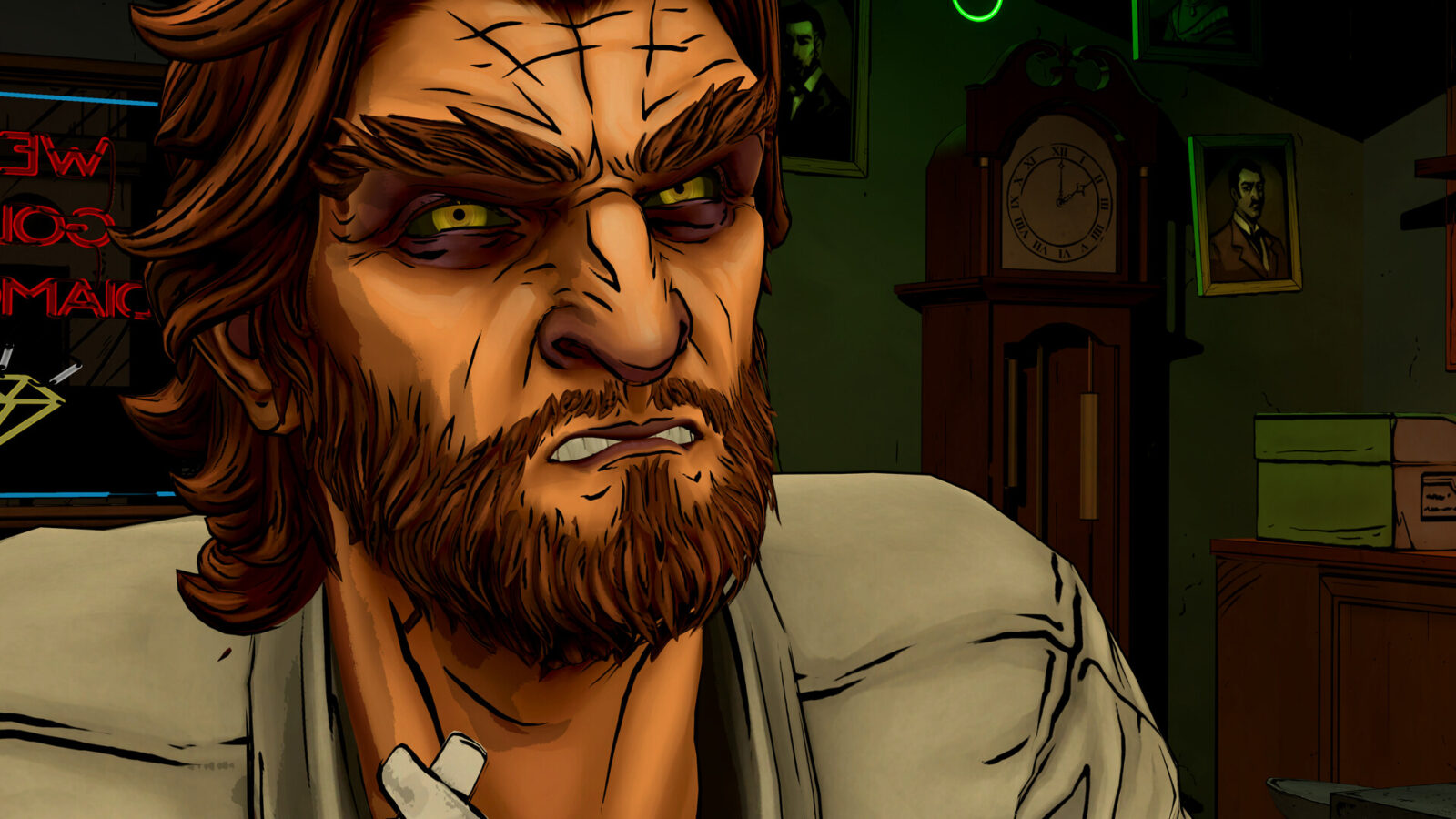
Between conversations, you take direct control of Bigby to poke around crime scenes and locations, examining objects and piecing together evidence. These segments aren’t puzzle-heavy, and anyone expecting a full detective sim should temper expectations. Their real value is that they extend the moral dilemmas into the physical space. Do you barge into a mourning gathering to ask your questions, or show some respect? Do you knock on a door or simply kick it down? The more I played, the more these small decisions felt like a test of self-control, because the game constantly tempts you toward the faster, nastier route. When someone obviously guilty is smirking at you, playing the good cop takes genuine restraint, and that friction is exactly the point.
Quick-time events that actually earn their keep
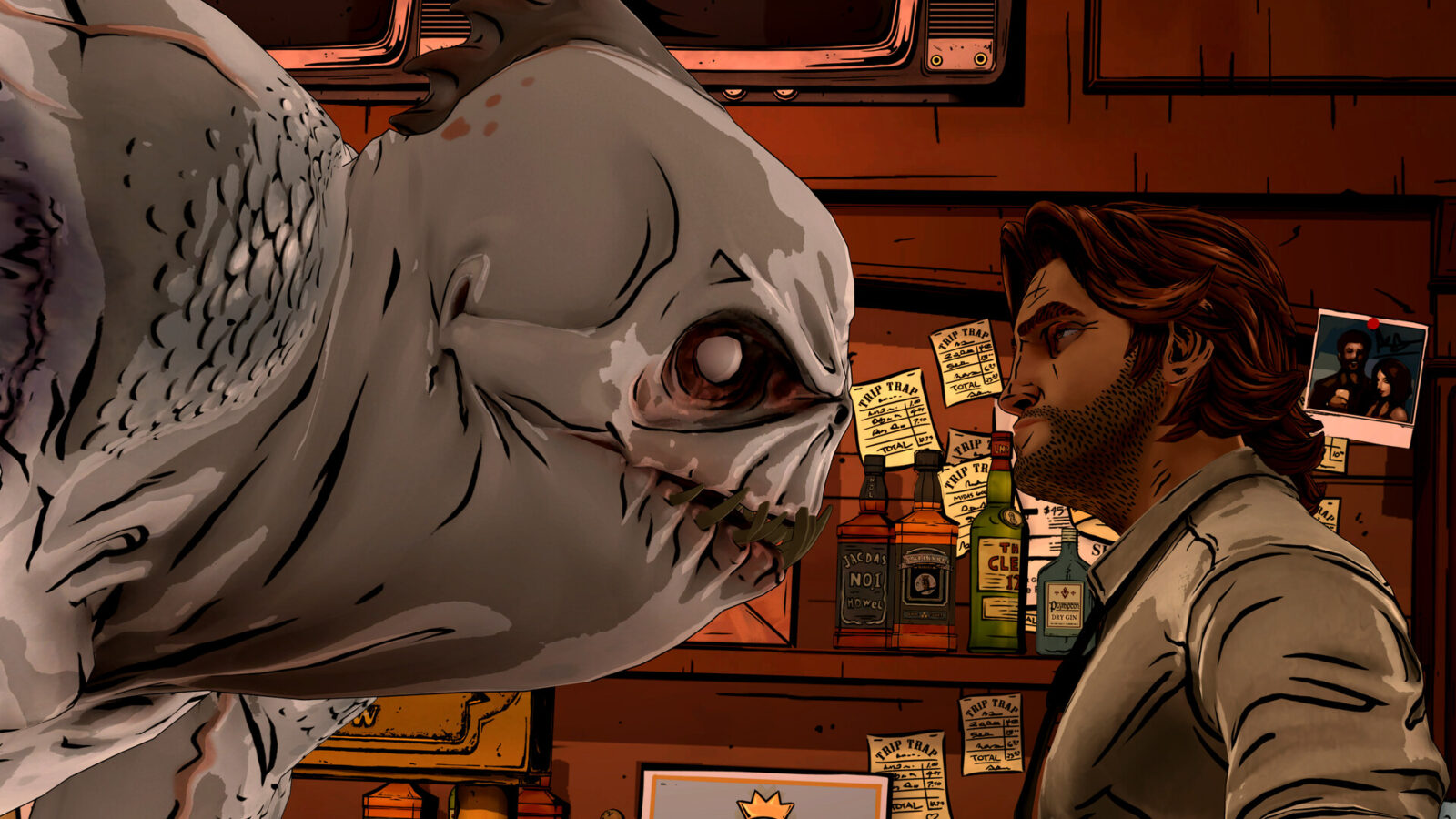
Action scenes run on quick-time events, which can be a dirty phrase in modern game design, but The Wolf Among Us uses them better than most. Bigby is a wolf in a man’s skin, and these sequences are where that animal side comes out, with leaps across city rooftops, savage brawls and even the grim business of setting a broken bone. Failing can end in a game over, which keeps you honest, but checkpoints are generous enough that a missed prompt rarely costs much. These moments come along frequently enough to break up the long stretches of conversation and investigation. Many of them are also brutal to watch, and the animation during these set pieces delivers the impact the story needs. They work less as tests of skill and more as punctuation marks, bursts of violence that remind you exactly what Bigby is capable of when the leash slips.
Five episodes, one awkward middle stretch
The remaster bundles all five episodes together, each running about two hours, so you can binge the whole thing rather than wait weeks between chapters the way players did in 2013. For most of that runtime, the pacing is excellent, and your choices feel like they’re shaping the momentum of the case. The exception is the fourth episode, where the story stalls. Characters revisit points they’ve already made, information you worked hard to uncover gets re-explained, and the tension sags at exactly the moment it should be tightening for the finale. It’s not a disaster, as there are still worthwhile conversations scattered through it, and the final episode does a strong job of pulling things back together. Still, in a story this sharp, two hours of treading water stands out. I understand why a remaster wouldn’t rewrite a chunk of its narrative, but it’s worth knowing the dip is still there.
A seedier, sharper Fabletown
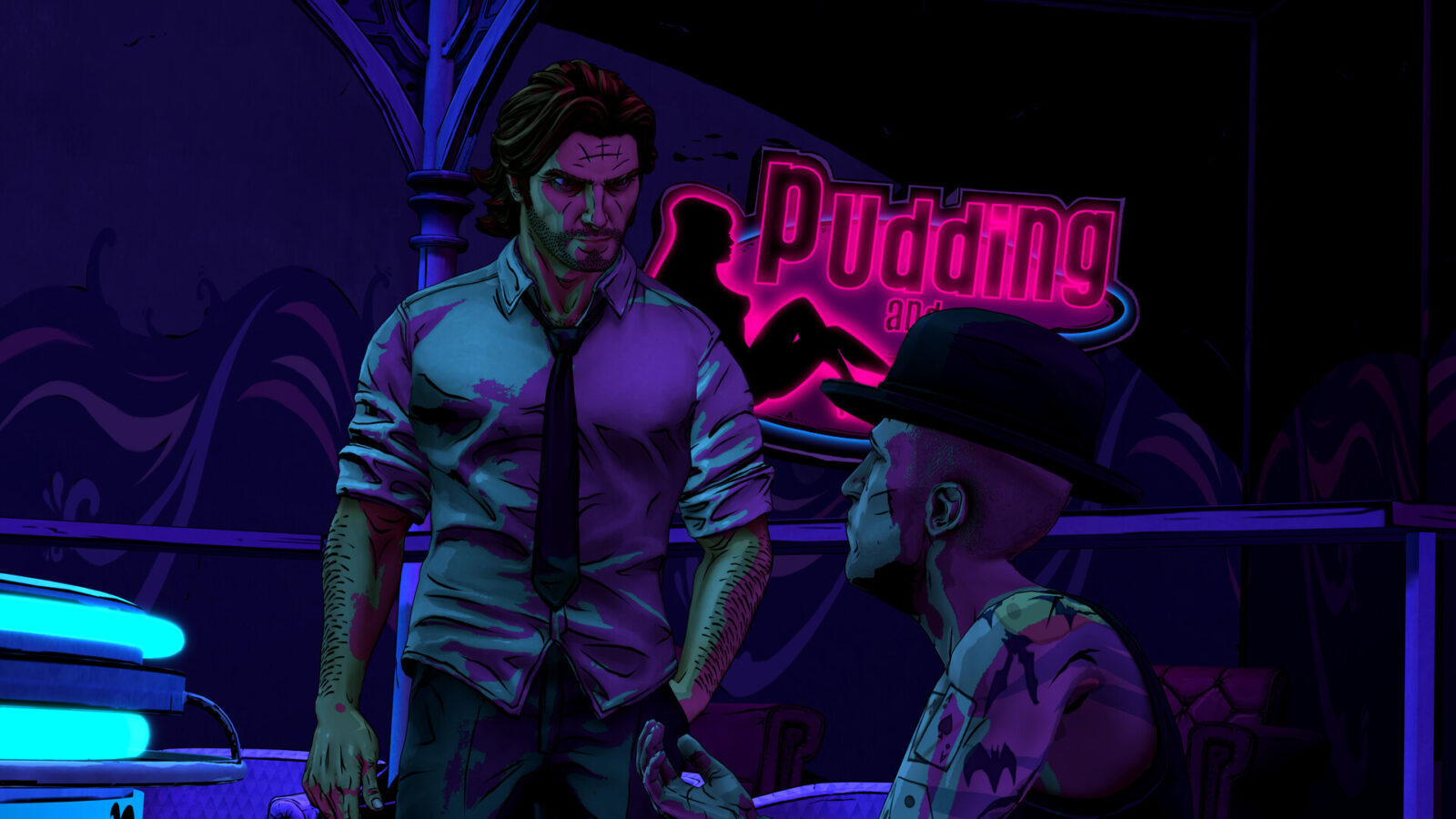
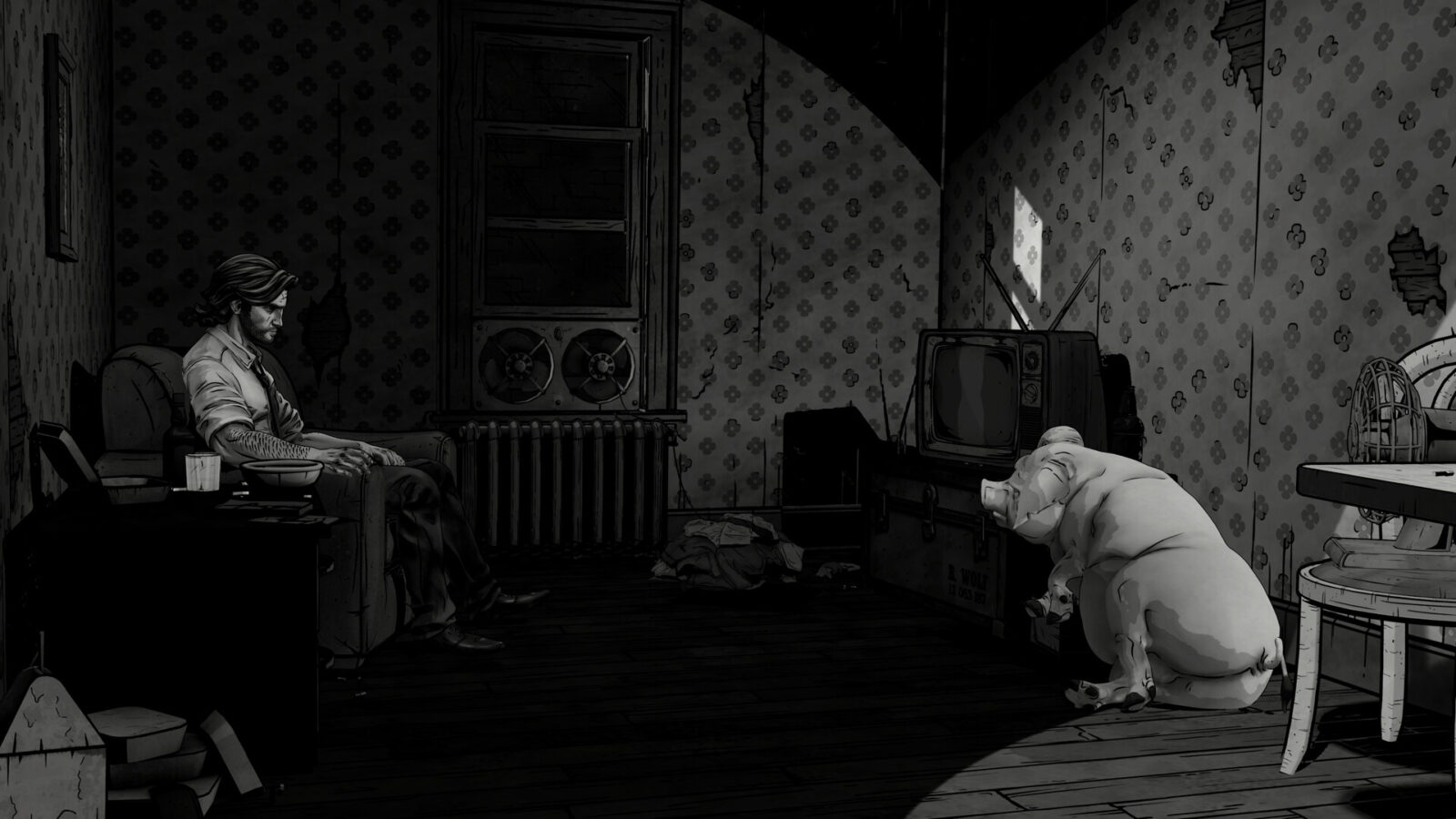
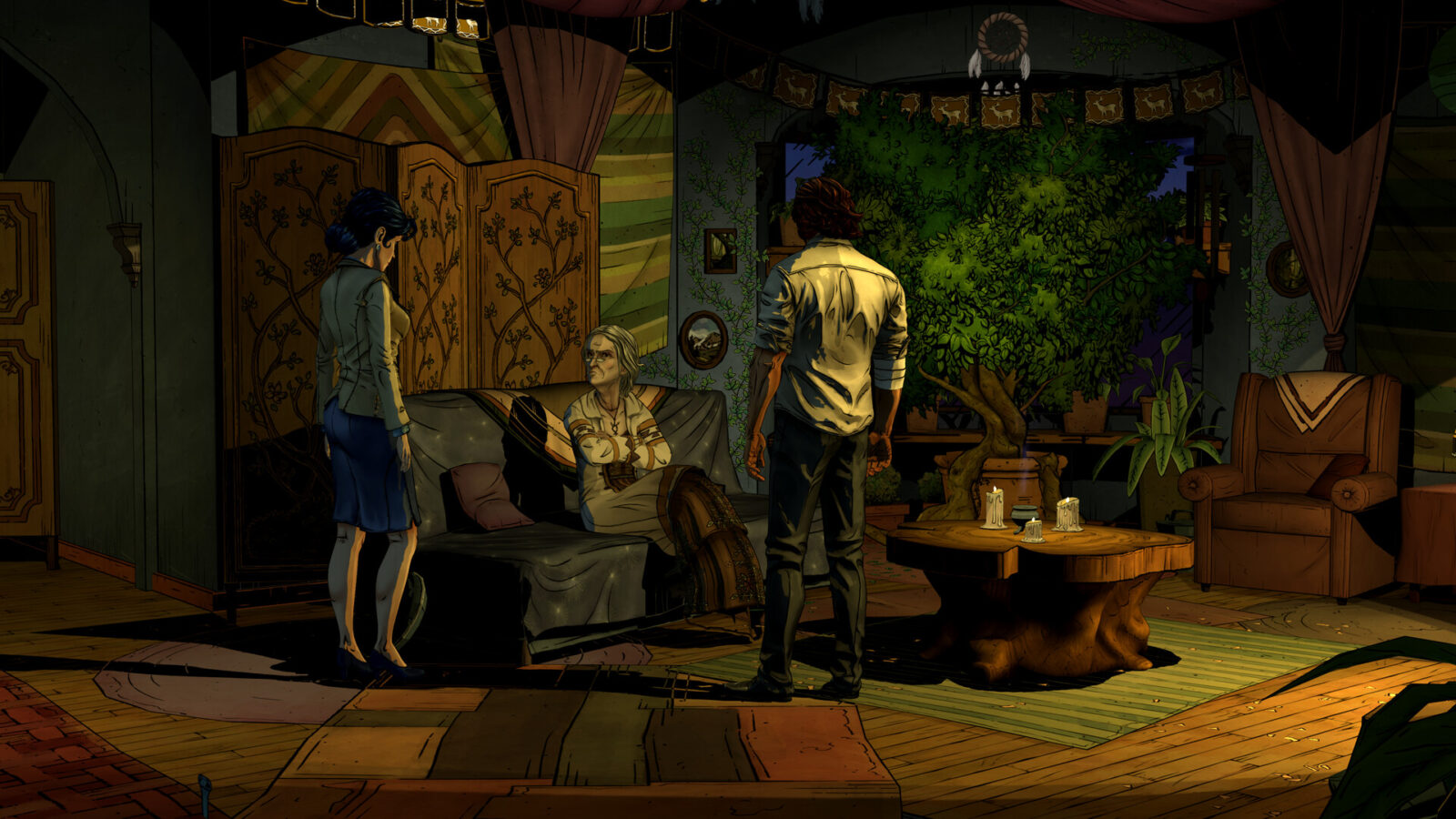
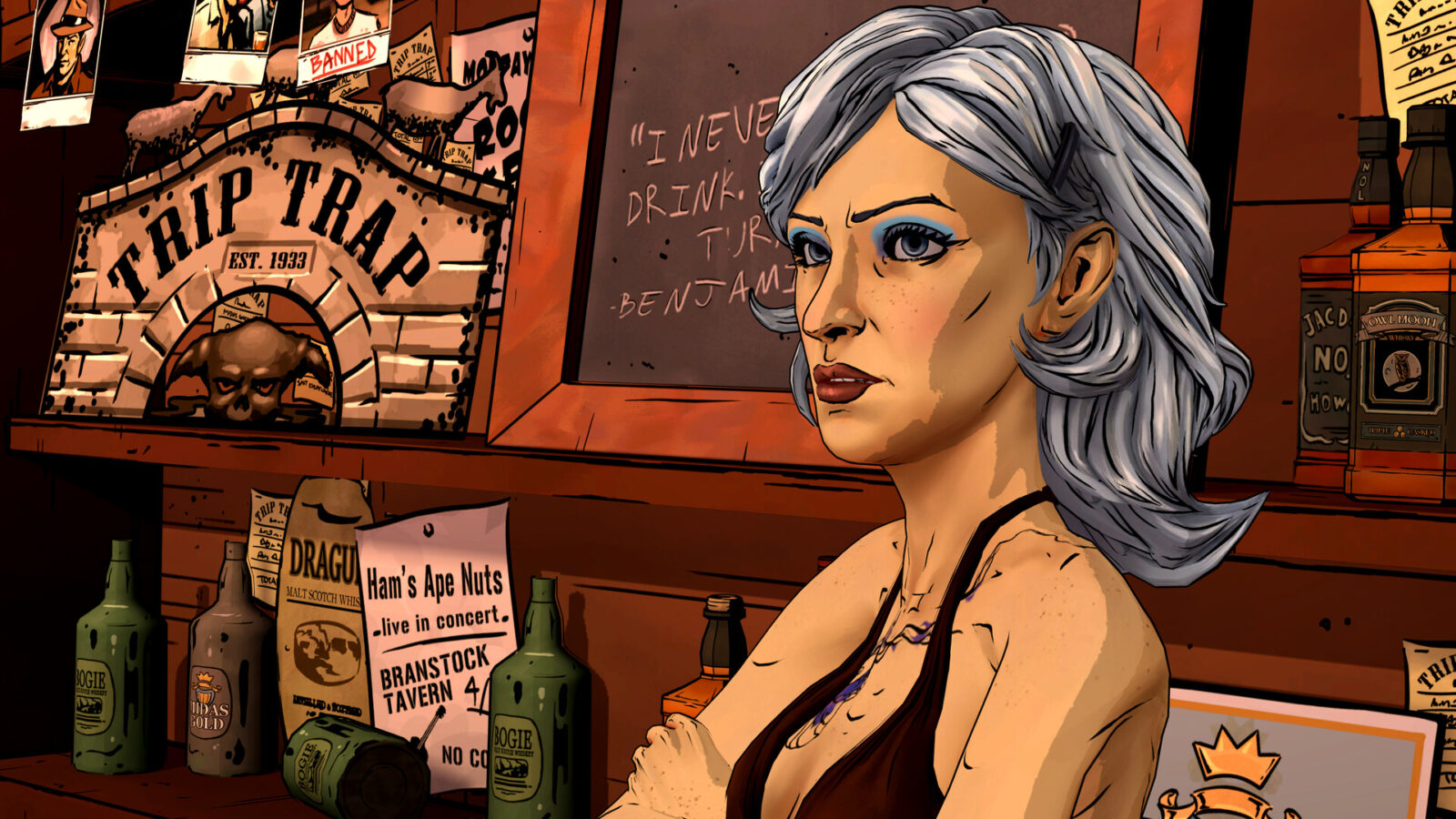
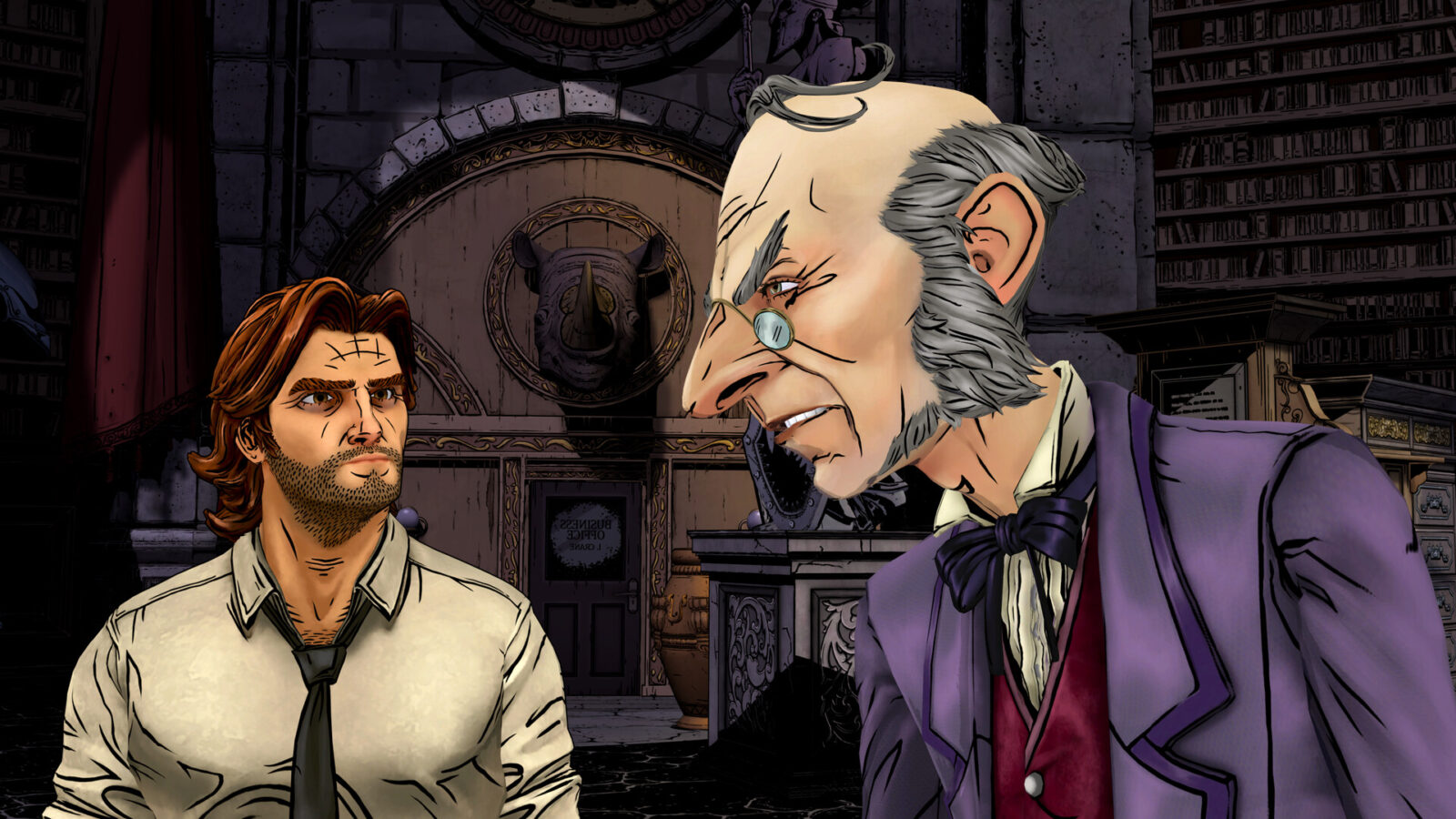
Where this remaster really justifies itself is in its environments. The original already used its locations to tell you about the people in them, and that approach shines even brighter here. Bigby’s cramped, barely furnished apartment says everything about his isolation, while the local bar feels rough around the edges but warm enough to keep its struggling regulars coming back. The upgrade layers in far more detail across the board, from furniture fabrics to the clutter in a pawn shop. Aunt Greenleaf’s apartment is now even more convincingly witchy, packed with tassels and odd trinkets, and the Puddin’ n’ Pie club keeps its sleazy glamour while gaining Art Nouveau-style pendant lamps and lavish neon. It’s the kind of upgrade that doesn’t just make things prettier but deepens the mood, giving the city a richer, more oppressive atmosphere to wade through.
Stiff joints that should have been loosened
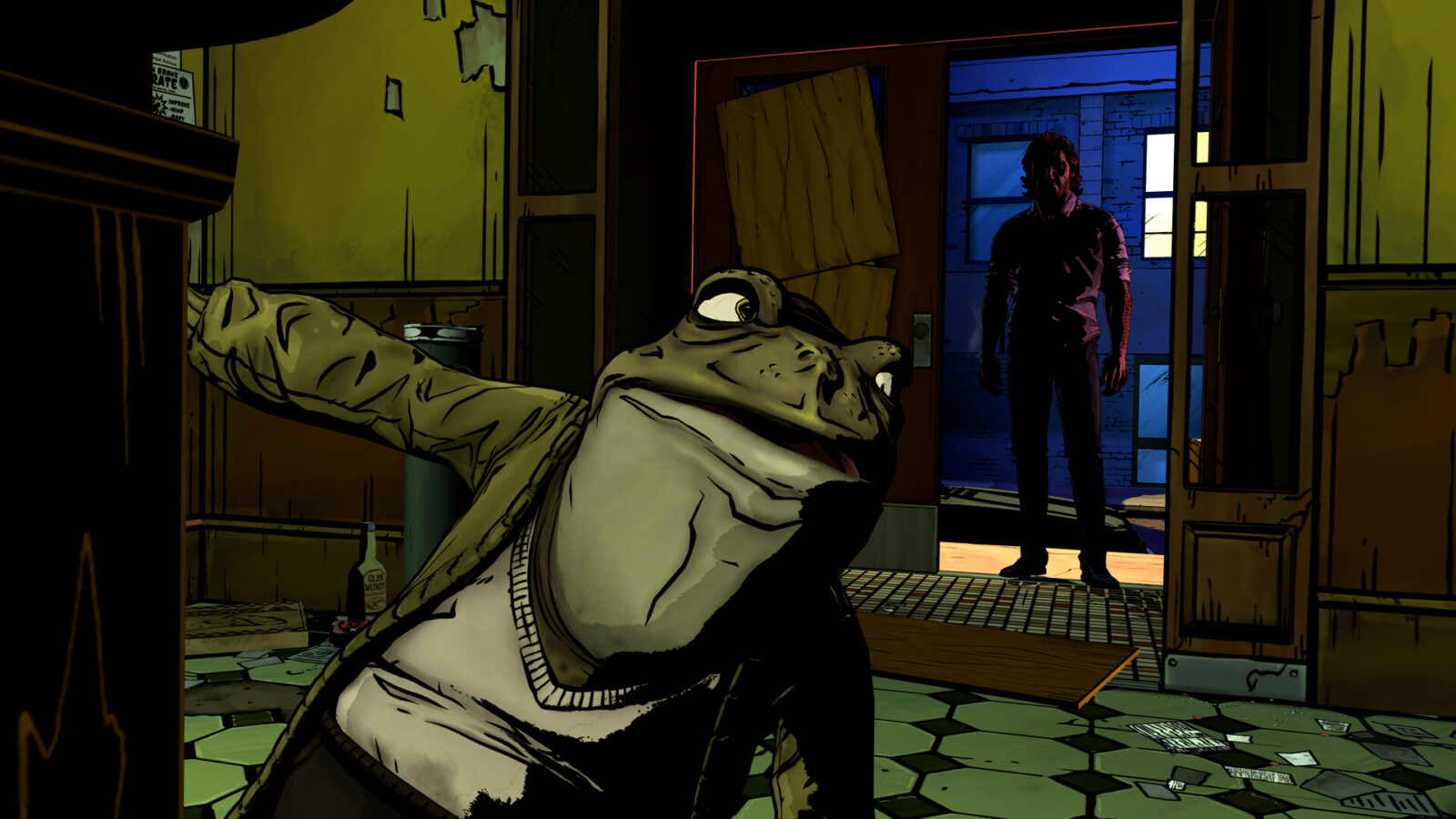
Unfortunately, the animation hasn’t received anywhere near the same care. Characters still rotate and shift in that slightly mechanical way that defined Telltale’s engine of the era, and Bigby’s clue-inspection animations remain noticeably rigid. Back in 2013, players forgave these quirks because the writing carried everything. In 2026, sitting next to such lovingly redesigned environments, the jerky movement and robotic motions are harder to ignore. It never breaks the experience, and the performances and writing are strong enough to carry you past it. But this is the single biggest reason the remaster falls short of feeling like the final word on the game, because it’s precisely the kind of rough edge a remaster exists to sand down.
Bonus features for the lore hounds
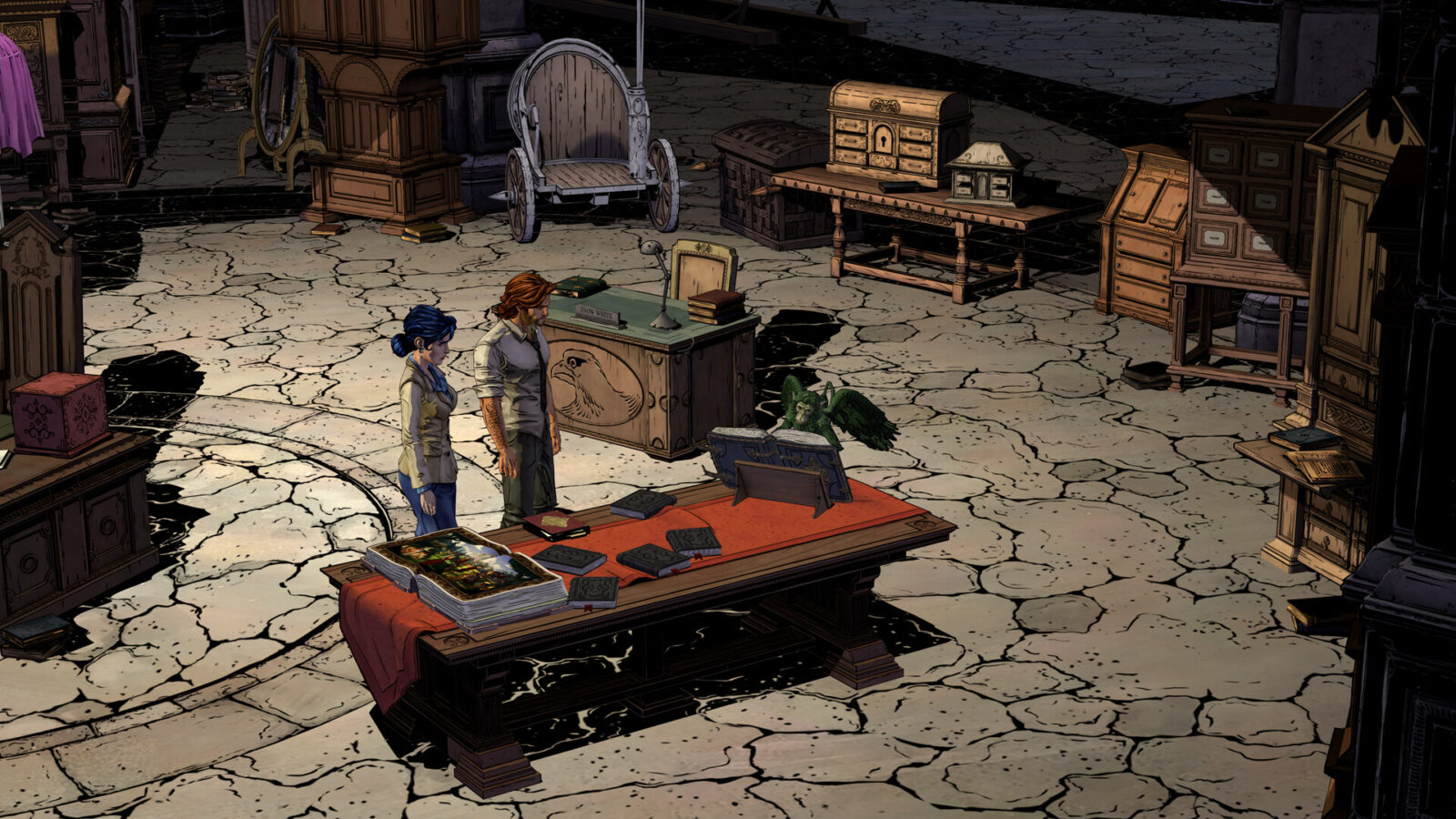
The remaster also comes loaded with extras that feel like a throwback to old-school DVD special editions. A Noir mode lets you play the entire game in black and white, which is a genuinely fitting way to experience a story steeped in classic crime cinema. There’s a gallery comparing original and remastered art, along with developer and cast interviews exploring how the game was made. The menus for all this lean nostalgic rather than practical and feel a little dated to navigate. The standout is a set of playable deleted scenes, which are rough but offer a fascinating look at plot threads and alternate directions that never made the final cut. For fans who already know the story inside out, these are the best reason to return.
Verdict
The Wolf Among Us Remastered is a reminder that great writing ages far better than technology. Its murder mystery remains gripping, its cast is excellent, and its biggest idea, that the sheriff’s real case is proving he isn’t a monster, still feels fresh and genuinely affecting. The redesigned environments add texture and atmosphere that make Fabletown feel grimier and more alive, while the extras, especially the playable deleted scenes and Noir mode, give returning fans worthwhile reasons to revisit. On the downside, the fourth episode’s sluggish pacing is untouched, and the stiff, dated animations clash noticeably with the improved visuals, leaving this short of being the definitive version. If you’ve never played it, this is easily the best way to experience one of Telltale’s finest stories ahead of the sequel. If you have, the visual upgrade and bonus content make a return trip worthwhile, as long as you can live with a few creaky joints.