
TL;DR: Orbitals pairs inventive two-player puzzle-platforming with gorgeous retro-anime style and constantly evolving cooperative mechanics. Find a partner and a Nintendo Switch 2, and Shapefarm offers a sharply focused argument for why dedicated co-op still matters.
There is a particular kind of chaos that only works when another human being is involved. One person understands the puzzle immediately, the other is staring confidently at completely the wrong piece of machinery, and somewhere between frantic instructions and accidental competence, everything suddenly clicks. Orbitals builds almost its entire identity around creating those moments.
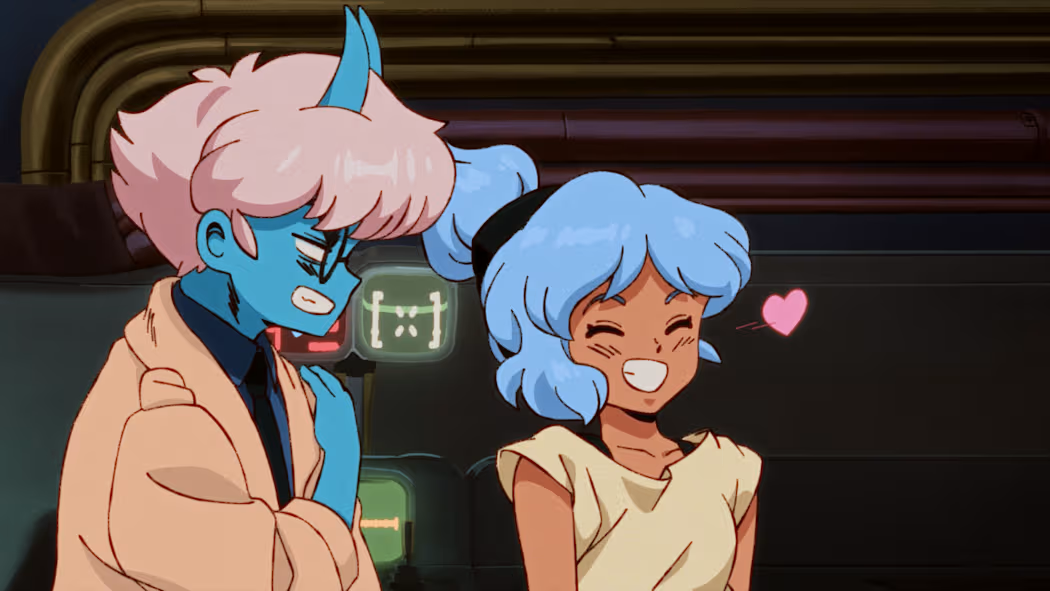
Developed by Tokyo-based Shapefarm, Orbitals is a Nintendo Switch 2-exclusive cooperative adventure designed specifically for two players, with no single-player option. Its young heroes, Maki and Omura, venture through unstable cosmic ruins using an assortment of physical tools while the game continually finds new reasons for both players to depend on one another. Great cooperative design needs to make communication, timing and shared discovery part of the mechanics rather than optional background noise, and that philosophy sits at the heart of Orbitals.
Two players aren’t optional — they’re the entire point
The shadow of It Takes Two inevitably hangs over Orbitals. Shapefarm co-founder Jakob Lundgren previously worked at Hazelight, and the game occupies the same relatively uncommon category of adventures constructed from the ground up around two-player cooperation. What gives Orbitals its own personality is how tightly it concentrates that philosophy, constantly looking for ways to make both players active participants rather than turning one into an occasional assistant.
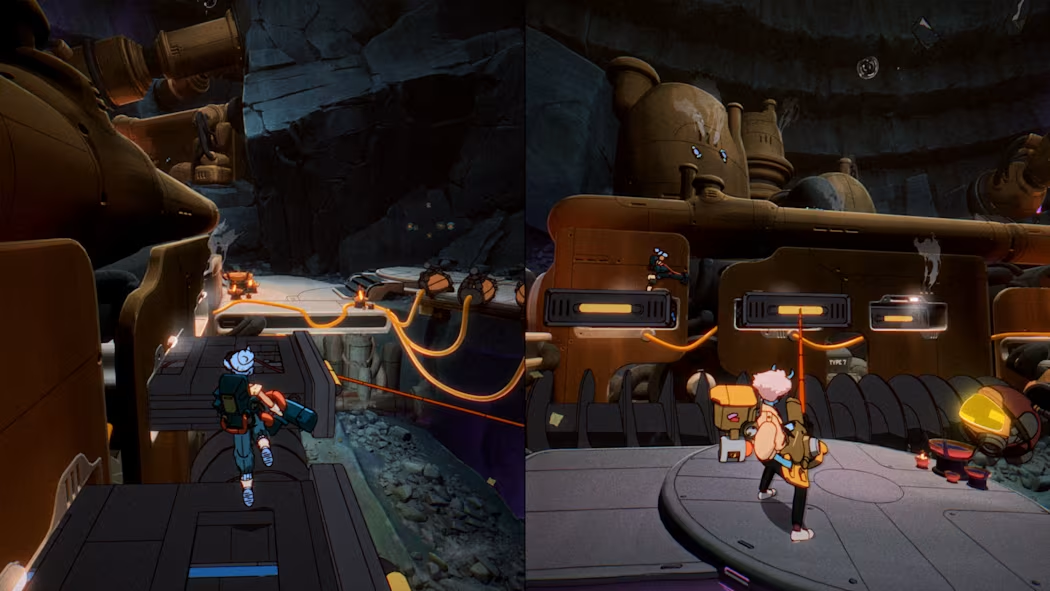
Maki and Omura explore using tools including a grappling hook, laser and water hose, but the interesting part is how their functions intersect. The water hose and laser can manipulate objects through freezing and thawing, while another sequence involves keeping a self-destructing robot charged as it helps the other player through a grappling challenge. These aren’t simply two characters standing on separate pressure plates until a door politely opens. Each player contributes to a mechanical relationship, meaning understanding what your partner needs becomes as important as executing your own part correctly.
Orbitals keeps changing the co-op conversation
Cooperative games have a pacing problem that single-player adventures can largely avoid. Repeat a mechanic too frequently and two people don’t simply master it; they stop needing to communicate about it. Once both players know exactly what happens next, some of that wonderful multiplayer chaos disappears, and suddenly you’re just two efficient employees operating the universe’s strangest warehouse.
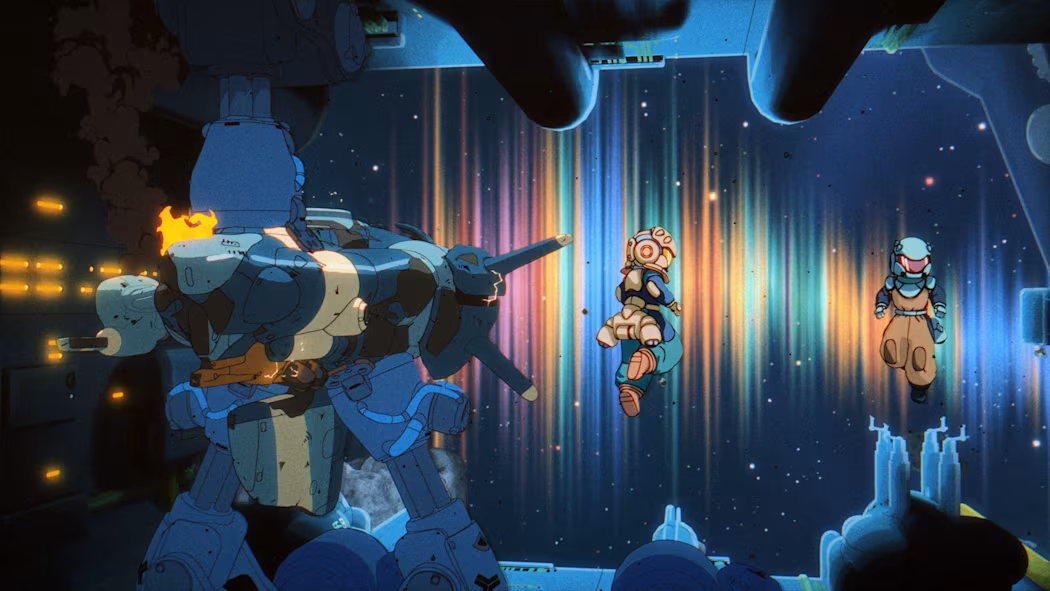
Orbitals tackles that problem by continually changing the context around familiar tools. Rather than endlessly throwing disposable abilities at players, Shapefarm recombines existing mechanics and changes each person’s responsibilities. The challenge isn’t removed in pursuit of accessibility either: platforming can demand precise timing and puzzles don’t necessarily reveal their solutions immediately, while instant respawns ensure failure doesn’t become tedious. That balance creates friction without wasting the limited time two people have managed to coordinate for a gaming session.
Even flying the ship is a team sport
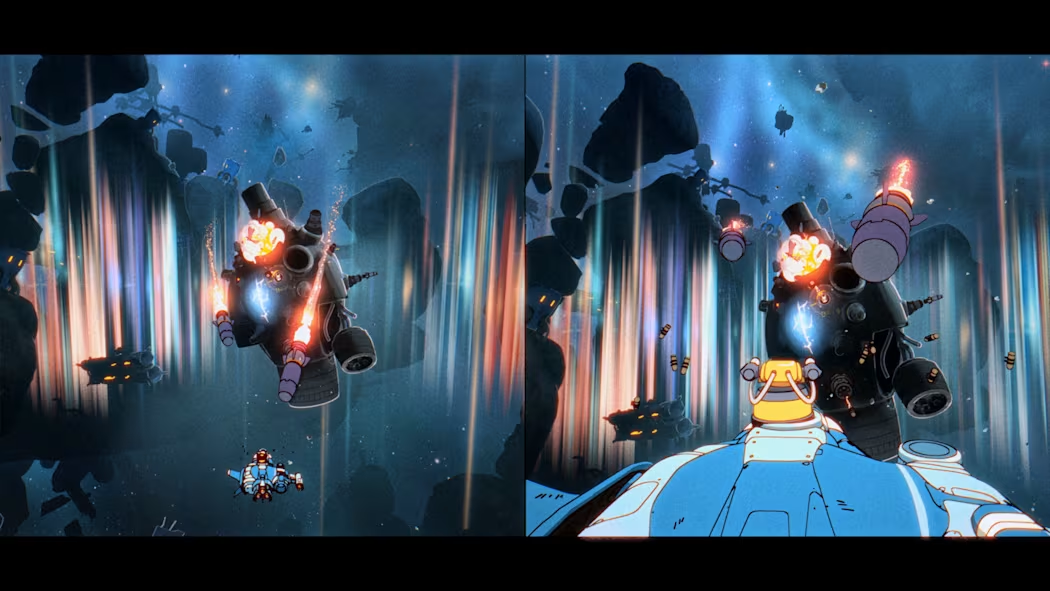
The cooperative philosophy extends beyond puzzles and platforming. Maki and Omura travel aboard a retrofuturistic spacecraft, with one player handling piloting duties while the other operates its gun. It’s another straightforward division of labour, but it reinforces the game’s central idea that progress is something the pair accomplish together rather than two individual journeys occasionally colliding.
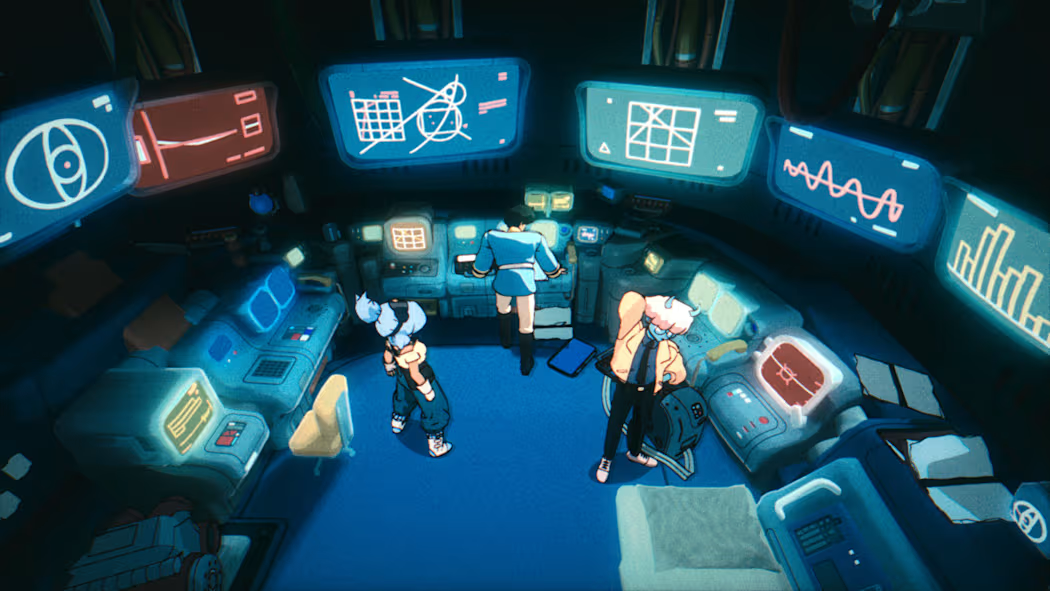
That consistency is important because weaker cooperative adventures can feel like collections of solo activities happening simultaneously. Orbitals repeatedly separates its protagonists’ responsibilities while keeping their outcomes connected, encouraging both players to find a rhythm and then adapt when the situation changes. You’re not merely sharing a screen with somebody else; their understanding of the problem effectively becomes another part of your control scheme. That dependency is precisely what makes dedicated co-op exciting when the design is strong enough to support it.
An anime adventure with actual visual identity
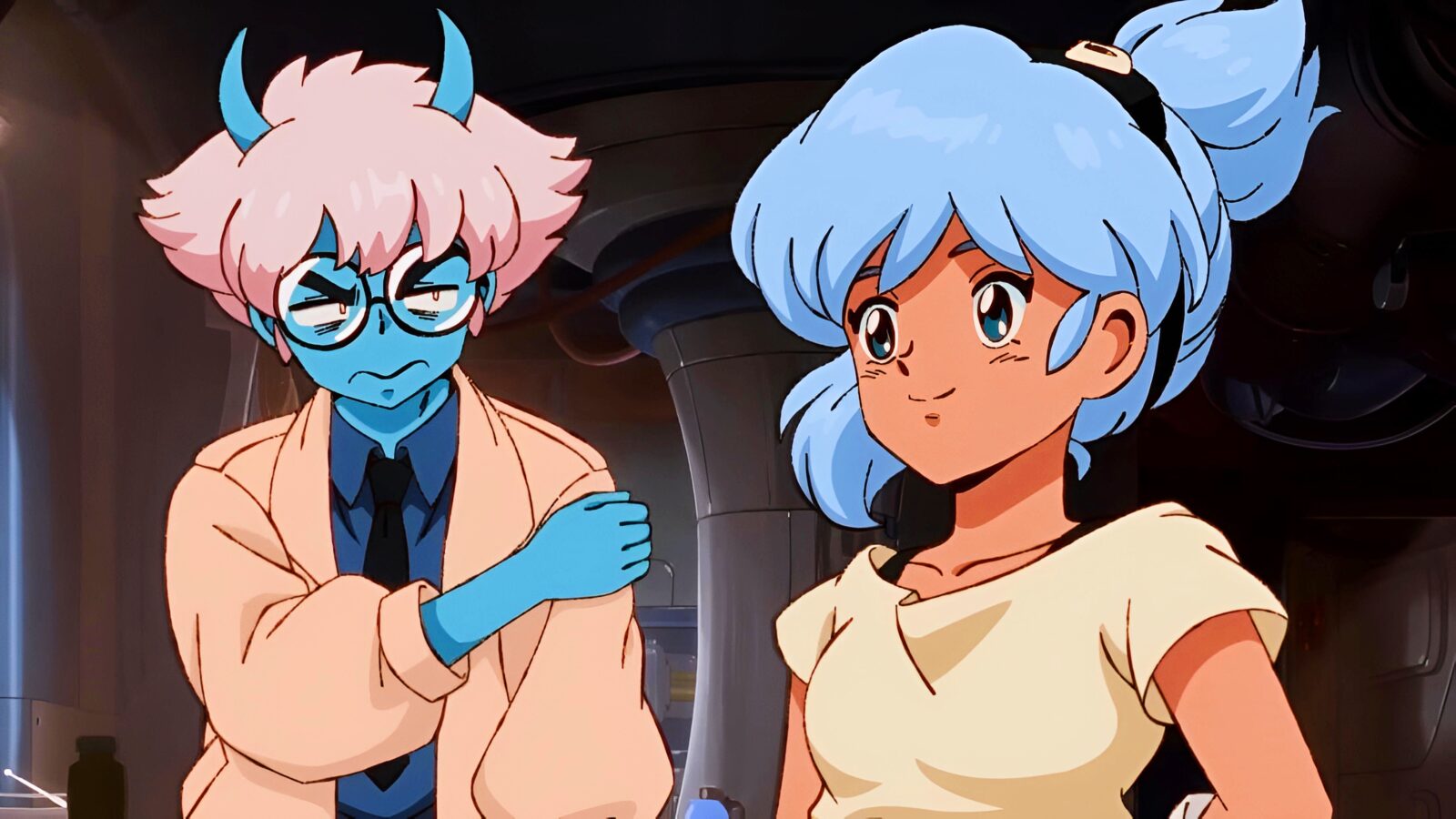
Mechanically, Orbitals has plenty to distinguish itself, but visually it isn’t exactly interested in arriving quietly either. Its presentation draws heavily from older anime, combining faded pastel colours with a deliberately soft image designed to evoke analogue animation and vintage displays. Shapefarm has cited Neon Genesis Evangelion and Cowboy Bebopamong its inspirations, but the aesthetic works because those influences inform an entire visual language rather than becoming a checklist of recognisable references.
The treatment of Maki and Omura is especially clever. Their 3D character models are animated in a manner that evokes the stepped movement of traditional 2D cel animation, creating a deliberately unusual look that complements their youthful personalities. It’s technically impressive, but more importantly, it serves the characters and tone. The colour palette, animation and retrofuturistic technology all feel as though they belong to the same universe, preventing Orbitalsfrom becoming another modern game wearing nostalgia as an Instagram filter.
A story smart enough to support the adventure
Orbitals doesn’t spend forever clearing its throat before getting started. Maki and Omura belong to a society aboard a space station threatened by a cosmic storm, and both survived an earlier space-time catastrophe when their consciousnesses were transferred into artificial bodies. Those bodies can regenerate, giving the game’s rapid resurrection mechanic an actual place within its fiction rather than simply asking players not to think about why these children keep returning from catastrophic accidents.
Their mission sends them into unstable ruins to recover and reactivate old equipment, providing the structural excuse needed to move between elaborate cooperative situations. The overarching objectives aren’t necessarily the narrative attraction; characterisation carries more of the weight, with Maki and Omura presented as enthusiastic young adventurers rather than hardened intergalactic heroes. Their energetic performances are available in multiple spoken languages, including English and Japanese, and the lighter storytelling approach leaves enough space for the real relationship at the centre of the experience: the one between the two people holding controllers.
Shorter can be smarter
One of the more interesting decisions behind Orbitals is Shapefarm’s acknowledgement that cooperative players have limited time. Getting two adults simultaneously available for a game can sometimes require more scheduling expertise than organising a Destiny raid, so the studio deliberately avoided making the adventure excessively long or punishing. Combined with immediate respawns and frequent mechanical variation, that philosophy puts momentum ahead of endurance.
That approach feels particularly appropriate for this genre. A dedicated co-op adventure gains little from stretching a good mechanic across another hour simply because somebody decided a larger playtime number looked better. Its currency is surprise: another strange contraption, another coordination problem and another moment where both players finally understand what the other is trying to accomplish. There is an unavoidable limitation, though: Orbitals requires another player and is exclusive to Nintendo Switch 2, making both a willing partner and Nintendo’s hardware mandatory parts of the admission price.
Verdict
Orbitals demonstrates why dedicated two-player adventures deserve considerably more attention. Instead of treating cooperation as a feature layered onto conventional platforming, Shapefarm makes dependency between players the foundation of its puzzles, traversal, gadgets and spacecraft sequences. Its clever combinations of the grappling hook, laser and water hose give both participants meaningful responsibilities, while forgiving respawns allow the game to challenge coordination without turning every mistake into wasted time.
Its gorgeous retro-anime presentation gives the adventure an identity beyond its mechanics, and Maki and Omura’s youthful energy fits a game more interested in playful momentum than overwrought drama. The requirement for two players and Nintendo Switch 2 exclusivity inevitably limits who can experience it, but those compromises are inseparable from how focused the design is. For two people looking for an adventure that genuinely gives them reasons to communicate, coordinate and occasionally accuse each other of spectacular incompetence, Orbitals makes an exceptionally convincing case for dedicated co-op.