TL;DR: Deified is a sharp, stylish tactical roguelite built around relic slots that grant power with strings attached. Fast, resource-free combat and deep synergies make it hugely satisfying, even if boss spikes, grindy unlocks and cluttered screens hold it back slightly. At $14.99, strategy fans should absolutely play it.
Deified is the kind of game that gets its hooks in quietly and then refuses to let go. On paper, it’s another turn-based tactical roguelite in a genre already crowded with Slay the Spire disciples and Into the Breach admirers. In practice, it builds everything around one clever idea that makes nearly every decision feel like signing a contract with a demon who reads the fine print better than you do. Relics only work once you put them in a slot, and each slot gives you a bonus and a drawback at the same time. That single rule turns gear progression from a loot shower into a series of uncomfortable negotiations, and I like it a lot.
It comes from a studio with a real pedigree in thoughtful strategy. Deified was developed by Unexpected, the French indie studio behind As Far As The Eye and looK INside, with Goblinz Publishing handling duties alongside a catalog that includes Legend of Keepers, Hero’s Hour, and Shogun Showdown. That company makes sense, because Deified shares Shogun Showdown’s love of tight, readable puzzles with sharp teeth. It launched in Early Access on April 27, 2026, before its full release on September 21, 2026, and sells for $14.99.
A Wagnerian setup with cursed gold and fallen Lords
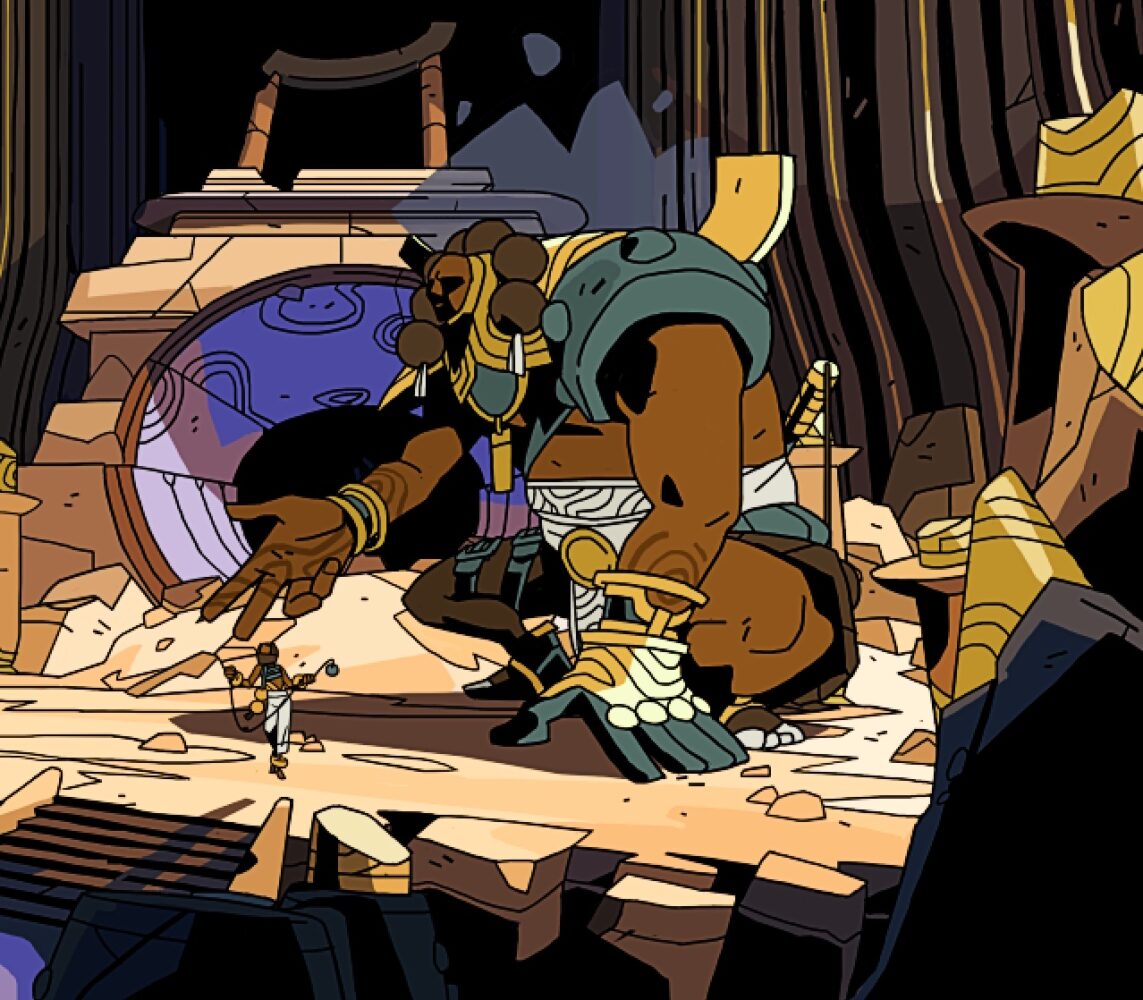
The premise borrows from the same mythological vault as Wagner’s Ring cycle, which is a deliciously nerdy foundation for a game about power that ruins whoever holds it. The Lords have corrupted the Gold of the Rhine to forge relics of enormous power along with eternal curses, and you play as Sator, set on confronting these figures, learning from their failures, and taking back the gold across seven boss encounters. It’s basically the rings of power problem: everyone who wanted the shiny thing became something worse. The narrative framing does a smart job of justifying the mechanics, since every reward you earn literally carries a curse.
The Lords themselves are more memorable than the setup suggests. Ego, for instance, is a theatrical figure whose obsession with adoration bleeds directly into the way his wing plays, which is exactly how a roguelite should marry story and systems. The full release also rounded out the experience in a meaningful way. Version 1.0 added unlockable Prophecy cutscenes, proper intro and ending cutscenes, a new boss for the final stretch, a second character named Brunehilde with her own stats and synergy tiers unlocked after beating the six Lords, and a dedicated Boss Rush mode for her. I wouldn’t call the story the main reason to play, but it gives the climb a destination worth reaching.
No mana, no action points, and a much faster rhythm because of it
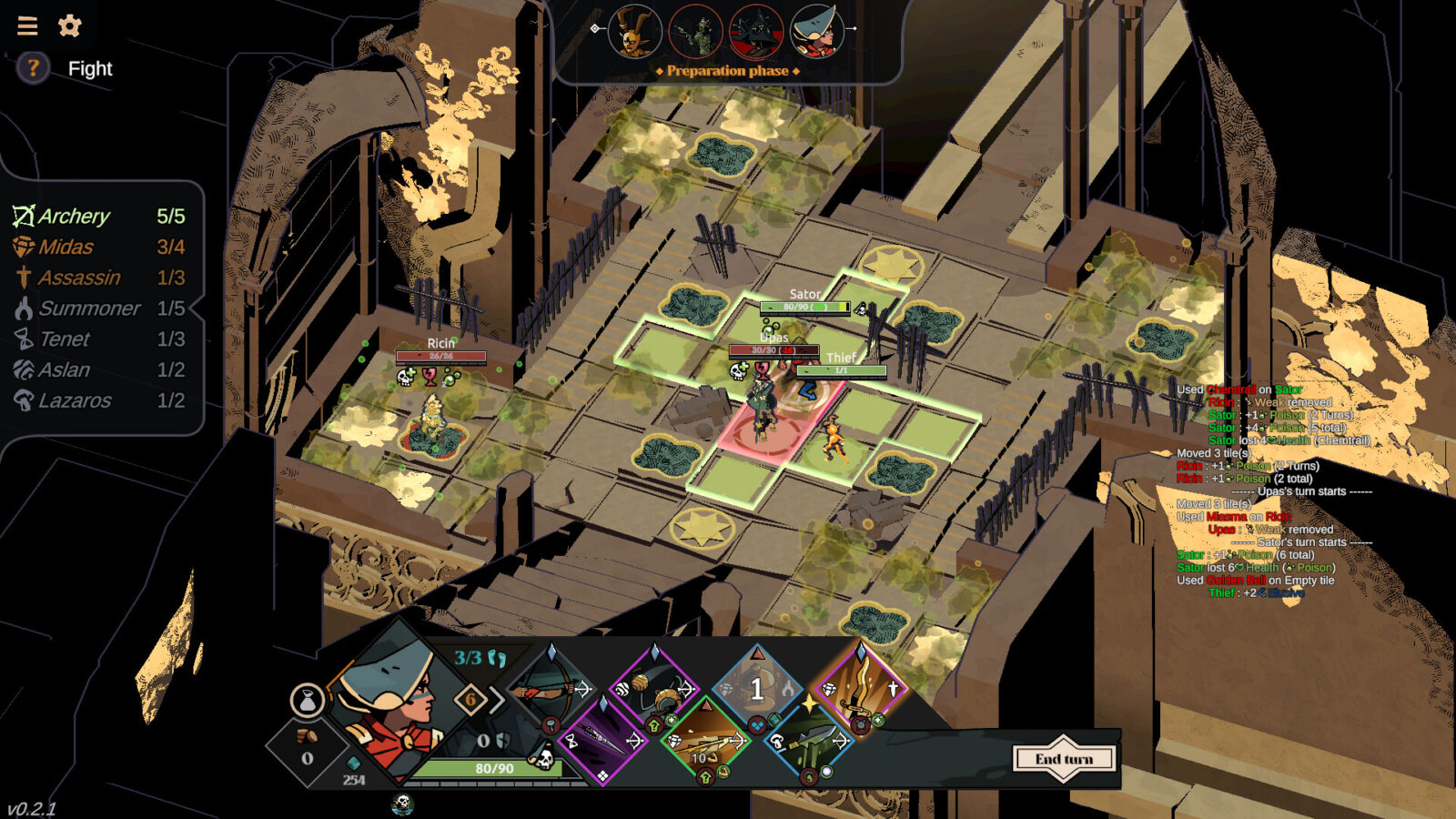
What I appreciate most about Deified’s combat is how much friction it removes without removing depth. The game makes a point of having no mana, no action points, and no cooldowns, so you’re powerful every turn. Your only real in-battle resource is movement points, which keeps turns brisk, and once you understand the systems you can often execute a full turn in under 30 seconds while the enemy AI responds just as quickly. For anyone who finds traditional tactics games a little ponderous, that pace is a genuine selling point. It feels closer to a chess puzzle than a spreadsheet simulator, and I never felt bogged down by bookkeeping between actions.
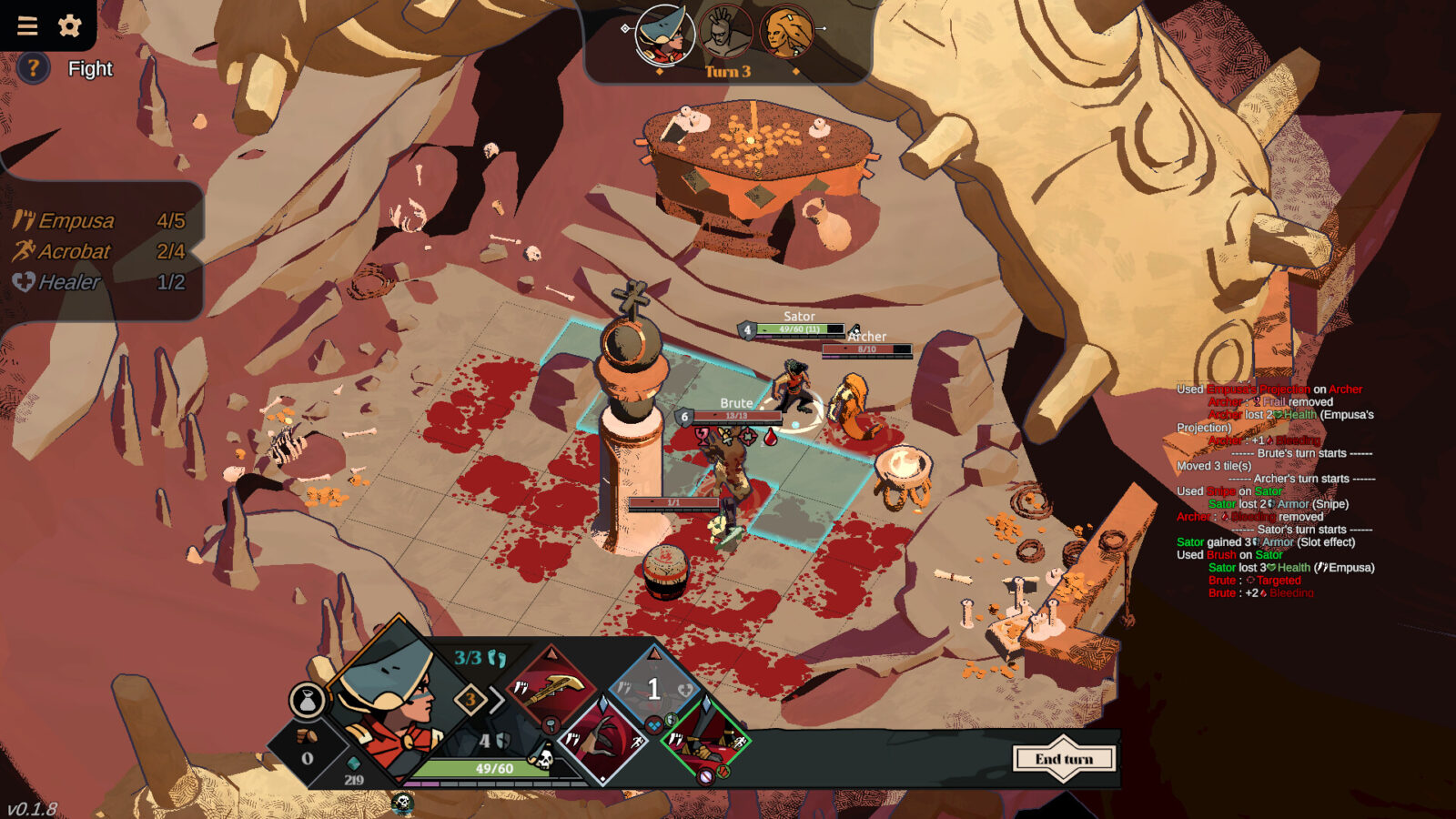
The catch, of course, is that freedom from resource management doesn’t mean freedom from consequences. Sator has very low health and can die extremely quickly after a single wrong move, so positioning and target priority matter far more than raw damage output. Enemy passives drive much of the decision-making: Body Guards attack anything within range that hits an ally, Managers swap places with a Reflection at the end of each turn, and Reflection users move and deal damage through mirror copies. Reading the board correctly is the whole game, and getting it right feels fantastic.
The slot system is Deified’s best idea and its beating heart
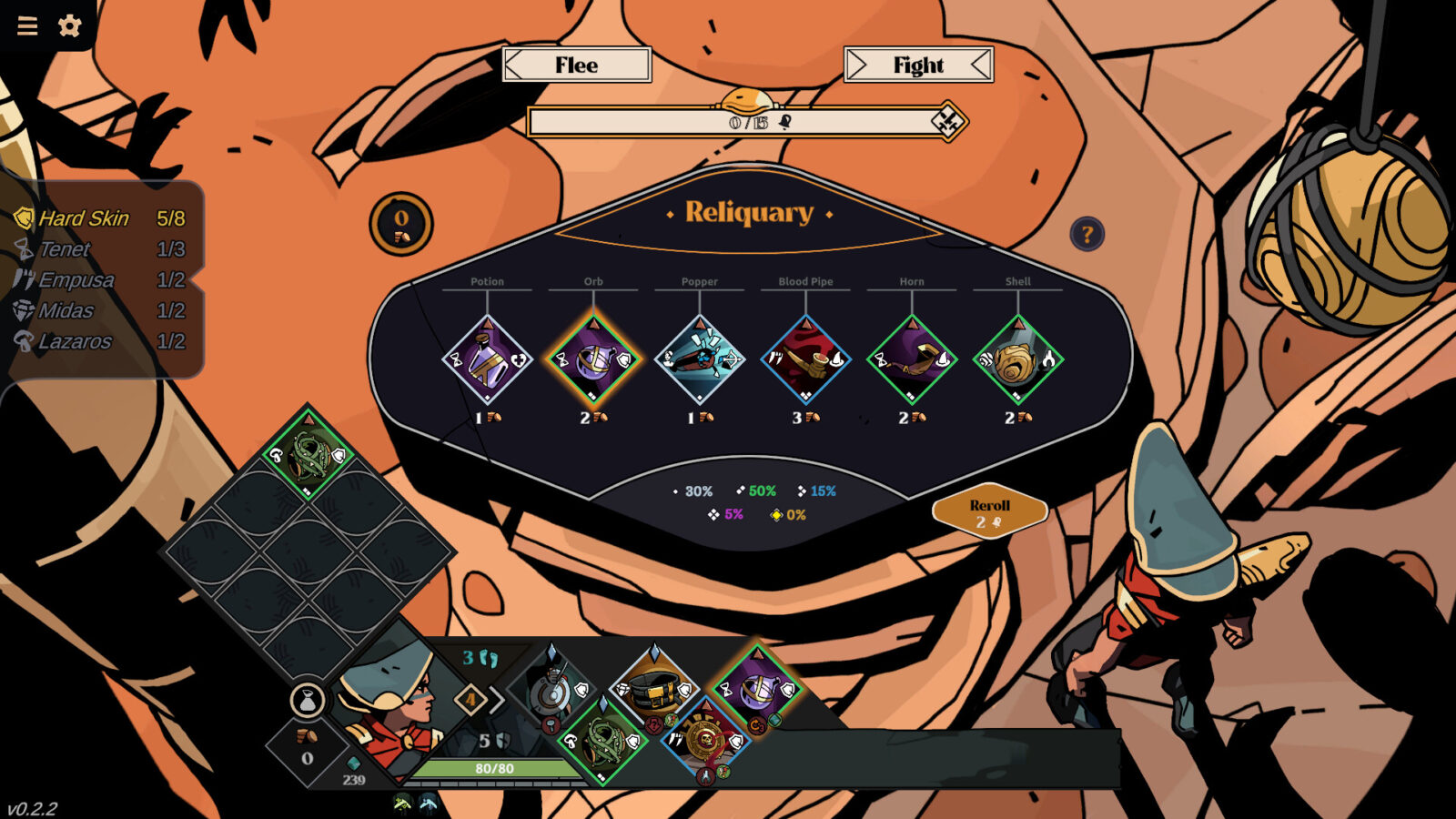
This is where Deified separates itself from the pack. Each slot offers a bonus and a drawback that shape your strategy, and some of the trade-offs are wonderfully mean. One slot adds a Pull ability but teleports you to a random tile, another inflicts Poison on enemies hit while stripping half your Armor on use, and another deals bonus damage to the farthest enemy while cutting your Effectiveness. The Pull example is my favourite kind of design, because the benefit is a positioning tool and the drawback scrambles your positioning, so you have to evaluate them together rather than separately. It’s a monkey’s paw system, and it consistently makes upgrades feel like decisions instead of formalities.
The game also gives you a way to clean up past compromises, which keeps the system from feeling punishing. The Forge’s Reforge option can remove a slot’s negative modifier later in a run, so a risky early pick can mature into a cornerstone of your build. Relics are restored by assembling multiple identical fragments, and collecting relics of the same type triggers synergies. That layering of slot, synergy and restoration is what gives Deified its longevity, because every run asks a slightly different question.
Synergies give each run a real identity
Builds in Deified tend to form around a Lord’s relic family rather than random high-rarity drops, which is a big part of why runs feel distinct. Tenet relics, for example, use time-reversal effects that link movement to repeated abilities, making the order of your actions within a turn part of the build itself. Yes, it’s named exactly what you think, and yes, it’s as brain-bending as the Nolan film, just with fewer people shouting about entropy. When a synergy clicks, you go from scraping by to dismantling rooms in a way that feels earned rather than handed to you.
There’s a pressure valve outside combat too, which I think is underrated. Selecting or rerolling relics in the Reliquary builds Noise until a visit becomes a mandatory fight, and fleeing a fight means giving up its rewards. It stops you from endlessly fishing for the perfect relic, and it forces the same kind of risk assessment that defines the combat. Players frequently compare it to Slay the Spire, Hades and Teamfight Tactics, and the diversity of viable builds is regularly singled out as a major strength.
Boss fights and progression are where the climb gets steep
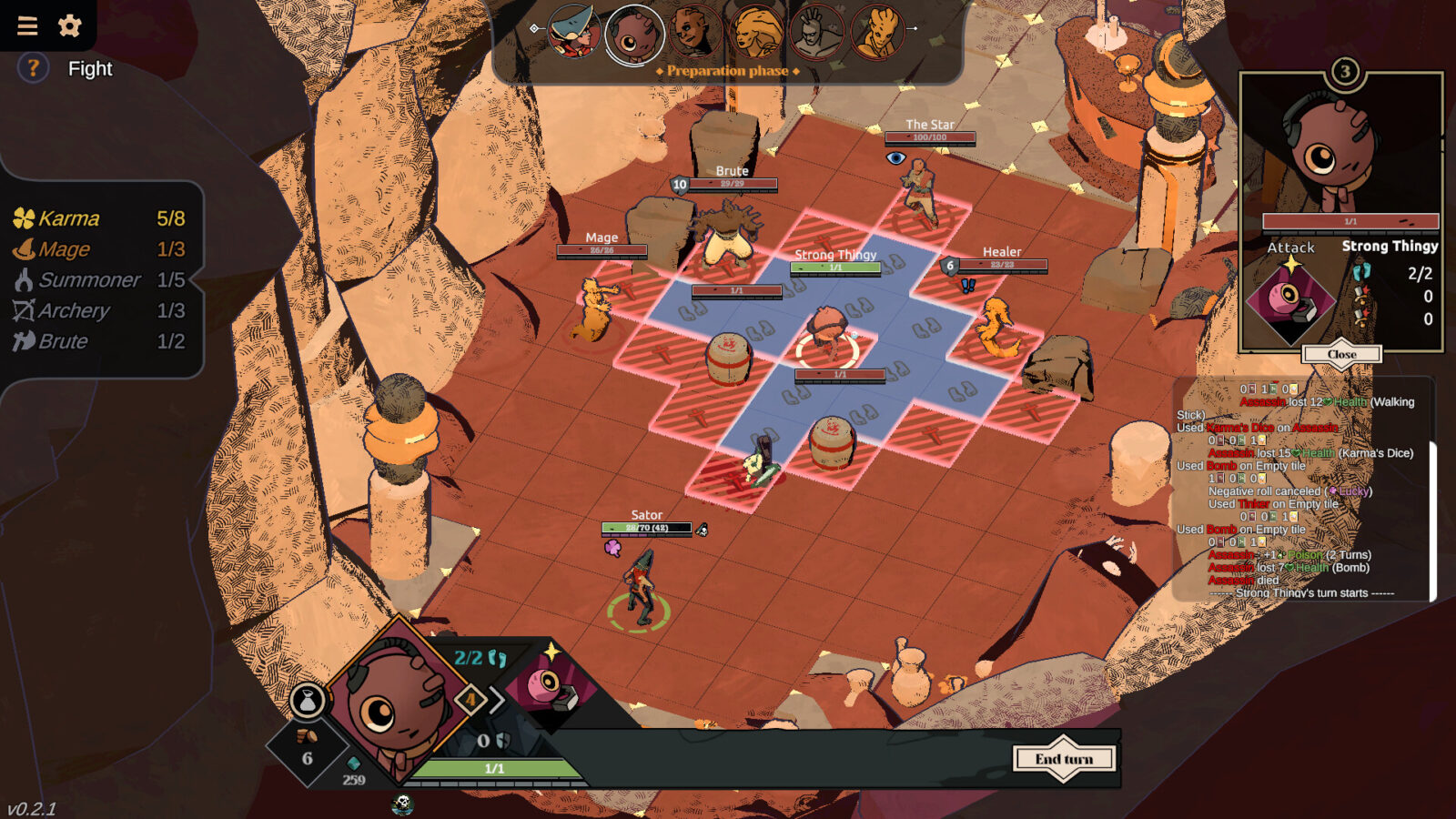
Each Lord’s wing escalates toward its boss in a satisfying way, introducing mechanics that the finale then twists. In Ego’s wing, the floor fills with Reflection users, and Ego then hides inside a Reflection until you step onto the right one. That’s great encounter design, but it also exposes Deified’s harshest edge. The difficulty jump at boss fights is sharp, and a loadout that breezes through regular encounters can stall against the next Lord. I don’t mind a demanding roguelite, though those spikes can feel abrupt rather than gradual, especially early on.
Meta progression is the other sticking point. Obols buy Temple skill points and room unlocks, which gives failed runs a purpose but locks a sizeable portion of build options behind repeated attempts. The good news is that the developers have clearly been listening. Post-launch patches increased the Obols earned for reaching deeper, made Temple ultimate skills readable before purchase, cut Temple skill point costs by up to half, and reworked the Lazaros wing so its slow-to-kill Zombies became Brambles while giving its boss a new phase. The structure still asks for patience, but it’s far less of a grind than it was at launch.
Gorgeous comic-book art, cluttered tactical screens
Visually, Deified has a confident identity that helps it stand out in a sea of generic dark fantasy. Heavy outlines, angular architecture and wide fields of sand, gold and turquoise give the Citadel a distinctive look, and the Lord portraits carry real personality. It feels closer to a stylised graphic novel than a grimdark mud palette, which makes the morally murky themes land with more contrast. The whole thing has a striking, almost Moebius-adjacent flavour that I genuinely enjoyed looking at.
The tactical layer isn’t as elegant as the art direction. A busy fight can display range overlays, status icons, health bars, a combat log, synergy counters and a growing equipment bar simultaneously, with large tooltips covering big chunks of the board. Thankfully, recent patches added separate size settings for tooltips, health bars and the combat log, plus toggles for hiding health bars and previewing every enemy’s attack range at once. Performance demands are modest too, with minimum requirements of Windows 10, a dual-core 2.4GHz processor, 4GB of RAM and 2GB of VRAM, and Valve rates it Playable on Steam Deck, though some in-game text is small and may be hard to read.
Verdict
Deified is one of those indie roguelites that wins you over with a single strong idea and then keeps proving that idea has more depth than you expected. The slot system, where every upgrade arrives with a bonus and a curse attached, turns routine loot decisions into genuine strategic puzzles, and the absence of mana, action points and cooldowns keeps combat fast without making it shallow. Synergies give runs a clear identity, enemy passives make positioning matter, and the comic-book art direction gives the whole package a personality that’s easy to fall for.
It isn’t flawless. Boss fights spike sharply in difficulty, the Obol-based meta progression still gates a lot of build variety behind repeated runs, and the combat screen can turn into a soup of tooltips and overlays during busy fights. The developers have already chipped away at most of these issues through patches, which is encouraging. At $14.99, it’s easy to recommend to anyone who loves tinkering with builds in Slay the Spire, Shogun Showdown or Into the Breach, while players who want a gentle, low-stakes tactics game should probably look elsewhere. For me, it’s one of the most satisfying tactical roguelites of the year, and I fully recommend it.