Apple’s foldable is three days from shelves, and the clearest look yet at how it will behave day to day has arrived through the App Store. Fresh screenshots of Apple’s own apps running on the iPhone Duo show a device that borrows heavily from the iPad while trying to keep a phone’s muscle memory intact, and they answer several questions that marketing renders have so far left open.
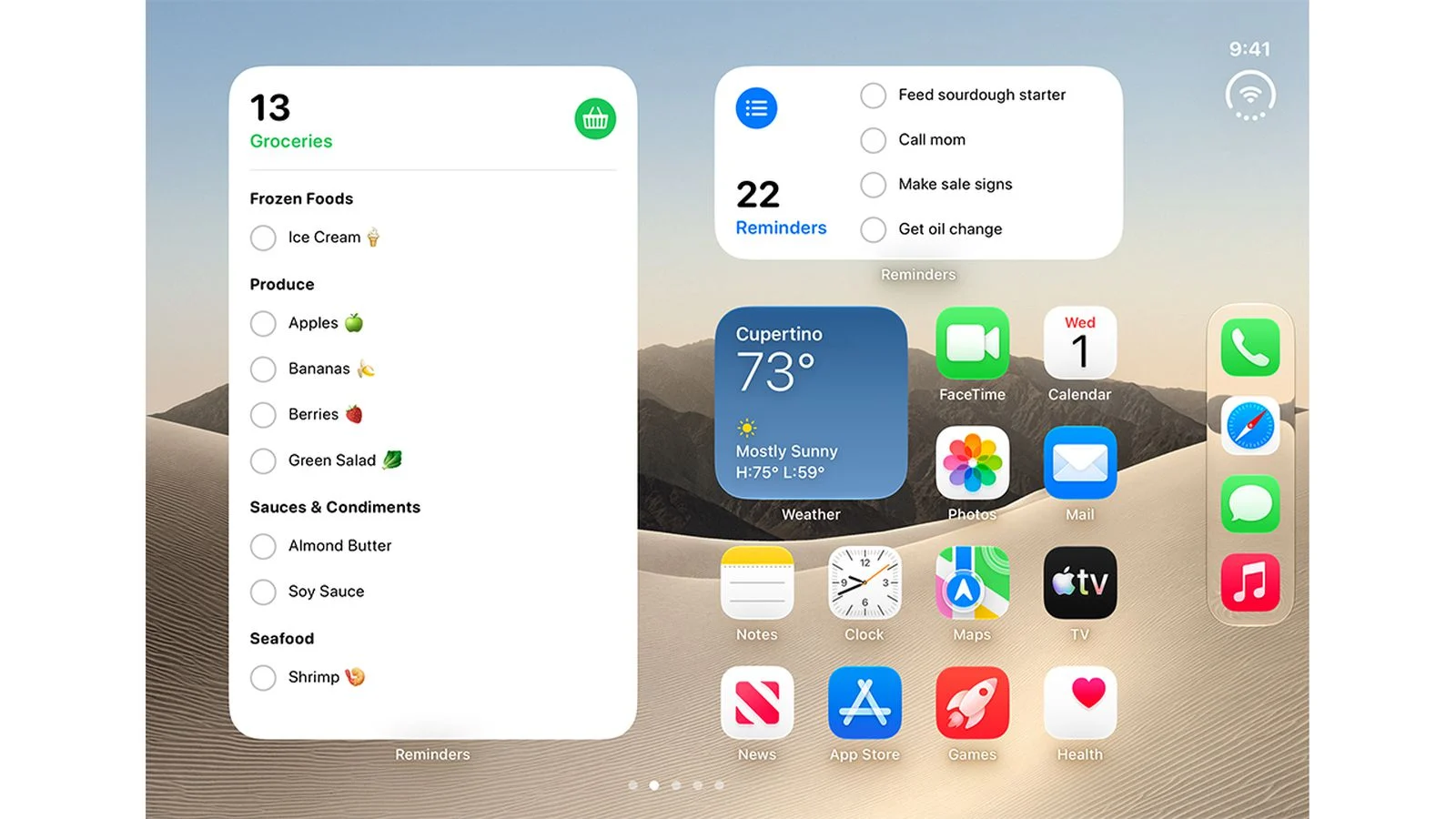
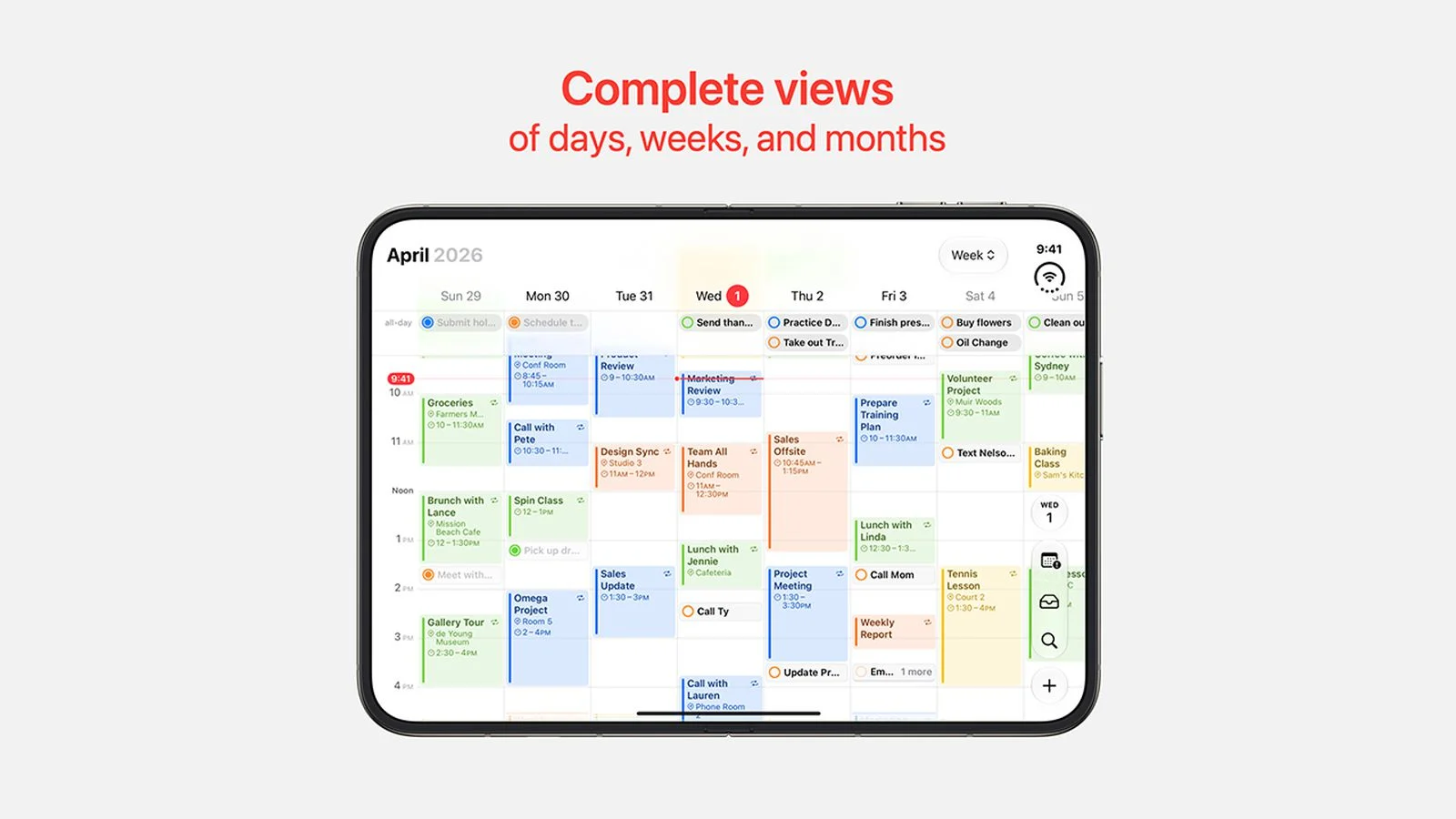
The dominant pose is landscape. Unfolded on its side, the Duo runs many first-party apps with a sidebar carved out of the left edge, a layout anyone who has used iPadOS will recognise instantly. Clock, Reminders and Health follow that template, while apps that don’t need much navigation stretch across the full width of the panel. Where a navigation bar does exist, a tap hides it, which suggests Apple is treating screen space on the inner display as something to protect rather than fill.
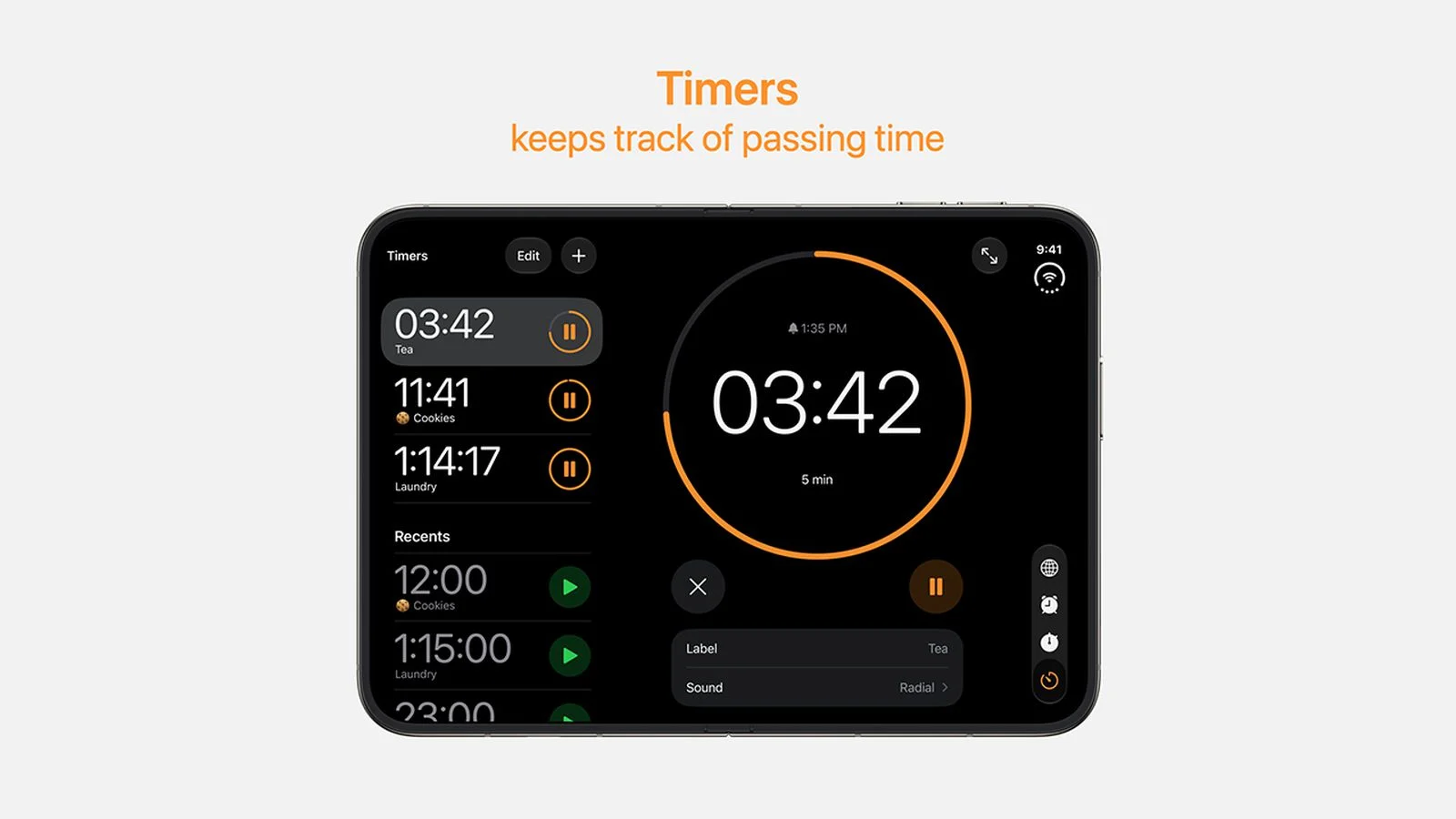
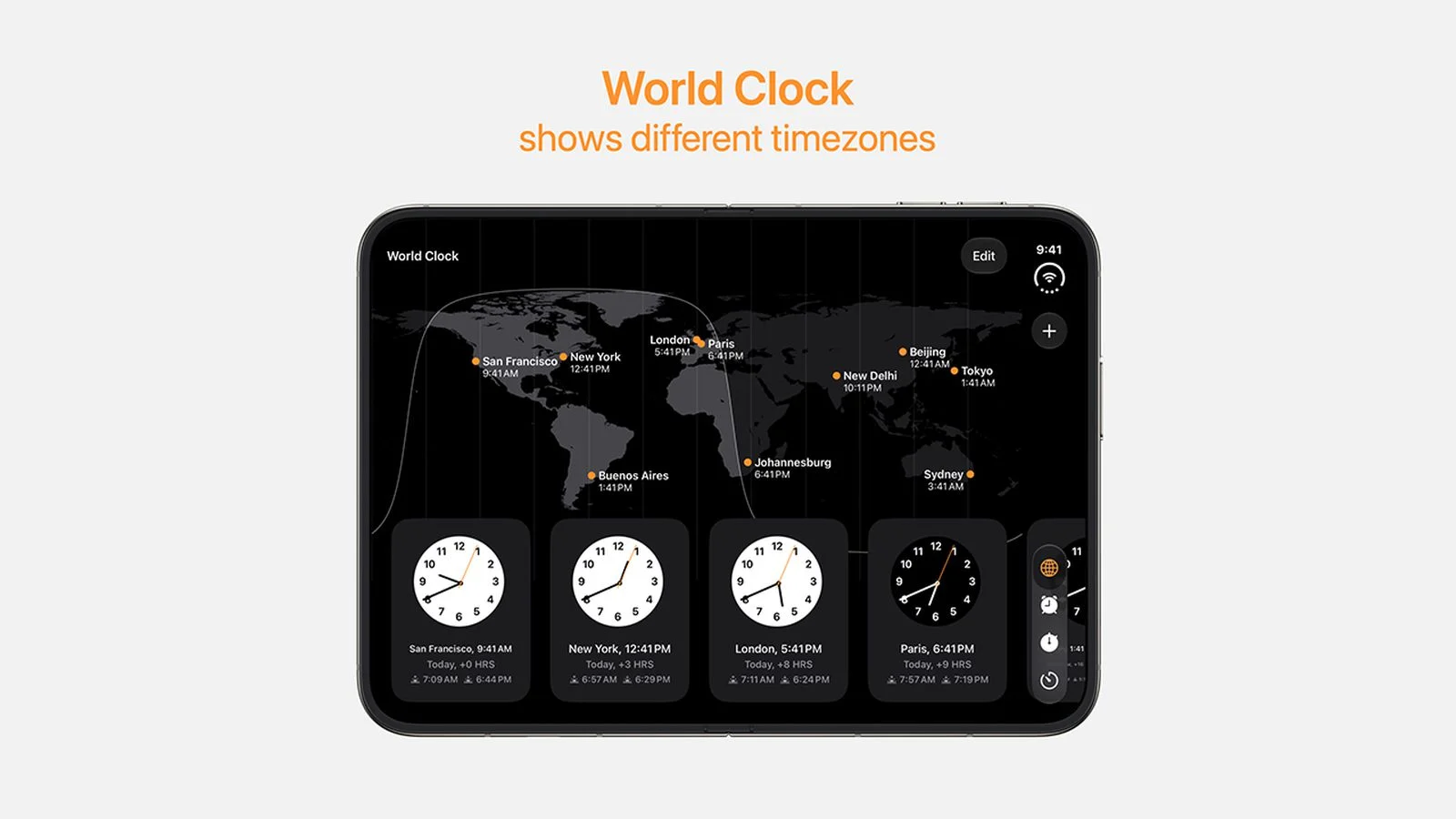
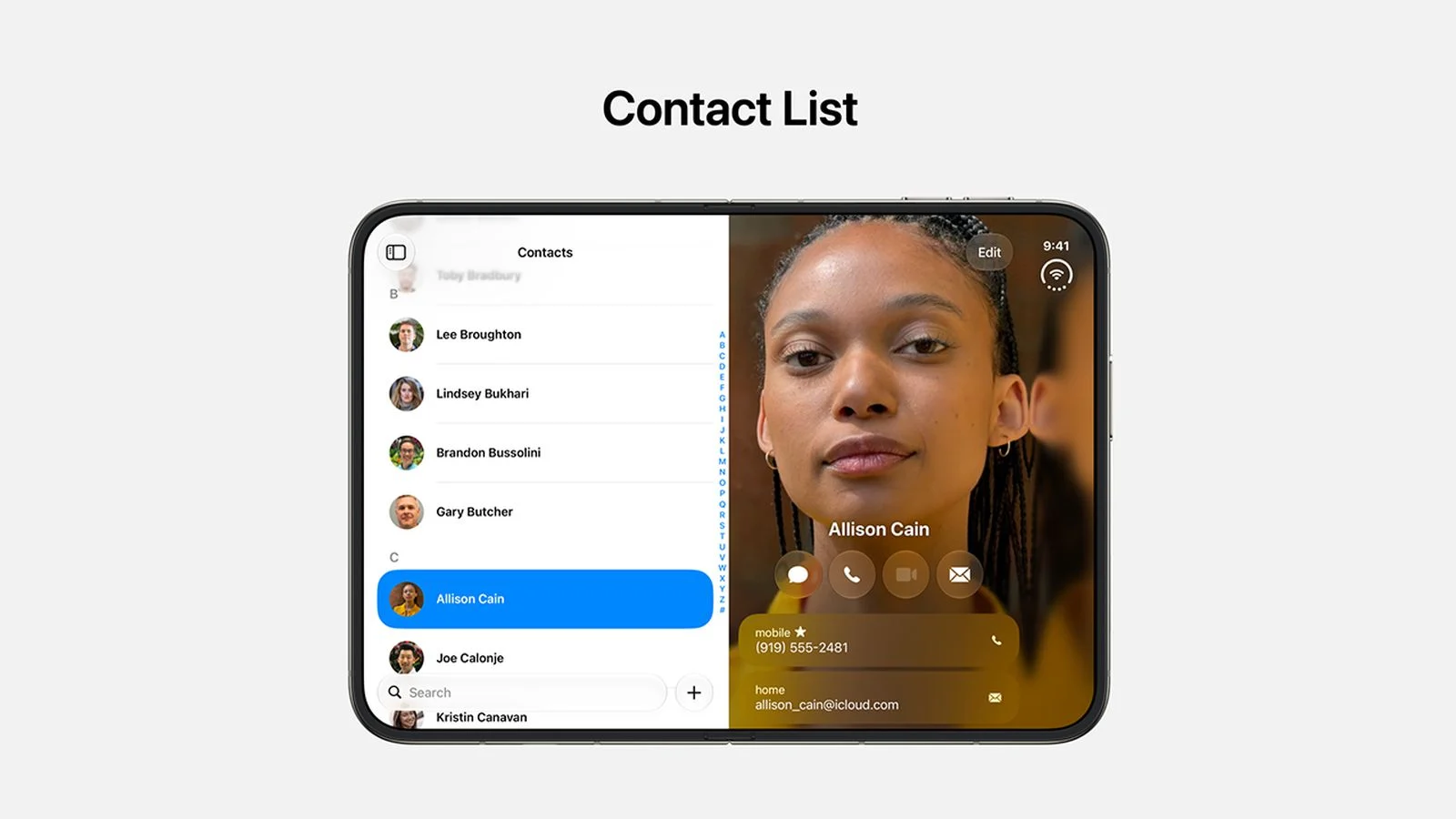
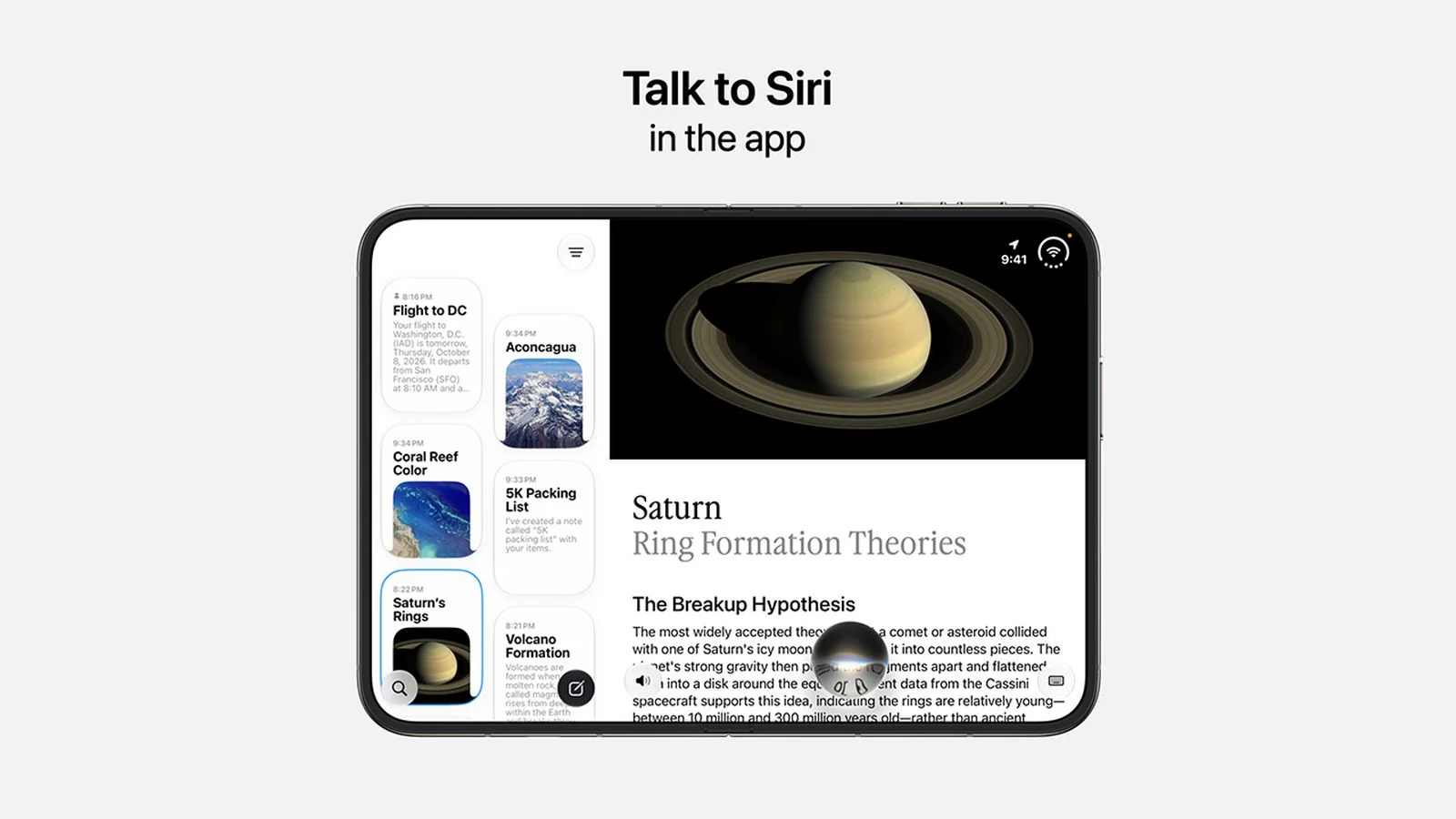
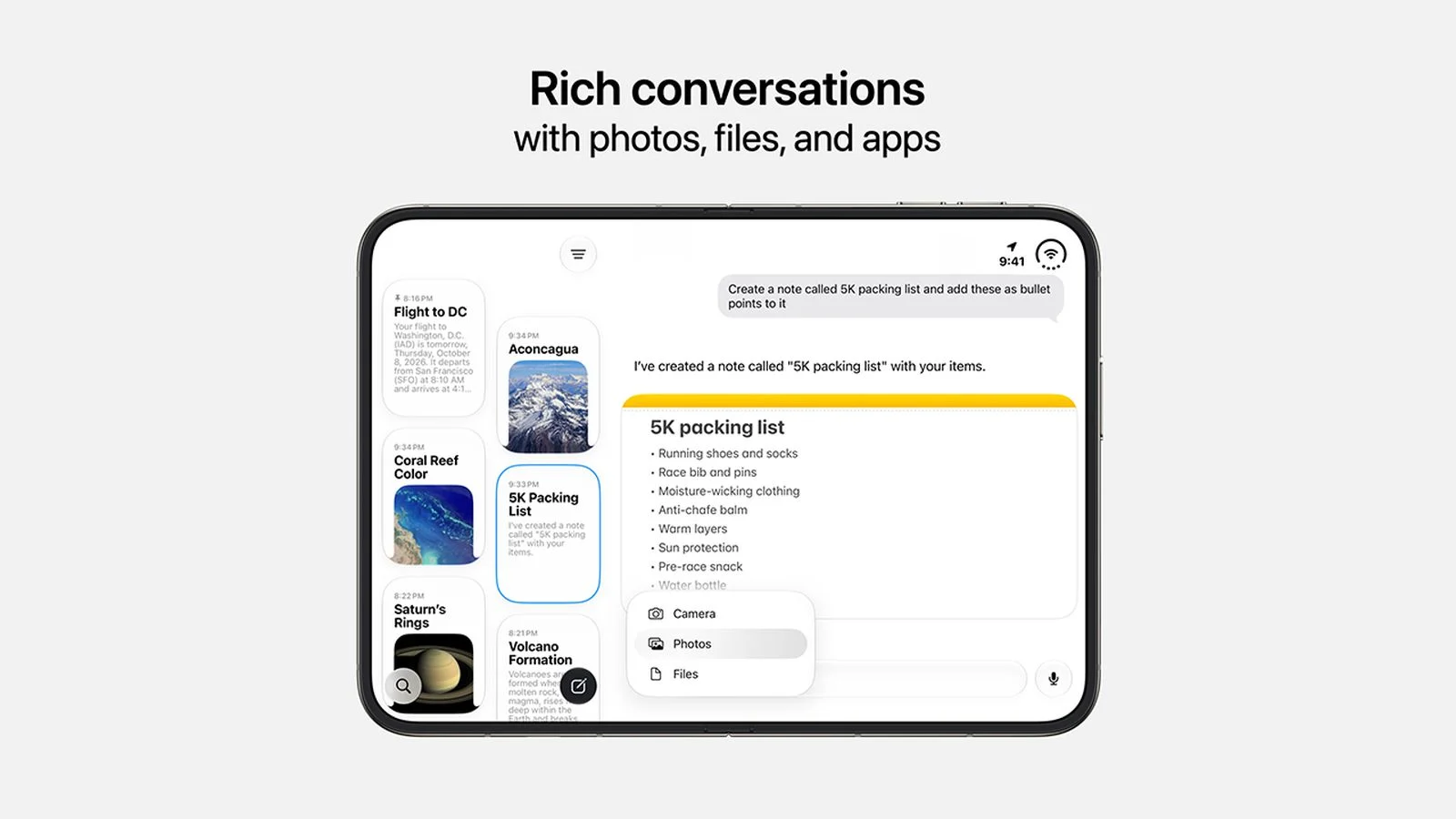
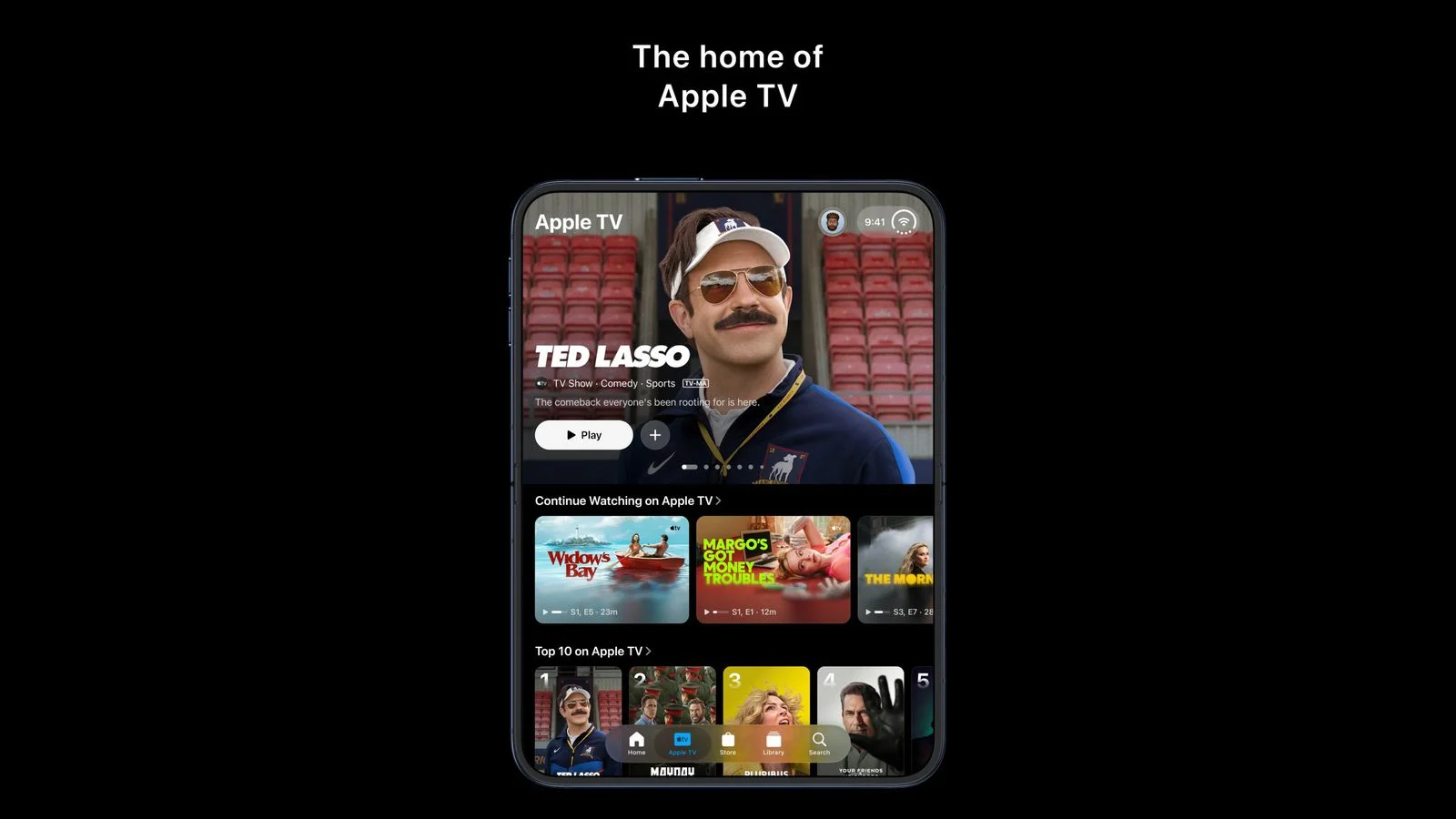
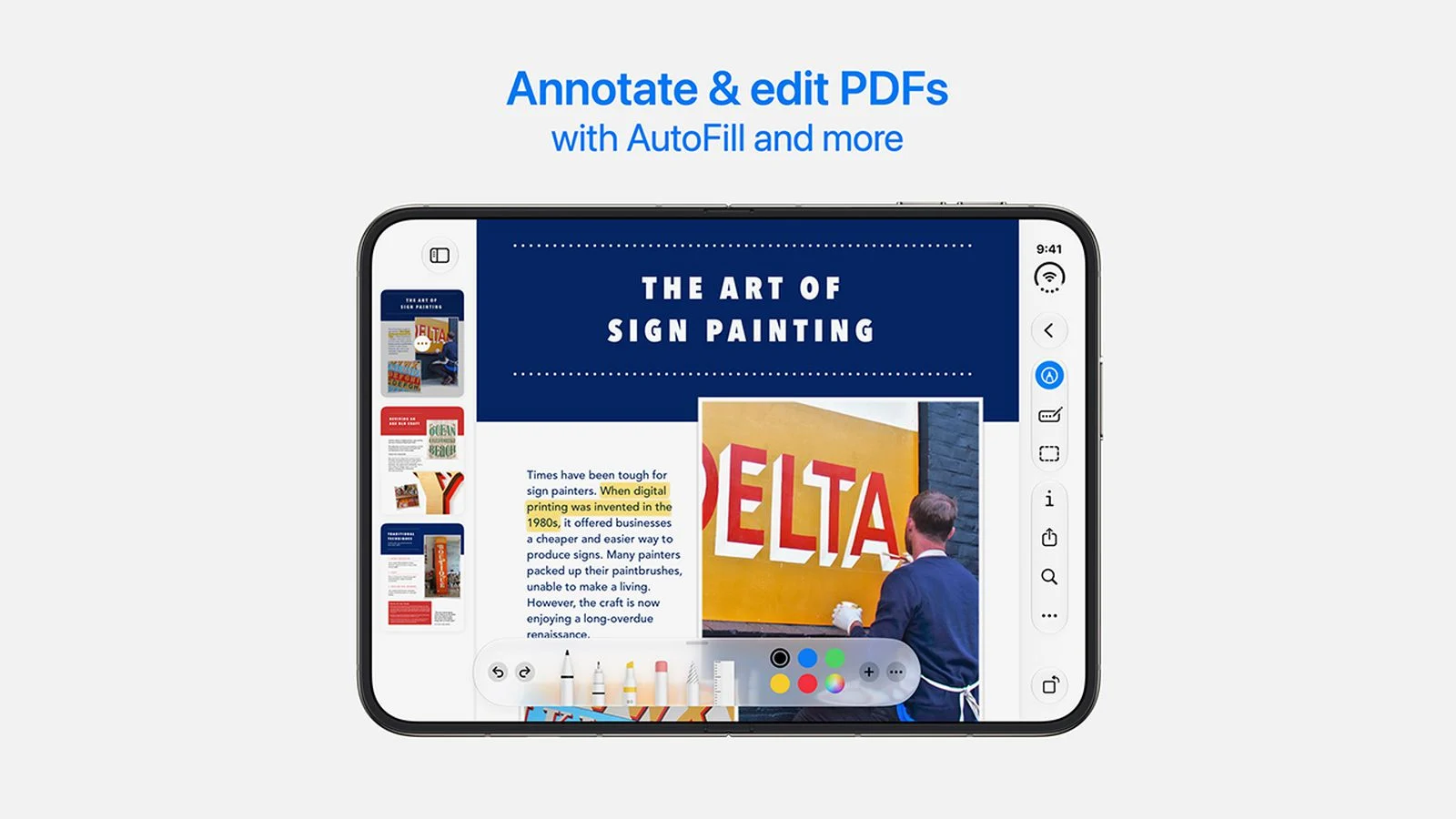
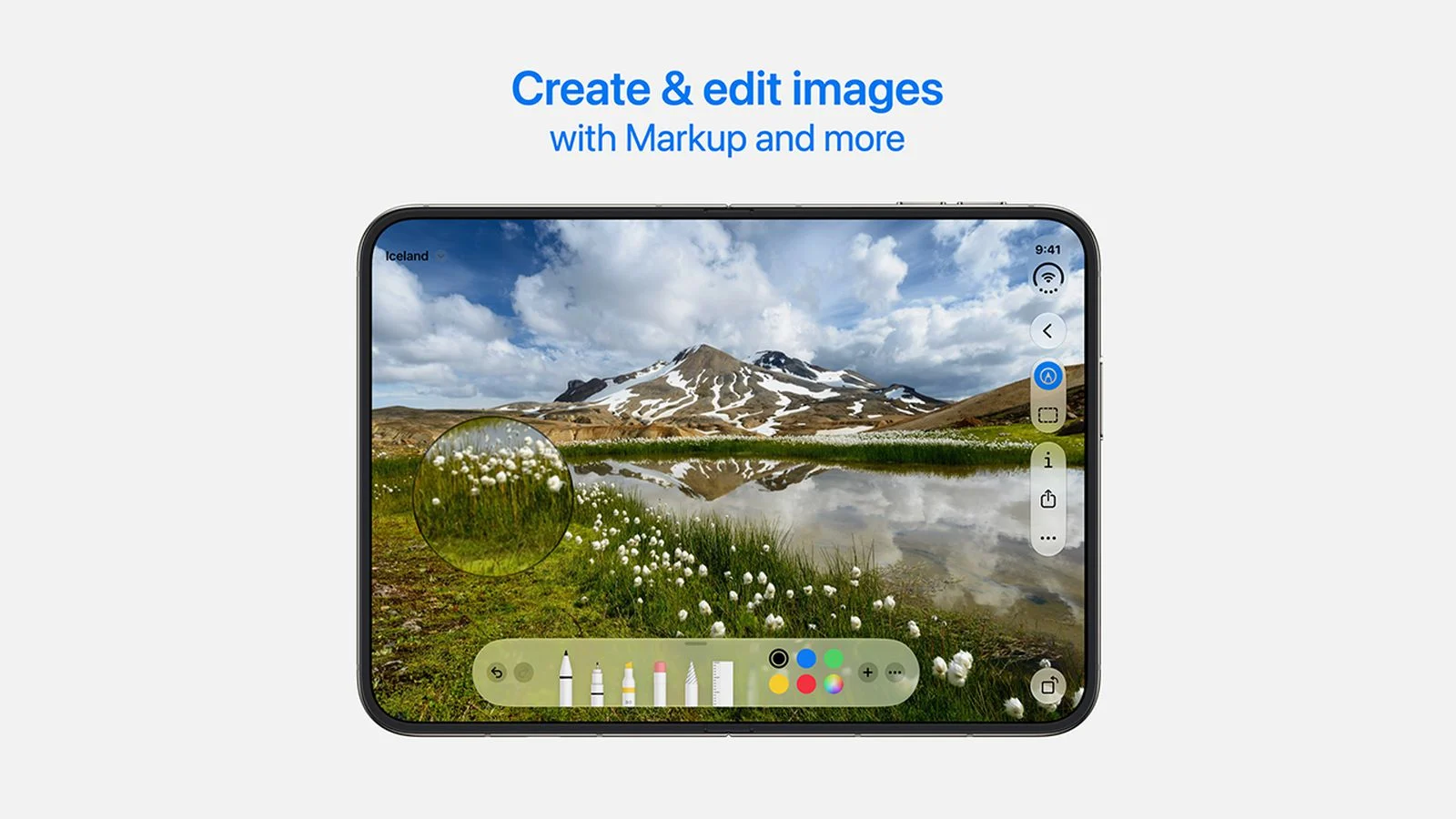
Several apps go beyond a simple sidebar. Contacts splits into a list of names alongside an editing pane, turning a fiddly phone task into something closer to a desktop workflow. The Siri app takes a middle path, arranging past conversations as tiles on the left with the full thread opening on the right. Preview combines a bottom tool palette with sidebars and navigation bars, and Markup offers a decent preview of how drawing and photo-editing apps could feel with this much canvas under a finger or stylus-free fingertip.
The most significant interface change is where controls live. The dock and navigation bars sit vertically on the right edge in both open and closed modes, a notable break from the bottom-anchored design iPhone users have known since 2007. The exception comes when the Duo is unfolded and held upright, much like an iPad in portrait, at which point navigation drops back to the bottom. Apple says this orientation suits apps that rely on the keyboard and browsing in Safari, though it barely features in the screenshots, which makes it hard to judge how comfortable it will be in practice.
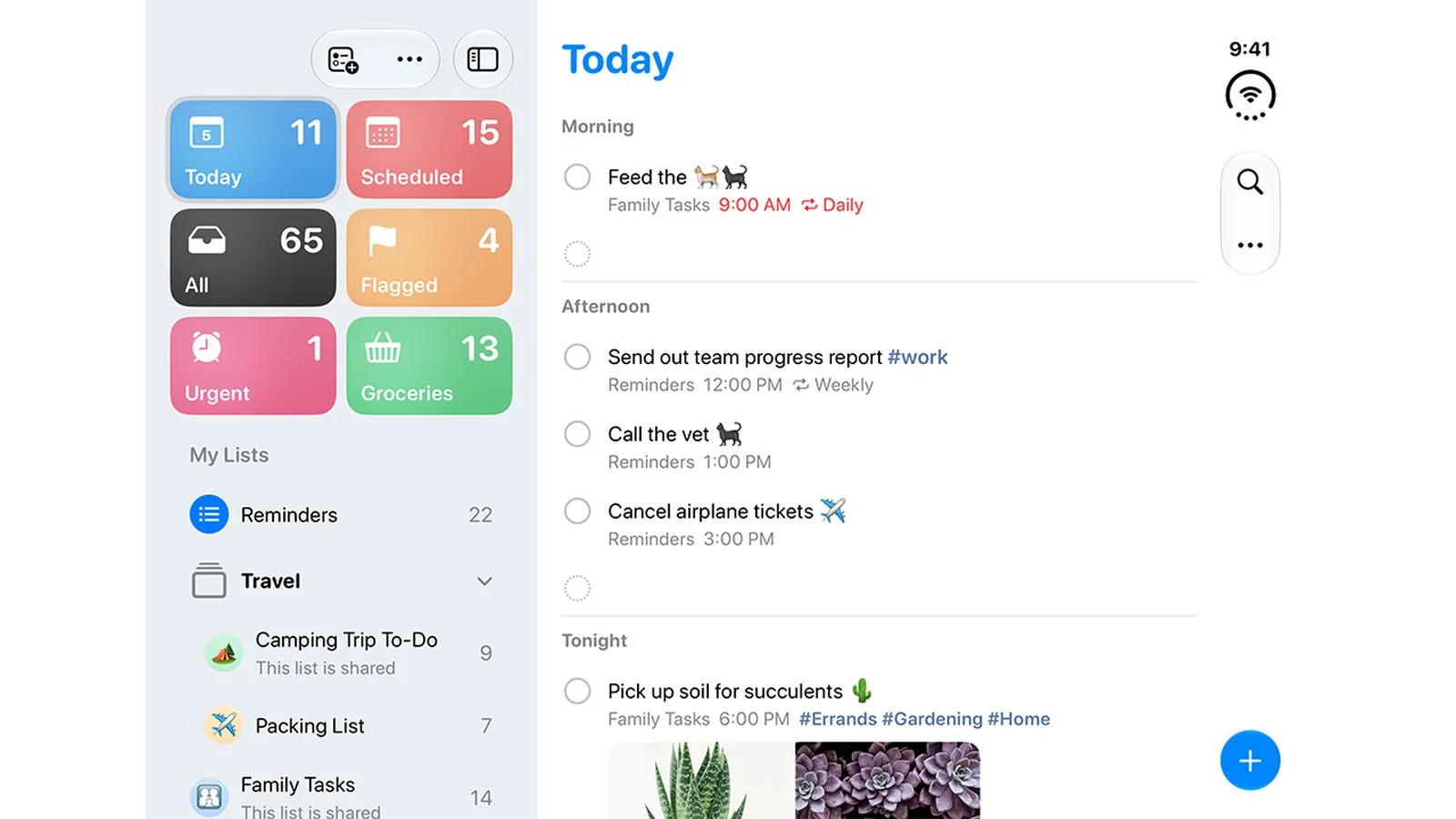
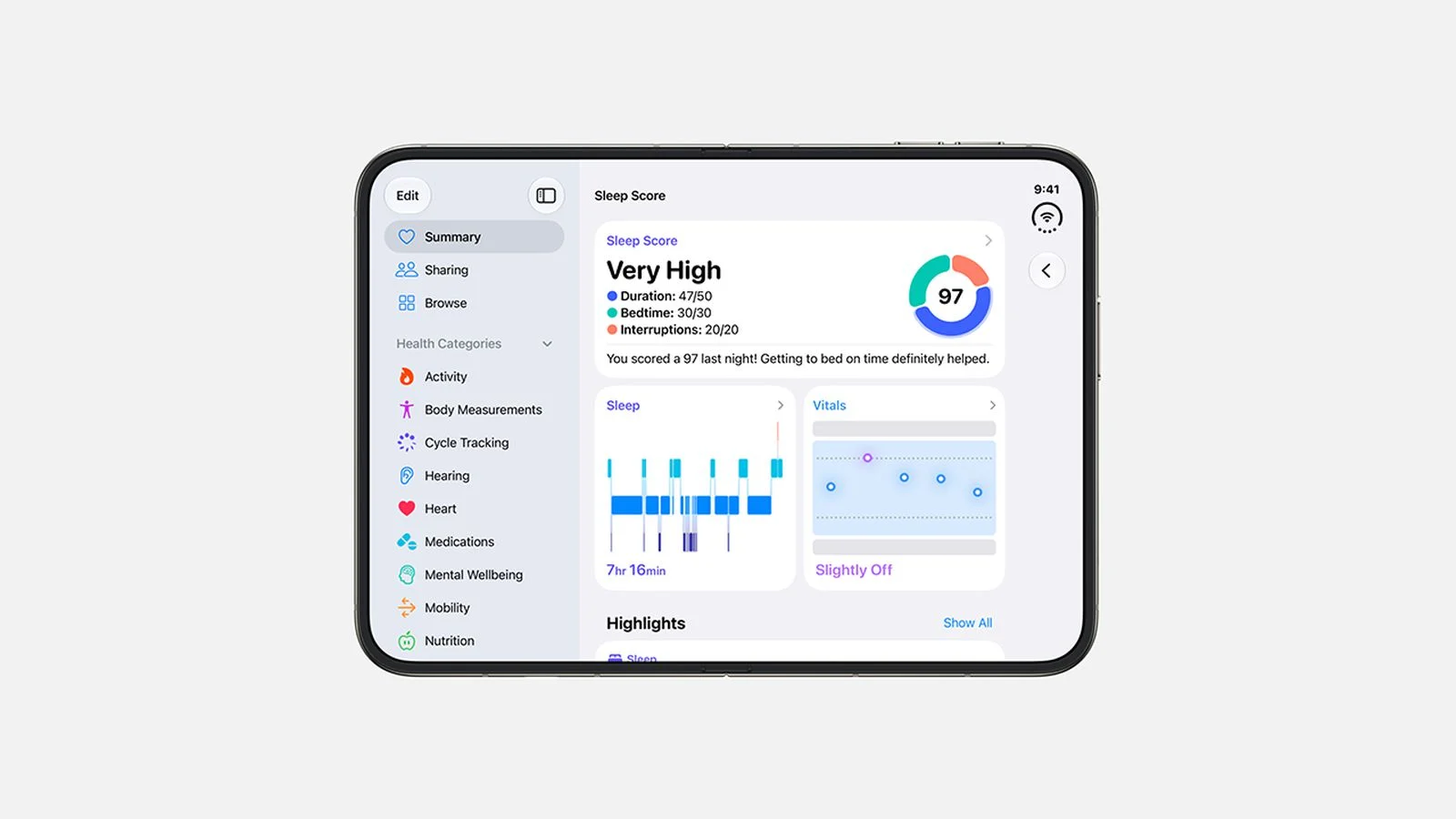
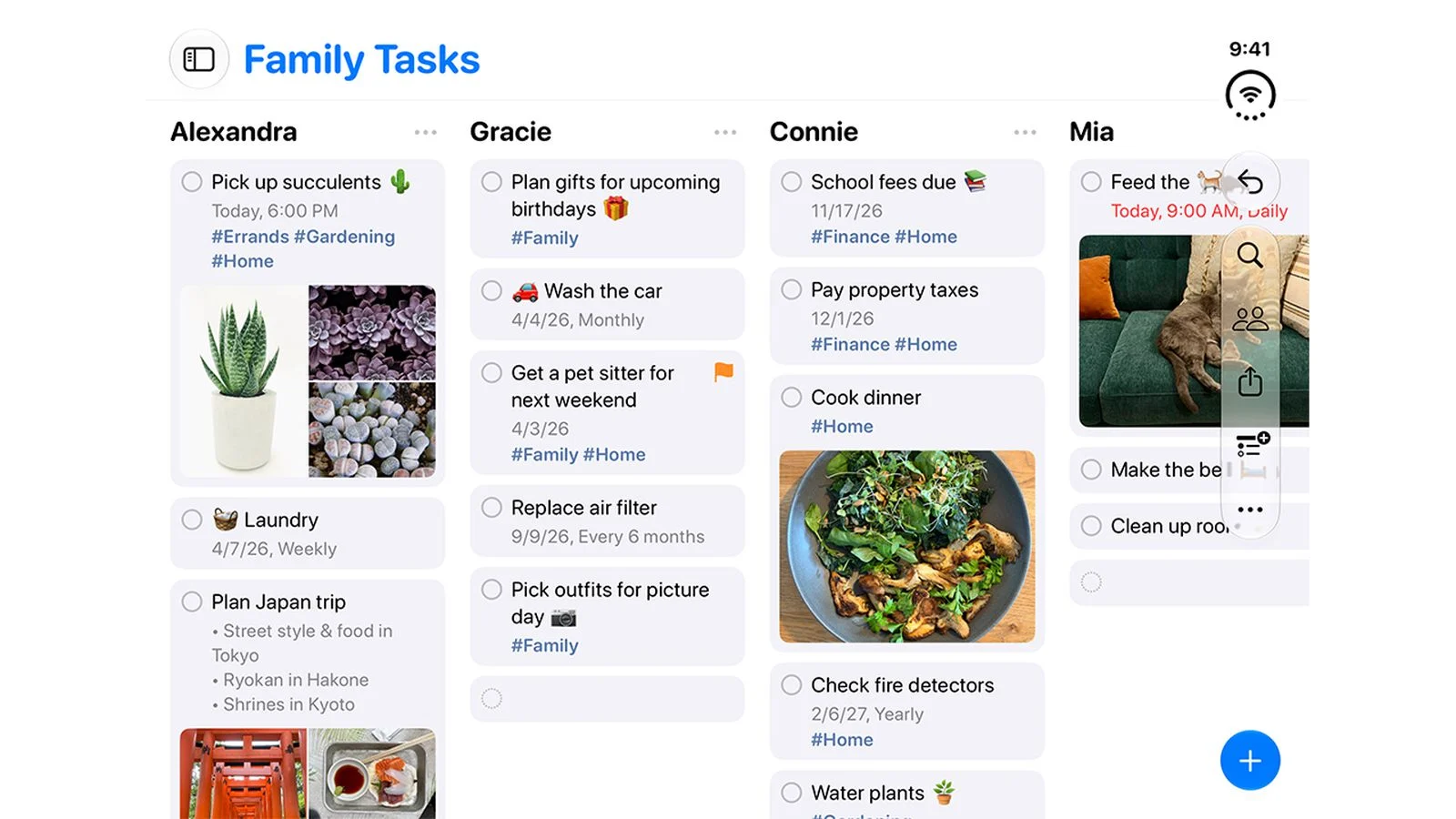
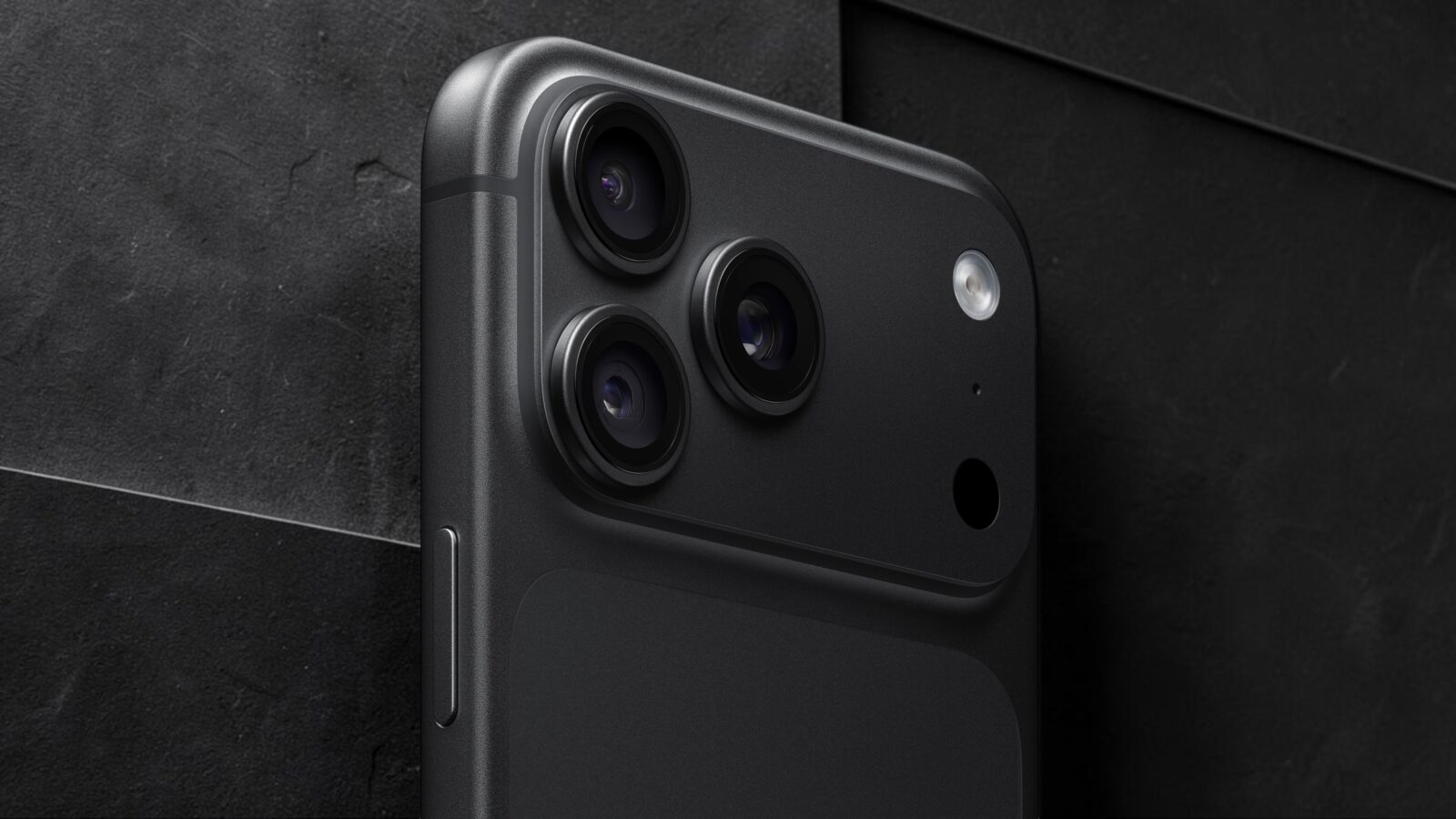
The Home Screen takes a split approach of its own, with widgets in a Today view on the left and app icons on the right. The status bar moves to the upper-right corner, and the Lock Screen shortcuts for Flashlight and Camera sit at the bottom right. Because the inner display has no Face ID and hides its FaceTime camera beneath the panel, there’s no permanent Dynamic Island there. Instead, it slides out from the side of the screen when alerts and Live Activities need attention. The outer display keeps a smaller, vertically oriented Dynamic Island wrapped around its camera cutout.
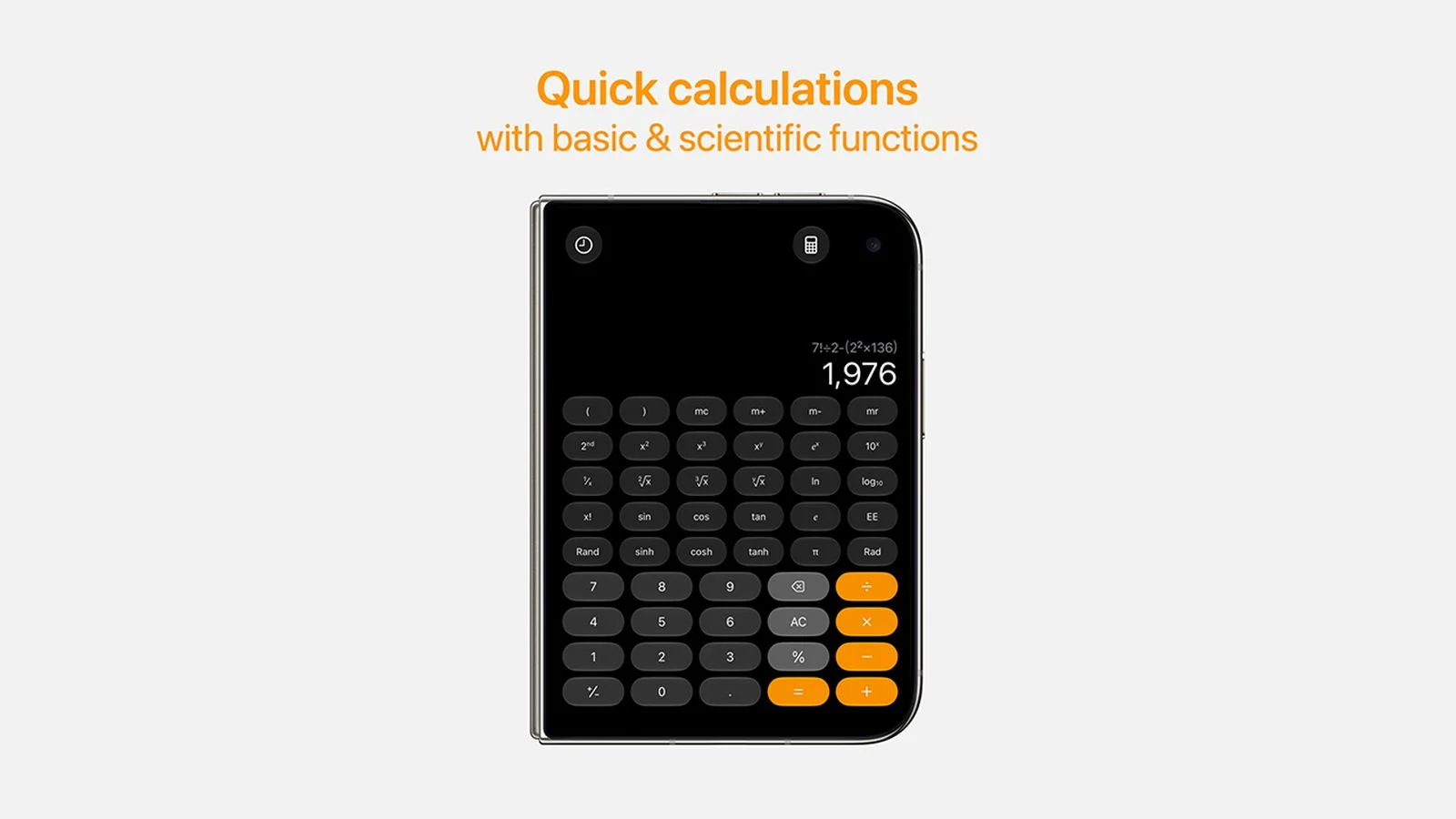
Smaller details reveal Apple’s thinking too. Long-press popovers aren’t scaled up, so they occupy proportionally less of the larger display rather than looming over content. Apps are designed to jump quickly between the cover screen and the inner panel, with navigation buttons kept in consistent positions so users aren’t hunting for controls every time the hinge moves. Calculator and Files both appear on the outer display, giving a sense of how the closed experience will compare with a standard iPhone.
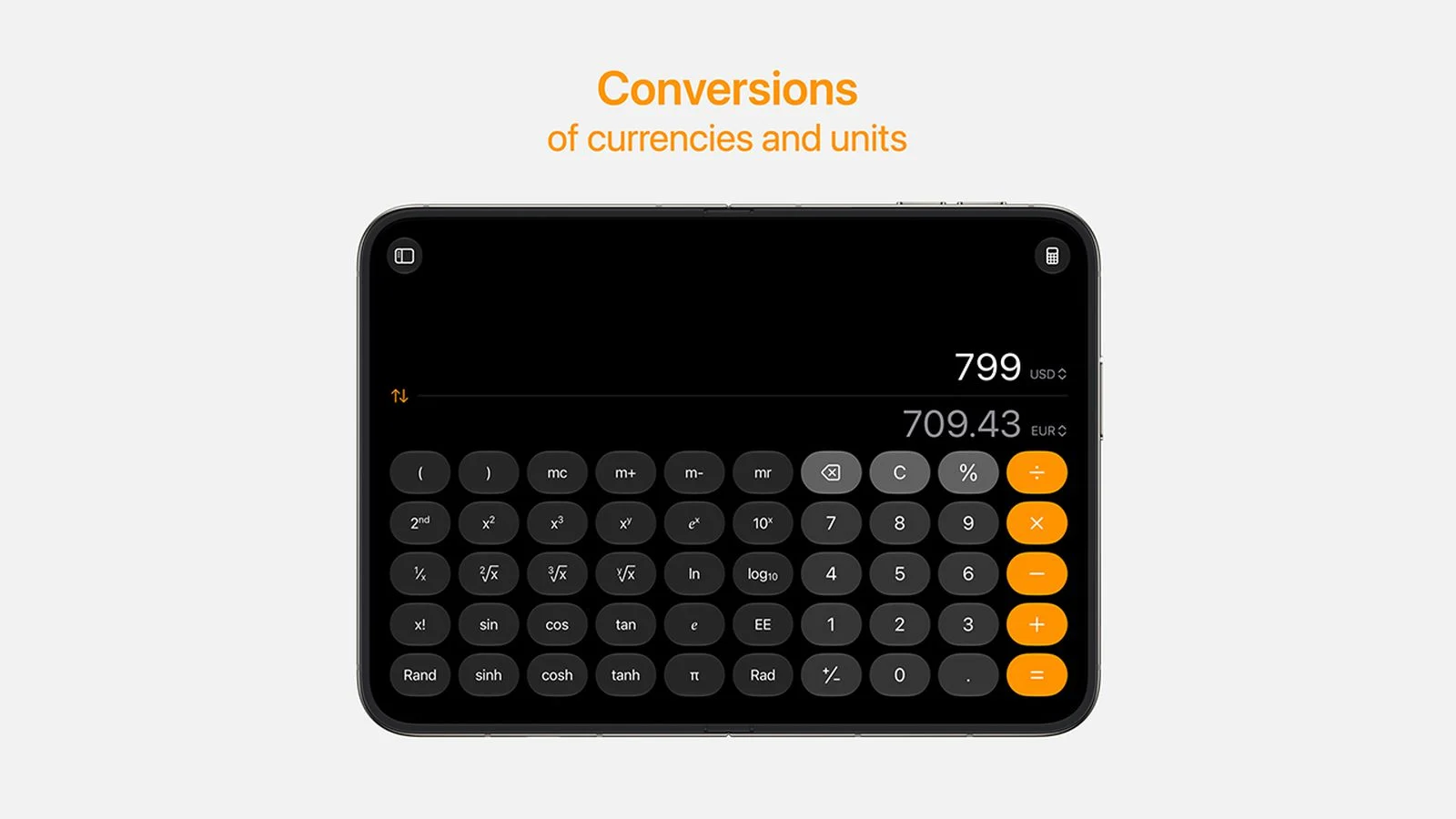
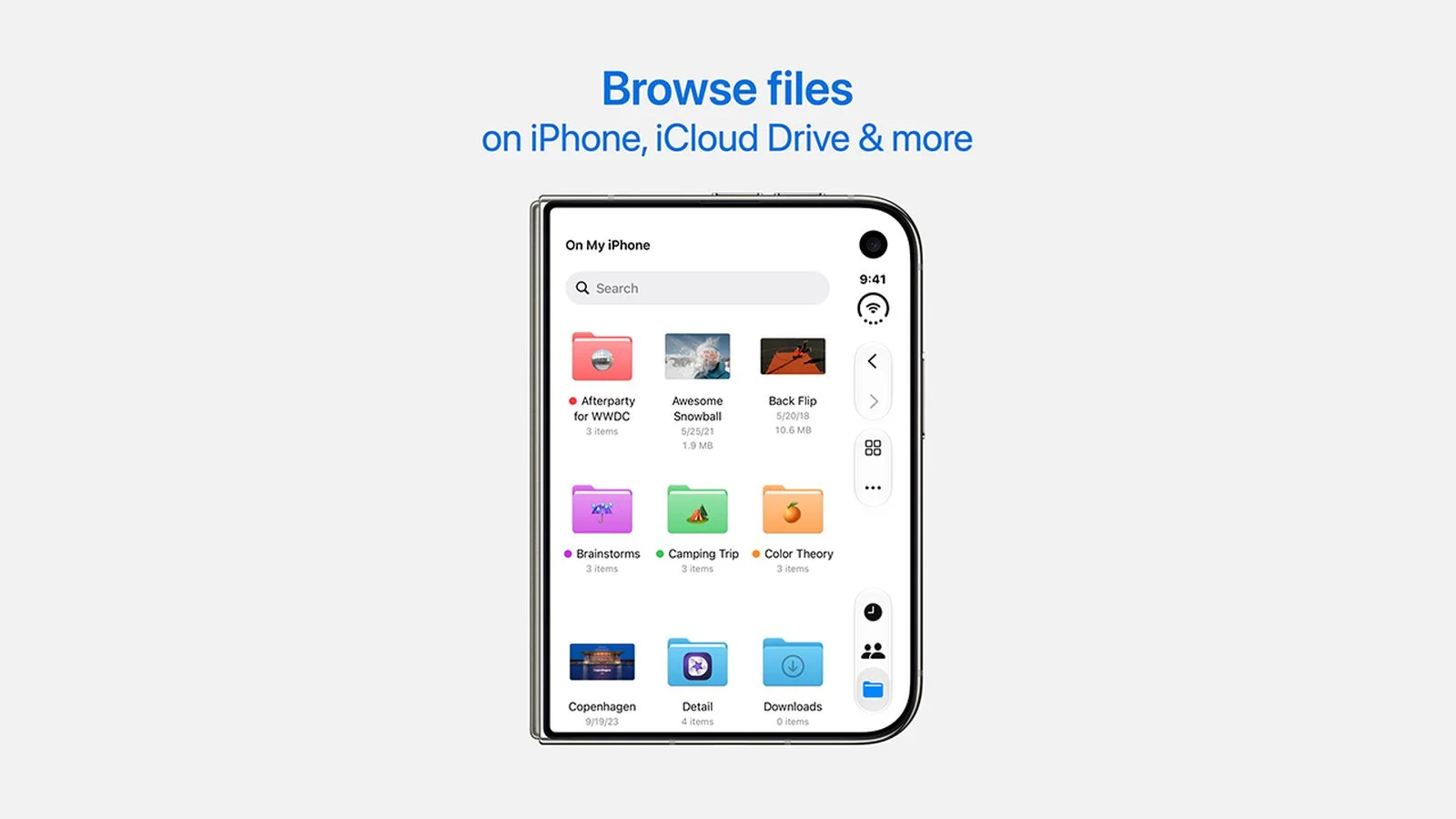
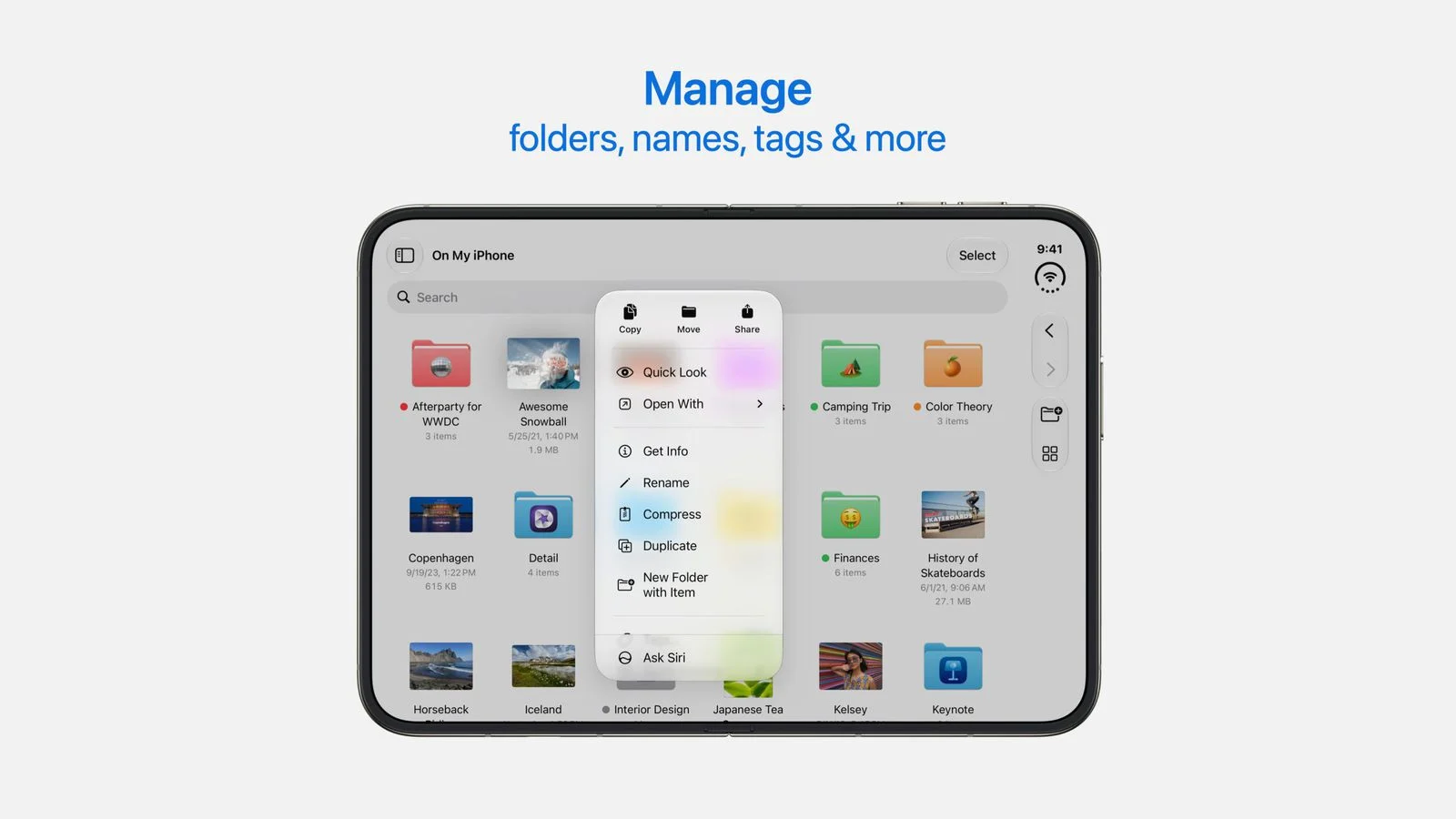
Folded positions matter as well. The Duo can sit at an angle like a miniature laptop for video, stand in a tent shape with the outer screen facing out, or be held partially open like a book. Running two apps side by side and opening multiple Safari windows are both supported, though neither is showcased, which leaves real multitasking performance as one of the bigger unknowns heading into launch.
The hardware picture is filling in alongside the software. An EU energy label lists total battery capacity at 4,883 mAh across two cells, and the device is eSIM-only worldwide. Availability is a tougher story, with reports of tight supply and retail staff steering customers away from walk-in purchases on launch day.
Ultimately the screenshots only show Apple’s side of the equation. Samsung and Google have spent years learning that foldables live or die on third-party support, and polished first-party layouts mean little if popular apps simply stretch to fit. With reviews expected imminently and the device arriving on October 23, the real test is how quickly developers decide the Duo is worth redesigning for.