
Apple spends an enormous amount of time talking about materials, structural integrity, precision engineering and durability. I have discovered a considerably faster way of testing all of that: leave your iPhone 17 Pro Max on the roof of your car, drive away, wait approximately 20 minutes, take a sharp corner, launch it onto a highway and then allow more than eight cars to drive over it.
My iPhone 17 Pro Durability Test Score
Please do not try this at home. I have already completed the research.
This particular durability test began innocently enough. I placed my iPhone 17 Pro Max on the roof while putting my bag inside the car, got in and drove away. The phone, unfortunately, did not. Or rather, it did. Just not inside the car.
For roughly 20 minutes, my iPhone was apparently enjoying the world’s least comfortable road trip from the roof. In what may be the most unexpectedly impressive MagSafe demonstration ever conducted, the phone somehow latched onto the metal and stayed there.
Twenty minutes. On top of a moving car.
Apple advertises MagSafe for chargers, wallets and accessories. Apparently “temporary automotive roof mounting system” was a feature they forgot to mention.
Everything was going remarkably well until physics remembered it had a job to do. I took a sharp turn, the iPhone finally lost its grip and flew onto the highway. This would normally be the point where you start researching the price of a replacement phone.
Unfortunately for the iPhone, its adventure wasn’t finished.
Before I could safely retrieve it, more than eight cars drove over it.
Not eight people stepping on it. Not eight shopping carts. Eight actual cars, with engines, wheels and absolutely no respect for AppleCare.
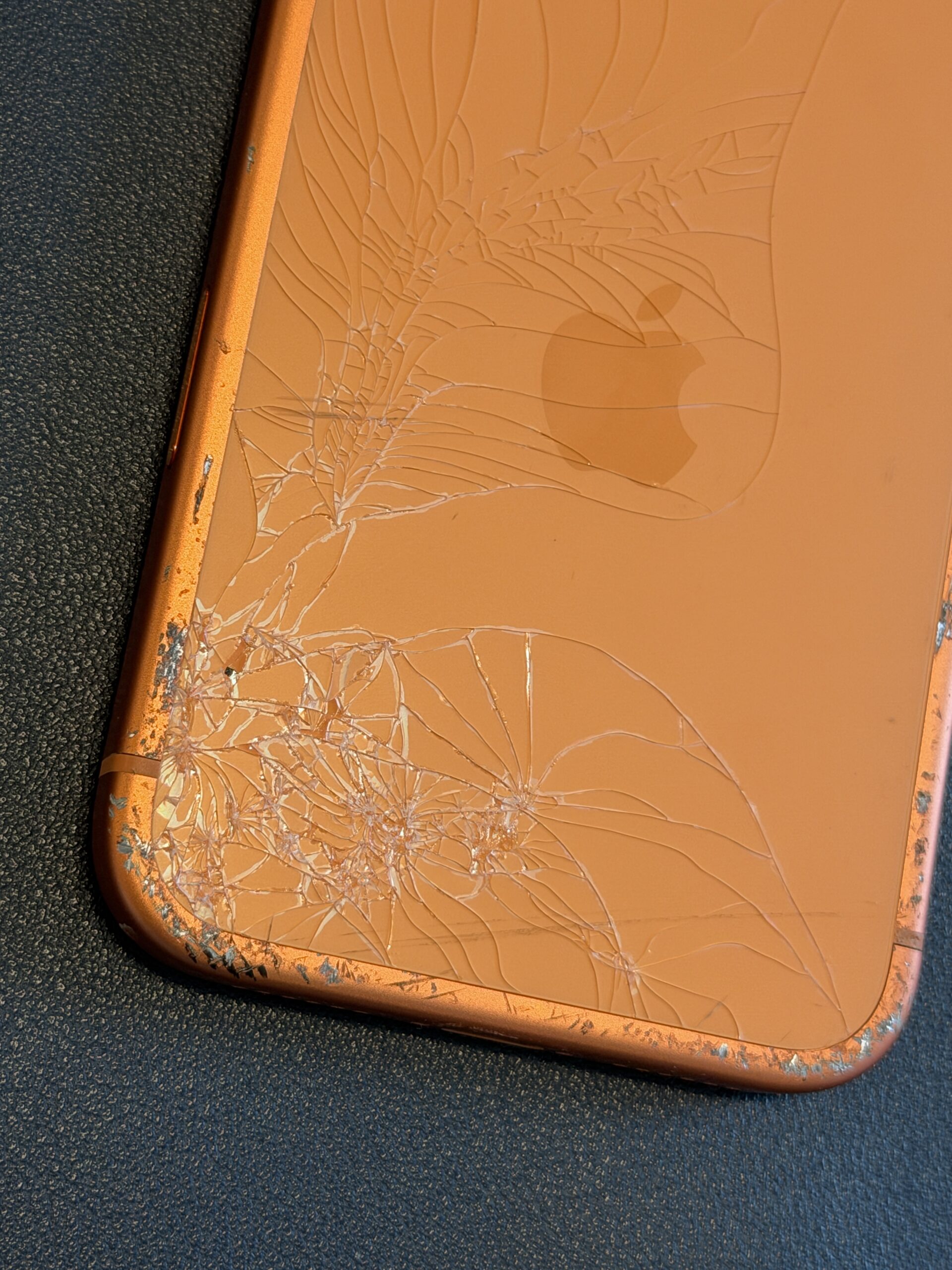
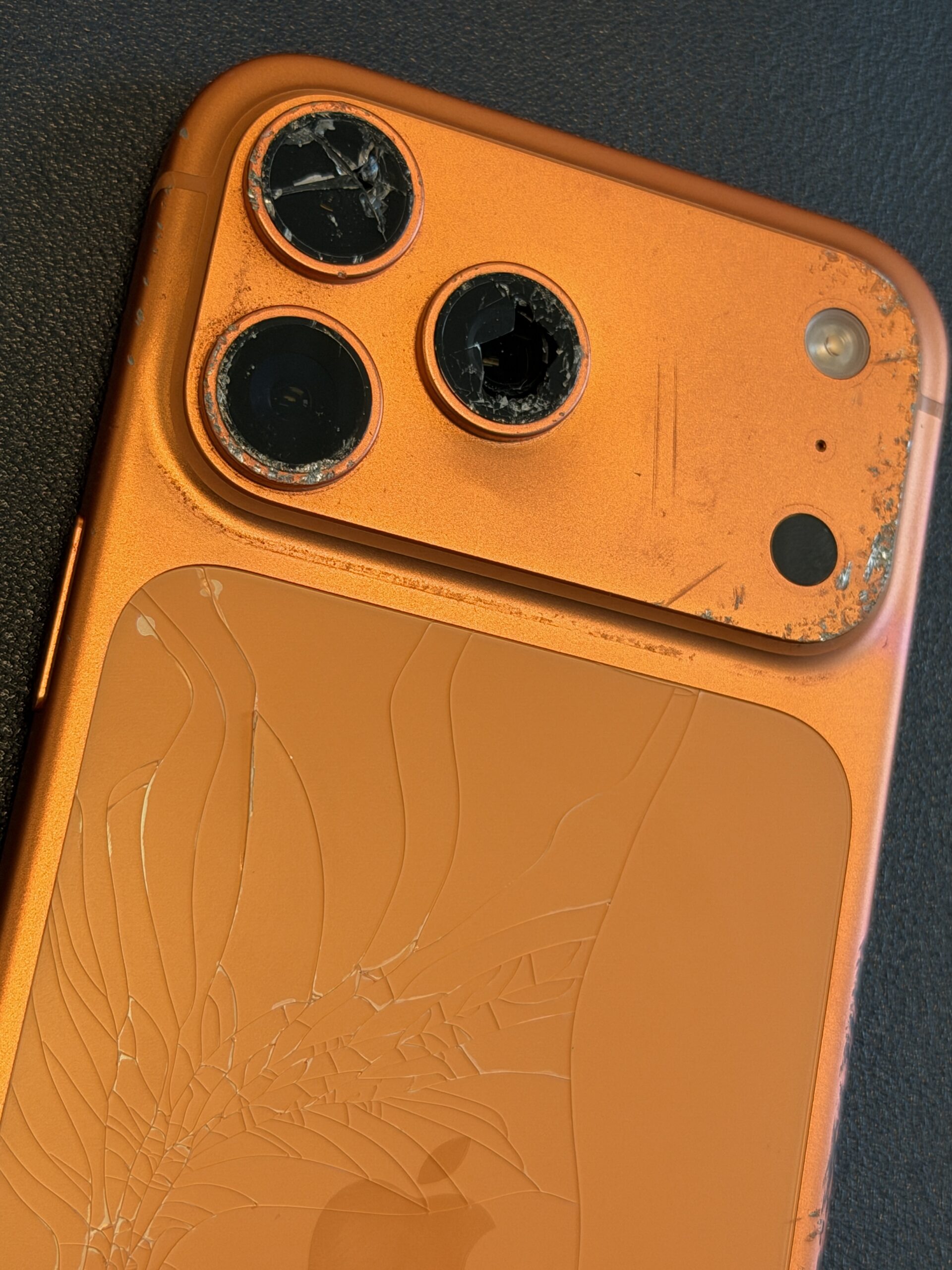
By the time I managed to pick it up, I expected to find an extremely expensive collection of orange metal, silicon and powdered glass. Perhaps a button if I was lucky.
Instead, I found… an iPhone.
Admittedly, an iPhone that looked like it had recently lost an argument with the highway.
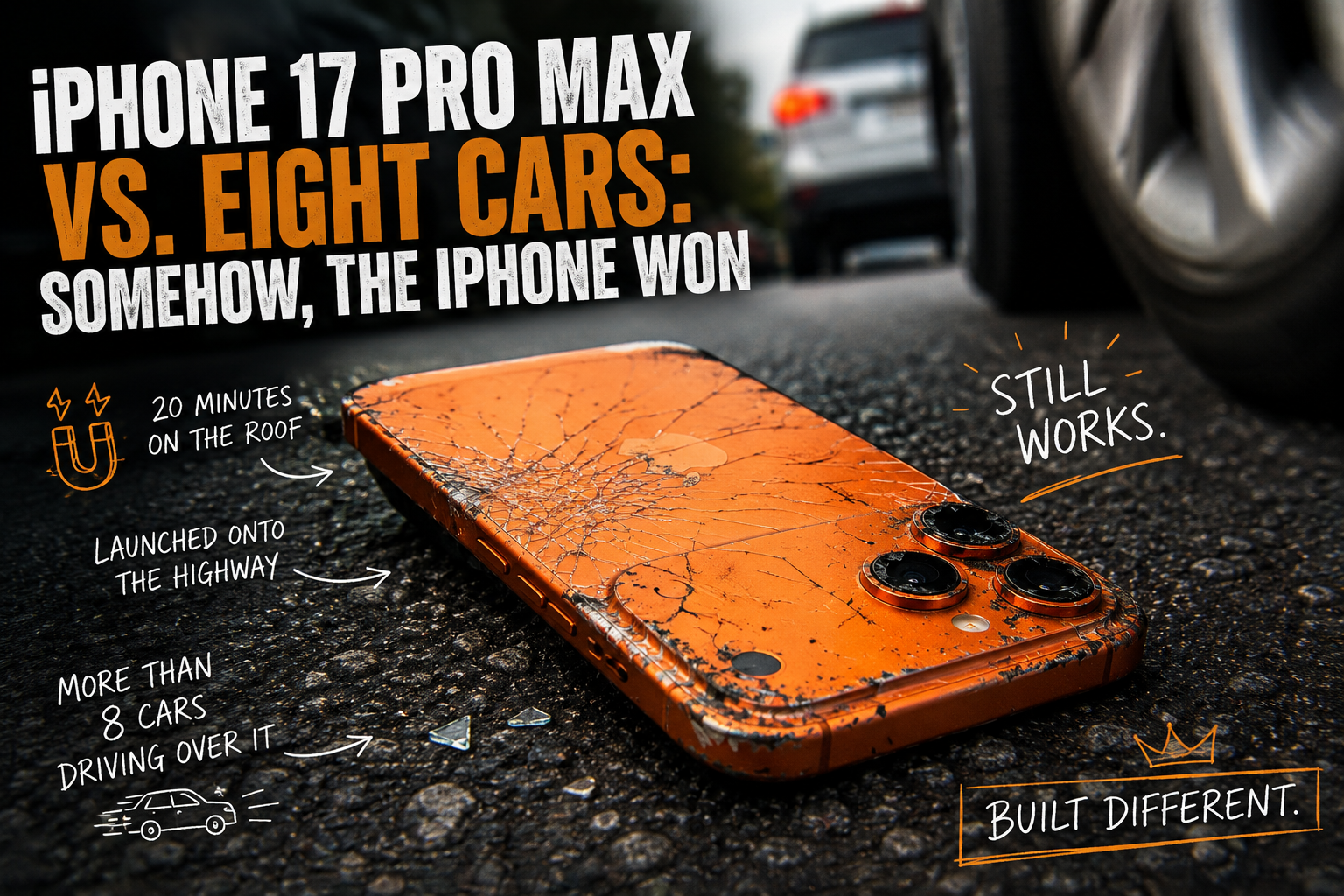
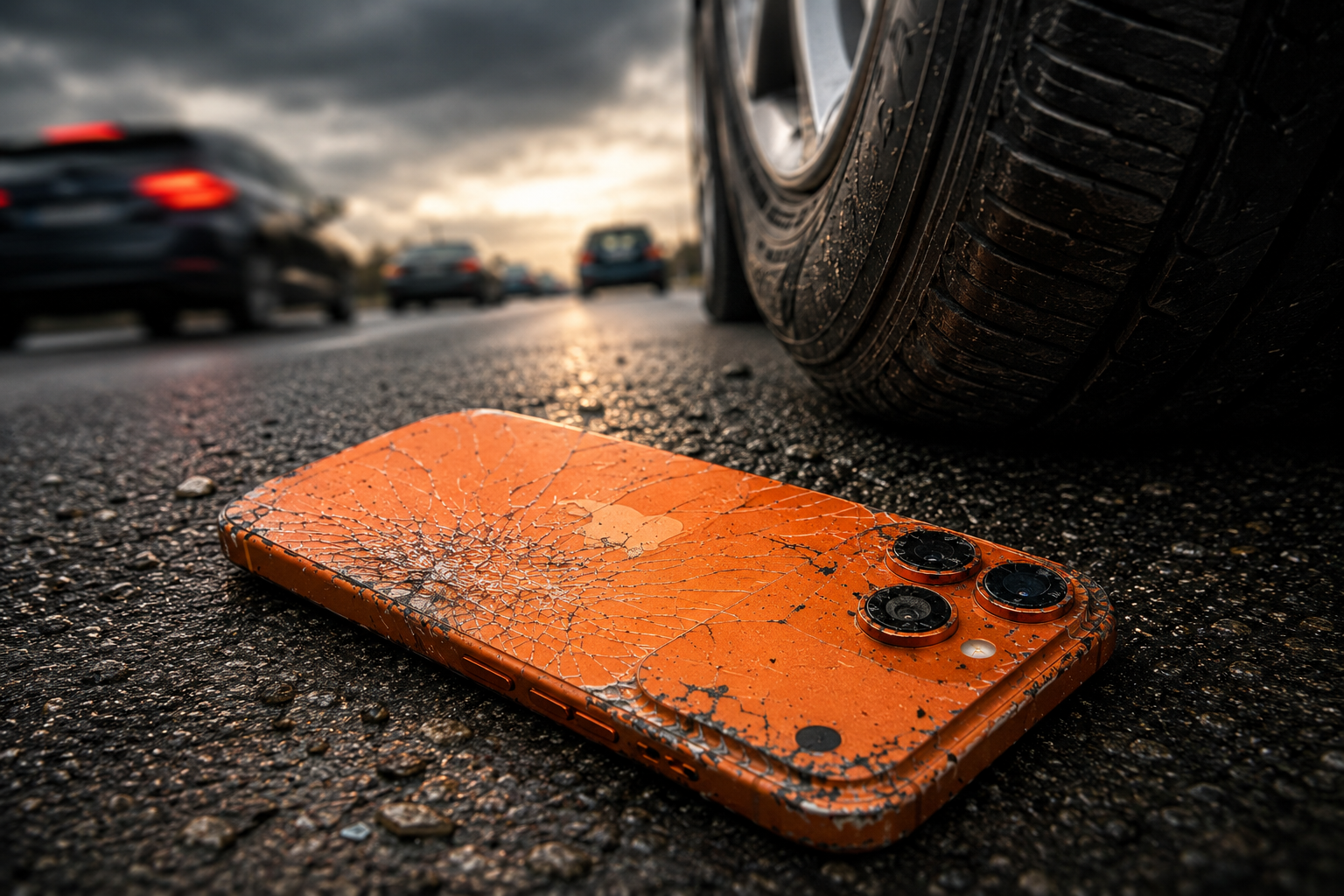
The orange frame is heavily scraped. The back glass is spectacularly shattered. Two camera lenses took serious damage, and the camera housing looks like it went twelve rounds with the motorway and lost on points. The entire phone now has the aesthetic of a limited-edition iPhone 17 Pro Max: Mad Max Edition.
And yet, somehow, the front display didn’t shatter.
Even more ridiculously, the phone still works.
That is where this stops being merely funny and becomes genuinely impressive.
Smartphones are incredibly dense pieces of engineering. Behind those few millimetres of metal and glass sit the battery, logic board, cameras, sensors, display assembly and countless tiny connections that generally prefer not to have several tonnes of automobile repeatedly introduced to them.
Yet the basic structure of this iPhone held together.
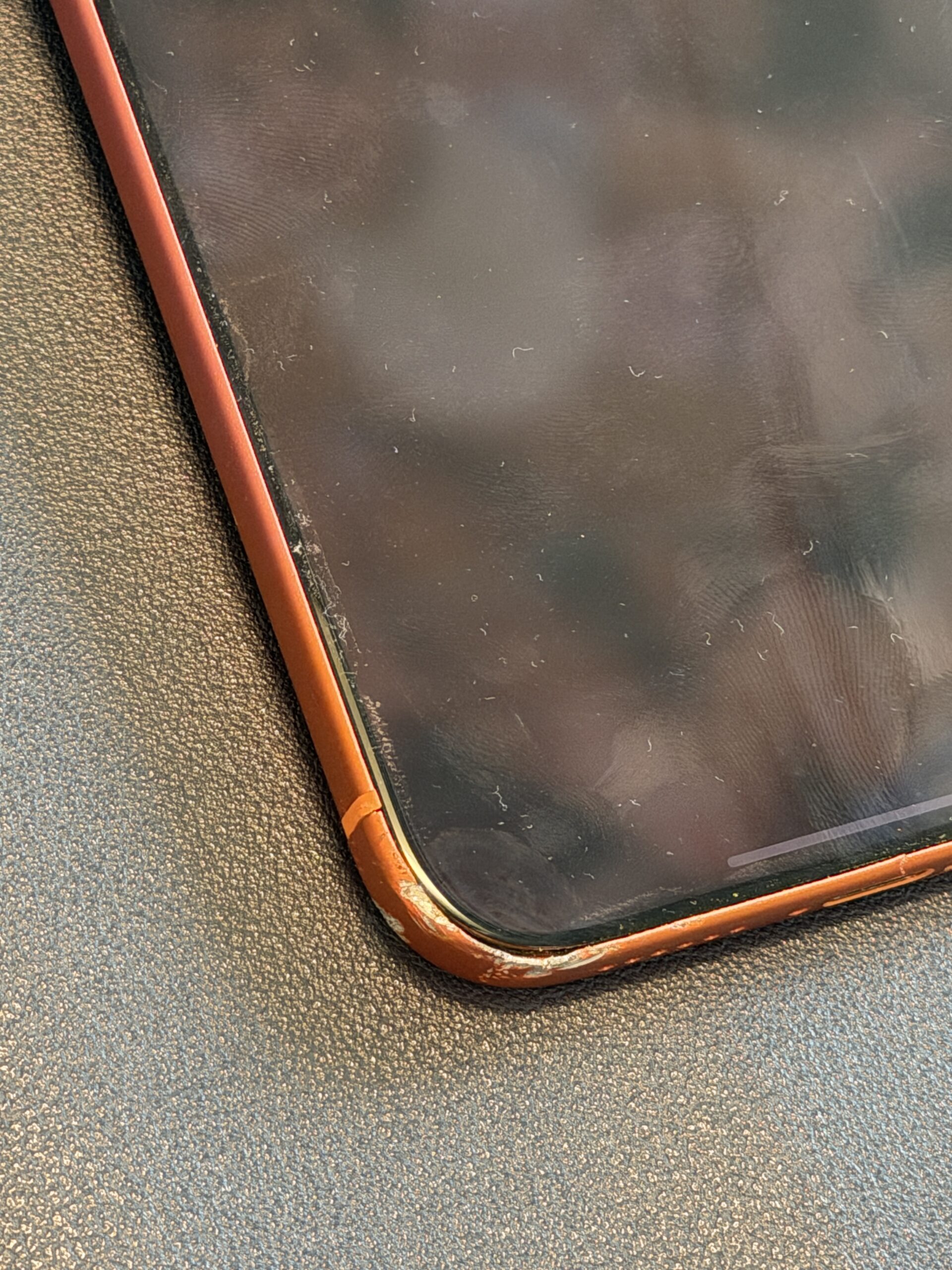
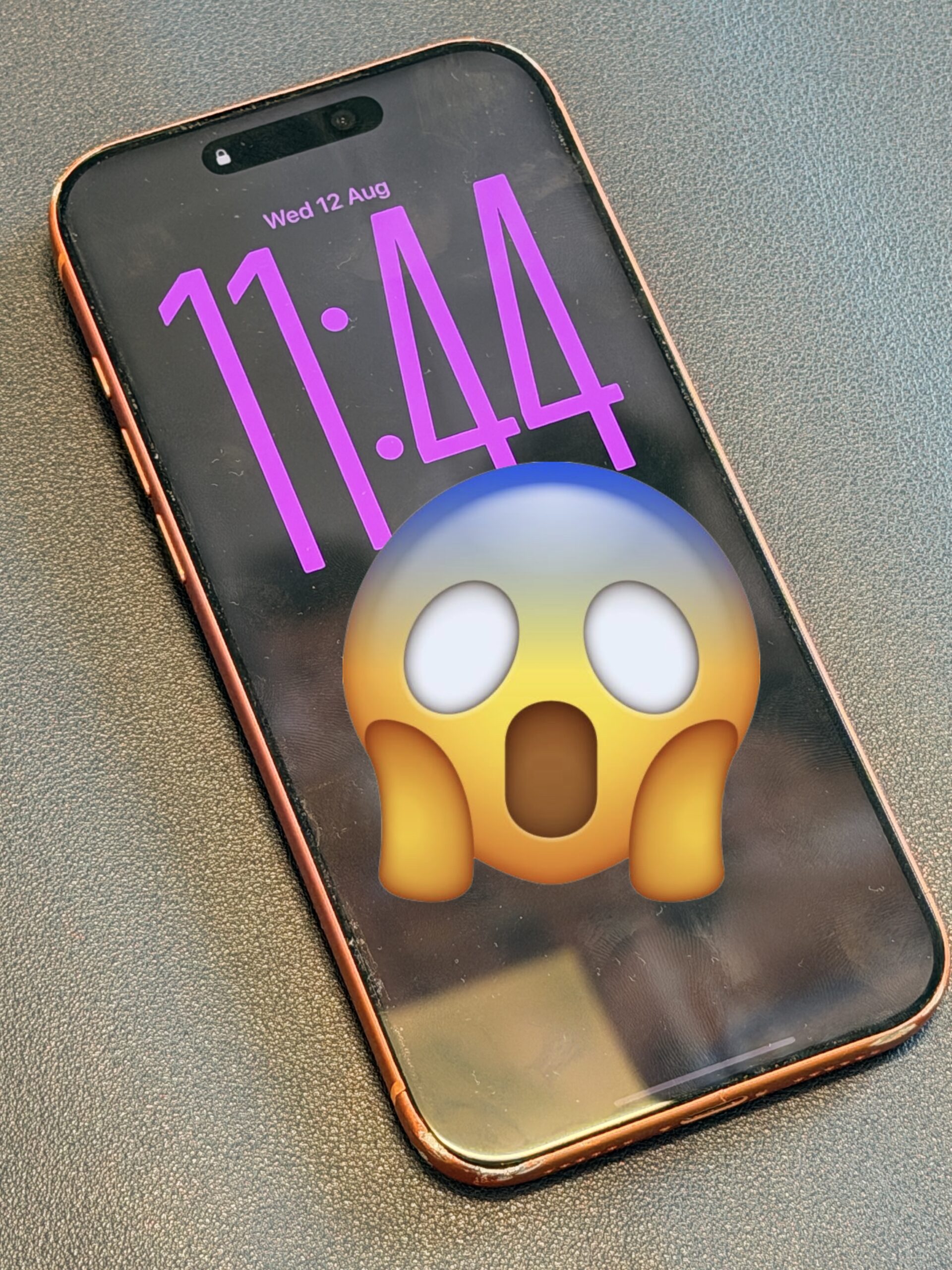
The screen deserves particular credit. We’ve all seen phones acquire a shattered display after falling 50 centimetres from a sofa at precisely the wrong angle. This one fell from a moving vehicle, landed on a highway and was repeatedly driven over before apparently responding with, “Is that all you’ve got?”
At this point I’m not sure whether to take it to an Apple Store or nominate it for a military decoration.
MagSafe deserves a raise too. It was designed to hold chargers and accessories in place, not secure an entire iPhone to the roof of a moving vehicle for approximately 20 minutes. Obviously, nobody should interpret this as evidence that an iPhone is a suitable automotive accessory, but I certainly have considerably more respect for magnets now.
Apple probably has sophisticated laboratories filled with robotic drop rigs, pressure machines, environmental chambers and engineers carefully recording the results.
My testing methodology was slightly different:
Forget phone. Drive. Turn. Launch. Highway. Eight cars. Retrieve.
Scientific? Absolutely not.
Convincing? Strangely, yes.
None of this means the iPhone 17 Pro Max is indestructible. Mine provides rather compelling photographic evidence to the contrary. The back is destroyed, the cameras are damaged, the chassis carries enough battle scars to qualify for veteran status, and I certainly wouldn’t trust the water resistance anymore.
But that’s almost beside the point.
The remarkable thing isn’t that an iPhone can be damaged by cars. It’s how much iPhone remained after the cars were finished.
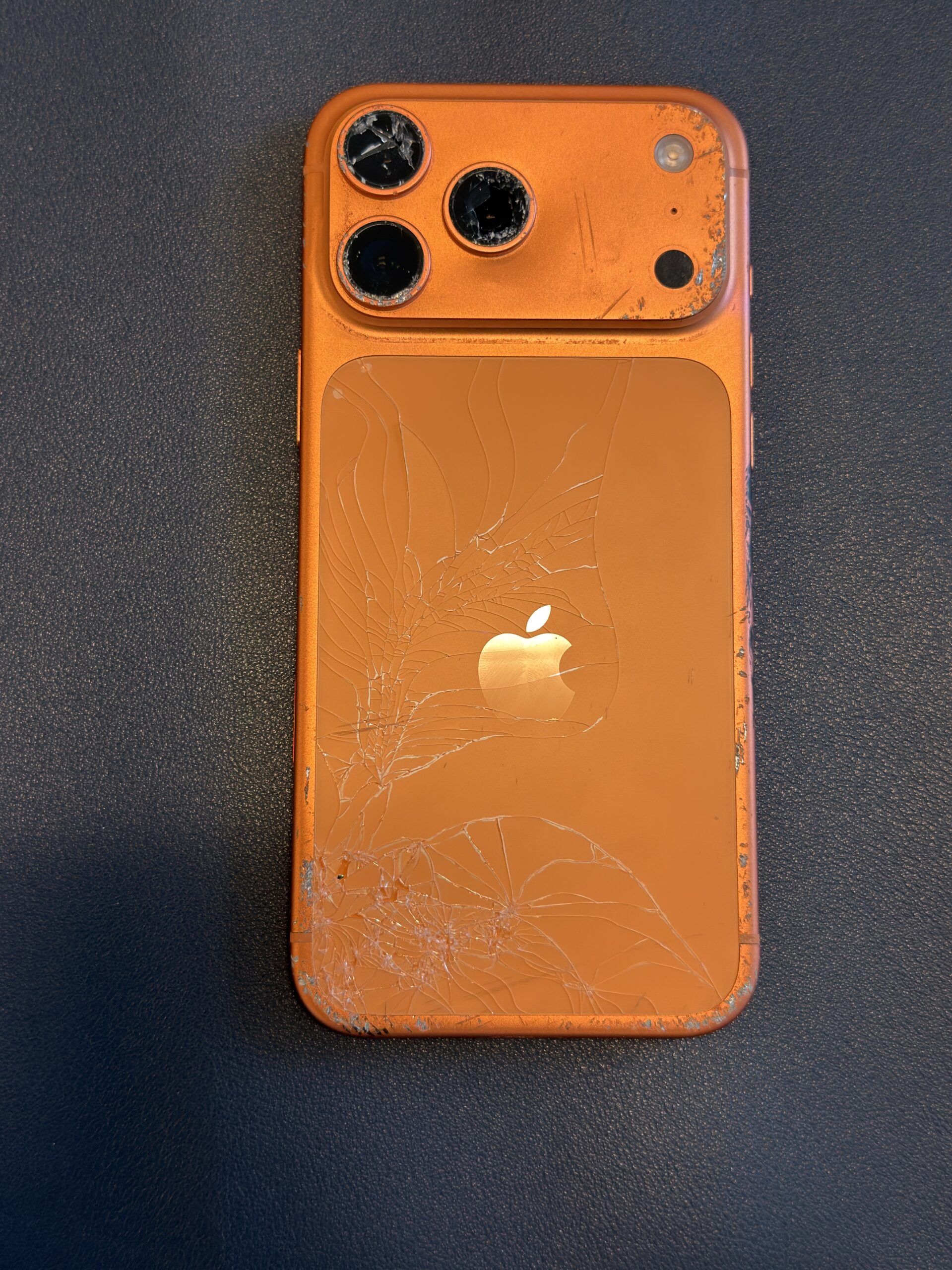
For all the jokes about premium smartphone prices, this is one occasion where Apple’s obsession with materials, structural engineering and build quality appears to have earned its keep. This phone endured the sort of durability test no manufacturer would reasonably put on a presentation slide and came out battered, shattered and looking like it had survived the apocalypse… but still functioning.
So congratulations, Apple. Your iPhone 17 Pro Max survived approximately 20 minutes on top of a moving car, an unscheduled meeting with asphalt and more than eight cars driving over it.
I’m impressed.
The iPhone needs repairs.
My dignity may need repairs too.
And from now on, I’m putting the bag on the roof.