

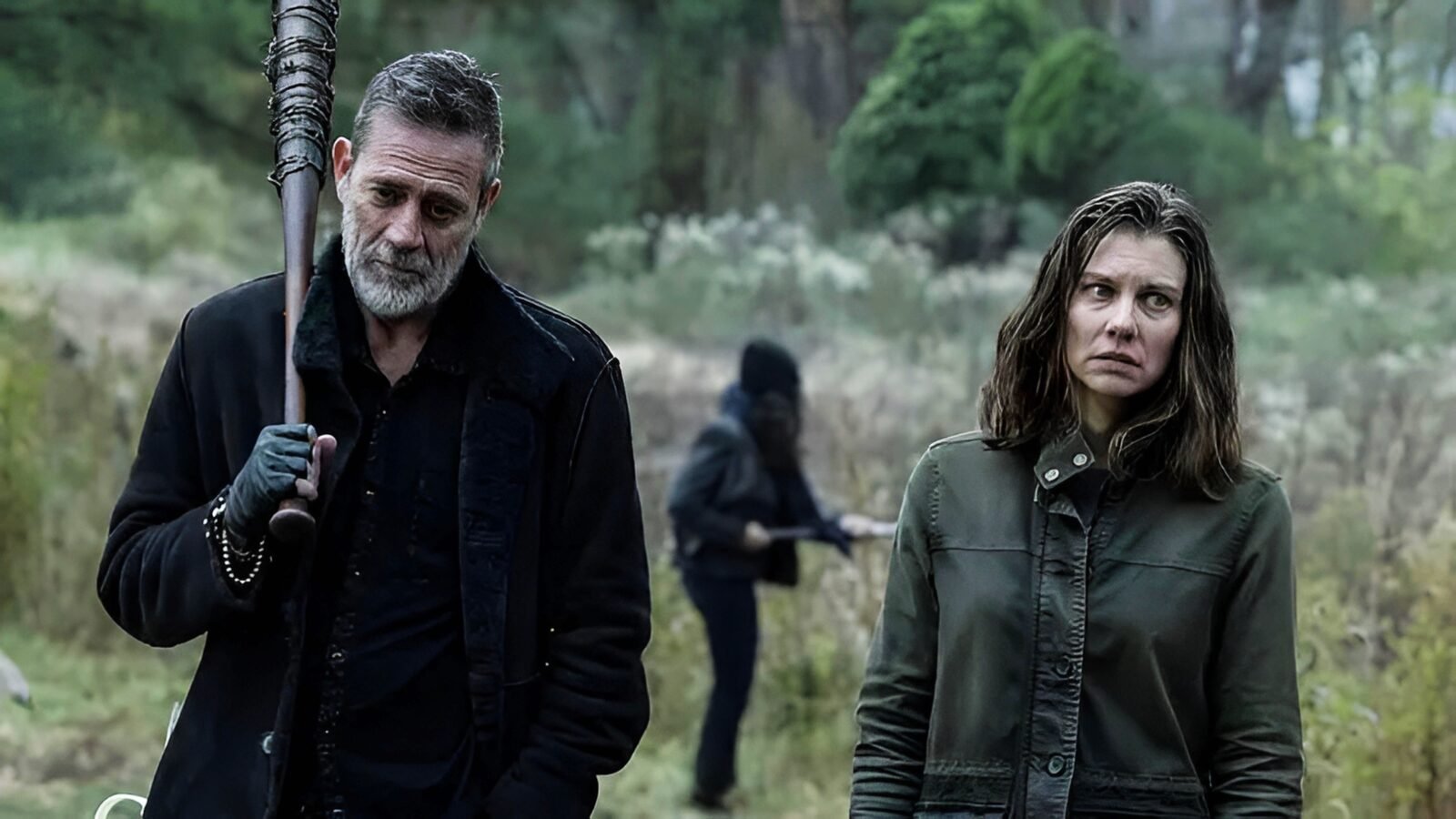
TL;DR: “Emigrants” gives The Walking Dead: Dead City something more valuable than another bloody showdown: genuine character growth. Hershel finally finds his purpose, Maggie embraces rebuilding over revenge, and one familiar pocket watch carries an emotional weight that longtime fans will immediately understand.
The Walking Dead: Dead City Season 3
The Walking Dead: Dead City has spent much of its existence wrestling with the enormous amount of history attached to Maggie, Negan and everyone unfortunate enough to get caught between them. Season 3, however, is beginning to feel interested in something more productive than repeatedly reopening wounds that stopped being fresh several apocalypses ago. Episode 3, “Emigrants,” shifts its attention toward community, responsibility and the uncomfortable question of what the next generation should inherit from the survivors who came before them. The result is an episode with considerably less swagger than some of Dead City’s bigger outings, but considerably more heart, especially for Hershel, who finally starts becoming a character rather than an extension of Maggie’s trauma.
New York starts feeling like something worth saving
The Statue of Liberty settlement gives Dead City a welcome change of purpose. Instead of another grim hideout populated by survivors waiting for the next betrayal, Maggie and Renata are trying to build something sustainable, and that distinction matters. Turning on the lights was always going to attract attention in a world where electricity might as well be a giant neon sign reading “civilization available here,” and episode 3 immediately explores the consequences. Two rival groups arrive carrying wounded survivors and plenty of unresolved hostility, forcing the settlement to decide whether its ideals survive contact with actual human beings. As usual in The Walking Dead, zombies are relatively straightforward compared with convincing two groups of angry people not to murder each other.
What makes “Emigrants” effective is that it does not completely surrender to the franchise’s usual cynicism. The leaders remain trapped inside their grievances, but the ordinary survivors eventually recognize the possibility of cooperation, with Central Park emerging as potential farmland rather than another battlefield. There is something genuinely refreshing about seeing this universe contemplate agriculture, medicine and infrastructure instead of merely discovering increasingly creative ways to decorate abandoned buildings with corpses. Renata brings optimism to that vision, while Maggie supplies the hard-earned practicality of someone who has watched communities rise and collapse repeatedly. Their partnership works because neither woman feels redundant; one gives people something to believe in, while the other understands exactly how difficult keeping that belief alive will be.
Hershel finally becomes more than Maggie’s rebellious son
The biggest improvement in Dead City season 3 continues to be Hershel. Earlier versions of the character were understandably angry but dramatically frustrating, with much of his identity built around resenting Maggie and being manipulated by the Dama. That material made psychological sense without always making compelling television. Episode 3 finally gives him something far more valuable: usefulness. Working alongside Luis in the makeshift hospital, Hershel responds to wounded strangers with concentration and empathy, demonstrating that his experiences have not simply hardened him. In a franchise overflowing with characters who learn to kill because survival demands it, watching someone discover that his contribution might be keeping people alive feels unexpectedly meaningful.
His developing medical ability also gives the character a future that belongs to him rather than to Maggie or Negan. Hershel is no longer interesting simply because he is Glenn’s son or Maggie’s child; he is beginning to determine what those connections mean on his own terms. There is a lovely irony in his trajectory because the Greene family has always carried an association with healing. His grandfather adapted veterinary knowledge to treat survivors when qualified doctors were increasingly rare, while Glenn repeatedly risked himself for other people long before bravery became another form of currency in the apocalypse. Hershel’s path does not duplicate either man, but it feels spiritually connected to both. For perhaps the first time, Dead City makes his family history feel like an inheritance rather than baggage.
The pocket watch lands because the show earns the moment
Maggie giving Hershel the Greene family pocket watch could easily have become shameless nostalgia bait. This franchise knows exactly how much emotional ammunition names like Glenn and Hershel Greene still carry, and it has occasionally been far too eager to reach into that particular box. Here, however, the symbolism feels justified. The watch has traveled through generations and relationships, representing trust more than ownership, and Maggie does not hand it over merely because Hershel has reached a certain age. She gives it to him after watching the person he is choosing to become. That distinction prevents the scene from feeling like another callback designed to make longtime viewers point enthusiastically at their televisions.
Lauren Cohan plays the exchange with the restraint it deserves. Maggie’s relationship with Glenn will always exist underneath her character, but “Emigrants” allows that history to become something other than grief or fuel for her endless conflict with Negan. Passing the watch to their son transforms memory into continuity. Hershel is not being asked to become Glenn, nor should he be; nobody needs a teenage boy wandering Manhattan attempting pizza deliveries in the apocalypse to complete the metaphor. Instead, Maggie recognizes qualities that remind her of the people who once carried the watch: compassion, courage and a willingness to help when walking away would be easier. It is a small scene by Walking Dead standards, yet emotionally it carries more weight than plenty of bloodier sequences.
Maggie and Renata offer a better kind of power struggle
The episode also quietly develops one of season 3’s more interesting relationships through Maggie and Renata. Television has conditioned us to expect two capable leaders sharing authority to eventually become rivals, particularly in The Walking Dead, where leadership disputes historically have the life expectancy of someone hiding a bite. Yet their dynamic currently works because their strengths complement one another. Renata understands morale and represents the emotional center of this growing settlement, while Maggie approaches survival like an engineer inspecting a bridge: identify every weakness before somebody falls through it. Maggie’s strategic instincts naturally make her influential, but the episode wisely avoids turning that influence into an immediate grab for control.
There is still tension buried inside the arrangement because Maggie has led communities before and instinctively thinks several moves ahead. Her ideas about what the settlement needs inevitably shape its direction, even when Renata remains its most visible leader. That creates an interesting question without requiring the show to manufacture hostility between them. Maggie seems exhausted by power rather than hungry for it, and there is something satisfying about watching her use leadership experience without needing another throne. After years spent protecting Hilltop, the Bricks and her own family, perhaps her most meaningful evolution would be learning that building a home does not require carrying the entire structure on her shoulders.
“Emigrants” proves Dead City can evolve beyond Maggie and Negan
Perhaps the most encouraging thing about episode 3 is how little it relies on the central gimmick that originally sold Dead City. Maggie and Negan remain foundational to the series, and their history is impossible to erase, but there are limits to how many times their relationship can cycle through hatred, reluctant cooperation and reminders of Glenn’s murder before the emotional machinery begins making alarming noises. Season 3 appears increasingly aware of that problem. By expanding Hershel’s role, developing the settlement and introducing meaningful questions about rebuilding society, the series is creating story engines that can operate independently of its most famous feud.
That does not mean “Emigrants” is a flawless episode. At roughly 40 minutes, some of the conflict between the visiting factions feels compressed, and the shift toward cooperation arrives with less resistance than the franchise typically gives such transformations. Hershel’s rapid progress as a medical apprentice also stretches credibility slightly, even by the standards of a universe where practically everyone becomes frighteningly competent after sufficient montage-adjacent experience. Still, the emotional logic holds together. The episode knows where it wants Hershel to end up and provides enough character groundwork for the destination to feel satisfying. More importantly, his growth opens possibilities rather than closing them, which is exactly what a third season should be doing.
Verdict
The Walking Dead: Dead City season 3 episode 3 is not designed around an enormous walker set piece or another explosive confrontation between Maggie and Negan, and it is stronger for resisting both temptations. “Emigrants” finds drama in the harder work of rebuilding, asking whether survivors who have spent years learning how not to die can finally learn how to live together. Hershel benefits most from that shift, finally gaining an identity rooted in healing, responsibility and his own choices, while the Greene family pocket watch gives his development an emotional connection to Glenn and his grandfather without drowning the scene in nostalgia. The episode occasionally rushes its community conflict and asks viewers to accept Hershel’s medical progress rather quickly, but its emotional payoff lands. After years of inherited pain, Dead City finally lets Hershel inherit something better.