
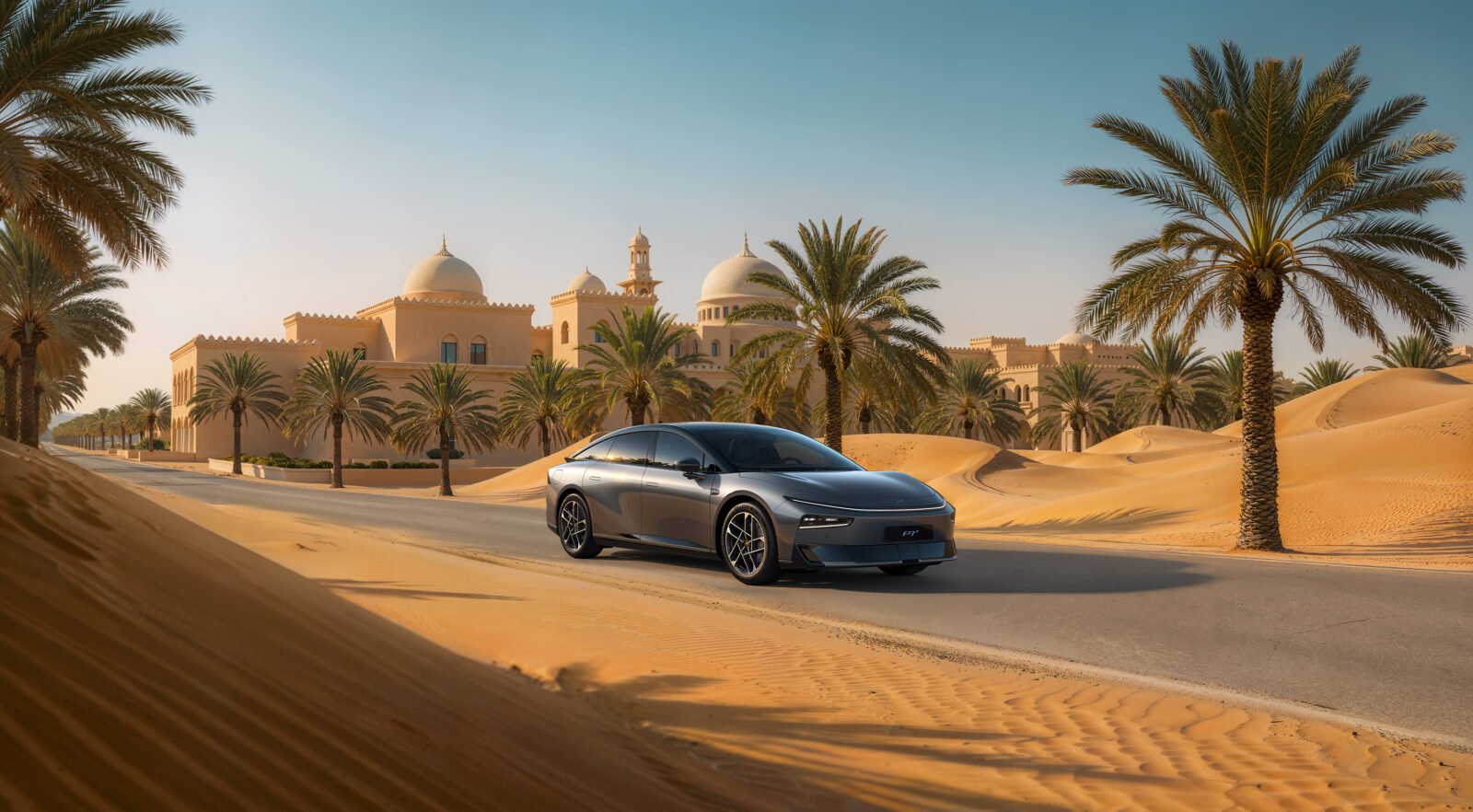
XPENG has brought its P7+ electric fastback to the United Arab Emirates, expanding the brand’s presence in a market that continues to absorb more battery-powered cars. The model is presented as a practical four-door with coupe-inspired lines and the interior volume of a mid-size SUV. It sits on an 800-volt silicon-carbide platform that supports 5C charging, allowing a claimed charge from 10 to 80 percent in twelve minutes when connected to a compatible high-power station. That speed is useful for drivers covering the distance between emirates, though actual times will depend on charger availability and ambient temperature.
The cabin follows what XPENG calls a cloud-space layout, finished with Nappa leather and a microfiber suede headliner. Designers claim thirty-five separate storage spots. A 3,000 mm wheelbase delivers generous rear legroom, while the boot holds 573 litres and expands to 1,931 litres when the rear seats are folded, with a 1.1-metre-wide opening that helps with larger items. The software suite includes the Tianji XOS interface and XPILOT ASSIST, which offers fourteen active safety functions powered by a Turing AI chip. These driver-assistance systems are increasingly standard among Chinese electric vehicles aiming at the premium segment.
Pricing starts at AED 164,000. The car is available for viewing and test drives at XPENG showrooms across the UAE. The launch coincides with a period of fluctuating fuel prices; after several months of rises, the UAE Fuel Price Committee cut petrol and diesel rates for July 2026. That short-term relief does not erase the longer-term calculation many commuters make about predictable electricity costs versus petrol. At the same time, national policy continues to push electrification, with a target of electric vehicles making up half the fleet by 2050. Dubai Municipality has allocated AED 150 million to install 600 public supercharging stations over the next two years, while Dubai alone recorded more than 40,600 EV registrations in the first half of 2025.
The P7+ joins a growing field of Chinese electric models competing for buyers who want space, rapid charging and advanced software without European or American pricing. Whether the combination of fast-charge capability, cabin volume and assistance features proves decisive will depend on real-world range in Gulf heat, the density of 800-volt chargers, and how the software performs over years of updates. For now it adds another option for drivers who regularly move between city centres and longer regional trips.