
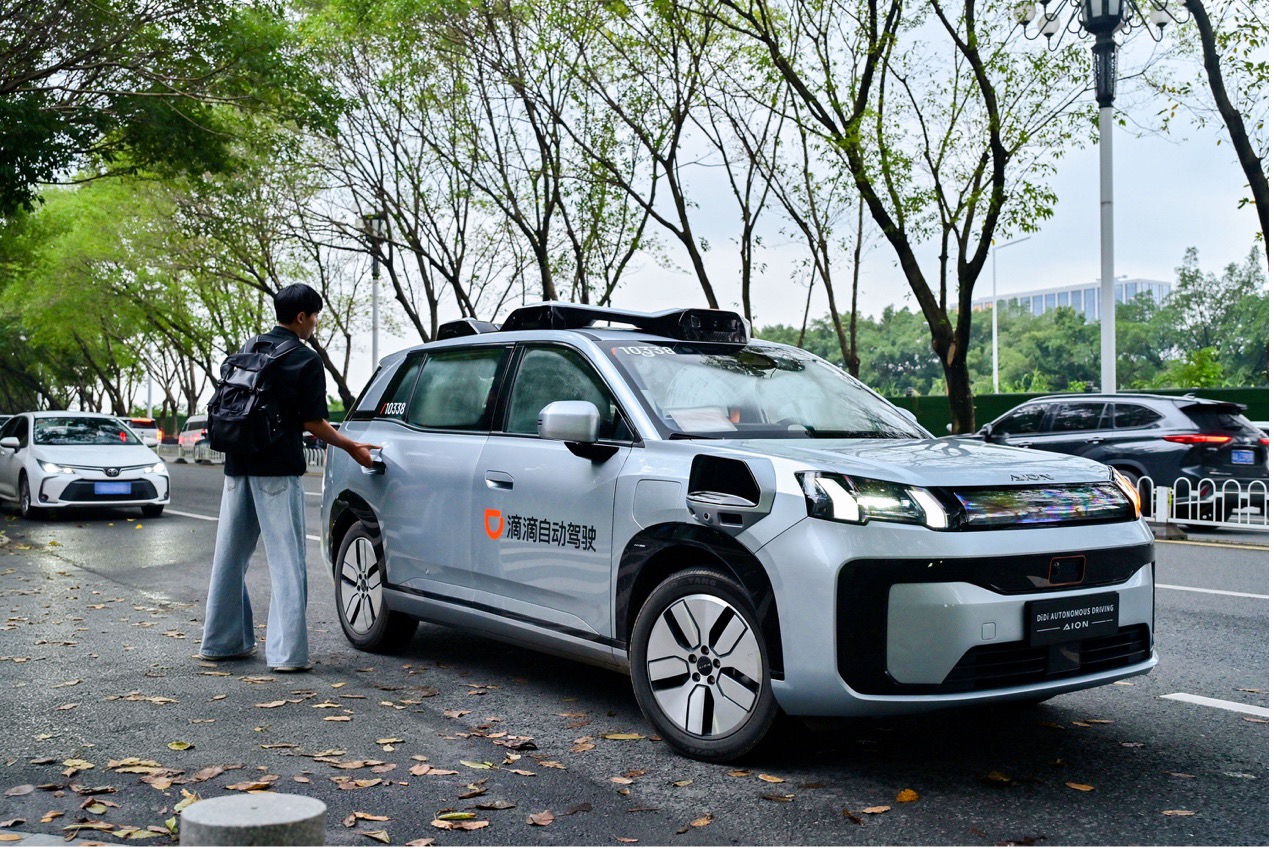
DiDi Autonomous Driving has started fully driverless passenger service trials with its R2 robotaxi in China, giving the company a more production-focused platform as it prepares to take its autonomous driving operation beyond its home market. The UAE is set to become the company’s first international destination, with local testing and pilot programmes planned during 2026.
The R2, developed with GAC Aion, represents a shift from adapting conventional vehicles towards building a car specifically around Level 4 autonomous passenger services. DiDi says its existing driverless operations have been running around the clock in selected demonstration areas of Guangzhou and Beijing since the fourth quarter of 2025. The new trials put the R2 into passenger operations rather than limiting it to technology validation.
Hardware is predictably a major part of that proposition. The R2 carries 33 sensors, combining LiDAR, cameras, 4D millimetre-wave radar, infrared cameras and audio sensors. Its central computing system provides more than 2,000 TOPS of GPU processing performance, while multiple layers of redundancy are intended to keep critical systems operating if individual components fail.
Those numbers are substantial, but autonomous vehicles are increasingly being judged on considerably more than sensor counts and computing power. Consistent behaviour across unpredictable traffic, reliable fleet operations and the ability to deal with unusual road situations will matter more as robotaxis move into commercial service.
DiDi has also designed the cabin around the absence of a human driver. Rear passenger space has been prioritised, alongside adjustable seats and a 17.3-inch ceiling-mounted entertainment display. An AI voice system can handle functions including PIN verification, beginning a journey, climate controls, windows and ambient lighting. These seemingly smaller details could become important as operators work out how passengers interact with vehicles when there is no driver available to assist them.
The UAE provides an interesting proving ground. DiDi confirmed in April that it was working with local partners toward robotaxi testing and pilot projects, while its partnership with the Abu Dhabi Investment Office places it within Abu Dhabi’s Smart and Autonomous Vehicle Industries ecosystem.
Dubai, meanwhile, is already building meaningful autonomous taxi experience. According to figures released by the Government of Dubai Media Office on August 19, robotaxi operations in the emirate had exceeded four million kilometres, while 7,613 fully driverless passenger journeys had been completed. The wider fleet stood at 144 vehicles, with 48 actively operating.
That activity sits within Dubai’s Autonomous Transportation Strategy, which targets converting 25% of transportation into autonomous modes by 2030.
DiDi therefore won’t be entering an untouched market. The more revealing test for the R2 will be how effectively a system developed through Chinese urban operations can be adapted to UAE roads, regulations, climate and passenger expectations. Starting fully driverless service trials in China is an important step, but international deployment will provide a much tougher measure of how transferable the technology really is.