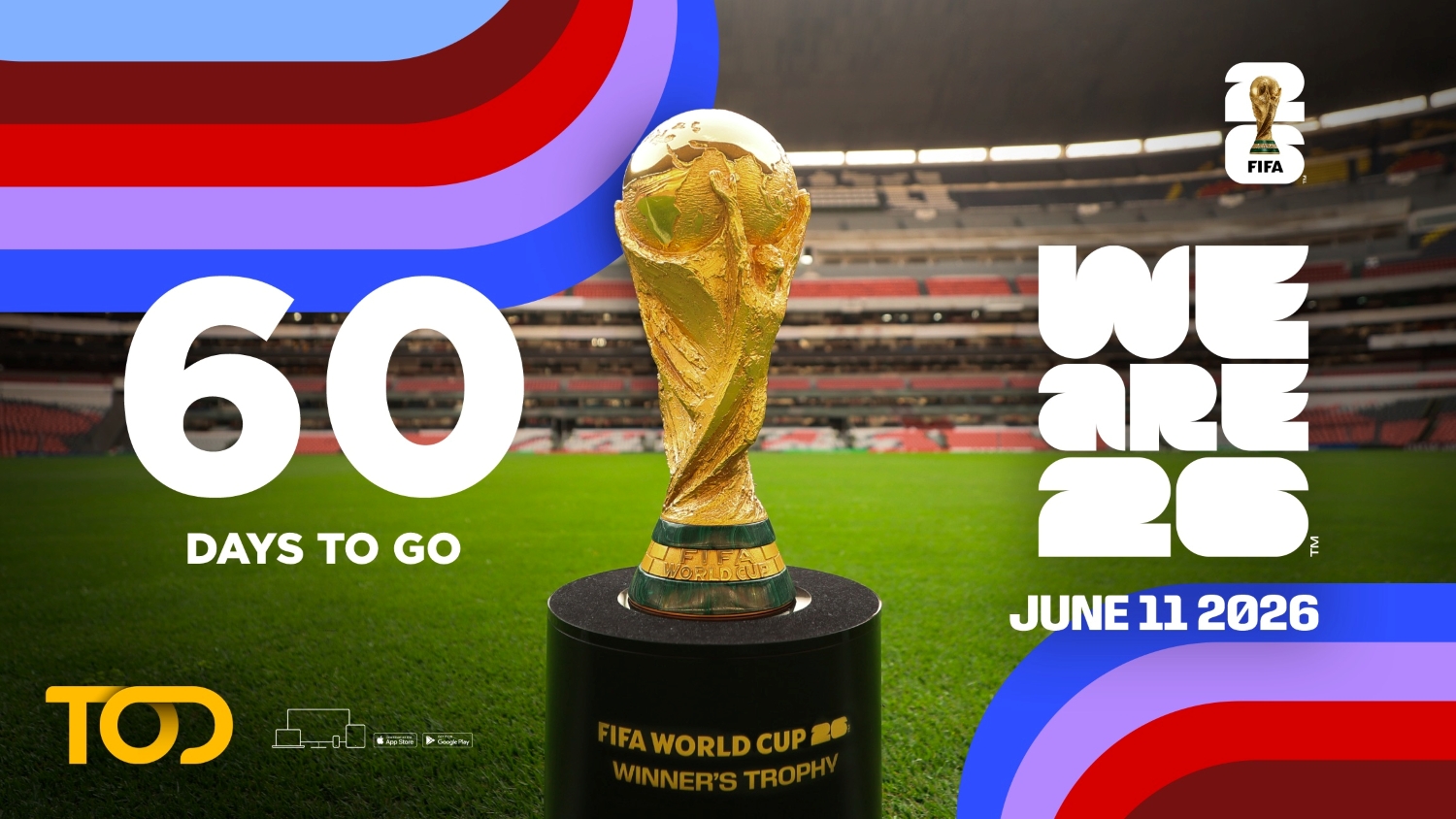
With just two months until the FIFA World Cup 2026 kicks off on 11 June, Arab football stands on the verge of its largest-ever presence at the tournament, and the streaming platform TOD is preparing to carry every match to viewers across the MENA region.
This edition marks a notable shift. Eight Arab national teams — Jordan, Morocco, Tunisia, Algeria, Egypt, Qatar, Saudi Arabia and Iraq — have qualified, the highest number the region has sent to football’s flagship event. The leap builds directly on Morocco’s surprising run to the semi-finals at the 2022 World Cup in Qatar, which raised expectations and strengthened belief across North Africa and the Gulf.
The group stage wastes little time in testing that confidence. Morocco faces Brazil, Tunisia meets the Netherlands, Egypt takes on Belgium, while both Algeria and Jordan are drawn against Argentina. These early clashes against football’s established elite will quickly show whether the region’s progress is substantive or still largely aspirational.
Leading the charge are several recognisable figures carrying both national pride and club-level pedigree. Morocco’s Achraf Hakimi, Egypt’s Mohamed Salah, Jordan’s Mousa Al-Taamari and Qatar’s Akram Afif headline the Arab contingent. They will share the pitch with global names such as Cristiano Ronaldo and Kylian Mbappé, as well as an emerging generation of younger talents, creating a tournament caught between legacy players and fresh transitions.
TOD, the subscription OTT service from beIN MEDIA GROUP launched in 2022, holds the official MENA streaming rights. The platform promises 4K coverage, multilingual commentary and a suite of interactive tools including catch-up functions, personalised discovery, interactive timelines, automated highlights, FanZones and MultiView. In practice, the value of these features will be judged by their reliability during peak viewing hours rather than the length of the feature list.
Peter Mrkic, managing director of TOD-MENA, framed the event as a defining moment for Arab football and the wider region. The platform’s role, he said, is to deliver an immersive, device-friendly experience from the opening whistle to the final. While such language is typical for any rights holder ahead of a major tournament, the real test will be seamless delivery when millions log in simultaneously.
The broader picture is telling. Arab football has long combined deep domestic passion with inconsistent results on the international stage. The expanded 2026 participation offers a platform to build on 2022’s breakthrough, yet the jump from participation to genuine contention remains steep. Success will be measured not by the number of teams present but by competitive performances against the world’s best.
For fans in the UAE and across the Gulf, TOD provides the most straightforward access to live matches without relying on traditional broadcasters. Whether the platform’s technical upgrades genuinely improve the viewing experience or simply add digital clutter will become clear once the tournament begins in earnest.
Ultimately, the 2026 World Cup gives Arab football its biggest stage to date. The coming weeks will reveal whether that stage becomes a showcase of arrival or another chapter of promising but incomplete progress.