

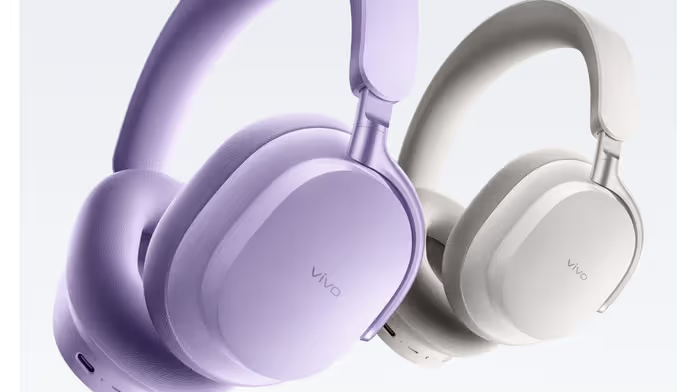
Vivo has entered the over-ear headphone market with its first active noise-canceling model, aiming to combine extended battery life, solid audio credentials, and a notably low price. Announced alongside its latest smartphones, the Vivo Over-Ear Noise-Canceling Headphones arrive as the Chinese company diversifies beyond handsets into personal audio, a category already crowded with established competitors.
At 238 grams, the headphones prioritize comfort with foam cushions and synthetic leather ear pads. They come in Cloud White and Breeze Purple finishes. Inside, 40mm dynamic drivers cover a frequency range from 20Hz to 40kHz and carry Hi-Res Audio certification for both wired and wireless use, along with support for 360-degree spatial audio. These specifications place the product in the mid-range segment on paper, where many devices promise similar capabilities but often differ markedly in real listening conditions.

The active noise cancellation system claims up to 58dB reduction, with preset modes tailored for planes, subways, and buses. Battery performance stands out as a potential strength: up to 75 hours with ANC disabled and 35 hours with it enabled. A quick 10-minute charge reportedly yields nine additional hours of playback. Such figures sound competitive in a market where battery longevity has become a key battleground, though actual results will depend on volume levels and usage patterns.
Connectivity relies on Bluetooth 5.4, supporting simultaneous pairing with up to three devices for easy switching between phones and laptops. A low-latency mode reduces delay to 47 milliseconds for gaming, while built-in AI tools offer real-time translation and call management assistance. A companion app provides a 10-band equalizer, supplemented by physical controls on the ear cups, including a volume wheel. These features reflect the broader trend of headphones evolving into multifunctional devices rather than simple audio tools.
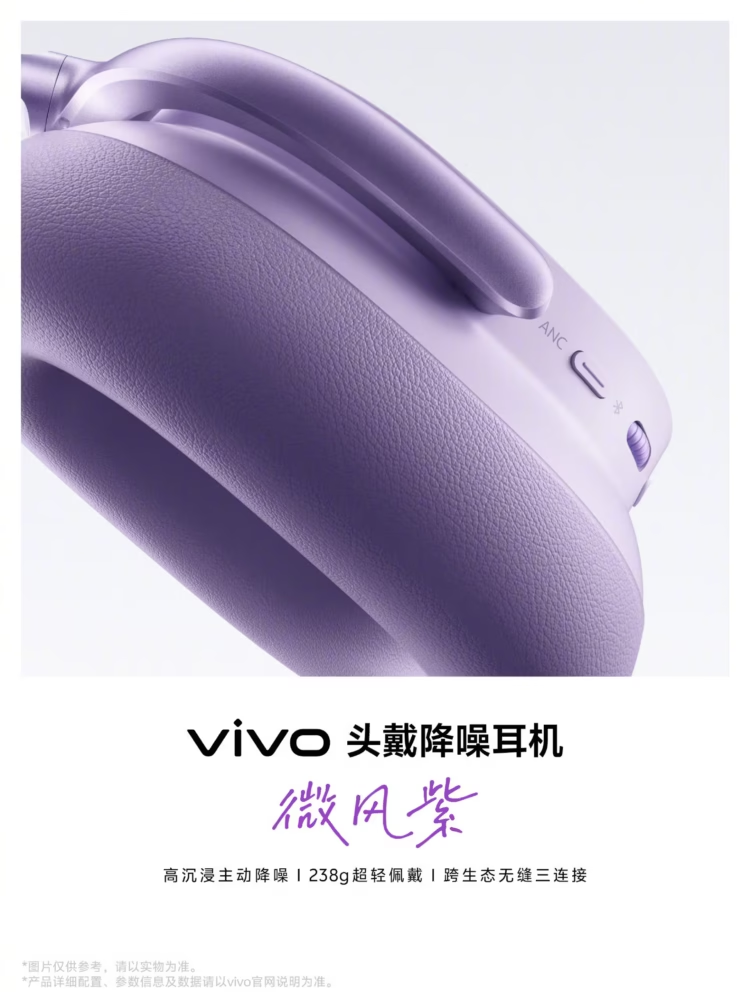
Priced at 499 yuan, roughly $69, the headphones position themselves as an affordable option when they launch in China on June 10. Global availability details remain undisclosed. This aggressive pricing could appeal to budget-conscious consumers, yet it also raises questions about long-term build quality and component durability compared to more expensive alternatives from brands with deeper audio heritage.
The launch fits Vivo’s pattern of rapid expansion across consumer electronics, leveraging its smartphone success to test new categories. However, the audio space demands more than specification sheets. Many first-generation products from phone makers have shown promise on launch but struggled with refinement in areas like sound signature consistency or ANC effectiveness against varied real-world noise. Battery claims, while impressive, have historically proven optimistic once independent testing begins.
Overall, Vivo’s debut over-ear ANC headphones represent a pragmatic attempt to capture value-driven buyers in a maturing market. Success will hinge on whether the balance of comfort, battery life, and features holds up beyond the initial marketing push. For now, the product adds another accessible choice for users seeking capable noise-canceling headphones without premium markups, though careful evaluation remains essential once samples reach reviewers.