

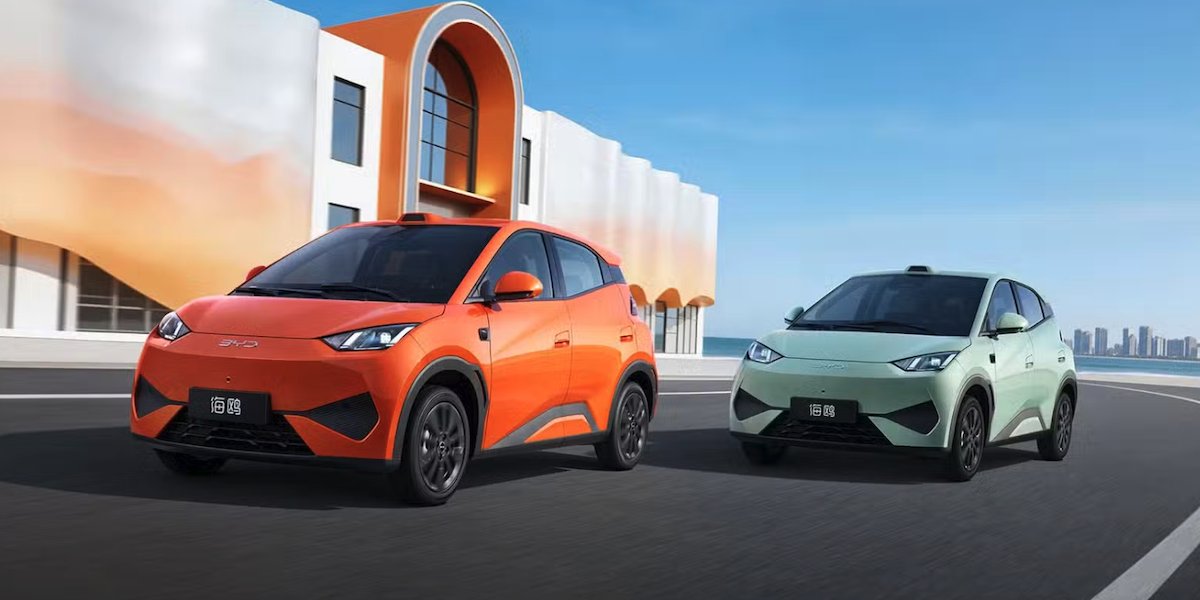
BYD has introduced its first in-house automotive driving chip as part of a broader push into advanced driver assistance systems for its electric vehicles. The Chinese manufacturer, already one of the world’s largest EV producers, unveiled the XUANJI A3, a 4nm chip designed specifically for automotive use. According to the company, a three-chip setup can deliver more than 2,100 TOPS of computing power while using 20 percent less energy per TOPS than some rival hardware. It natively supports L3 and L4 autonomous driving capabilities, levels that promise greater hands-off functionality but still require human oversight in most real-world conditions.
The chip announcement arrives alongside other software and hardware updates. BYD now offers full damage coverage for its God’s Eye Urban Navigate on Autopilot system in China, covering economic losses from accidents deemed the vehicle’s fault while the system is engaged. This one-year policy applies to new buyers and existing owners upgrading to version 5.0. The company cites data from over 3.15 million intelligent vehicles accumulating 124 million miles daily, supported by a 5,000-strong R&D team, as justification for the risk it is assuming. The entire lineup can also be equipped with a LiDAR-equipped God’s Eye variant featuring planned upgrades, including the XUANJI Architecture 2.0 with satellite sensor integration, an enhanced physical AI model, and a self-evolving data system.
Additionally, BYD introduced the DiLink AI Intelligent Cockpit, which includes a digital assistant capable of proactive task handling and deeper reasoning. These developments reflect BYD’s strategy of vertical integration, controlling more of its technology stack from batteries and motors to chips and software. In an industry where many automakers partner with specialized suppliers like Nvidia or Mobileye, BYD’s approach aims for cost control and faster iteration, particularly important in China’s highly competitive EV market.
Yet questions remain about execution and real-world performance. While L3 and L4 systems sound advanced on paper, regulatory approval, edge-case handling, and consistent safety records have challenged even established players. Tesla’s Full Self-Driving, for instance, has faced scrutiny over promised capabilities versus delivered results, and similar gaps often appear across the sector. BYD’s insurance offer is a notable customer gesture, but it applies only in China for now and may serve partly as a marketing tool to build confidence in systems still maturing. Daily mileage figures impress, yet the quality and diversity of that data matter more than volume when training AI for unpredictable driving environments.
The EV landscape has shifted dramatically in recent years, with Chinese brands moving from budget disruptors to technology leaders. BYD’s in-house chip development mirrors broader national efforts to reduce reliance on foreign semiconductors amid geopolitical tensions. For consumers, the appeal lies in potentially more affordable advanced features, but history shows that autonomous driving claims often outpace reliable deployment. Features like proactive AI cockpits risk adding distraction if not carefully tuned, a concern echoed in broader industry discussions around driver attention.
Overall, BYD’s latest moves signal serious investment in self-reliance and feature depth. Whether the XUANJI A3 and associated systems deliver meaningful advantages over established competitors will become clearer through independent testing and long-term reliability data. In a market pressured by rapid innovation and regulatory evolution, such vertical control could prove advantageous, provided safety and usability keep pace with ambition.