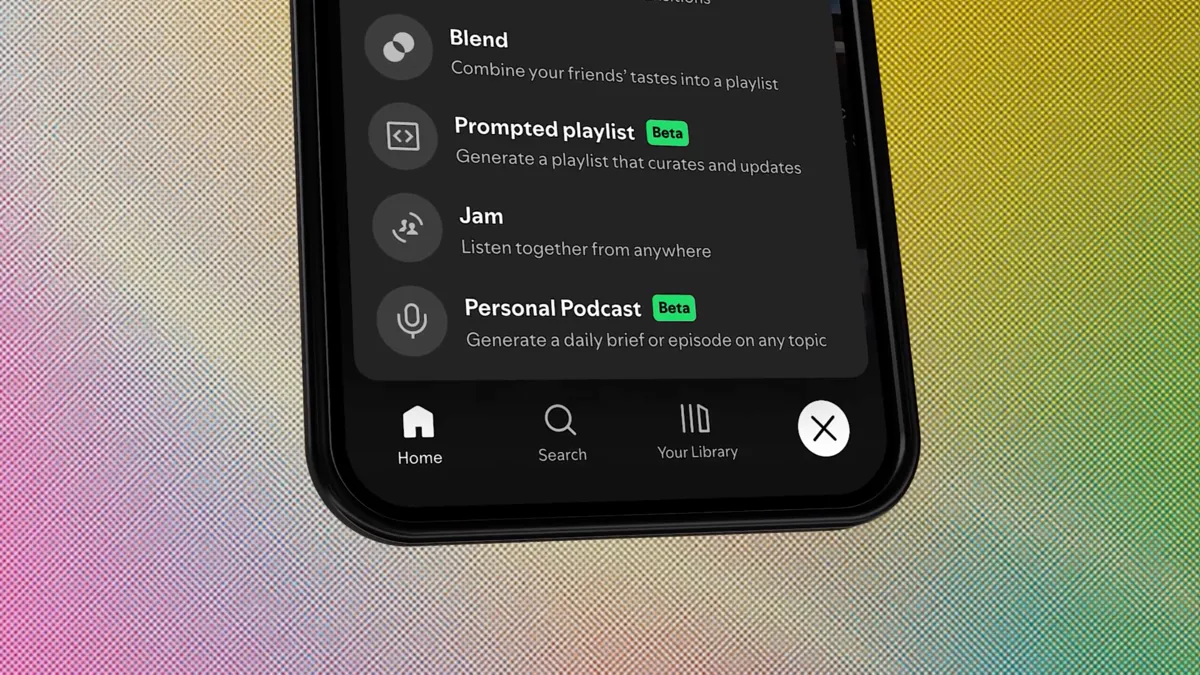
Spotify is introducing a new AI-driven tool called Personal Podcast that allows premium subscribers to generate private audio episodes based on simple text prompts. The feature, set to roll out to users in the United States starting in June, reflects the streaming giant’s continued push into artificial intelligence as it seeks to differentiate itself in an increasingly crowded audio market.
Users will enter a description of the desired content directly in the Spotify app, after which the system creates a customized episode drawing from the listener’s interests and past habits. The process supports scheduling recurring episodes, such as daily news summaries or weekly overviews, which could appeal to those seeking structured listening routines. Additional context can be incorporated through links, PDFs, or plain text, and creators can refine prompts or select different AI voices for the output. Generated episodes remain private and appear in the Your Library section rather than public feeds.
While the concept builds on the rapid integration of generative AI across media platforms, it arrives at a time when many listeners express fatigue with algorithmic recommendations and synthetic content. Spotify has experimented with AI features before, including personalized playlists and multilingual support for its DJ tool, yet this marks a more direct entry into user-generated audio production. The company will provide a limited number of monthly credits for generation, with options to purchase extras, a model that echoes the freemium strategies common in AI tools but risks alienating users who already pay for premium access.
From a broader perspective, podcast consumption has evolved significantly since the medium’s early 2000s roots as independent RSS feeds. What began as a decentralized space for creators has shifted toward centralized platforms that prioritize convenience and scale. Spotify’s move fits this pattern, leveraging its vast user data to personalize experiences while keeping outputs private to address potential concerns around ownership and distribution. However, the credit system introduces a layer of micro-transactions that could limit experimentation for casual users, especially when competing free or open-source AI audio generators are gaining traction elsewhere.
The timing also raises questions about quality and authenticity. AI-generated voices have improved markedly in recent years, yet they still often lack the nuance and emotional depth of human hosts. Early adopters may find value in quick briefings or niche topic explorations, but whether these synthetic podcasts can sustain long-term engagement remains uncertain. Privacy considerations add another dimension. Although episodes stay within personal libraries, the reliance on user data and uploaded materials invites the usual scrutiny around how platforms handle information in the AI era.
Overall, Spotify’s Personal Podcast feature represents a pragmatic attempt to blend personalization with emerging technology. It could streamline content discovery for busy listeners or those with specific interests, yet it also highlights the industry’s wider tension between innovation and the risk of diluting the genuine human connection that originally drew many to podcasts. Success will likely depend on execution quality and how transparently Spotify manages the balance between convenience and the underlying costs of AI infrastructure.