

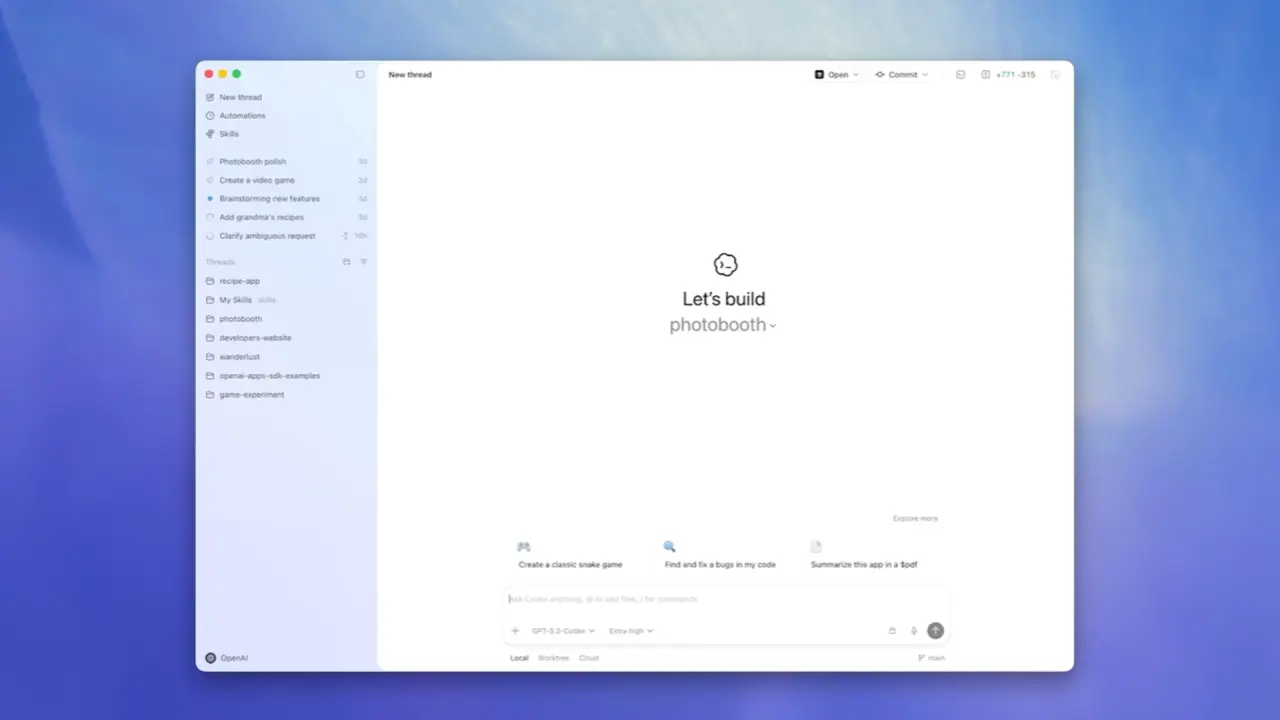
OpenAI has released Codex as a native macOS application, bringing its AI-assisted coding tool out of the command line and into a dedicated desktop environment. Until now, Codex was primarily accessed through web-based workflows or CLI integrations, which limited its appeal outside more technical user groups. The macOS release signals a push toward broader adoption and positions Codex as a more direct competitor in the increasingly crowded AI coding tools market.
Codex is designed as OpenAI’s platform for building and coordinating AI agents, a category often described as “agentic AI.” Rather than focusing on single-prompt interactions, Codex emphasizes longer-running tasks, parallel execution, and coordination between multiple agents. This approach mirrors the direction taken by rivals such as Claude Code, which has gained traction among developers looking for more autonomous coding assistance.
According to OpenAI, the Codex app allows users to manage multiple agents simultaneously, with work divided into separate threads organized by project. This structure makes it possible to run parallel tasks without agents overwriting each other’s context, or to assign different parts of the same codebase to separate agents. The macOS app also integrates with common development environments, syncing with IDEs and the Terminal to preserve context across tools rather than forcing users into a closed interface.
One of Codex’s more distinctive features is its support for Skills. These are structured folders containing instructions, scripts, and other resources that agents can reference when performing specialized tasks. Skills can be used for repeatable workflows such as automated code reviews or testing routines, and users can either rely on prebuilt options or define their own through an interface built into the app. This leans Codex toward system-level assistance rather than ad hoc code generation.
To mark the launch, OpenAI is temporarily increasing rate limits for existing subscribers across Plus, Pro, Business, Enterprise, and Edu tiers. The company is also allowing limited access for ChatGPT Free and GO users, suggesting an effort to seed adoption ahead of wider platform changes.
The Codex release comes during a busy period for OpenAI, following the introduction of Atlas, its AI-powered browser. At the same time, the company is facing mounting financial and competitive pressure. Analysts have warned of significant revenue challenges in 2026, and reports suggest that NVIDIA is reassessing a potential large-scale investment. Against that backdrop, Codex appears less like an experimental side project and more like a strategic attempt to secure a foothold in developer tooling.
The macOS version of Codex is available now through OpenAI’s website. A Windows release has not yet been announced.