

Meta has launched a new standalone AI app, marking its latest move in a crowded field of conversational assistants. While the company’s Meta AI has already been embedded in popular platforms like Instagram, WhatsApp, Messenger, and Facebook, this new release gives the AI a dedicated presence on mobile devices.
Built on Meta’s Llama 4 large language model, the app aims to establish more conversational and personalized interactions, particularly through voice. Meta is positioning the app as a starting point for developing AI that feels tailored to individual users. To that end, it initiates onboarding with personal questions and is designed to adapt responses based on user-specific information.
Unlike more static voice assistants, Meta AI can operate in the background, allowing users to carry on conversations with the AI while multitasking within other apps. This hands-free functionality is currently available in the U.S., Canada, Australia, and New Zealand, suggesting a phased rollout with broader geographic support likely to follow.
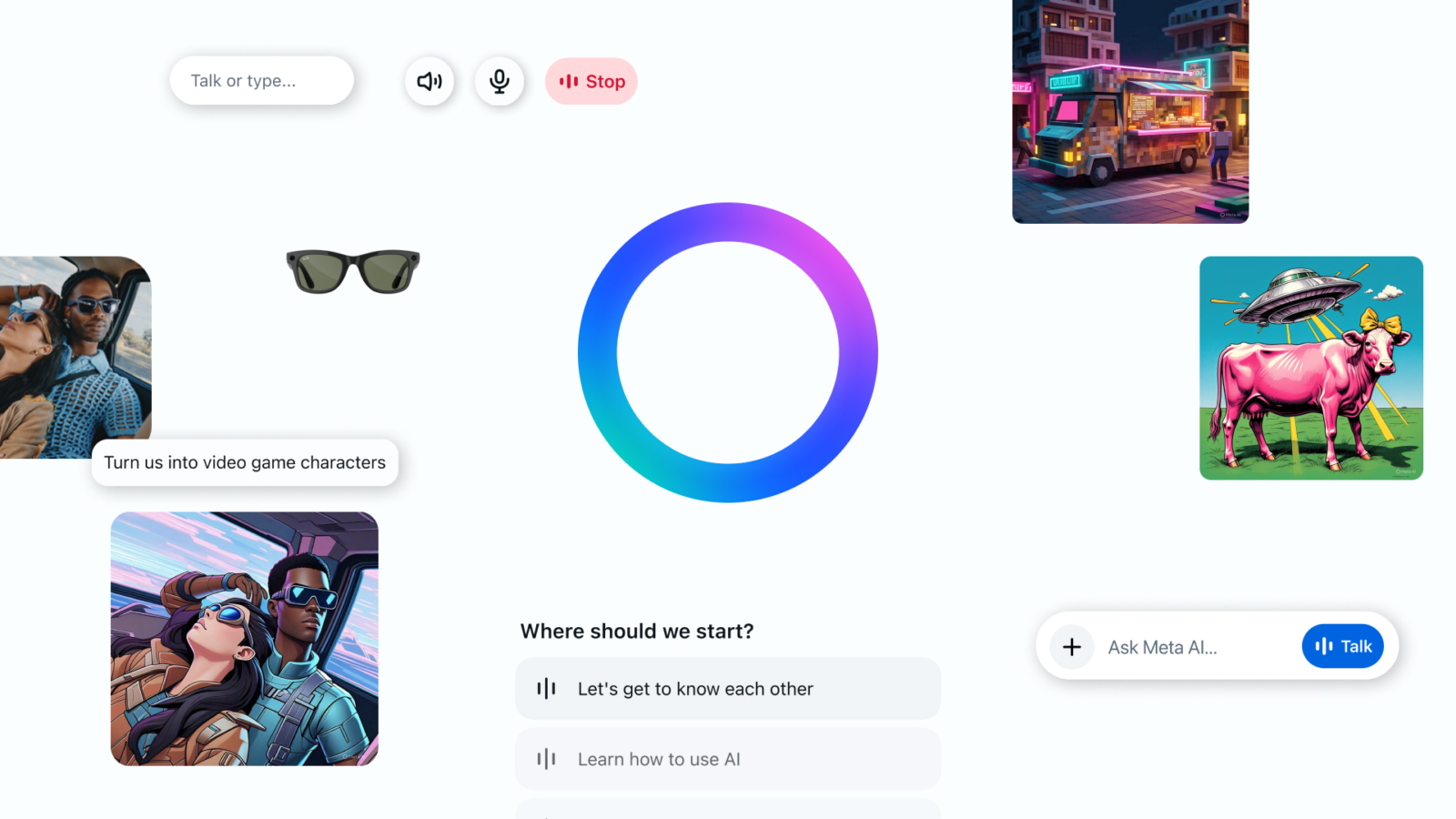
The app also supports image generation and editing, all controllable via text or voice commands. While those features aren’t novel within the generative AI space, Meta’s execution is closely tied to its ecosystem. The assistant can pull from a user’s Meta-linked profile data, behavioral signals, and contextual cues to tailor outputs—an approach consistent with the company’s broader history of content personalization.
Meta AI can also conduct web searches, generate shopping recommendations, and offer pre-scripted prompts to help guide conversations. These features indicate Meta’s ambition to blend search, creativity, and utility into a single, voice-forward experience.
As expected, the app is free to download on the App Store. Its launch signals Meta’s intent to compete directly with existing AI platforms by leveraging its deep well of user data and social integration. Still, the degree to which users will embrace an AI that draws on their broader digital footprint remains to be seen—particularly given the company’s ongoing challenges around data privacy and transparency.