
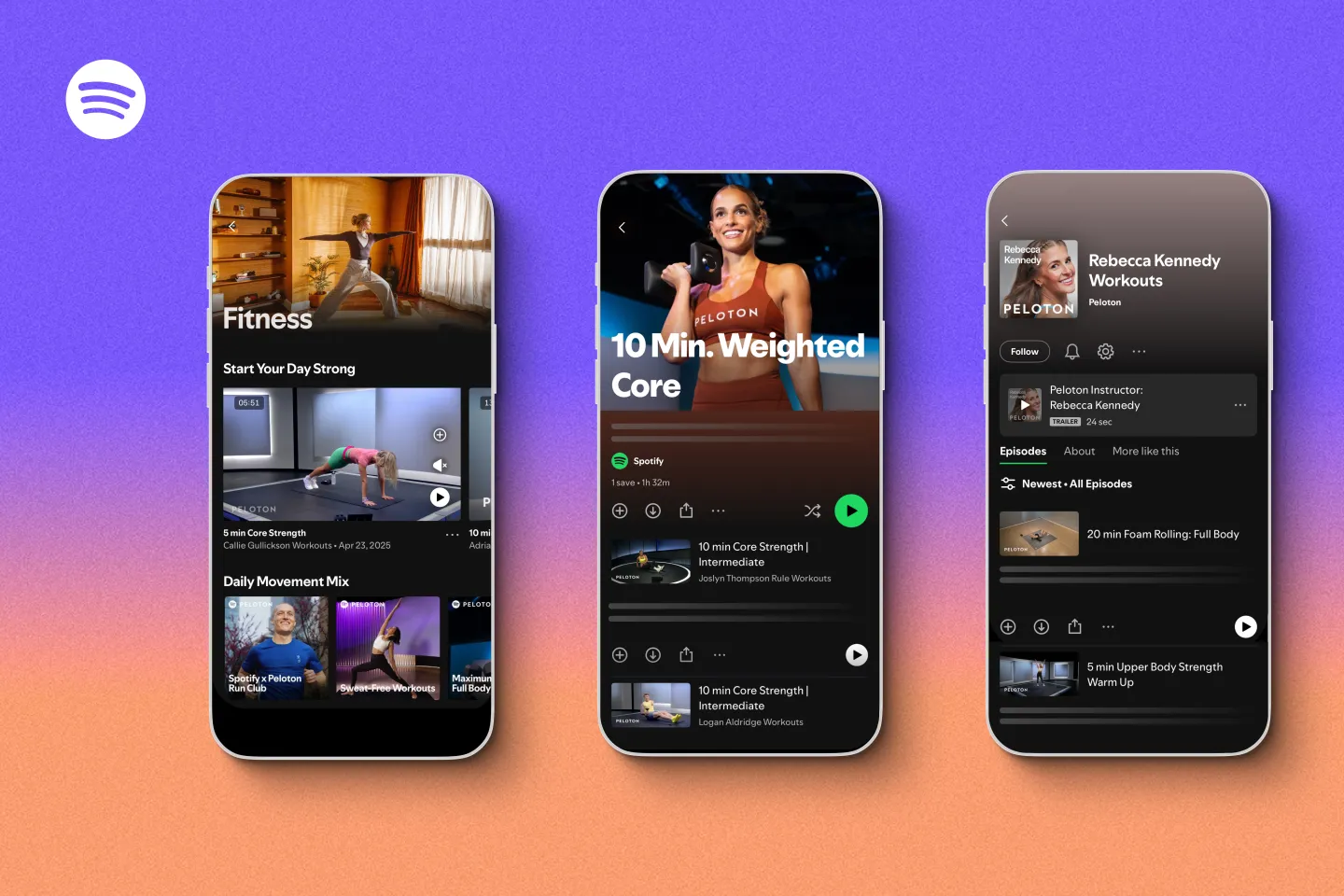
Spotify is expanding its audio and video offerings into guided fitness workouts through a new partnership with Peloton, adding another layer to an already sprawling app. The move brings curated playlists and sessions from independent creators alongside a sizable library of Peloton classes for premium subscribers.
For years, Spotify has steadily broadened its scope beyond music. Podcasts, audiobooks, and even video content have become standard features, reflecting the company’s long-term push to become a central hub for on-demand audio and related experiences. Fitness content fits neatly into this pattern. Exercise playlists have circulated on the platform for some time, and many users already rely on Spotify during runs or gym sessions. Now the service formalizes that use case with a dedicated fitness hub offering outdoor runs, strength training, yoga, meditation, and more.
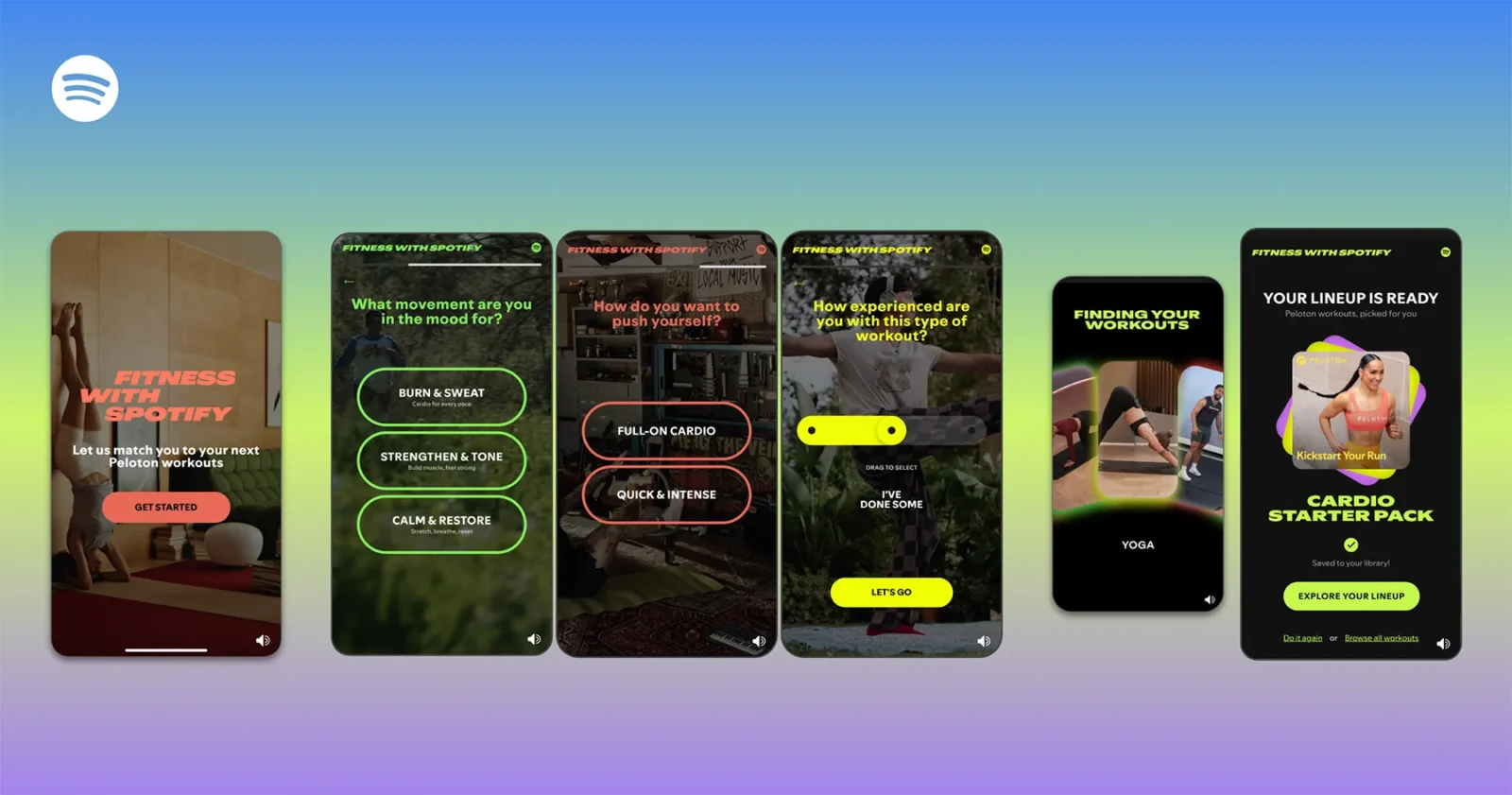
To access the new fitness hub, free and premium subscribers can simply search for “fitness” in the search tab. Additionally, Spotify is announcing a partnership with Peloton that will give premium subscribers access to more than 1,400 ad-free, on-demand workouts. These classes range from bodyweight routines to instructor-led sessions. Notably, most require no specialized equipment, distinguishing them from Peloton’s signature bike or treadmill experiences. Content comes from familiar names such as Yoga with Kassandra, Sweaty Studio, Chloe Ting, and Pilates Body by Raven. The integration feels practical rather than revolutionary, capitalizing on existing habits rather than inventing new ones.
Navigation happens through the new fitness section, accessible across mobile, desktop, and television apps. Spotify emphasizes cross-device continuity: users might begin a video workout on their TV, continue with audio guidance on a phone during a run, and finish with recovery content on a smart speaker. The setup acknowledges the fragmented way people actually consume media today, moving between screens without friction. Initial rollout limits Peloton material to select markets, with most classes in English and smaller selections in Spanish and German.
On one hand, deeper fitness integration makes sense for a service that already tracks listening patterns and generates mood- or activity-based playlists. On the other, it contributes to an increasingly crowded interface. Spotify’s app has grown complex over time, layering new categories and recommendations that can overwhelm rather than streamline discovery. Users seeking a clean music player sometimes find themselves navigating wellness promotions and podcast suggestions instead. This expansion risks diluting focus further, even if it adds genuine utility for subscribers already invested in the ecosystem.
The fitness space itself remains competitive. Dedicated apps like Peloton, Nike Training Club, and Calm have built loyal audiences around specialized hardware or community features. Spotify’s entry leverages its massive user base and existing audio infrastructure rather than trying to outbuild those platforms. Whether the combination proves sticky will depend on execution and how seamlessly the content slots into daily routines.
In broader terms, the partnership highlights ongoing convergence between entertainment and health tech. Streaming services increasingly view wellness as adjacent territory worth claiming, especially as consumers blur lines between background audio, guided experiences, and active workouts. Spotify’s approach remains pragmatic, building on strengths it already possesses instead of chasing hardware ambitions. The result is another incremental step in the company’s evolution from music catalog to lifestyle platform.