
Google is expanding its paid AI lineup with the introduction of a lower-cost, mid-tier subscription designed to sit between its free offerings and more expensive premium plans. The new tier, branded as Google AI Plus, signals a broader effort by Google to make advanced AI features available to a wider audience without requiring a $20 or higher monthly commitment. The move places Google more directly in competition with recent pricing experiments from OpenAI, particularly its own mid-range plan, ChatGPT Go.
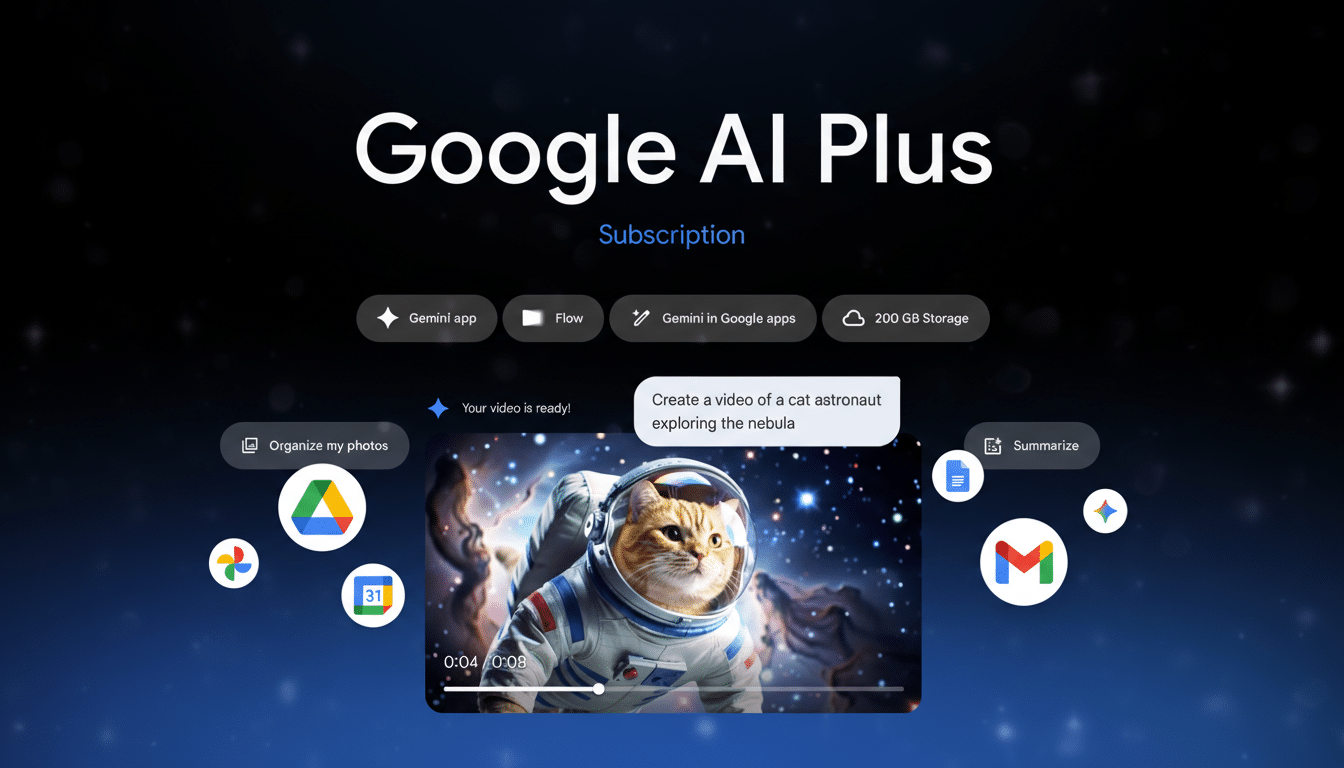
Until now, Google’s more capable AI tools were largely gated behind Google AI Pro at $20 per month or the significantly more expensive Ultra tier at $250 per month. With Google AI Plus priced at $7.99 per month, the company is clearly targeting users who want more than basic AI assistance but are unwilling to pay premium rates. The plan is launching in 35 countries, including the United States, and will be folded into the existing Google One subscription ecosystem.
At this price point, subscribers gain access to a mix of AI features and cloud services rather than a standalone chatbot. The plan includes usage of advanced Gemini models, additional cloud storage, and a set of specialized AI tools aimed at research, note-taking, and media creation. While Google positions this as a way to “open the AI doors” to more users, the bundle also reinforces the company’s long-standing strategy of tying new capabilities to its broader services, such as storage for Google Photos and files.
Existing Google One Premium 2TB subscribers will automatically receive the added AI benefits, which suggests the company is using AI as a retention and upsell mechanism rather than a purely separate product. New users are also being encouraged with a limited-time discount that halves the price for the first two months, lowering the barrier to trying the service.
The timing is notable. OpenAI recently introduced ChatGPT Go at roughly the same monthly price, though that plan is expected to include ads. By contrast, Google AI Plus remains ad-free and emphasizes practical extras like 200GB of storage through Google One. The comparison highlights a philosophical difference: ChatGPT Go centers on access to conversational AI, while Google’s offer blends AI features into an existing productivity and storage bundle.
For users, the decision between these plans is less about raw AI capability and more about ecosystem fit. Those already invested in Gmail, Google Photos, and Drive may see more value in Google AI Plus, while heavy users of ChatGPT may tolerate ads in exchange for staying within OpenAI’s tools. From a market perspective, Google’s pricing move suggests growing pressure to normalize AI subscriptions at lower price points, especially as competition increases and casual users become more cost-sensitive.
Rather than redefining what consumer AI can do, Google AI Plus appears designed to stabilize and broaden adoption. It lowers the entry cost, packages AI with familiar services, and responds directly to competing mid-tier offerings. Whether that balance is enough to sway users will likely depend less on branding and more on how useful these tools prove in everyday use.