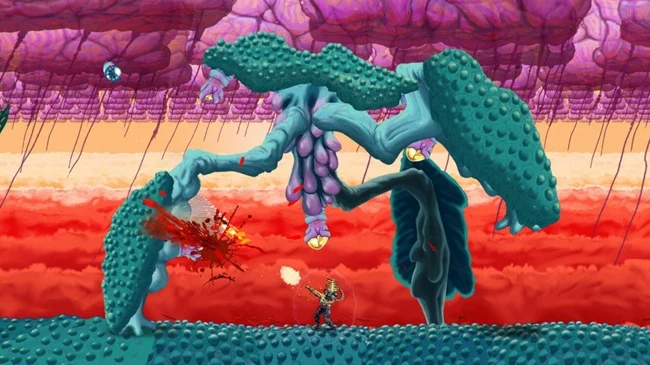


When the game Fandango came out… It was strange. It was beautiful. It was artistic and it was a Windows release so I didn’t play much of it. Fast forward a few years later and a friend of mine in one of the many gaming Whatsapp groups I’m part of posted the link to the soundtrack, and my God what an amazing sound track it was and still is.

I had to play the game. And I did. I fell in love with it. It wasnt’t the greatest game in my opinion, but the whole thing was a visual experience to remember. But this is not what this post is about, there are many reviews of fandango on the web, this is not one of then. No, this post is about conversation trees, used in video games where there is conversation involved.
You will have encountered conversation trees in any game that has conversations in it, they look like this diagram below:

Sounds familiar? ,You approach the character, select from a few choices and then based on your choices the character would respond accordingly. Functional, but not how things work in real life.
You see, in real life, people have a choice to speak to you or not. They make decisions about you the moment they see you and they size you up immediately. They update that sizing up once they find out more about you. Once they have interacted with you, they decide on weather they’re going to talk to you again, avoid eye contact or casually nod at you at the elevator while they hope you don’t start conversation. Life is much more complicated than that.
For an industry that has pushed the envelope in graphics from Pong to the amazing photorealistic graphics you see today (I’m looking at you Crysis 3), not much progress has been done in the field of conversations. Which is a shame, because we as humans are at the top of the food chain partly because of our superior communication skills.


Yay Science!
So let’s get back to how potentially a company could disrupt the video game space by building a conversation engine.
Let’s see how we can improve this, and by this, I mean having entire game dialogues inside an excel sheet which is sort of the way it’s done righ now:
Hierarchy of needs: Each NPC “Non Playing character” has to have some needs. Why is this character standing here in the middle of Armageddon waiting for me to ask them questions? Don’t they have shit to do? Shit to do, starts with hierarchy of needs. An NPC needs to have some purpose. If the NPC’s house has been raided by hoards of barbarians, I doubt they’d be chatty to some random stranger wielding an axe and a sword, clearly up to no good. We must create personality that is affected by the history of the NPC.
History: No Self respecting NPC would continue to answer the same questions again and again. At some point, they’re bound to say: You know what? Forget you maaaaaan! We have many opportunities to create history for the important NPC. We don’t have to create an entire backstory, just what it means for that NPC at that particular moment in the game. Let’s examine that NPC who just had his house raided by barbarians. He’s probably upset, angry, unsure what to do and if he has some backbone, he’d probably want to get some revenge. Each one of those states can be ranked numerically and reactions to any stimuli can be calculated accordingly. All we have to do is factor it into the NPC.
Importance to the story arc: As a gamer, you have a story arc, the hero’s journey if you will. A game designer should know how important this NPC is to your overal journey and sort of force the NPC’s hand a little bit. The NPC cannot be fully autonomous, but it should fake it a bit. If the NPC were autonomous, there is no guarantee that your game will end. In fact, with fully autonomous NPC, games would be just like real life. Highly unpredictable.
Personal preference: In real life, people have preferences. If our NPC whose house was raided by barbarians just met a person who looks like a barbarian, chances are he won’t be super cooperative. One would think he would be outright mean. In real life , guys are more responsive to girls, and children are more responsive to women. Which give you an idea who has the real power in this world. “All the single ladies. All the single ladies. All the single ladies. All the single ladies”.
AI: Don’t get me started on AI. AI is just one large big pile of decision trees. Let’s not go there, okay? Maybe one day someone will crack AI and this conversation would not be necessary, but until then, let’s not bring AI into it, deal?
These are just some of the things we can do to make conversations better. But the biggest challenge is how do we impliment them. Parsing text the gamer types/selects is one things. Guessing the meaning of what that text means is a completely different thing. Try having a conversation with a bot about a big apple. Is it NY? Is it a huge MacBook? Is it a big apple? Thankfully those confusions happen in real life anyway and they won’t degrade the gaming experience much.
The challenge is actually deciding what the NPC is going to type/say/do to the gamer. Google has that nailed I think, when you ask google a question, it sort of suggest answers in their autocomplete. How do I convert to, typically yields one of the following suggestions:

This same concept of autocomplete or suggestions can be expanded a bit for conversations. That is to say, the gamer types or selects from a list of possible interactions. The NPC then, based on a combined function of history, needs, preferences, importance to story arc or whatever other parameter the game designer so chooses, replies with one of the most likely options.
There is even math to describe how this can be done, and if you want to know more, feel free to connect with me. But this is not the place for such math. After all, this is a blog post about gaming and we like to keep it light.
The question I’d like to ask is:
How come Google with all their text processing powers have not paid attention to this untapped market in the gaming space. A Google driven conversation engine is not as complicated as full blown artificial intelligence that can pass the Turing test.