

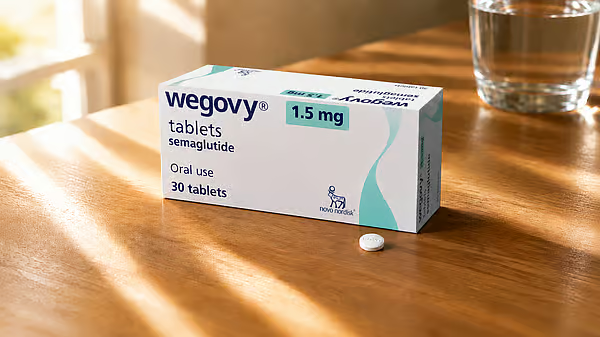
Novo Nordisk has introduced the oral version of its weight-loss drug Wegovy in the United Arab Emirates, marking the first market outside the United States to offer the pill form. The move expands options for managing obesity in a region where the condition affects a significant portion of the population, but it also raises familiar questions about long-term accessibility and the broader challenges of treating a complex chronic disease.
The Wegovy pill, containing semaglutide, is approved for reducing excess body weight and helping maintain that loss over time in adults with obesity or overweight plus related health issues. Clinical data from the OASIS 4 trial showed participants achieving an average 17 percent weight reduction when adhering to the 25 mg daily dose, with about one in three losing 20 percent or more. These results mirror those seen with the injectable form of the drug. Importantly, it stands as the only oral weight-loss medication cleared by regulators in both the US and UAE to lower the risk of major cardiovascular events, such as heart attack and stroke, in people with established heart disease and excess weight.
This launch reflects growing demand for more convenient delivery methods beyond weekly injections. As an oral GLP-1 receptor agonist, the pill simplifies treatment for some patients who prefer avoiding needles, potentially improving adherence in real-world settings. Yet history reminds us that weight-loss medications often face hurdles. Earlier drugs promised much but delivered mixed results once scaled, with side effects and high costs limiting widespread use. Semaglutide’s safety profile in trials aligns with previous studies, showing common gastrointestinal issues that tend to ease over time, but sustained benefits still depend heavily on continued use alongside lifestyle changes.
In the UAE, where roughly 28 percent of adults live with obesity and projections suggest nearly 7.5 million people could be affected by obesity or overweight by 2035, the arrival of this option arrives at a critical moment. Globally, obesity impacts over a billion individuals, driven by genetic, environmental, and social factors rather than simple personal failing. The condition’s progressive nature demands ongoing medical attention, something health systems must address beyond providing new prescriptions. Novo Nordisk plans further rollouts in select markets later in 2026, guided by local healthcare readiness and patient needs.
While the data supports meaningful clinical benefits for many, affordability and equitable access remain pressing concerns. Obesity care has evolved considerably from older approaches focused solely on diet and exercise, yet systemic barriers persist. Healthcare infrastructure, including telehealth support for monitoring, will play a key role in determining how effectively this treatment integrates into everyday practice in the UAE and beyond.
The introduction of the Wegovy pill highlights both progress in pharmacological options for weight management and the enduring need for comprehensive strategies that tackle root causes. As more countries consider similar approvals, balancing innovation with practical, sustainable care will define success in addressing this public health challenge.