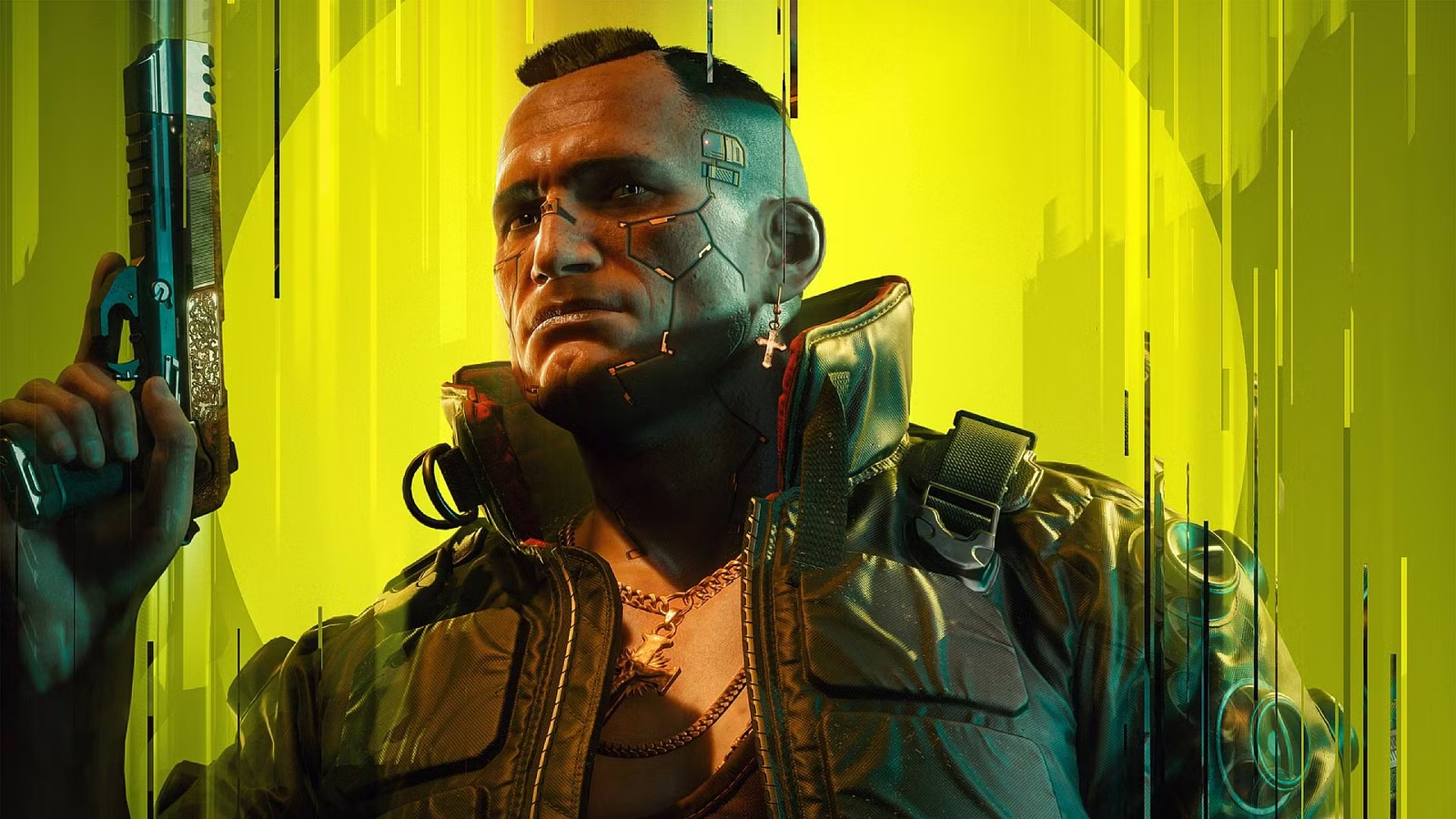
Cyberpunk 2077 continues to grow well beyond the troubled 2020 launch that defined its early reputation. What began as a single-player RPG rooted in Mike Pondsmith’s tabletop setting has branched into side stories, crossovers, and now tabletop adaptations that try to recapture the same street-level tension. One of the newer efforts is the Cyberpunk 2077 trading card game from WeirdCo, a studio with no prior track record in the format. Their latest reveal centers on a card simply called The Heist.
The card draws directly from the early mission in which V and Jackie Welles attempt to steal experimental technology from Konpeki Plaza. In the original game that sequence ends in failure and personal loss; the card version appears designed to echo that outcome while highlighting the partnership between the two characters. According to the announcement, The Heist works best when paired with a friendly Gig card, a mechanical choice that mirrors Jackie’s loyalty rather than turning him into a pure combat asset. The accompanying artwork shows V carrying a wounded Jackie while firing on surrounding threats, an image that leans into the mission’s darker emotional weight instead of pure spectacle.
Trading card adaptations of established video-game worlds are nothing new. Titles tied to larger franchises have long used key story moments as set pieces, hoping familiarity will draw in players who already know the lore. WeirdCo’s approach follows that pattern by converting recognizable scenes into playable cards rather than inventing entirely new material. Whether the wider set maintains the same focus remains to be seen, but the studio has already shared plans for a beta event that will let participants test the system before full release.
The move into physical cards also reconnects Cyberpunk 2077 with its tabletop origins more directly than most of the recent digital expansions. Board-game and card-game versions of popular properties often succeed or fail based on how faithfully they translate core themes into rules. In this case the emphasis on partnership and consequence suggests an attempt to keep the tone closer to the source material’s street-level grit than to pure power fantasy. Fans who remember the original heist sequence will recognize the reference immediately; newcomers may simply treat it as another high-stakes encounter card.
WeirdCo’s lack of previous TCG experience leaves the final product’s quality an open question. Early reveals can look polished while the broader mechanics still need refinement. The Heist card itself offers a clear snapshot of how the game intends to handle iconic moments, but the surrounding systems, balance, and long-term support will determine whether the project becomes a lasting companion to the video game or another short-lived licensed release. For now it stands as one more example of how Cyberpunk 2077’s world continues to be mined for new formats years after its rocky debut.