
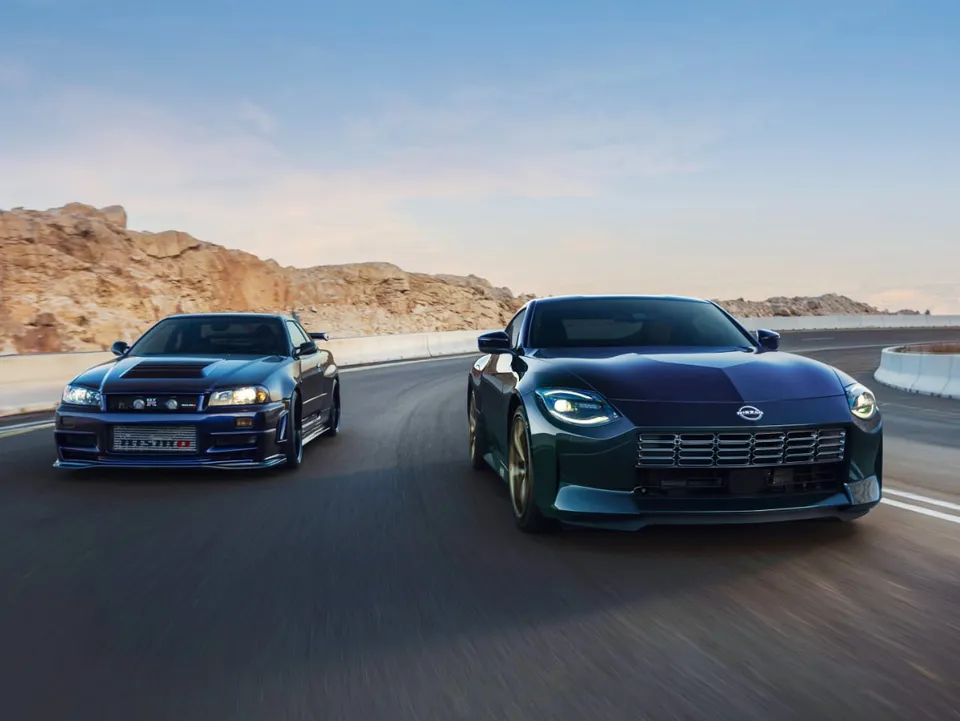
The Nissan Z Heritage Edition has made its debut in the Middle East, offering a limited-run version of the current-generation sports car dressed in retro styling cues borrowed from Nissan’s performance past. Launched on 5 May 2026, the model draws heavily on the brand’s GT-R heritage with its Midnight Purple paintwork and bronze-finished 19-inch RAYS alloy wheels, while retaining the mechanical package of the standard seventh-generation Z.
At its core sits a 3.0-litre twin-turbo V6 producing 400 horsepower at 6,400 rpm and 475 Nm of torque available from 1,600 to 5,600 rpm. That broad torque curve should make the car responsive in everyday driving, a practical trait often overlooked in pure sports cars. Buyers can choose between a six-speed manual transmission equipped with launch control or a nine-speed automatic. The manual will appeal to those who still value the engagement of three pedals, though the automatic’s quick shifts suit mixed urban and highway use common across the region.
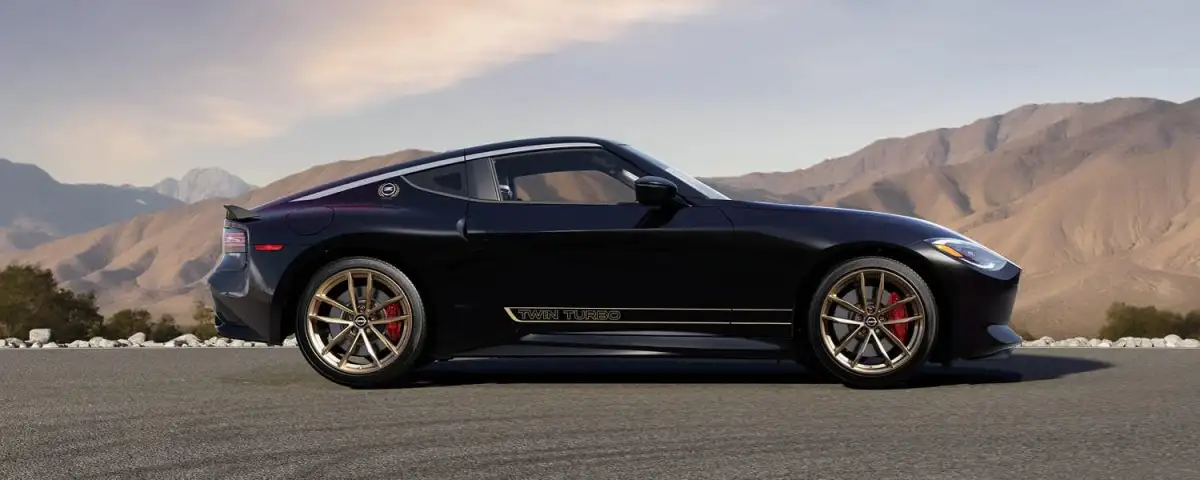
Visually, the Heritage Edition references the fourth-generation 300ZX (Z32) with its long-hood, short-deck proportions that have defined the Z lineage since the 1970s. The Midnight Purple finish evokes the iconic R34 GT-R, a colour that still carries weight among enthusiasts decades later. The bronze wheels provide contrast without veering into overt showiness. It is a restrained update that respects the car’s heritage rather than attempting to reinvent it. Yet it also highlights how the current Z, while competent, remains a relatively straightforward evolution of a formula established long before turbocharging and digital dashboards became commonplace.
Inside, the cabin mixes analogue touches with modern interfaces: a 12.3-inch digital instrument cluster flanked by three traditional pod gauges, an 8.0-inch central touchscreen supporting Apple CarPlay and Android Auto, and an eight-speaker Bose audio system. The layout prioritises driver focus over unnecessary complexity, a refreshing approach when many sports cars chase touchscreen-heavy minimalism that can distract at speed. Safety equipment includes automatic emergency braking with pedestrian detection, blind-spot monitoring, lane departure warning, and rear cross-traffic alert—features that have become expected even in performance models as regulations tighten and roads grow busier.
This is not a radical new machine but a carefully packaged tribute aimed at enthusiasts who value continuity. Limited production adds exclusivity, which often translates to stronger resale value in the Middle East’s collector-oriented market. Pricing details have not yet been disclosed, though expect a noticeable premium over the standard Z, similar to how Nissan has positioned other heritage-flavoured models like the Patrol NISMO locally.
In a broader context, the Z Heritage Edition arrives at a transitional moment for the automotive industry. While electric powertrains dominate future product plans across the sector, internal-combustion sports cars like this still satisfy a core audience that appreciates mechanical character and auditory drama. Whether this limited run proves enough to sustain interest until the next chapter of the Z story remains to be seen. For now, it offers a tangible link to Nissan’s performance history in a region where such connections still resonate.