

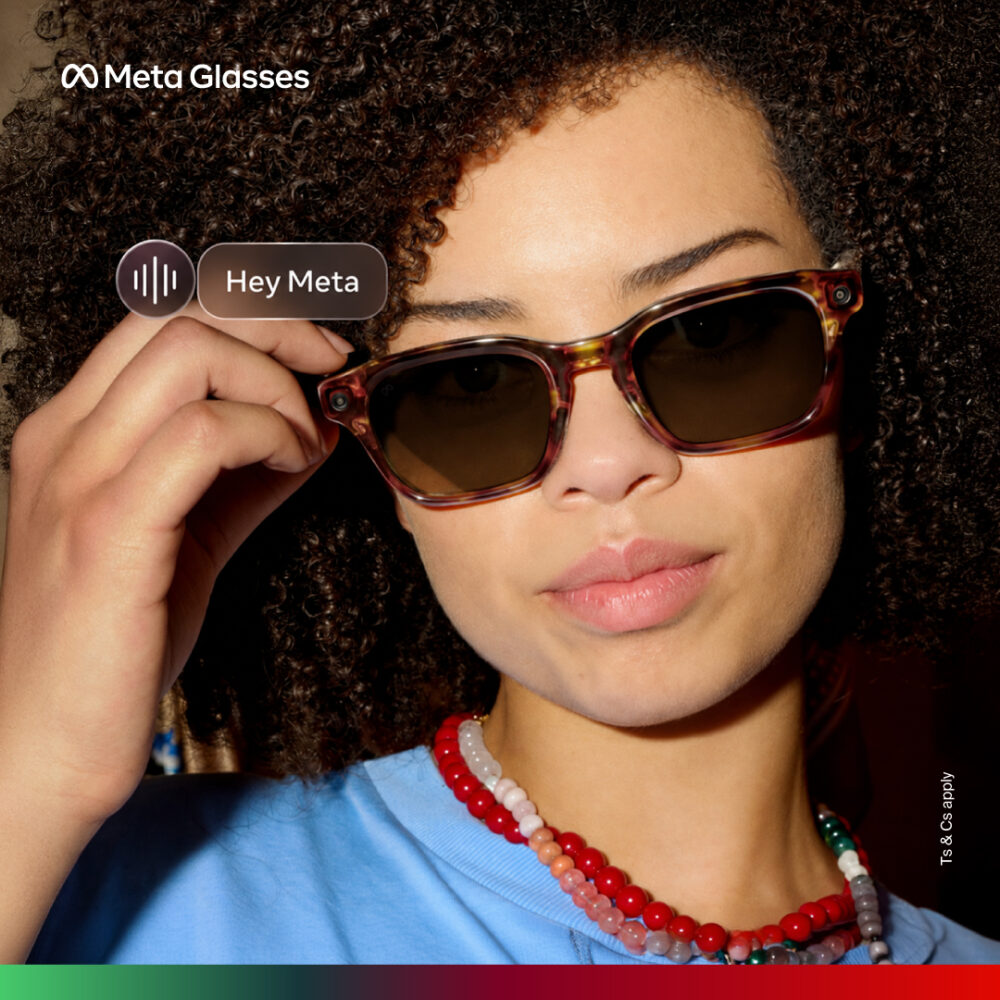
The UAE has become one of the first markets in the region where you can walk into a telecom store and leave with a pair of Meta’s AI glasses. etisalat UAE is now selling the Meta, Ray-Ban Meta and Oakley Meta eyewear ranges, and says it is the first operator in the Middle East and North Africa to carry them.
The lineup covers four products: the Meta Glasses, the second- and third-generation Ray-Ban Meta frames, and the sport-focused Oakley Meta HSTN. Pricing starts at AED 1,160 for an outright purchase. etisalat is also offering instalment plans over 12, 18 or 24 months starting at AED 55 per month, and says no other operator offers those terms.
The financing matters more than it might seem. Smart glasses have struggled to get past early adopters for most of the last decade, partly because few people know what they are for until they’ve worn a pair. Meta and EssilorLuxottica took their first step with Ray-Ban Stories in 2021, a camera-and-audio product that drew more privacy questions than buyers. Later generations with Meta AI built in fared better, and the pitch moved away from taking photos without your phone toward having an assistant you can talk to while your hands are busy.
That assistant is the main selling point here. The glasses take voice commands for AI queries, translate speech in real time through the built-in speakers, and handle everyday tasks without you reaching for a handset. The design idea is that they should look like normal sunglasses or prescription frames first and like gadgets second, and the Ray-Ban and Oakley branding is how Meta and EssilorLuxottica try to achieve that.
Several things weren’t announced. etisalat gave no breakdown of prices by model, so it isn’t clear what the newer Ray-Ban generation or the Oakley HSTN costs above the AED 1,160 starting point. The announcement also doesn’t say which Meta AI features work fully in the UAE, or whether translation covers Arabic. Both would weigh heavily on any purchase decision in this market.
For etisalat, the move fits a wider trend among telcos of selling wearables and connected accessories alongside phones, partly to make their device catalogues more valuable. Putting AI glasses on the same instalment plans as smartphones treats them as an everyday purchase rather than a curiosity.
The bigger question is whether UAE buyers want to talk to an assistant built into their sunglasses. Getting the glasses into a carrier’s stores makes them easier to buy. Whether people find them useful enough to keep wearing is still open.