


The two global winners of this year’s James Dyson Award are both trying to make hidden damage visible. One looks for cracks buried inside concrete after an earthquake. The other looks for signs of a concussion that a player, coach or parent might miss on the sidelines. Each team receives £30,000, and both inventions are still early prototypes rather than finished products.
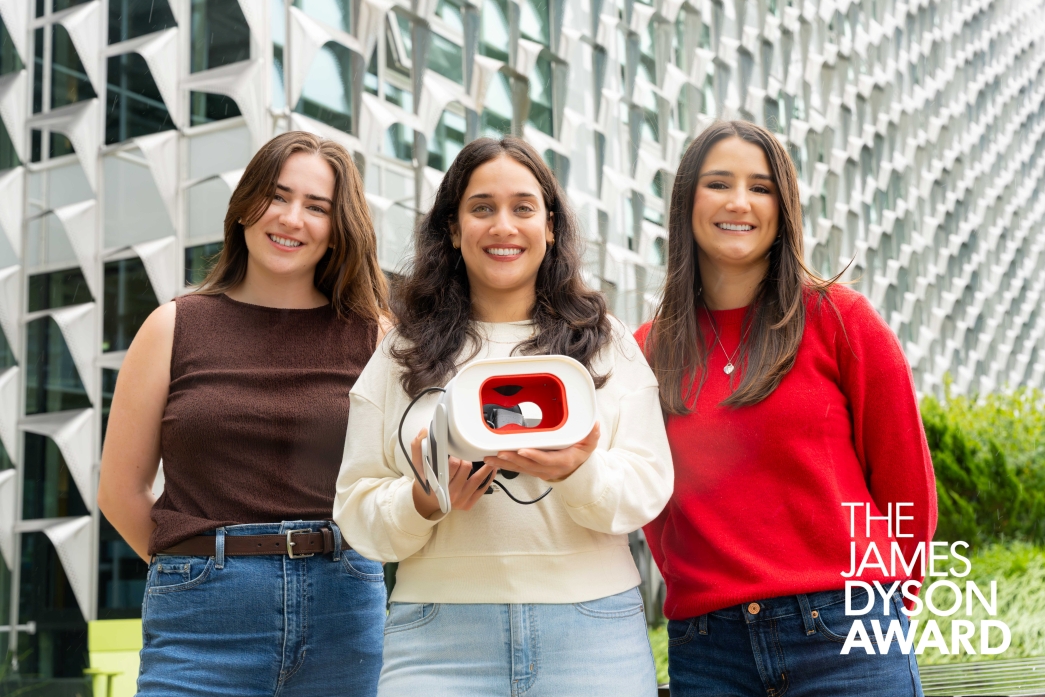
The medical prize went to Rumble Rims, a headset built by Harvard students Radhika Saran, Cleo Pontone and Sophia DeVito. Concussion is hard to spot in the moment because symptoms vary from person to person and can take up to 72 hours to appear. Clinic-grade assessment tools exist, but they’re usually too expensive for schools and amateur clubs, which leaves those teams relying on gut judgement. Rumble Rims uses infrared cameras to track how an athlete’s eyes follow and fixate on targets during a two to three minute test. A mobile display then gives real-time guidance on whether the player should come off and see a doctor. A recovery dashboard supports repeat testing in the days afterward. The team is careful to call it a screening tool, not a diagnostic one, and says return-to-play calls stay with medical professionals.
Getting there took several attempts. Helmets, mouthguards and chin rests were all tried before the team settled on side-mounted infrared cameras and angled dichroic mirrors. Next comes a more refined prototype, testing with coaches and medical advisers, and eventually formal medical device validation. That last step is the one that will decide whether this ever reaches a school field.
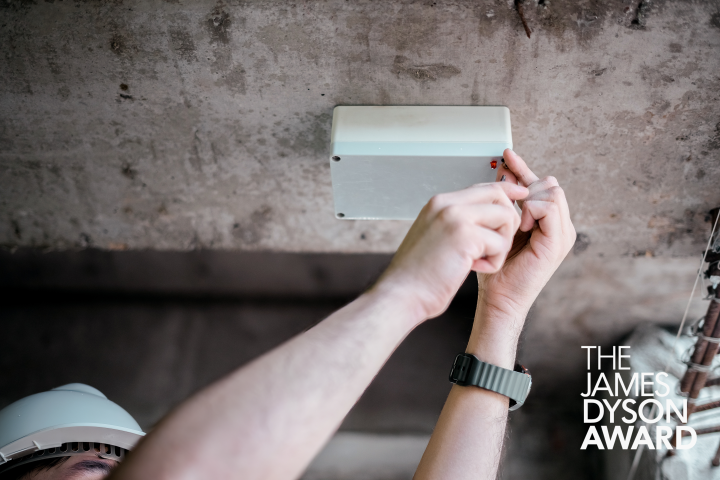
The sustainability prize went to Sentinel, from Filipino structural engineer Aldrei Ong. It’s a fitting project from a country on the Pacific Ring of Fire. Ong’s idea is to turn concrete spacer blocks, the small parts that hold rebar in place during construction, into sensors. The blocks are made from self-sensing concrete laced with conductive material. When cracks form, the concrete’s electrical resistance changes, and a small module sends any significant shift to an online dashboard engineers can check remotely. Each block reportedly costs about PHP 10 (roughly AED 0.55) to make, though the electronics will add to that figure. Sentinel is already installed in one building in the Philippines, and Ong plans custom circuit boards and versions that can be fitted to existing buildings.
The competition drew 2,294 entries from 28 countries and regions this year, its highest yet. The Award has handed out £1.5 million to more than 400 student inventions since 2005. The real test for both winners is how quickly they can move from prize money to independent validation.