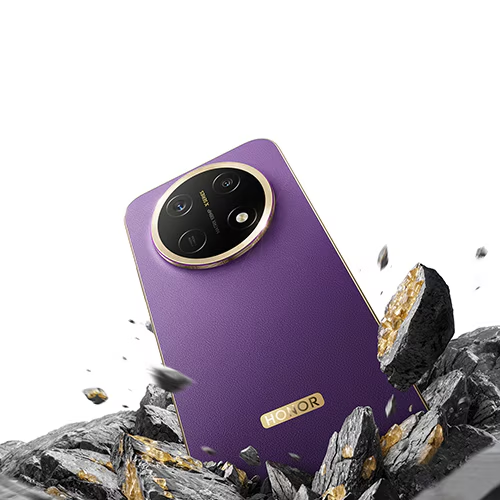
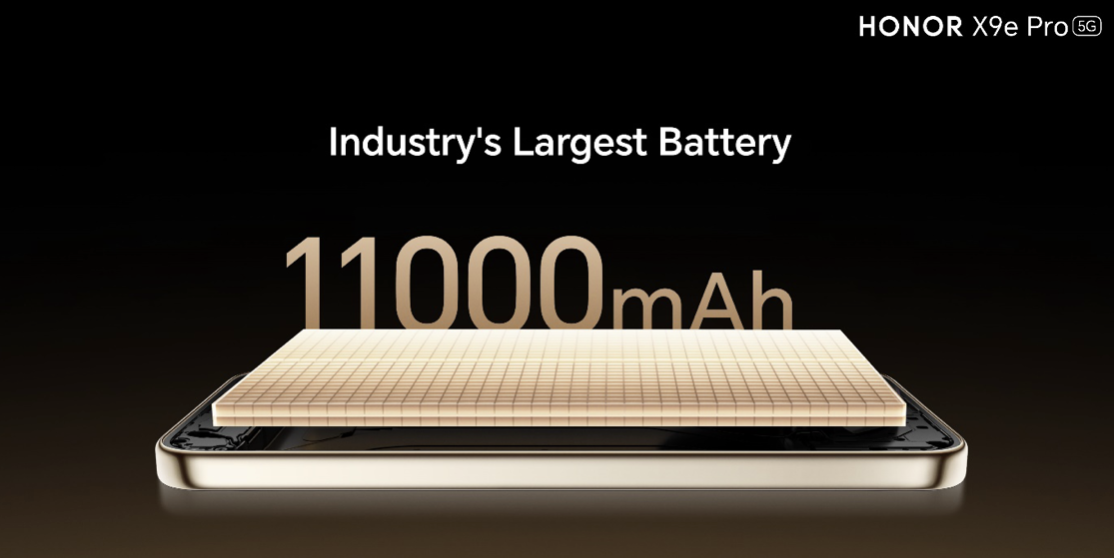
The HONOR X9e Pro is aimed at people who care more about a phone that keeps going than about headline specs. The main claim is an 11,000mAh battery, which HONOR calls the largest in the industry. Lots of phones offer big batteries. What’s unusual is that this one fits in a body 8.08mm thick that weighs 203g.
That’s possible because of silicon-carbon battery chemistry, which has spread quickly through Chinese Android phones over the past couple of years. Adding silicon to the anode stores more energy in the same space. HONOR says this is its fourth-generation version of the technology. The company also says it rearranged the mainboard, secondary board, display stack, mid-frame and back cover to make room. It claims two to three days of typical use per charge and says the battery should stay reliable for up to six years. That second figure is the more interesting one, but only time will show whether it holds up.
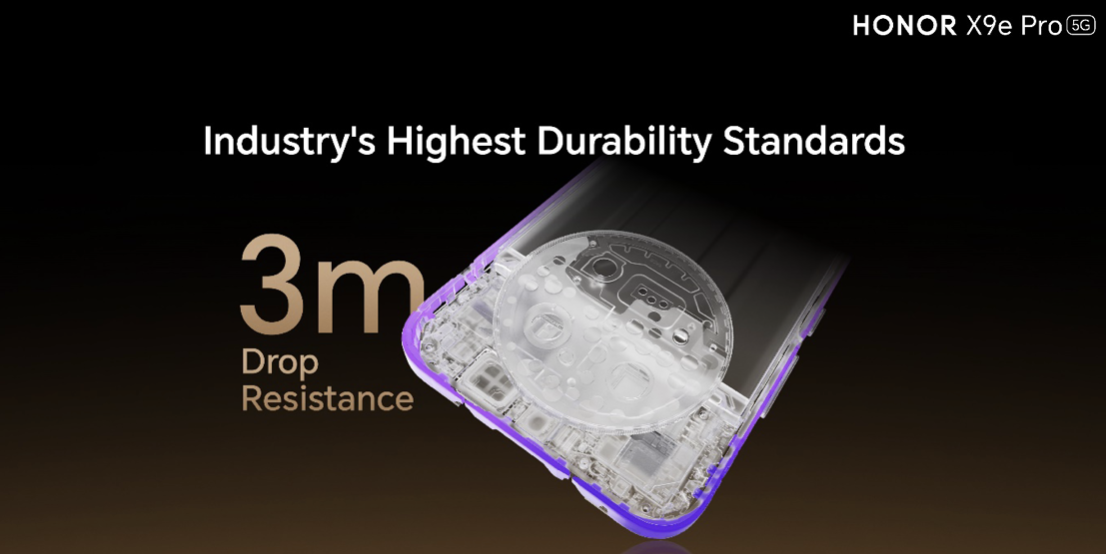
The other half of the pitch is toughness, which has been part of the X9 line’s identity for a few generations. The corners and edges use arch-shaped structures backed by metal reinforcement in the mid-frame, which is meant to spread the force of a drop. The display is held in place with a PUR adhesive that bonds around its edges. HONOR’s own lab tests credit it with roughly ten times the shear resistance of standard adhesives, though nobody outside the company has confirmed that number.
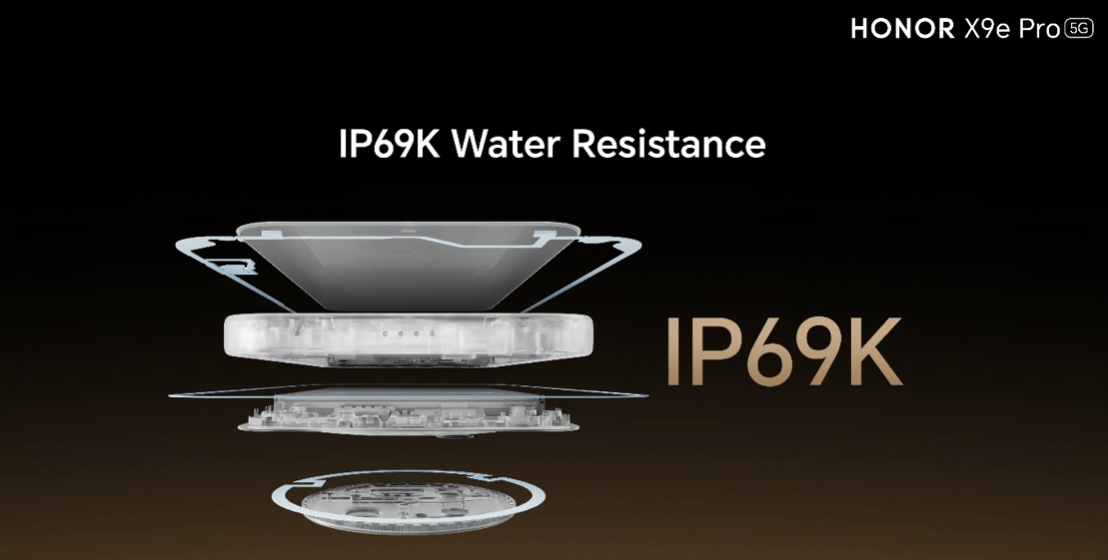
Water and dust protection uses separately sealed compartments, with extra treatment around the USB port, speakers, buttons and SIM tray. The phone carries IP68, IP69 and IP69K ratings, covering dust, high-pressure water jets and immersion down to 10 metres. HONOR itself notes that water resistance weakens over time, which is worth remembering if you plan to treat the phone as fully waterproof for years.
There is some outside validation. The phone has a five-star SGS Premium Performance certification for drop resistance in harsh conditions. HONOR’s internal testing covered drops from up to 3 metres at multiple angles, 100,000 immersion cycles, 24 hours of salt-spray exposure, and battery testing between -20°C and 50°C. Those are its own numbers, though, and real-world results will depend on how the phone lands and what it lands on.
The camera is a 108MP main sensor with optical image stabilisation rated to CIPA 6.0, meant to reduce blur in handheld and low-light shots.
More details here.