TL;DR: Boltgun 2 builds on the original with a second playable hero, branching campaign routes and more inventive objectives, all wrapped in a gorgeous miniature-inspired retro style. Bugs and loose platforming hold it back, but it’s a fast, funny and gory sequel worth playing.
Warhammer 40,000: Boltgun 2 has very little patience for preamble, and I mean that as a compliment. A few minutes of setup is all you get before the game drops you into combat, and from there it rarely slows down. The original Boltgun proved that the grim darkness of the far future fits neatly into the 90s shooter mould: fast movement, chunky pixels, arena fights, and enough gore to make a Khornate cultist blush. This sequel from Auroch Digital doesn’t try to rebuild that formula. Instead it adds more of what worked: bigger enemy counts, more varied objectives, a second playable hero, and a campaign that branches. What I found most interesting is that nearly every change targets the first game’s biggest weakness, which was a tendency to run out of surprises before it ran out of levels.
A daemon blows up your ship and the Imperium takes it personally
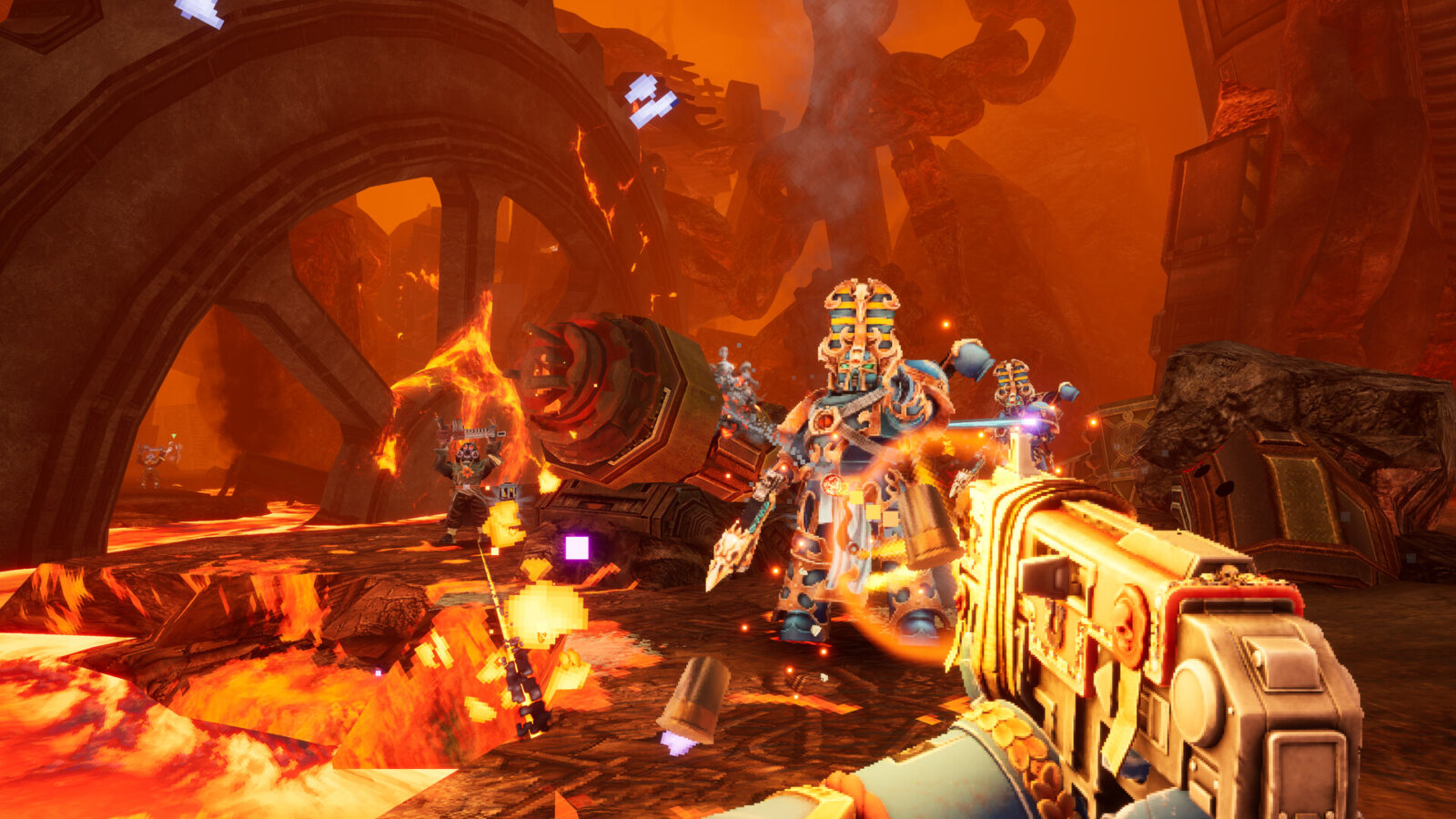
The premise is about as subtle as a bolt round to the face. The Great Daemon Vashtorr destroys your ship, and your response is a full-scale campaign of revenge across the galaxy, which counts as measured diplomacy by 40K standards. That vendetta takes you through bile-soaked swamps, daemonic strongholds, frozen facilities and more, with a sardonic Servo-skull floating alongside as your guide and, often, your comic relief. The story isn’t the reason to play. It leans heavily on lore terminology, and anyone who hasn’t absorbed a few Codexes will hear plenty of names and threats without much context. I don’t think that’s a serious problem in a game whose real narrative is “find heretics, remove heretics, collect ammo, repeat.” The plot gives each level a reason to exist, gets out of the way, and lets the Servo-skull’s dry humour handle the personality.
Two zealots, two very different ways to make a mess
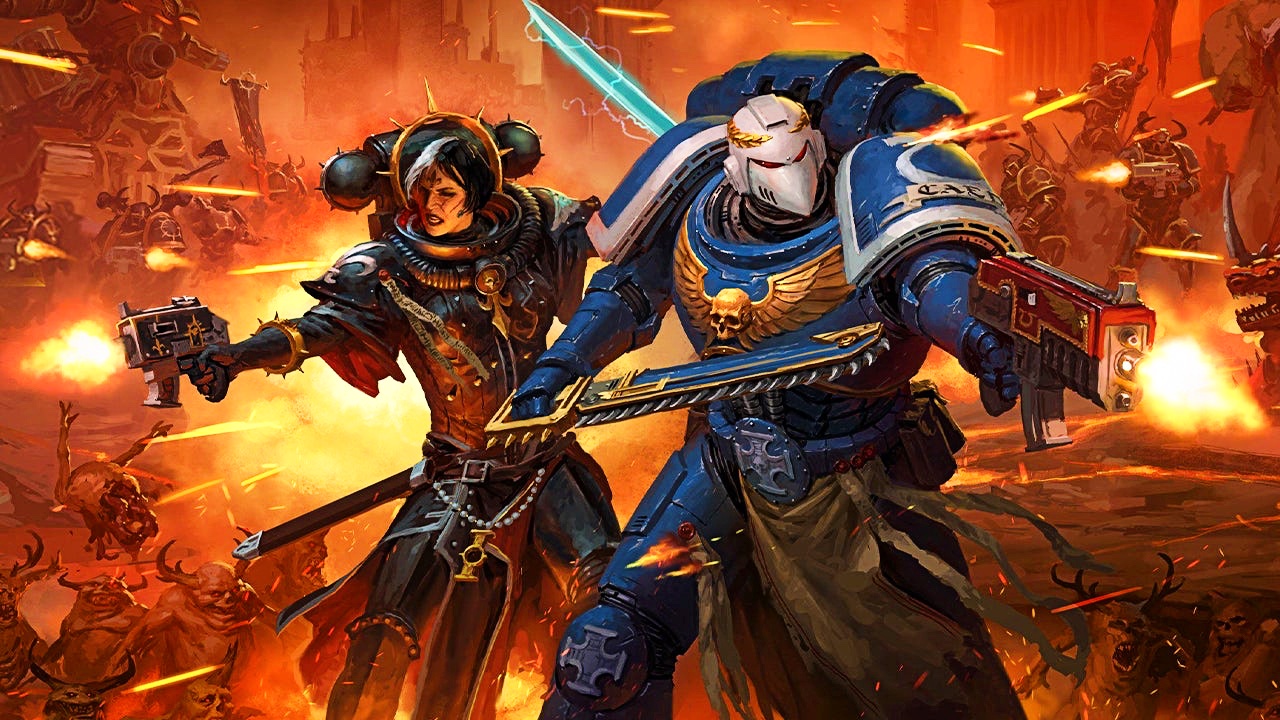
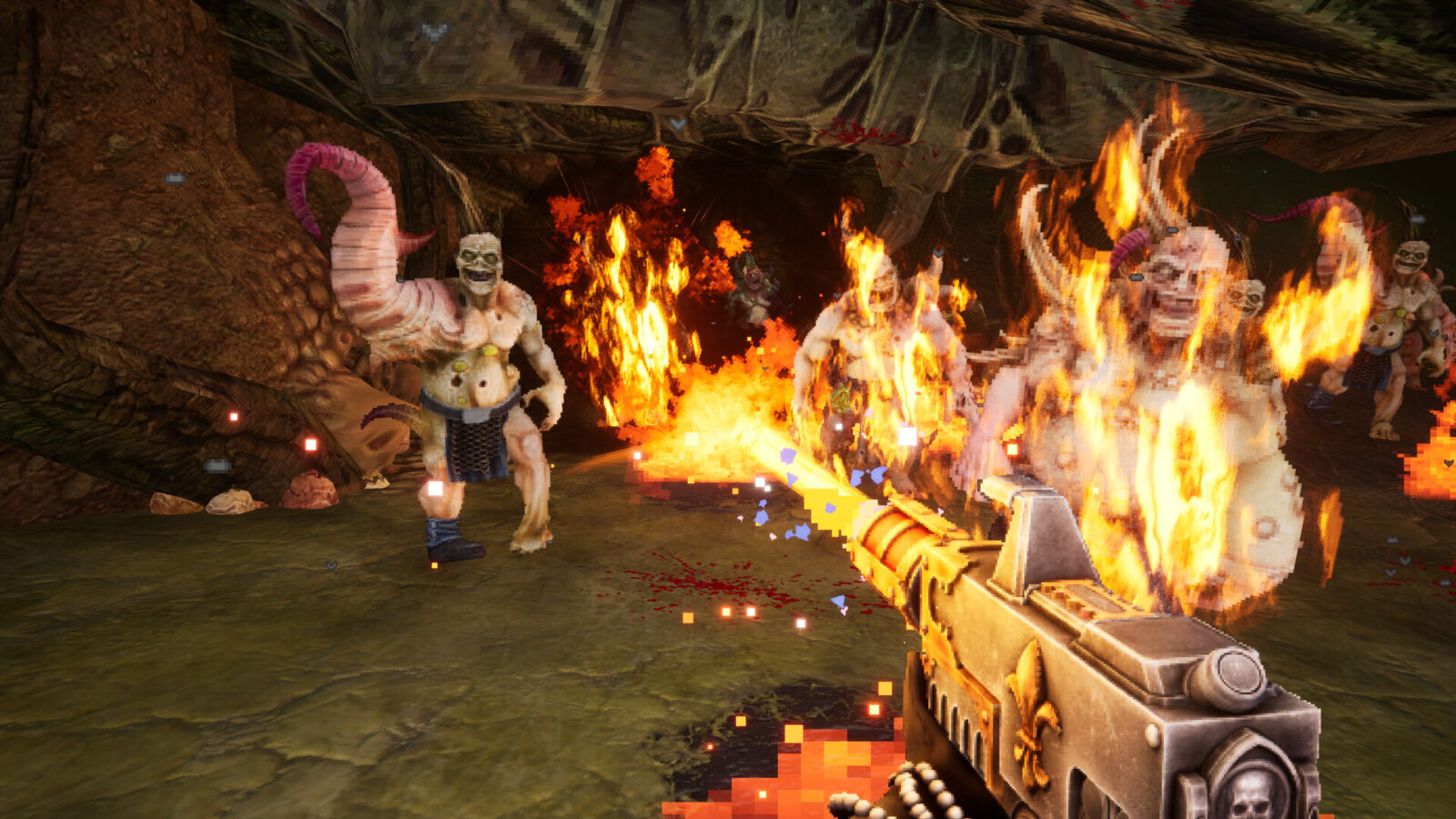
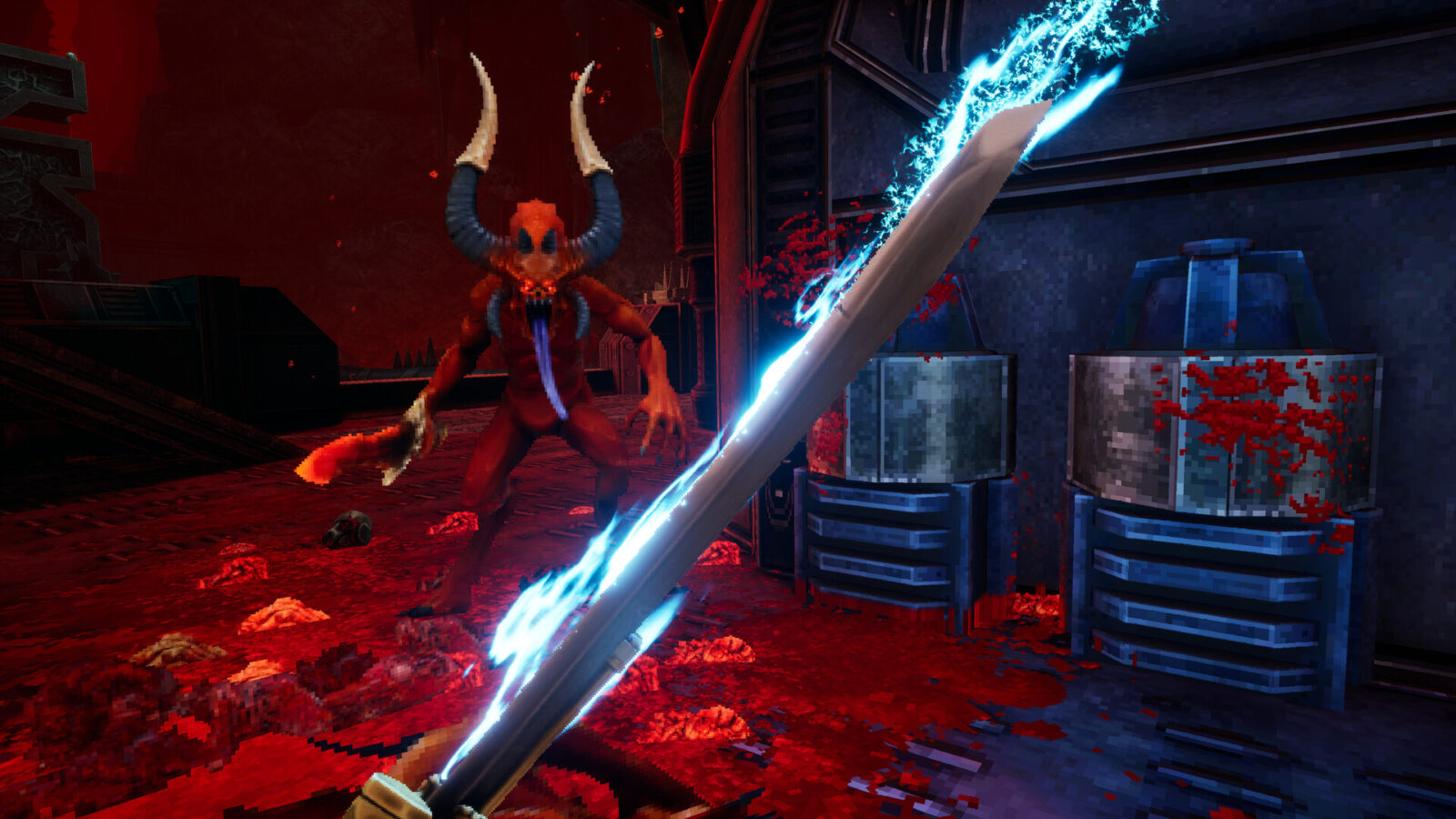
The sequel’s best addition is a second protagonist. Malum Caedo, the Space Marine from the first game, returns, and this time he shares the bill with Nyra Veyrath, a Sister of Battle. Both are fanatics, but they play differently, and that difference is what gives the campaign real replay value. Caedo is a walking siege engine: he carries a Chainsword and frag grenades, and his Chainsword Lunge is a committed, controlled strike that suits his weight and is great for thinning out crowds of weak enemies. Veyrath is faster, with a Powersword and a Melta Bomb, and her Fervent Slide sends her surging forward to cut through anything in her path. In practice, Caedo rewards you for planting your feet and imposing yourself on a room, while Veyrath rewards you for constant movement and aggressive repositioning. I like that neither feels like the “correct” pick. Each is a different answer to the same question of how to clear a room of daemons in the fewest seconds possible.
Branching paths make a second run feel worthwhile
Boltgun 2’s campaign isn’t a straight line. As you progress, you make choices on a campaign map that decide which battle zones you visit on the way to the finale, and there are optional side missions along the way. One fork, for example, offers a choice between a blight-infested rainforest and a fortified beachhead where enemies dig into sandy trenches. That structure does a lot of work alongside the two-character setup. A second playthrough isn’t just the same levels with a different sword. It can mean a different hero, a different loadout, and maps you never saw the first time. Each protagonist’s campaign runs around eight hours on the recommended Medium difficulty, so the full package is surprisingly meaty for a boomer shooter, especially if you want to see every route.
Arena combat with more variety than the formula suggests
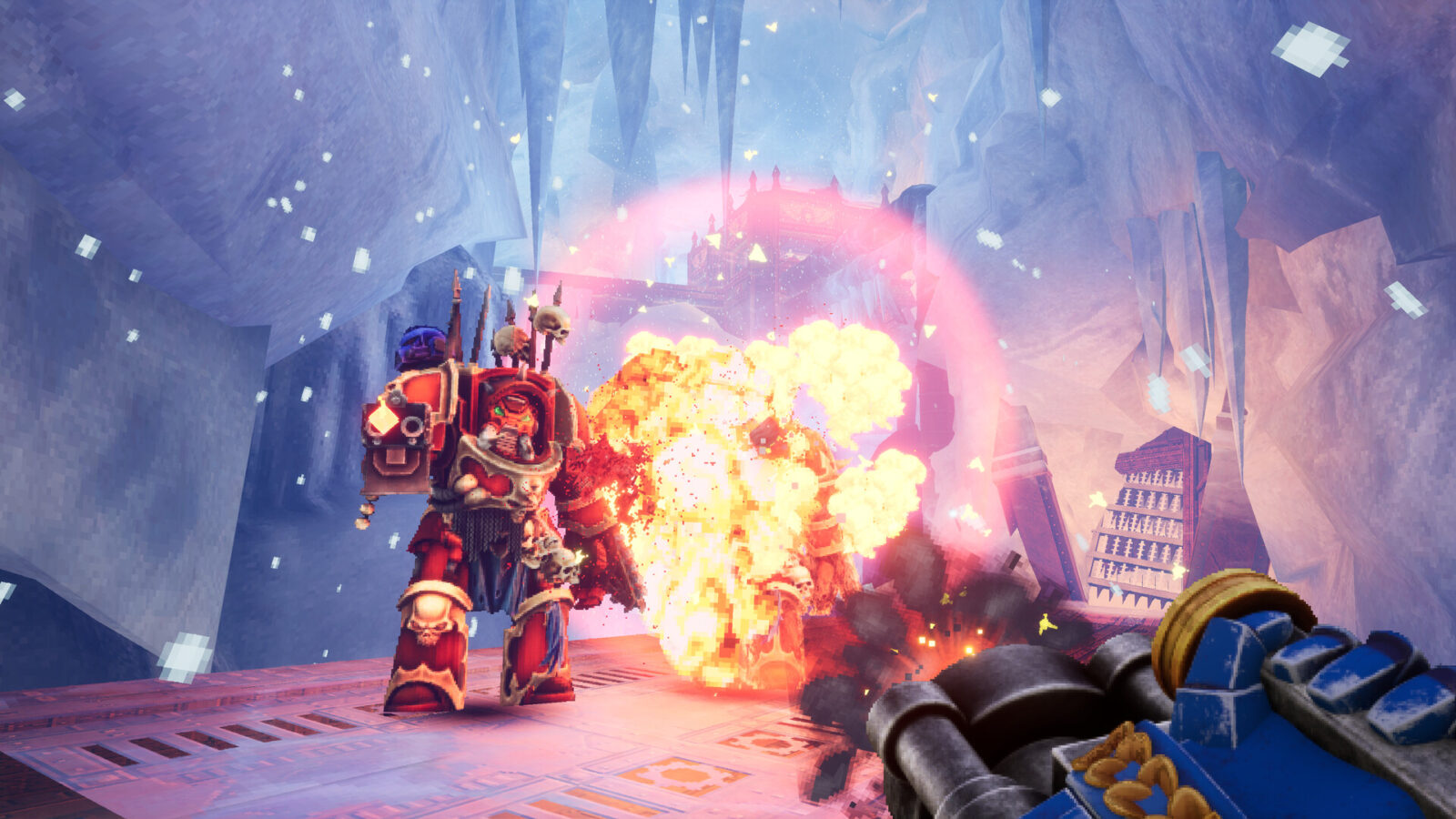
On paper, the mission design sounds familiar: descend into a corrupted hellhole, survive a few waves of arena combat, then fight your way out. The good news is that Auroch Digital keeps mixing up the details inside that template. One level has you destroying blood tanks to weaken a daemonic construct. Another has you working down a vertical chamber, smashing through panes of ice to drop enemies into the blades of a spinning fan below. These twists matter because the genre’s biggest enemy isn’t the final boss, it’s fatigue. When every arena plays like the last one, even great gunplay starts to blur. Boltgun 2 avoids that more often than its predecessor did, and I came away more impressed by its objectives than I expected from a game this committed to shooting things in the face.
Purges, allies and hazards keep every arena unpredictable
Each map also has its own complications. Purges return, periodically sealing you inside an area until every enemy is dead, and they’re as frantic as the name suggests. New this time are friendly soldiers who sometimes fight alongside you. They add to the sense of an actual war rather than a one-man rampage, and they’re useful as a distraction, which is about the most honest role an Imperial Guardsman can hope for. Environmental hazards such as burning pools and thick fog change how you read and navigate a fight, forcing you to think about positioning as well as aim. These layers also hide the collectibles: Secrets, which grant combat buffs, and Seals. What worked for me here is that exploration and combat feed into each other. The same clutter that makes a firefight chaotic also hides something worth coming back for.
Difficulty options that welcome everyone, from novice to masochist
Boltgun 2 has four difficulty levels. Low boosts your health and damage for players who just want the spectacle, while Exterminatus sits at the opposite extreme, and it’s exactly as unforgiving as anyone who knows the term would expect. Medium is the recommended setting and the most natural starting point. On top of that, there’s a set of gameplay modifiers, including options to turn off head bobbing and screen shake, plus an invulnerability toggle. I appreciate this flexibility. Retro shooters can be visually intense and mechanically brutal, and letting players reduce motion effects or remove the fail state entirely opens the game to people who might otherwise bounce off within minutes. Purists lose nothing, since the hardest settings remain there for anyone who wants to suffer for the Emperor.
The Emperor’s machine spirits aren’t fully appeased
For all its confidence, Boltgun 2 has technical problems that are hard to ignore. Enemies sometimes seem to forget there’s a war on and wander around idly instead of attacking. That’s no threat to your survival, but it undercuts the intensity the game works so hard to build. More serious is a bug where a Purge fails to end even after every enemy is dead, leaving the exit locked and blocking progress. That kind of issue matters more than a cosmetic glitch, because it stops the forward momentum that is the whole point of the genre. Movement also has some rough edges. It works well for strafing around arenas and hopping between platforms in a fight, but it can feel slippery during the more demanding platforming sections in the second half of the campaign. None of this ruins the game, but the platforming in particular exposes how floaty the controls can be when precision matters more than speed.
Tabletop miniatures brought to life in glorious pixels
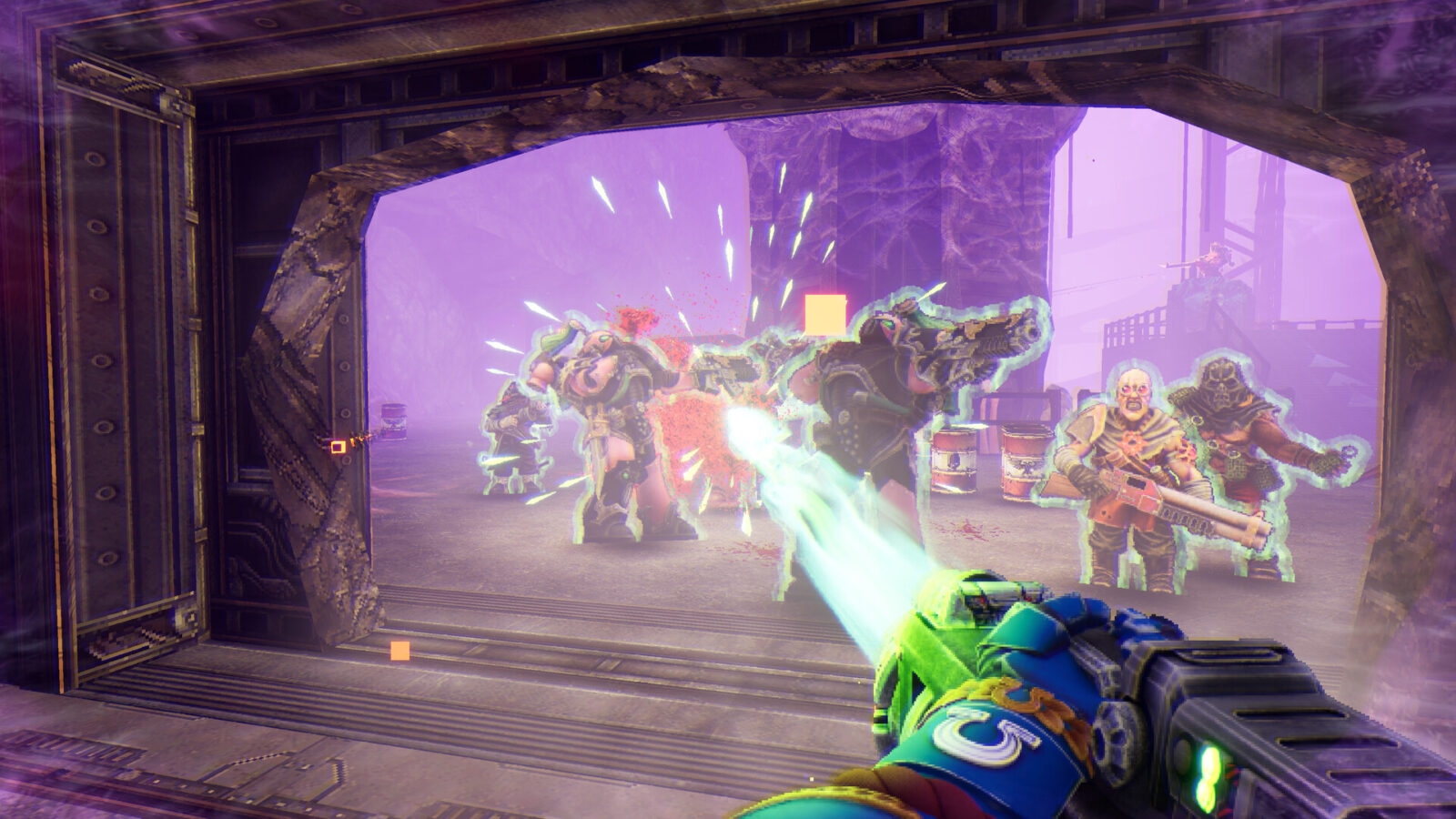
The art direction is Boltgun 2’s biggest strength outside combat, and it’s where the game will win over longtime Warhammer fans. Characters and enemies look like digitized tabletop miniatures, and that aesthetic fits the retro shooter style perfectly. Daemonettes are garish and unsettling, while the Bloodcrushers, with their mounted riders towering over you, are among the most imposing sights in the game. The animations stand out too, with small touches of personality that you could easily miss in the chaos. A Tormentor flips a knife around, and a Nurgling may moon you mid-attack, which is about as Nurgle as behaviour gets. None of these details are necessary, but together they show a studio that understands what makes this universe charming beneath all the misery and skulls.
Battle cries, barks and a Servo-skull with excellent timing
The audio adds a lot to the atmosphere. At the press of a button, your character can shout context-specific barks and taunts, which you can toggle on and off, and the zealotry they add makes every fight feel more like a crusade. Rahul Kohli reprises his role as Caedo and gives him a commanding, booming presence that suits a Space Marine. Alanah Pearce voices Veyrath with appropriately sharp ferocity, giving the Sister of Battle a personality as distinct as her fighting style. The Servo-skull’s writing deserves credit as well. Its deadpan, slightly absurd commentary provides a welcome contrast to all the righteous fury. It’s not easy for a shooter this loud to be funny, but Boltgun 2 has a better sense of humour than most of its peers.
Final Verdict
Warhammer 40,000: Boltgun 2 is a confident sequel that knows what made the original fun and builds on it in the right places. The new playable Sister of Battle doesn’t just add variety on paper. Veyrath plays differently enough from Caedo to justify a second campaign, and the branching map structure gives you new locations when you go back. Mission objectives offer more creative twists than the arena-shooter formula usually allows, while allies, hazards and well-hidden collectibles keep each map busy. The tabletop-miniature art style is excellent, and the voice cast and Servo-skull writing give it more personality than most retro shooters. The problems are real, though.
Bugs that prevent Purges from ending can halt progress, idle enemies undercut the tension, and slippery movement makes the late-game platforming more frustrating than it should be. The story is also heavy on lore and light on substance, though few people will play this for the plot. If you’re a Warhammer devotee, a fan of classic shooters, or simply curious about the boomer shooter revival, Boltgun 2 is easy to recommend, provided you can tolerate a few technical heresies along the way.