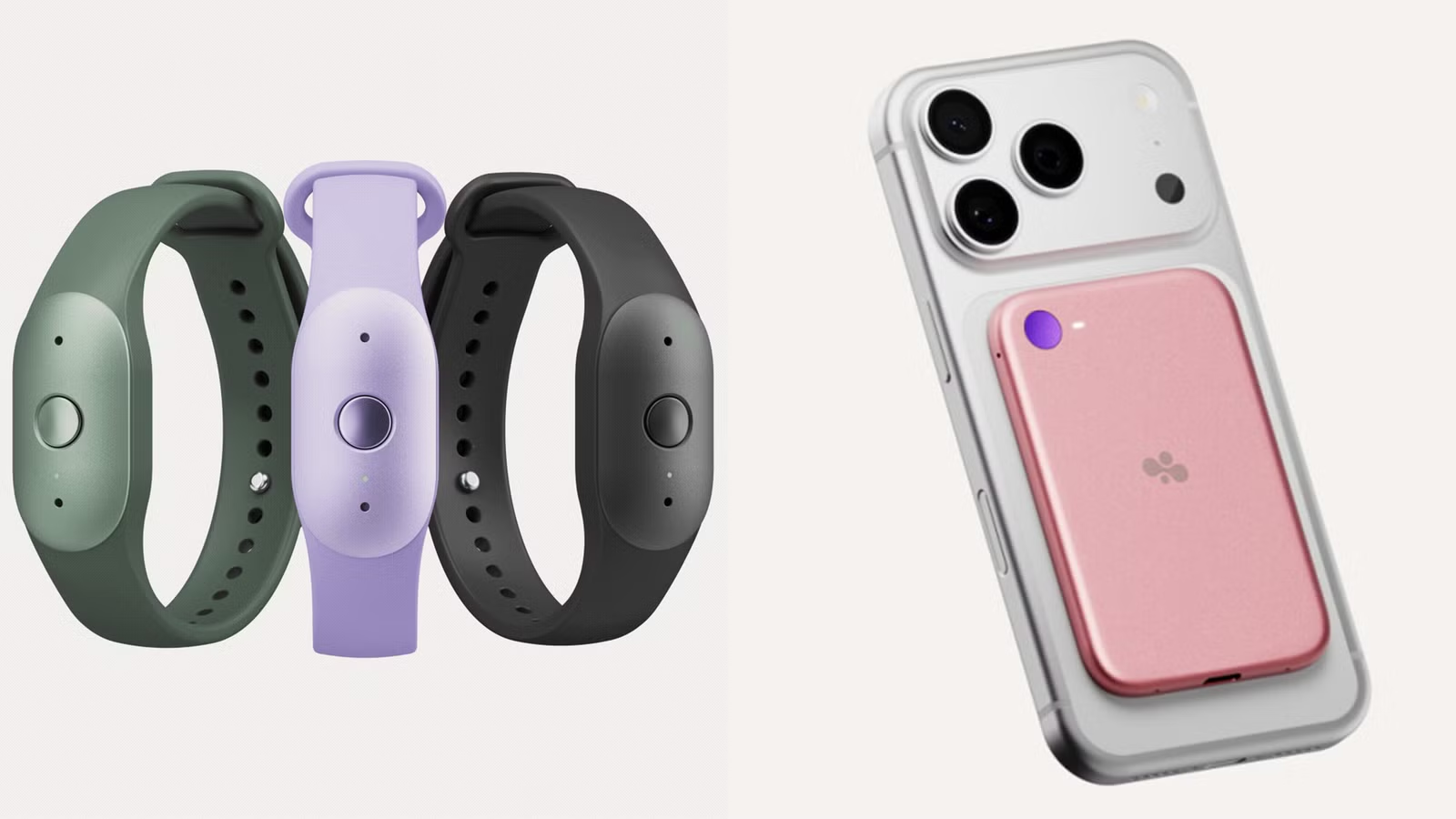
Amazon has released the first hardware from Bee, the AI wearable startup it bought last year, and it’s clear these products are as much about Amazon’s services as about AI. There are two devices: the Bee Frontier, which you wear, and the Bee Eclipse, which attaches to your phone. Both are built to listen to your conversations and turn them into something useful.
The Frontier is a $75 wearable you can wear on the wrist or clip to your clothes. It records conversations, then produces summaries, reminders, to-do items and what Amazon calls insights. Amazon says the battery lasts up to a week. A physical microphone button lets you choose when it listens, and the device switches itself off after a quiet period. Those are sensible choices for a product that will make some people uneasy.
The $100 Eclipse is the more interesting of the two. It’s Bee’s first device that you don’t wear, and it attaches magnetically to MagSafe iPhones or Qi2-compatible Android phones. It offers the same summaries as the Frontier, but runs on its own battery, which Amazon says lasts around three weeks, so it won’t drain your phone. Putting it on hardware people already carry may be smarter than asking them to wear another gadget.
The real business model is the subscription. Without paying, you get summaries, recaps and two weeks of memory. Bee Pro, at $11 a month, adds unlimited summaries, a chat assistant, a desktop app, third-party integrations, and the Alexa+ and Amazon shopping features. With Pro, you can ask an Echo speaker about your Bee data, and products mentioned in a conversation can turn into Amazon shopping listings. That works out to $132 a year on top of the hardware. The device is cheap, but most of what makes it useful sits behind the subscription.
Privacy is the obvious concern. Amazon says Bee encrypts data, doesn’t store audio and won’t share text without permission. Those are promises from the company, and they don’t settle a basic problem with devices that are always listening: the other people in a conversation never agreed to be recorded and summarised. Recording laws also differ from one country to the next.
Dedicated AI gadgets have struggled so far. The Humane AI Pin and Rabbit R1 both promised a lot and fell short. Bee is trying something narrower: it doesn’t aim to replace your phone, it just remembers what was said in meetings and conversations. That modest goal could help it succeed. Whether people will pay a monthly fee for their conversations to feed into Amazon’s shopping and Alexa ecosystem is less certain.