

TL;DR: Lanterns episode 7 digs into Hal Jordan’s family trauma with real emotional weight, then detours into gloriously weird Silver Age sci-fi. A weak subplot aside, it’s a superb setup for the finale.
For six episodes, Lanterns has been happy to let Kyle Chandler’s Hal Jordan play the swaggering veteran with all the answers, while Aaron Pierre’s John Stewart does the heavy emotional lifting. That split made sense, because John’s arc about inherited expectations has been the show’s backbone. It also left Hal oddly unexamined, a charismatic cop-show archetype we were asked to love without understanding. “The Jordan Boys,” directed by Alik Sakharov and written by Damon Lindelof and Tom King, finally corrects that imbalance, and in my view it’s the smartest structural decision the season has made. After two episodes that sidelined Hal and left the show feeling lopsided, this one pulls him back to the centre, even if he’s now a holographic echo of himself.
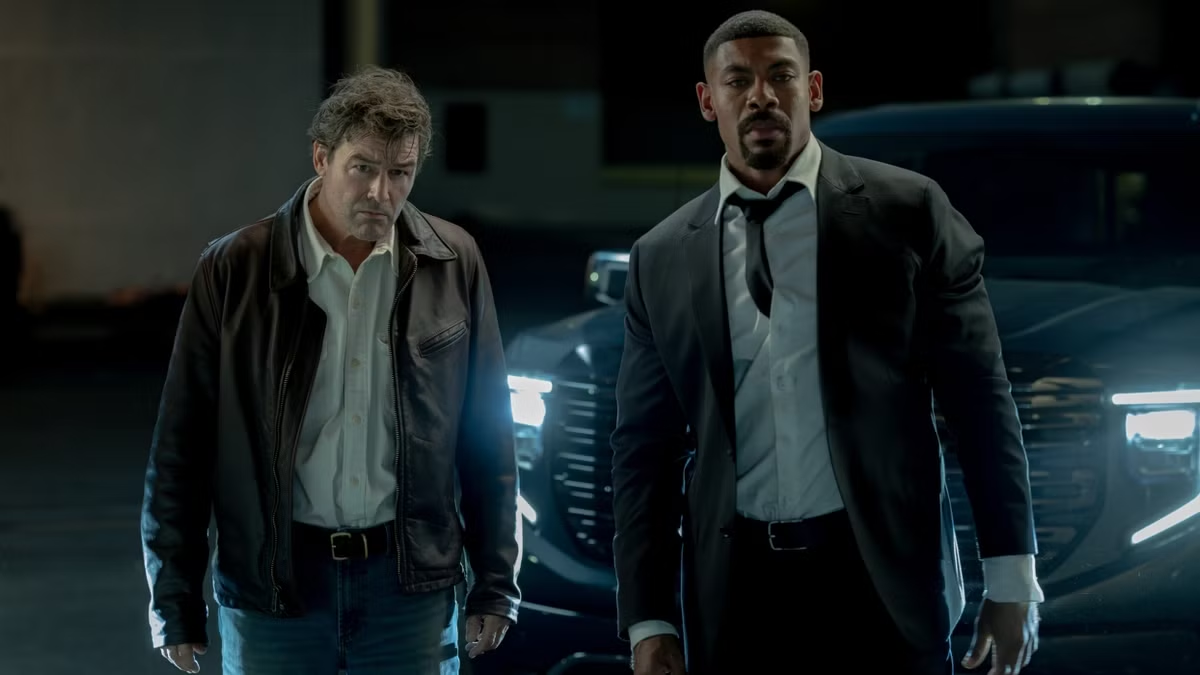
The pairing of John with the Hal-o-Gram, resurrected at the end of last week’s episode, gives Lanterns the buddy-cop energy it has been flirting with since the premiere. There’s a pleasing role reversal at work here, with John now the seasoned, weight-bearing partner and the hologram as the one catching up. Think of it as Lethal Weapon filtered through Tron: the mismatched duo formula is familiar, but the digital twist gives it a new kind of friction. The episode uses that setup to do something superhero TV rarely bothers with, which is to let the “fearless” hero take a hard look at where that fearlessness actually comes from.
A 1975 flashback that explains more than it lets on
The episode opens in 1975 with a young Hal, played by Henry Samiri, refusing to leave the pitcher’s mound during a no-hitter while his coach loses his mind. His father Martin, played by Jake B. Miller, storms in to back him, argues with the coach, and then takes the boy out to an airfield for a quiet life lesson. The coach is pitched at such a volume that he borders on parody, and the scene would have landed harder with a bit more restraint. Still, it does its job well, sketching the moment Hal learned to wear his father’s charm like armour. It’s one of those flashbacks that seems simple on first watch and grows more loaded the further the episode goes.
That groundwork pays off later, when Hal delivers a revelation about Martin that reframes everything we thought we knew about the character. I won’t spell it out, because it deserves to hit you cold, but it recasts Hal’s famous lack of fear as something closer to a lifelong terror he has buried under bravado. Lindelof and King are clearly interested in how men pass wounds down the line, and how “bravery” can simply be a refusal to look at what scares you. Placed alongside John’s own inherited burden, it turns the series into a pointed study of two sons shaped by their fathers’ failures. For a show built on a mythology where fear is literally a weapon, that thematic rhyme feels earned rather than bolted on.
Kelly Macdonald quietly steals the Rushville scenes
Not every thread in Rushville works, and the Maggie subplot remains the season’s weakest link, still struggling to justify the screen time it eats up. The so-called hat ceremony fares a little better, but only because it echoes the father-son material, not because it holds my interest as a story on its own. These pieces feel like set dressing waiting for a purpose, and a tighter edit would have lost nothing by trimming them. They’re minor drags, though, rather than episode-breakers.
What does work is Kelly Macdonald as Kerry, the no-nonsense small-town sheriff with a Gotham crime family in her background. It’s unexpected casting on paper, yet she balances warmth, openness and steel with a precision that makes every scene she’s in feel grounded. Her reaction to the Hal-o-Gram does more to sell her past romance with Hal than anything the previous episode offered, which mostly told us about it rather than showing us. It’s a reminder that Lanterns is at its best when it lets actors carry the emotional weight instead of the exposition.
The cosmic finale is a love letter to Silver Age weirdness
The last stretch of the episode finally lets Lanterns go full space opera, and after a season largely set on Earth, the change of scenery is a jolt of pure comic-book joy. John has already been exposed to the fear toxin that wiped out Antaan’s people, which gives the journey a ticking-clock urgency. The destination, a desolate world scarred by an android genocide with a mysterious purple factory on a remote island, looks a little thin in places, and the landscapes don’t quite match the ambition of the idea. Even so, the sheer strangeness of the sequence carries it, especially for anyone who grew up on Green Lantern’s stranger pages. The black hole transport device is a genuine deep cut from 1960’s Green Lantern #2 by John Broome and Gil Kane, and spotting it made my inner longbox collector very happy.
That callout also raises a fascinating question about where exactly this planet is, and longtime readers will have some very specific theories about Antaan’s origins. The closing moments lean hard into that speculation with an arrival that finally gives Ulrich Thomsen’s character room to breathe beyond the caged-genius mode he’s been stuck in. Thomsen has made a strong impression with limited screen time, and this is the first real sign that the show intends to unleash him properly. Whether he can sustain that menace through the finale is the big open question now.
Verdict
“The Jordan Boys” is Lanterns at its most ambitious, pairing a thoughtful examination of inherited fear and masculinity with a gloriously nerdy sci-fi finale. Kyle Chandler’s Hal finally gets the depth he’s been missing, Aaron Pierre continues to anchor the series, and Kelly Macdonald proves to be a secret weapon. The Maggie subplot and some underbaked alien landscapes hold it back, as does an overplayed flashback coach. Longtime Green Lantern fans will find plenty of Silver Age treasure, while newcomers get a surprisingly emotional character drama. Heading into the finale, Lanterns is one of the strongest things the new DCU has produced, and this episode is a big reason why.