

Rear displays on phones have spent years searching for a reason to exist. Xiaomi tried one on the Mi 11 Ultra back in 2021, where it mostly showed notifications and served as a selfie viewfinder, and the idea quietly faded. With the Xiaomi 18 Pro and 18 Pro Max, the secondary screen is back, and Xiaomi is clearly working hard to fill it with purpose. After AI-generated widgets and mini apps, the latest answer is a guitar.
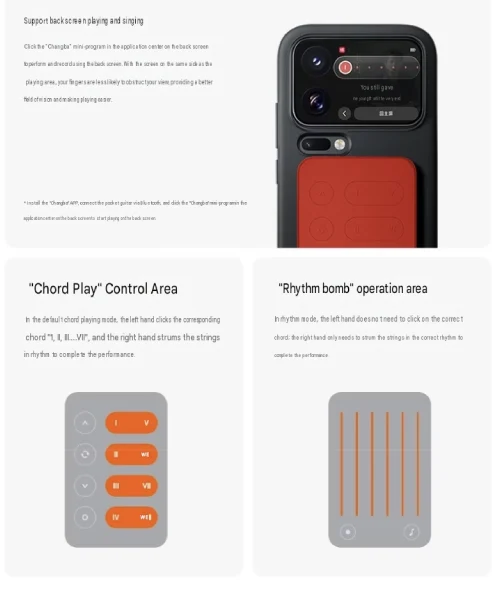
The Xiaomi Pocket Guitar is a magnetic accessory that snaps onto the back of the phone and folds shut over the rear display when not in use. Open it along its hinge and it becomes a two-part instrument: one half carries a row of chord buttons, the other a ridged, textured panel that stands in for strings. Flip it the other way and it doubles as a compact phone stand, which is probably the feature most owners will end up using daily. It comes in black and red.
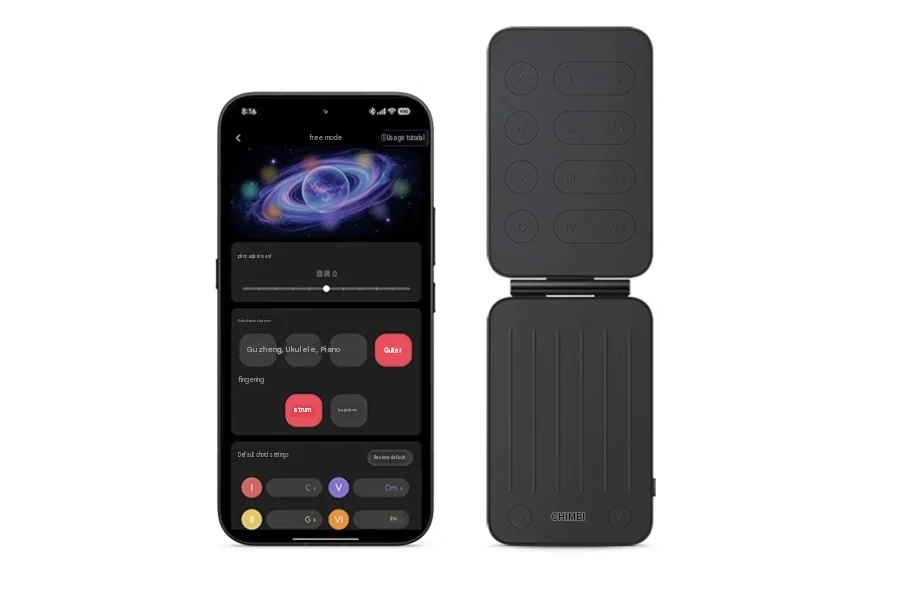
Playing relies on Changba, a popular Chinese karaoke and singing app, with the accessory pairing over Bluetooth. There are two ways to play. Chord mode has you pressing buttons numbered I through VII with one hand, a nod to how musicians describe chords by scale position, while strumming with the other. Rhythm mode strips things back further, asking only that you keep strumming in time while the app takes care of the harmony.
The rear screen earns its place through layout. Because the strumming panel sits beneath the display rather than over it, your hand stays clear of the on-screen prompts, song information and controls. That integration, including playback and recording on the back screen, is exclusive to the 18 Pro series. Other Xiaomi phones and iPhones running iOS 14 or later can still connect, but everything moves to the main display, which makes the accessory feel far less purpose-built.
Inside is a 630mAh battery that Xiaomi claims lasts up to 30 days per charge, topped up over USB-C.
It costs 599 yuan, roughly $90, and is currently sold only in China through JD.com. There’s no word on international availability, and given its dependence on a China-focused app, a global release looks far from certain.
As a product, it sits somewhere between a clever demo and a party trick. It won’t teach anyone real guitar, and it isn’t trying to. What it does show is that Xiaomi is willing to build hardware around its rear screen rather than wait for developers to find a use for it. Whether a strummable accessory convinces buyers that second displays matter is another question entirely.