
TL;DR: The Statik PowerStand is a 2m, 240W USB-C cable with a fold-out portrait and landscape phone stand built into its connector. It’s bulky and limited to 480Mbps data, but for desks, video calls, streaming and travel, the weird little legs are genuinely clever.
I genuinely thought we had reached the end of USB-C cable innovation. Make them tougher, make them longer, push more power through them, maybe add a tiny display if you’re feeling particularly cyberpunk. Job done. Then the Statik PowerStand landed on my desk with a wonderfully strange proposition: what if your charging cable was also your phone stand?
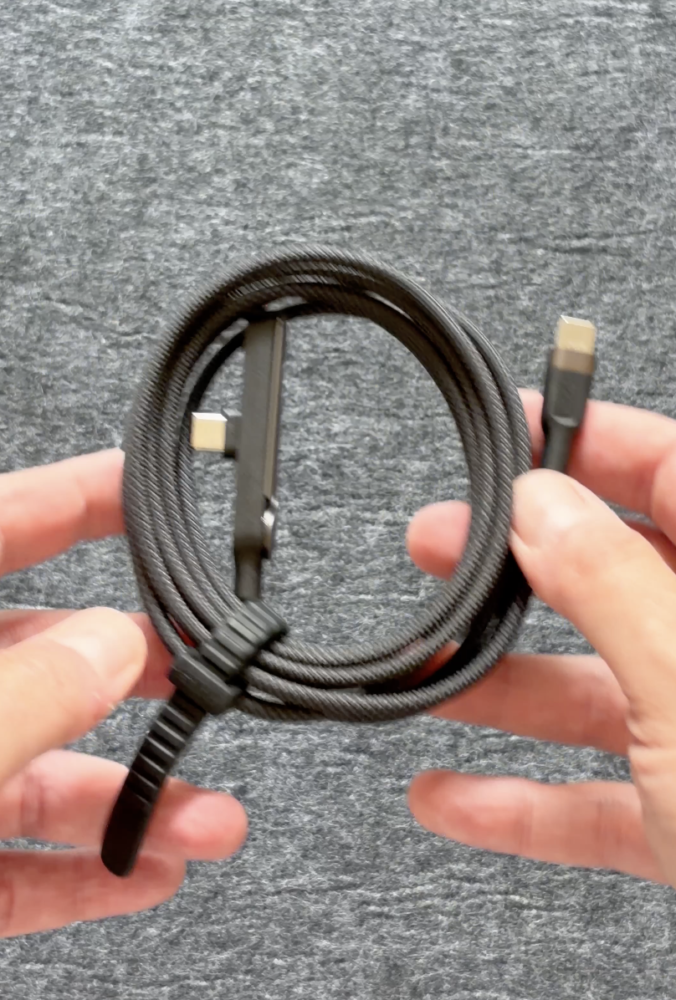
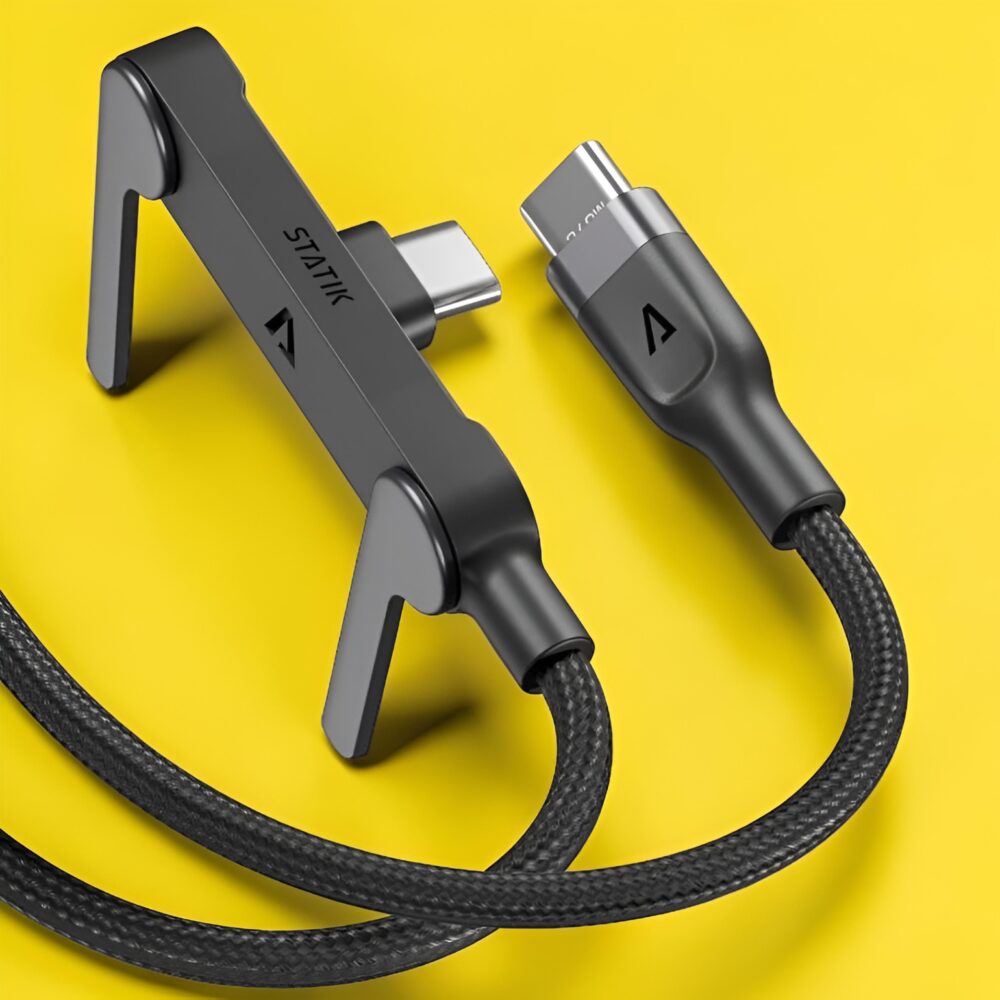
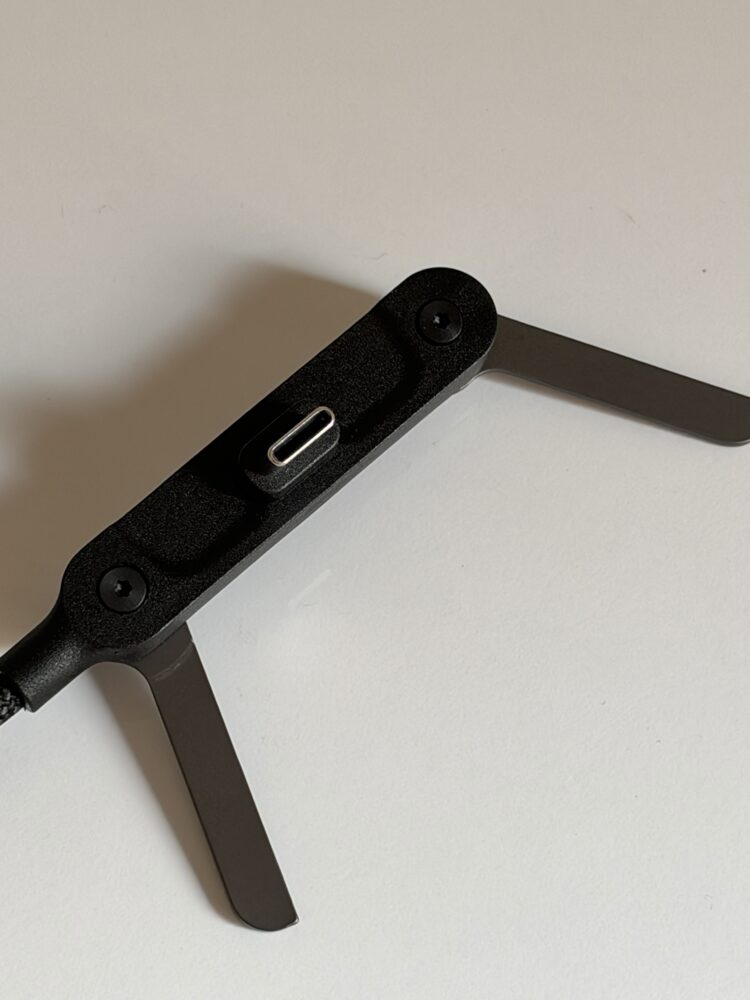
Yes, the cable has legs. Tiny fold-out legs built into the USB-C connector, allowing your phone to sit upright in portrait or landscape while it charges. It sounds like something created during a late-night engineering meeting after somebody asked, “But what else can we make the cable do?” Yet after reviewing the idea, I’ve come away thinking it’s far less ridiculous than it sounds.
The PowerStand is a 2-metre USB-C-to-USB-C cable rated for up to 240W charging, with 480Mbps data transfer, braided nylon construction and a 90-degree connector. The integrated stand is obviously the headline act, but there are several smaller design decisions that make the whole thing considerably more interesting than a novelty cable.
The Cable That Grew Legs
Let’s start with the weird bit.
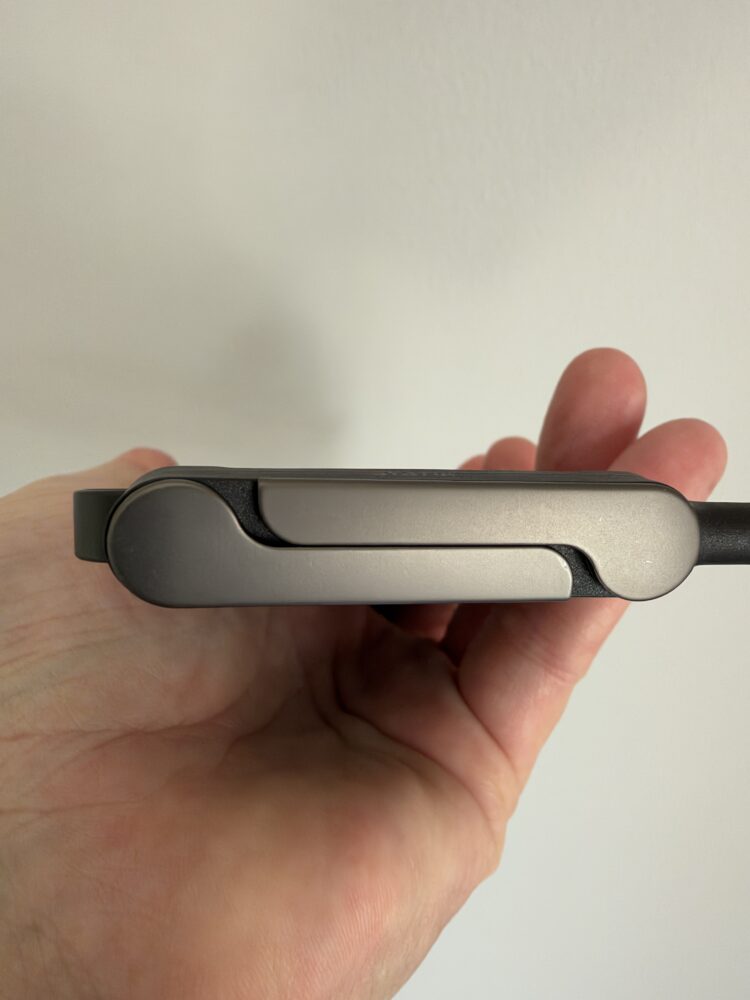
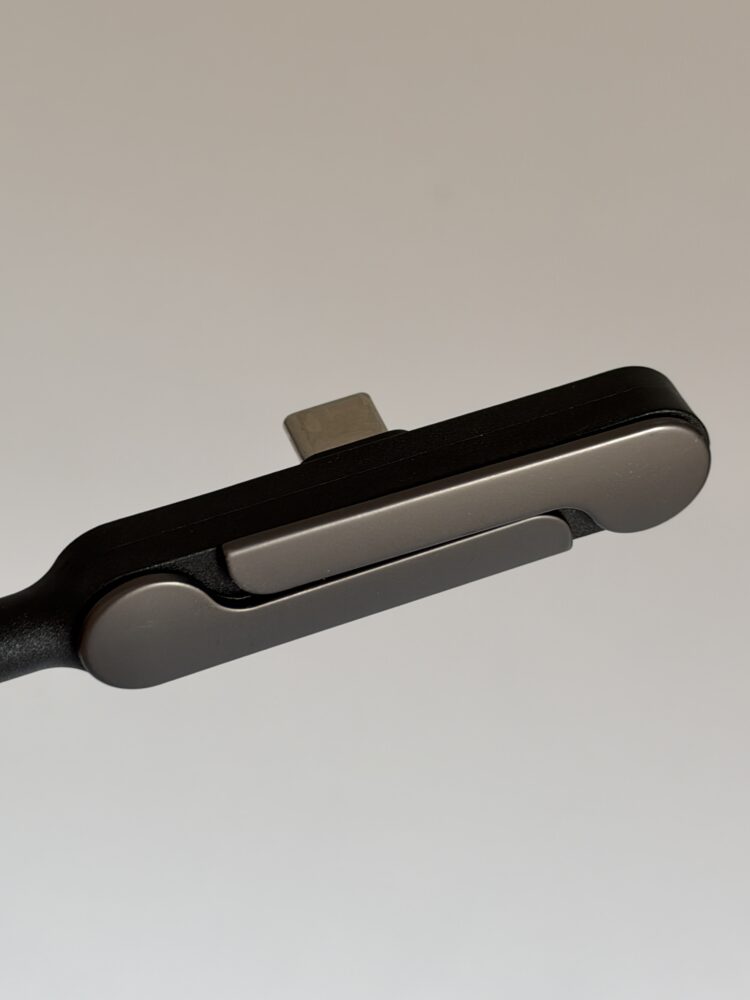
The phone-side connector is considerably chunkier than what you’d find on a normal USB-C cable because it houses a pair of folding supports. Pop them out, connect your phone and the PowerStand becomes a tiny tabletop stand. You can position the phone vertically for scrolling, calls and notifications, or horizontally when Netflix inevitably wins the battle against productivity.
And you know what? The concept makes sense.
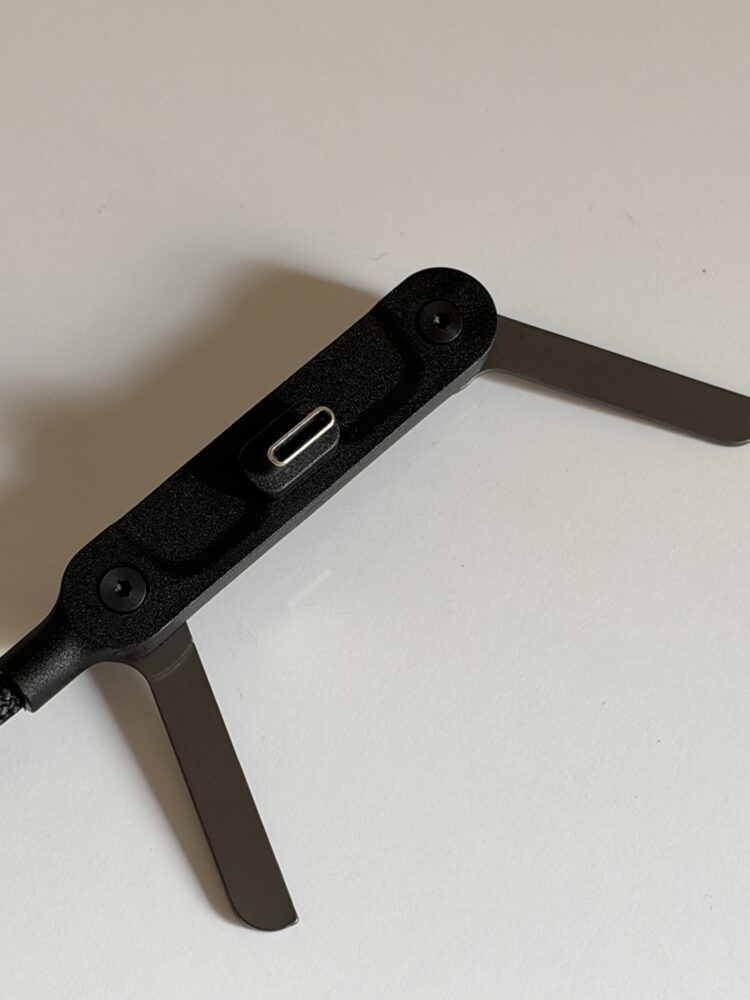
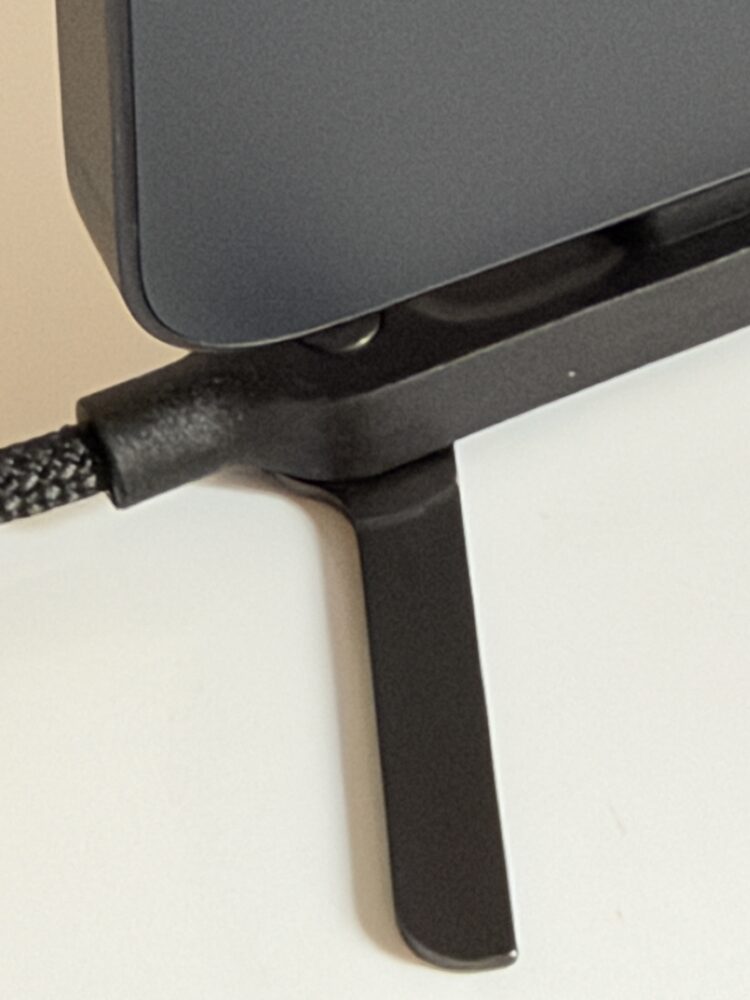
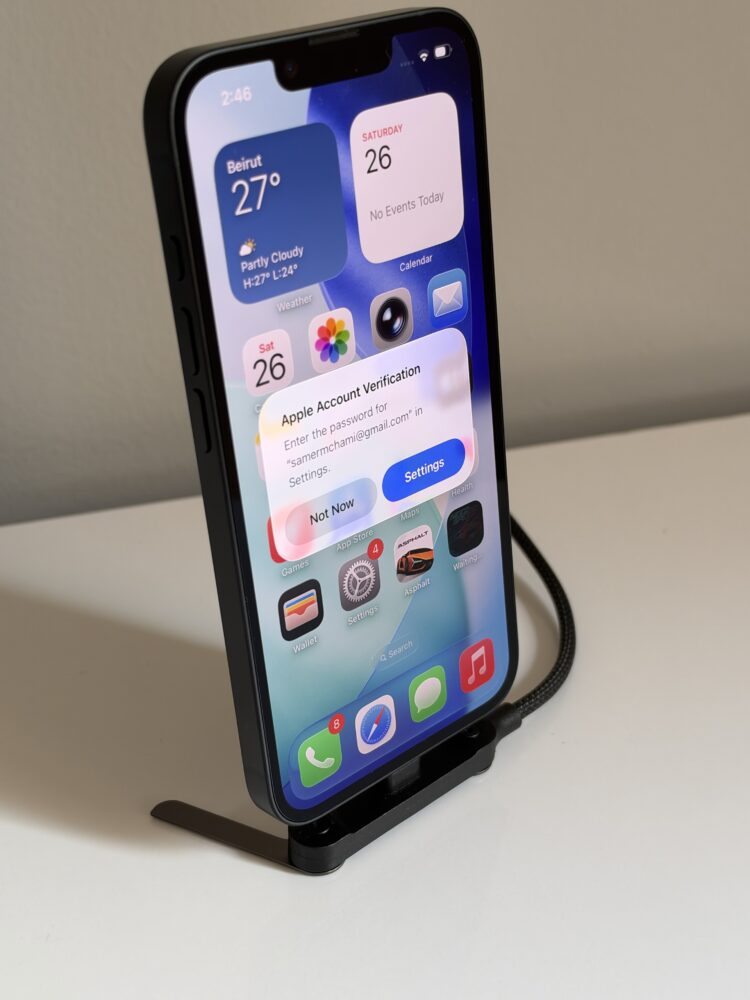
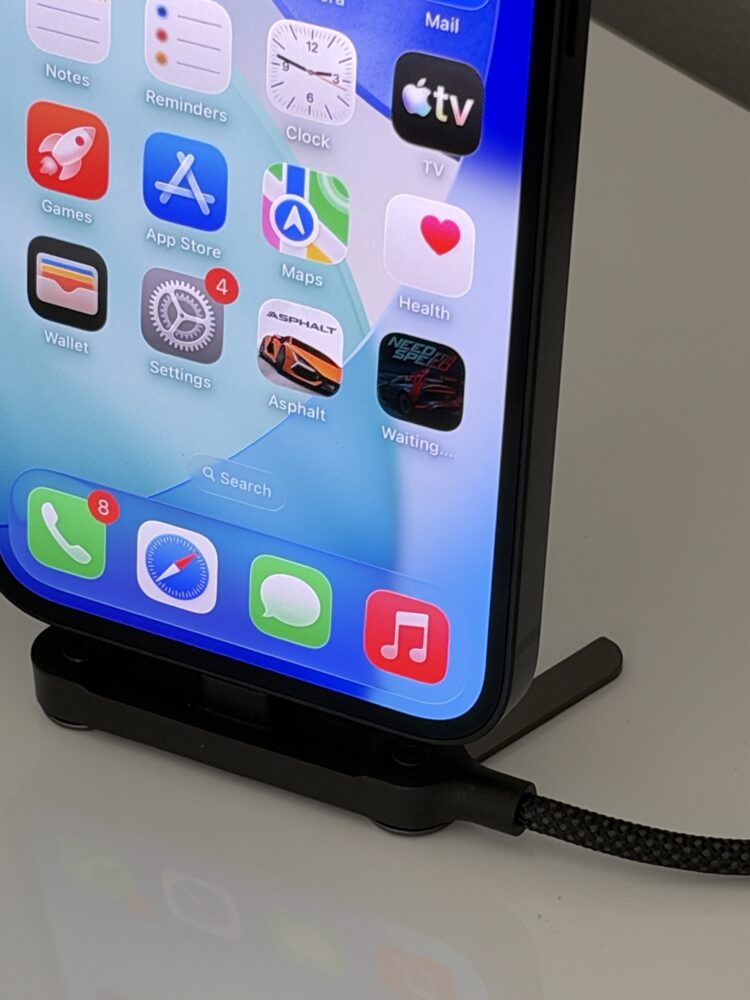
I’ve carried separate phone stands while travelling, used cases with kickstands and, in moments of desperation, balanced phones against whatever random object happened to be nearby. A charging cable is already something most of us carry everywhere, so making that cable perform double duty is exactly the sort of gadget logic I can get behind.
The clever part isn’t that Statik invented the phone stand. It’s that it attached one to something you’d probably have in your bag anyway.
Using the PowerStand Feels Surprisingly Natural
There isn’t much of a learning curve here, which is probably the biggest compliment I can give the design. Plug the USB-C connector into your phone, unfold the supports and put it down. There are no magnets to align, clamps to adjust or origami instructions required to transform the thing into its final form.
The 90-degree connector also makes considerably more sense once you remember that this cable is designed to remain attached while you’re actually using the phone. Instead of having a straight USB-C plug and cable sticking awkwardly out of the bottom, the cable runs off to the side. That’s useful when watching something horizontally and generally makes the setup feel less like your phone is tethered to life support.
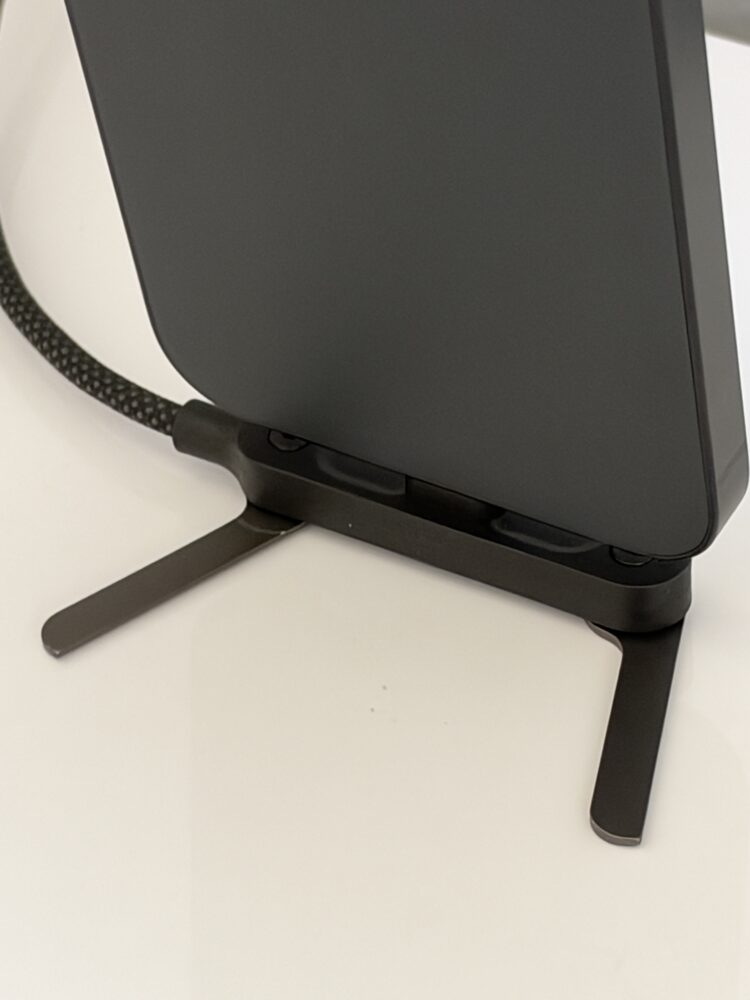
Statik has also extended the USB-C connector shaft specifically to accommodate phone cases. That’s important because designing an elaborate phone accessory that immediately fails when somebody uses a case would be peak gadget-industry comedy.
Portrait, Landscape and the Eternal Second-Screen Life
I think the PowerStand makes the most sense on a desk. My phone already spends a ridiculous amount of time beside my keyboard, and having it positioned upright while charging is simply more useful than leaving it flat. Notifications are visible, calls are easier to handle and the phone can become a little secondary display without requiring another accessory cluttering the workspace.
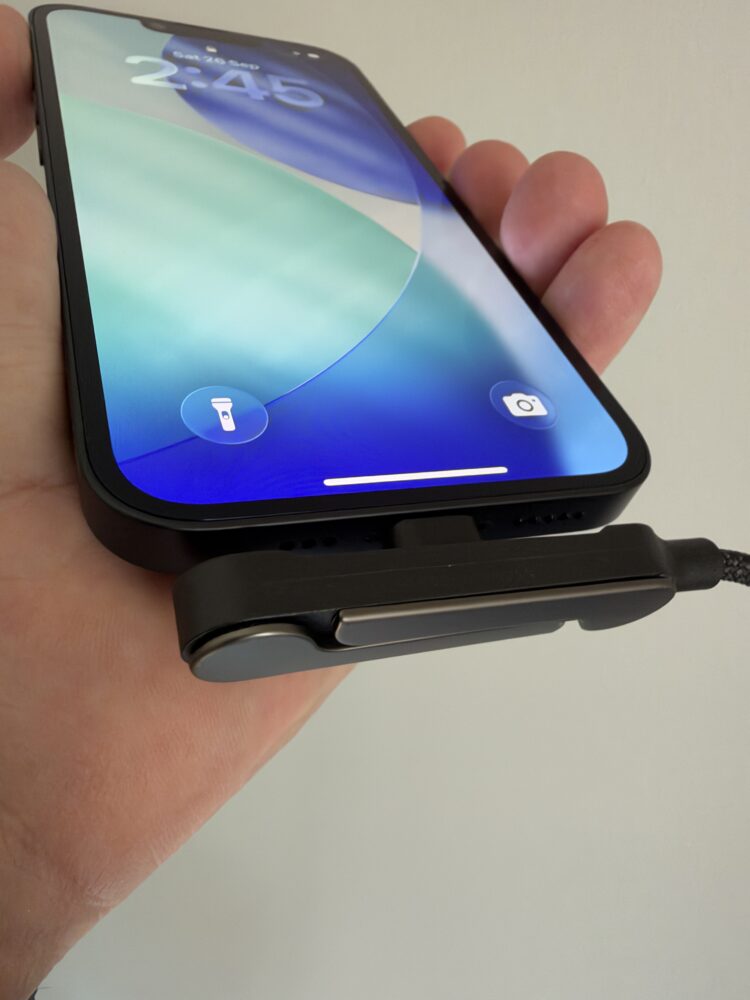
Landscape mode is arguably even more useful. That’s the natural position for YouTube, streaming and plenty of games, and it’s where that right-angle cable arrangement starts earning its keep. For travelling, I can also see the appeal immediately: one cable can theoretically replace both the charging lead and the cheap folding stand you’d otherwise throw into your bag.
There is obviously a physical limitation here. The stand mechanism has to live somewhere, so the connector is much larger than a regular USB-C plug. If your dream cable is basically invisible, this isn’t it. PowerStand arrives at the USB-C party wearing power armour.
Statik Even Thought About the Speakers
One of the more interesting details is something I initially wouldn’t have considered: phone speakers.
Because the PowerStand sits directly beneath the phone, its larger housing could potentially obstruct bottom-firing speakers and microphones. Statik has therefore incorporated what it calls sound-directing scoops into the housing, designed to channel audio toward the user rather than simply getting in its way.
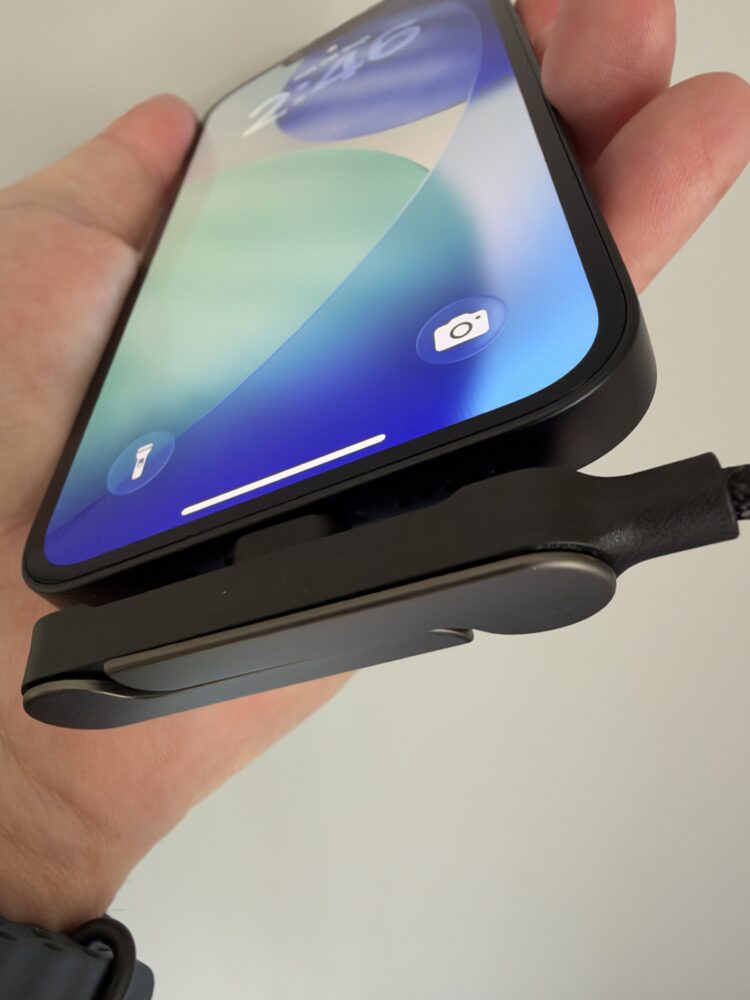
I’m not going to pretend this turns your phone into a miniature Dolby Atmos cinema because physics would like a word. What I appreciate is that somebody clearly considered the consequences of putting a big chunk of hardware underneath a smartphone. Multipurpose gadgets tend to become annoying when solving Problem A creates Problems B, C and “why can’t I hear anything?”
About That Massive 240W Charging Number
Then we get to the specification that’ll probably attract the most eyeballs: 240W.
The PowerStand is rated for USB-C charging at up to 240W, which is hilariously excessive for most phones but gives the cable enough headroom for significantly more power-hungry USB-C devices. In other words, this doesn’t have to become a phone-only cable just because the stand is clearly designed around smartphones.
But there is an important distinction here. A 240W cable does not make your phone charge at 240W. Your charger, device and supported charging standards ultimately determine how much power gets delivered. Think of the cable as having a very large pipe; attaching that pipe doesn’t magically make your tap produce more water.
That’s why I wouldn’t buy the PowerStand purely because there’s a giant 240W number attached to it. Buy it because you want the stand and appreciate having substantial charging capability available alongside it.
The Data Speed Is Much Less Exciting
USB specifications love making consumers suffer, so naturally charging capability tells you almost nothing about data performance.
The PowerStand tops out at 480Mbps data transfer. That’s perfectly serviceable for everyday transfers, syncing and CarPlay, but it isn’t remotely the cable I’d choose for regularly throwing enormous video files onto an external SSD. If you’re shopping for a high-performance USB data cable, there are much faster options.
I don’t consider that a deal-breaker because this is very clearly a charging-first product. Still, it’s worth knowing because “240W USB-C cable” can make something sound universally high-end when USB power delivery and USB data bandwidth are two entirely different boss battles.
Two Metres Is Exactly What I Want Here
Cable length can make or break something like this, and thankfully Statik hasn’t attached its clever stand to a tiny cable that forces you to camp beside a power socket.
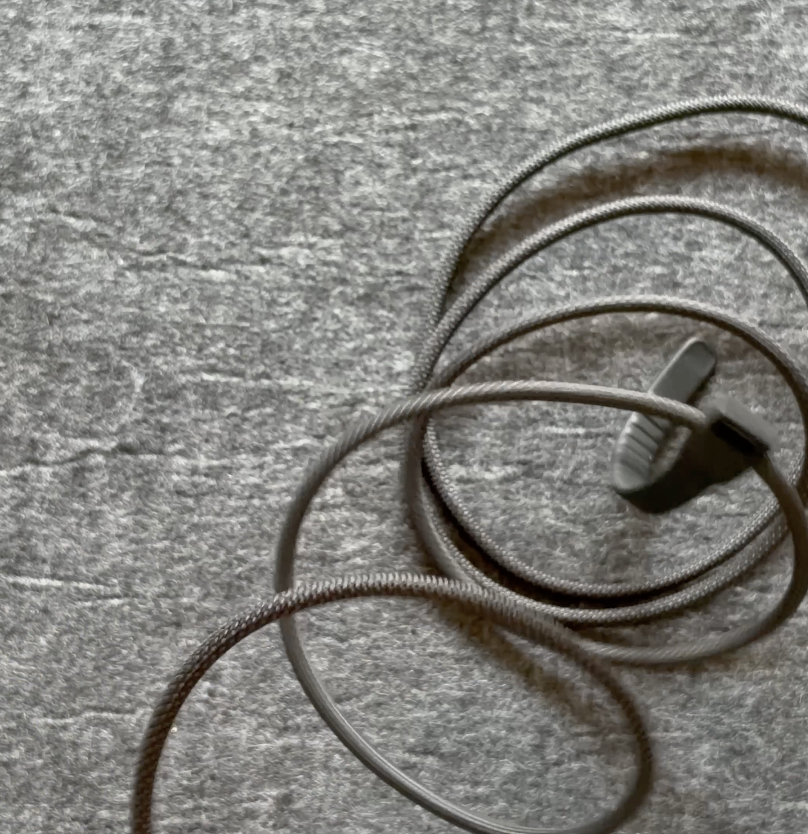
The PowerStand measures 2 metres, or 6.6 feet. That’s plenty for stretching across a desk, reaching a bedside outlet or dealing with hotel sockets that have apparently been positioned according to ancient feng shui rituals. A cable designed around actively using your phone while charging benefits enormously from that additional freedom.
Construction consists of a braided nylon exterior with a TPE connector shell and aluminium housing. Statik also claims the cable can withstand more than 10,000 bends. That’s the manufacturer’s durability claim rather than something I can independently verify from the supplied information, so I’m not awarding it the Mjölnir Certificate of Indestructibility just yet.
Who Should Actually Buy the Statik PowerStand?
This is one of those gadgets where you’ll know almost immediately whether the concept fits your life. If you regularly watch videos while charging, keep your phone propped beside your computer, make video calls from your phone or travel with a separate phone stand, the PowerStand combines two accessories in a genuinely useful way.
It’s much harder to recommend specifically for somebody who simply wants a USB-C cable. There are countless straightforward cables available, and the PowerStand’s larger connector makes little sense if you’re never going to unfold those legs. Likewise, people buying primarily for fast data transfers should look elsewhere because 480Mbps is clearly not the star of this particular show.
That’s actually what I like about the PowerStand. It isn’t pretending to reinvent USB-C. It’s a specialised cable built around one slightly weird but surprisingly practical idea.
Verdict
I went into the Statik PowerStand thinking the integrated stand might be one of those features that’s brilliant for approximately eleven minutes before you forget it exists. Instead, the concept makes an annoying amount of sense. We already use phones while they’re charging, we already prop them against random objects, and we already carry USB-C cables everywhere. Combining those things isn’t revolutionary, but it is clever.
The 2-metre length, right-angle connector, braided construction and up-to-240W charging capability make the PowerStand useful beyond its party trick, while portrait and landscape positioning give that stand more flexibility than I’d initially expect. I wish the 480Mbps data speed were more ambitious, and the oversized connector is inevitably the price you pay for cramming a stand into a cable.
But if you’re constantly propping your phone up while it charges, this is exactly the sort of slightly ridiculous gadget that can become unexpectedly useful. The PowerStand looked like a USB-C cable that had grown legs. After reviewing it, I’m starting to think more cables should.