


ASUS is preparing to expand its creator-focused laptop lineup in the UAE with new ProArt P16 and ProArt P14 models built around NVIDIA RTX Spark, targeting users who increasingly want to run demanding generative AI and creative workloads locally rather than relying entirely on cloud services.
The two ProArt laptops are expected to arrive in the UAE in October 2026, alongside Intel- and AMD-powered versions of the Zenbook 14. A Qualcomm Snapdragon-based Zenbook 14 is already available locally, giving ASUS a broader mix of architectures across its premium portable range.
The headline feature of the ProArt P16 and P14 is NVIDIA RTX Spark, which ASUS says can deliver up to one petaflop of AI performance and support as much as 128GB of unified memory. That amount of memory is particularly significant for local AI development and professional content creation, where model size and complex datasets can quickly overwhelm conventional laptop configurations.
According to ASUS, the hardware can handle large language models containing up to 120 billion parameters, work with 3D scenes exceeding 90GB and generate AI-assisted 4K video. Those figures describe substantial workloads for portable machines, although real-world performance will inevitably depend on individual applications, model configurations, thermals and power limits.
The wider shift toward local AI processing is arguably more important than the headline numbers. Running models directly on a laptop can reduce dependence on internet connectivity and cloud subscriptions while giving creators and developers greater control over their files. ASUS is also positioning its own MuseTree generative creation software and StoryCube media-management tool as part of that local workflow, alongside RTX-accelerated applications using NVIDIA’s CUDA ecosystem.
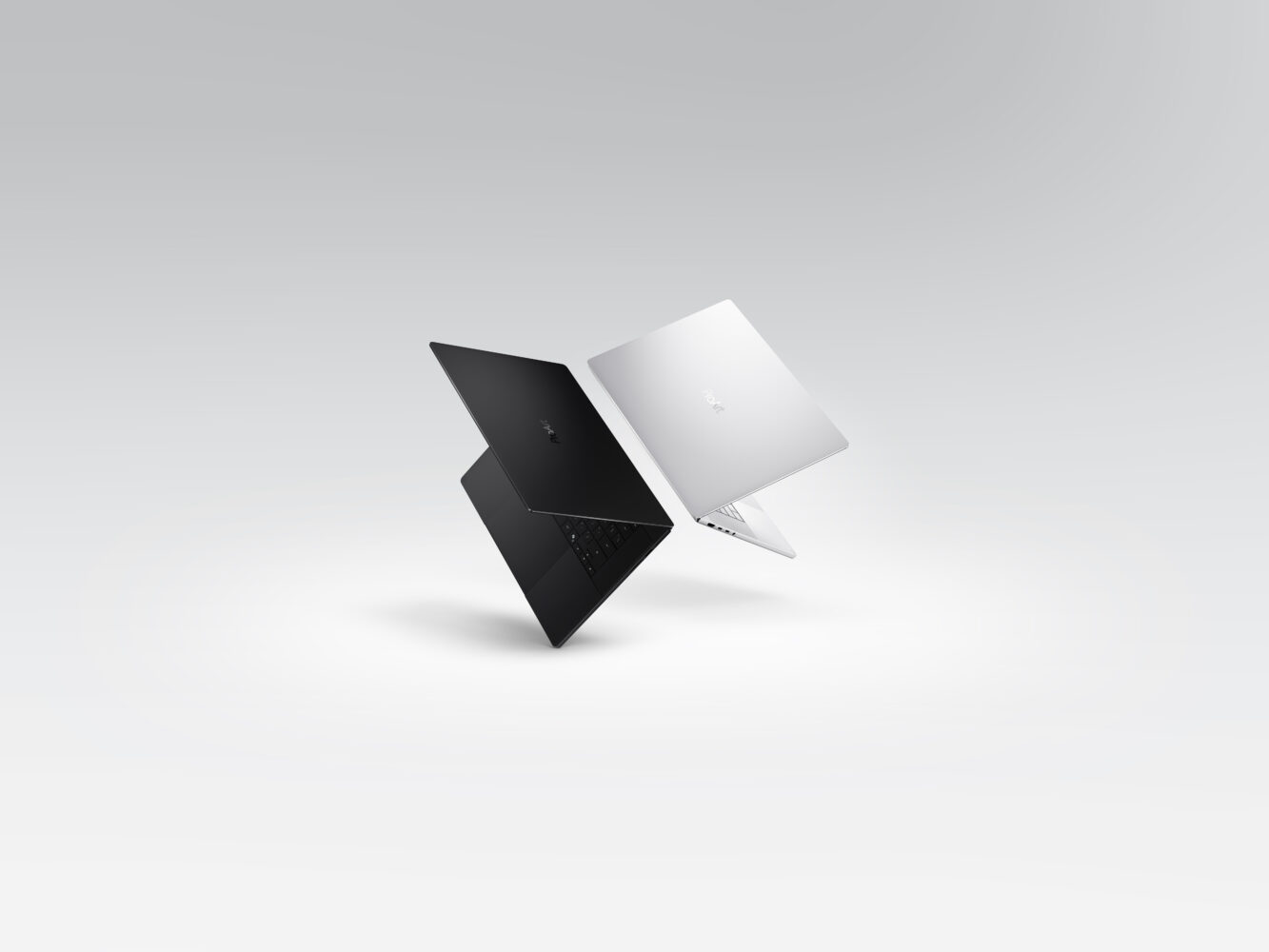
Portability remains part of the pitch despite the heavier computing ambitions. ASUS lists the ProArt P16 at 12.9mm thick and 1.77kg, while the smaller ProArt P14 weighs 1.48kg. The machines will be offered in Nano Black and Neo White finishes.
Displays are similarly aimed at visual professionals. The ProArt P16 can be configured with an ASUS Lumina Pro OLED panel offering up to 4K resolution, a 120Hz variable refresh rate and NVIDIA G-SYNC support. The P14 tops out at 3K resolution. High-resolution OLED panels have become increasingly common on premium creator laptops, so colour accuracy, calibration and sustained performance will matter as much as the specifications themselves.
ASUS is also keeping the Zenbook 14 positioned as the more mainstream ultraportable alternative. Its specifications include an OLED display and the company’s Ceraluminum lid material, with Snapdragon, Intel and AMD configurations giving buyers a choice of platforms.
Pricing for the incoming ProArt models and additional Zenbook 14 variants has not yet been announced. With an October UAE launch approaching, that missing detail could ultimately determine how compelling ASUS’s local-AI proposition looks against an increasingly crowded field of AI-focused premium laptops.