
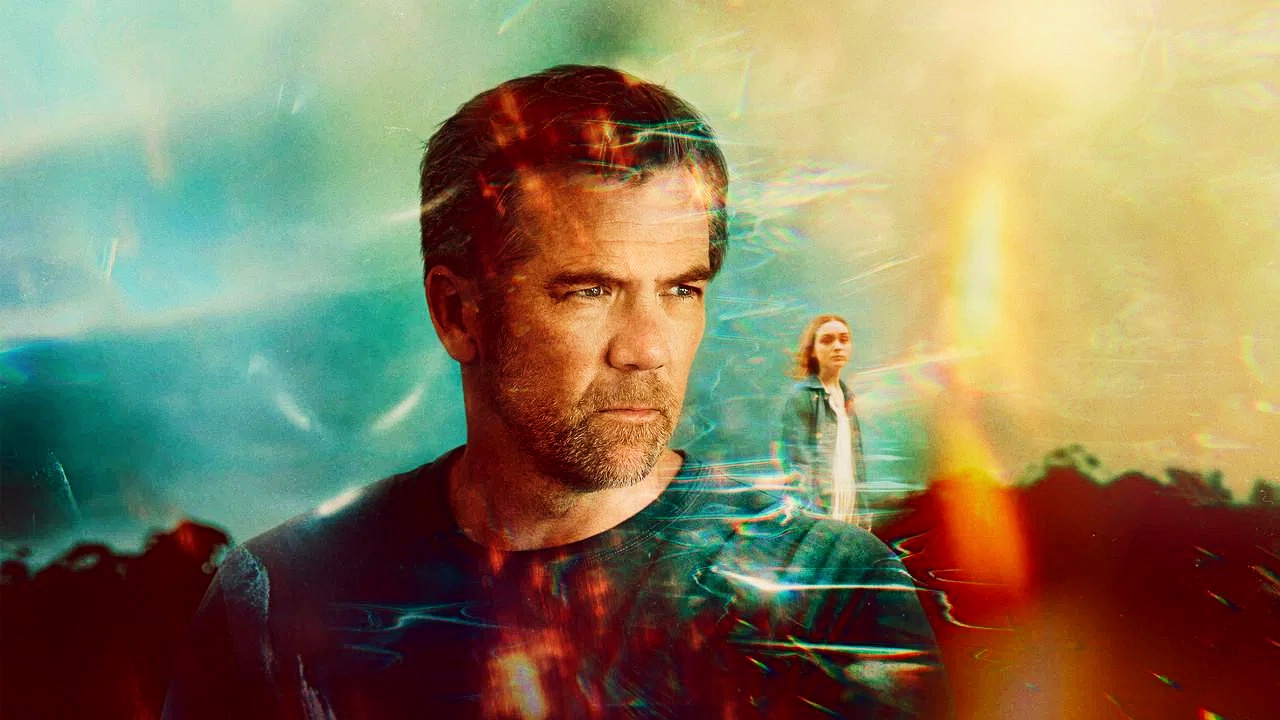
TL;DR: Last Seen combines a killer missing-child premise with superb performances and genuine emotional stakes. Patrick Brammall anchors a tense, beautifully shot Australian thriller where the consequences matter more than the twists.
Some crime thrillers hook you by hiding the answer. Last Seen takes a more dangerous route: it makes you care so much about the people chasing that answer that the mystery becomes almost secondary. Adapted from Ryan David Jahn’s novel The Dispatcher, this six-part Apple TV series takes an instantly compelling missing-child premise and wraps it around grief, guilt, addiction and the terrifying things people can justify when family is involved. Director Christian Schwochow keeps the pressure high, but the real weapon here is the cast, led by a Patrick Brammall performance that feels permanently one bad decision away from catastrophe.
Brammall plays Ian, a former police officer now working for Australia’s 000 emergency service. His daughter Maggie disappeared 11 years earlier, his marriage has collapsed, and Ian is six months sober while still carrying enough guilt to power several seasons of prestige television. Then the remains of a child are discovered in the Victorian bushland near where he lives. The possibility that Maggie has finally been found should provide closure; instead, it opens the door to something much stranger when Ian receives a phone call that makes him question everything.
Patrick Brammall makes Ian impossible to look away from
What immediately elevates Last Seen above standard missing-person television is Brammall’s refusal to play Ian as a conventional hero. He is sympathetic, certainly, but grief has reshaped him into somebody unpredictable, angry and increasingly willing to push beyond reasonable boundaries. The series understands that 11 years without an answer would not simply leave someone sad. It would fundamentally rewrite their relationship with hope.
Ian’s sobriety adds another layer of tension because addiction and obsession begin to feel uncomfortably adjacent. He is trying to maintain control over one part of his life just as the possibility of finding Maggie threatens to obliterate control everywhere else. That makes even his questionable behaviour emotionally understandable without requiring the show to excuse it. Brammall is particularly good at maintaining that distinction: Ian can frighten you, frustrate you and still make you desperately want him to find whatever truth remains buried.
It is also refreshing to see Brammall in material so far removed from the comic rhythms many viewers associate with Colin from Accounts. There is an ordinary quality to Ian that makes the performance more effective. He doesn’t suddenly transform into Liam Neeson with a particular set of skills because the plot needs momentum. He feels like a damaged man forcing himself deeper into circumstances that may be much bigger than he can handle.
Last Seen turns two troubled families into a psychological collision
Ian isn’t the only character carrying enough emotional baggage to incur excess charges. Brendan Cowell plays Harry, the brother of Ian’s friend Donald (Daniel Henshall), while Maxine Peake plays Harry’s wife Jenna. Their family lives with unconventional beliefs and an uneasy relationship with the wider world, creating another strand of the story that gradually becomes increasingly important.
Cowell is particularly effective because Harry doesn’t need exaggerated villain coding to feel unsettling. His guarded nature and commitment to protecting his family create tension precisely because the series allows ambiguity to do the heavy lifting. Peake brings another dimension to Jenna, whose conflicted presence stops the family from becoming a convenient collection of thriller archetypes.
That parallel between families gives Last Seen its thematic bite. Ian and Harry may occupy very different positions, but both are shaped by ideas about responsibility, protection and what someone owes the people they love. Once those instincts become tangled with fear, the moral boundaries start becoming wonderfully messy. This isn’t Fast & Furiousfamily logic where saying “family” magically absolves everyone after the third exploding helicopter; Last Seen is interested in what happens when devotion becomes justification.
The mystery works because its twists actually hurt
Writer Kris Mrksa’s adaptation understands one of the most important rules of twist-heavy storytelling: surprises mean very little unless they change something emotionally. A shocking reveal can make Twitter explode for 20 minutes, but if the characters remain unaffected, it is essentially narrative DLC nobody needed. Last Seen does considerably better.
The discovery of the child’s remains creates immediate urgency, but the series takes time establishing Ian’s emotional condition and the relationships surrounding him before allowing the larger machinery to accelerate. That patience matters. Once the story starts tightening its grip, developments have consequences beyond merely moving everyone to the next clue.
The six-episode format helps. There is enough room for relationships and suspicions to develop without turning Maggie’s disappearance into a 10-hour scavenger hunt stuffed with suspicious neighbours, red herrings and detectives staring meaningfully at evidence boards. The story is twisty, but its primary concern remains the psychological cost of those twists.
There are still moments when the mechanics become visible, and viewers who have consumed enough crime television may find themselves predicting certain directions before the characters get there. Yet Last Seen compensates through momentum and emotional investment. Knowing where part of the road might lead doesn’t necessarily make the journey less stressful when you care about who is driving.
Victoria gives Apple TV’s thriller a distinctive identity
Last Seen is also notable as the first Apple TV series made entirely in Australia, with production taking place in Victoria, where the story is set. Cinematographer Bonnie Elliott gives the series the polished visual confidence associated with Apple’s prestige productions without allowing that polish to completely sterilise its surroundings.
That matters because there is always a risk with expensive streaming dramas that every location begins looking as though it was processed through the same extremely expensive cinematic filter. Here, the Australian setting feels integral rather than decorative. The bushland, isolation and local texture support the mystery’s unease, while the performances retain a distinctly Australian naturalism.
Schwochow’s direction complements that approach by keeping the series muscular rather than melodramatic. Last Seencertainly contains heightened circumstances, but its best moments come from people reacting believably to unbearable situations. The visual confidence and controlled pacing make it easy to keep clicking “next episode,” which is basically the streaming-era equivalent of a critical hit.
Verdict
Last Seen takes an excellent thriller premise and, more importantly, gives it characters capable of carrying the emotional weight behind it. Patrick Brammall is superb as Ian, creating a protagonist whose desperation can be simultaneously sympathetic and alarming, while Brendan Cowell and Maxine Peake give the surrounding mystery considerably more psychological depth.
The series occasionally exposes the machinery beneath its twists, and seasoned crime-thriller addicts may anticipate some of its moves. That ultimately matters less than expected because Last Seen understands that revelation without consequence is just trivia. Its strongest surprises hurt because they matter to characters we have become invested in.
With six episodes, strong performances, impressive Australian cinematography and a mystery that rarely wastes time, Last Seen is an easy recommendation for viewers who like their crime television emotionally bruising rather than merely clever. Apple TV has another thriller worth losing a few evenings to — just don’t expect everyone involved to emerge from the experience with their emotional health bar intact.