
TL;DR: Slow Horses Season 6 is the show at its absolute best: dangerous, hilarious, emotional and wildly unpredictable. Years of characters and secrets collide in six superb episodes that change the game and make Season 7 feel painfully far away.
Six seasons in, Slow Horses should be settling into a comfortable rhythm. Jackson Lamb should insult everyone, River Cartwright should make at least one decision that raises the collective blood pressure of MI5, Slough House should stumble into another conspiracy, and we should all have a lovely time watching Britain’s least glamorous spies somehow save the day. Season 6 has absolutely no interest in being that predictable. Instead, Apple TV’s filthy, funny and increasingly fearless spy thriller digs into everything it has built since 2022 and delivers what I think is its best season yet.
That is no small claim because Slow Horses has been ridiculously consistent. But Season 6 feels different. Bigger without becoming bloated, darker without sacrificing the comedy and more emotionally charged without suddenly pretending Jackson Lamb belongs in a prestige-TV therapy session. By combining Mick Herron’s Joe Country and Slough House, the series turns years of characters, secrets and unfinished business into ammunition. The result is six episodes that feel less like another mission and more like the moment the entire Slow Horses universe starts shifting beneath everyone’s feet.
Slow Horses Season 6 turns Slough House into the target
The season begins with a problem so beautifully mundane that it could only happen on Slow Horses: nobody has been paid. Unfortunately, this isn’t just MI5 payroll being useless. Lamb (Gary Oldman) discovers that the Slow Horses have effectively been erased from the agency’s internal records, and Diana Taverner (Kristin Scott Thomas), newly installed at First Desk, claims she has no idea why.
Then former Slough House agents start dying.
What initially appears to be a series of accidents quickly becomes something far more sinister, forcing Lamb and his team to confront the possibility that somebody isn’t merely attacking MI5 — they’re specifically hunting the people connected to Slough House. That distinction immediately makes Season 6 feel more personal than another standard espionage conspiracy. These aren’t disposable assets caught in somebody else’s operation anymore. The misfits we’ve spent five seasons becoming attached to are suddenly the objective.
And Slow Horses knows exactly how much more dangerous that makes everything feel.
The past comes crashing back in spectacular fashion
Season 6’s greatest trick is that its returning characters never feel like nostalgia bait. Louisa Guy (Rosalind Eleazar) is pulled back into Slough House’s orbit, while Olivia Cooke’s Sid Baker makes the kind of return that instantly changes the chemistry of the series. Frank Harkness (Hugo Weaving) is also back, because apparently River Cartwright hasn’t suffered enough already.
Bringing these characters together allows Season 6 to exploit something few streaming shows reach often enough: genuine history. Relationships have baggage. Conversations carry scars. People remember betrayals, losses and unfinished arguments. Instead of treating previous seasons like completed save files, Slow Horses loads everything back into the campaign.
That is particularly effective with River. Jack Lowden has always been brilliant at playing a character who desperately wants to be the heroic spy while repeatedly discovering that real espionage is messier, uglier and considerably less interested in his heroic intentions. After a deeply personal loss, River is more emotionally exposed this season, and the return of people connected to his past forces him into territory he cannot simply sprint, punch or catastrophically improvise his way through.
Lowden is fantastic with that material. His renewed chemistry with Cooke also clicks immediately, giving the season an emotional connection to the earliest days of the series without feeling like the show is desperately pressing the nostalgia button.
The Slow Horses ensemble has never been this much fun
For all the assassins, conspiracies and institutional backstabbing, Slow Horses would collapse without its collection of wonderfully incompatible human beings. Season 6 understands this better than ever and throws its characters into combinations that generate comedy almost automatically.
River once again finds himself working alongside J.K. Coe (Tom Brooke), whose ability to make silence feel actively hostile remains a joy. Louisa and Shirley Dander (Aimee-Ffion Edwards) have their own unresolved friction, while Roddy Ho (Christopher Chung) continues behaving like somebody accidentally gave a Reddit comment section security clearance. His interactions with Emma Flyte (Ruth Bradley) remain painfully funny, and adding teenager Reece Nesmith (Lenny Rush) to his responsibilities is exactly the kind of terrible idea this show thrives on.
What impresses me is how effortlessly the humour survives alongside genuine danger. The jokes never make the threat feel meaningless because Slow Horses isn’t really writing jokes around its characters; the characters themselves are funny. Their egos, grudges, insecurities and complete inability to behave like the sleek superspies cinema has trained us to expect generate the comedy naturally.
That balance has always been the show’s secret weapon. Season 6 may be its best deployment yet.
Gary Oldman somehow makes Jackson Lamb even better
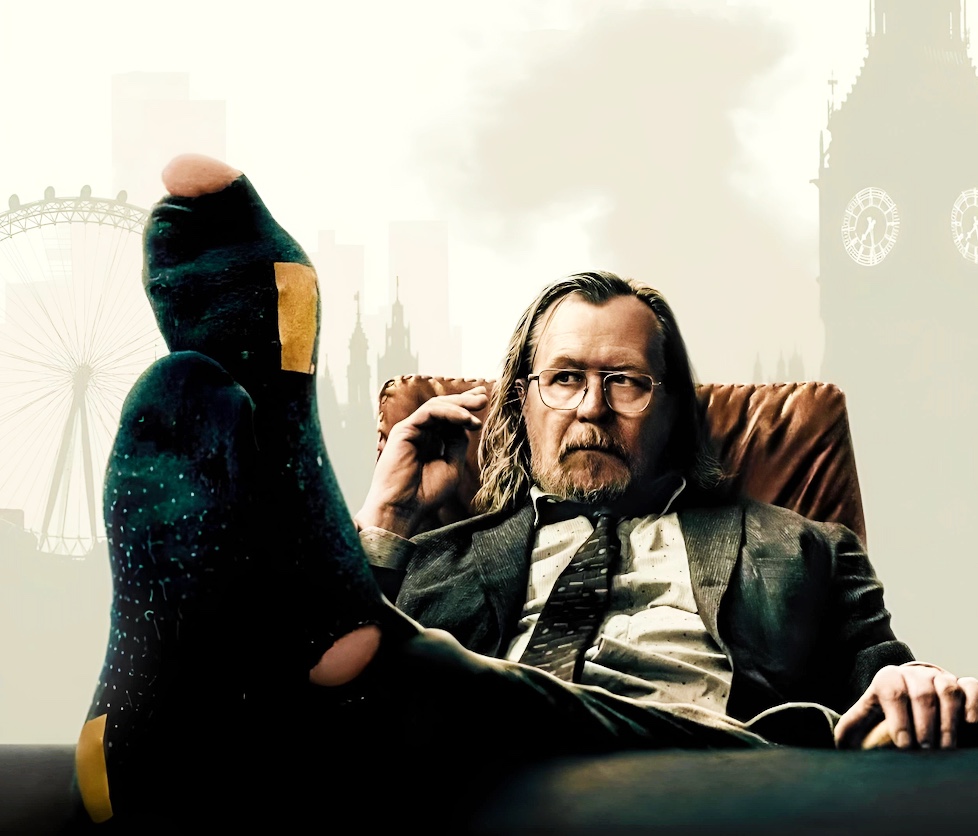
At this point, Jackson Lamb should have become predictable. Gary Oldman has spent six seasons weaponizing bad manners, worse hygiene and the posture of a man who appears personally offended by furniture. Yet Lamb remains completely magnetic.
The reason is that underneath all that glorious awfulness is an extremely dangerous intelligence officer. Season 6 puts his people under direct threat, which allows Oldman to reveal Lamb’s loyalty without sanding down any of his unpleasant edges. He doesn’t suddenly become sentimental or start delivering speeches about friendship. Thank the spy gods for that. Instead, the concern remains buried beneath insults, cynicism and calculation.
Kristin Scott Thomas continues to be his perfect opposite. Taverner may now occupy First Desk, but promotion simply gives her more knives to dodge. Peter Judd (Samuel West) is once again lurking around the machinery of power, while Damien Cantor (Peter Lloyd) threatens MI5 from another direction by potentially exposing covert operations.
The contrast between Lamb and Taverner remains delicious. She has to survive the institution. Lamb barely acknowledges that institutions deserve to survive him.
Season 6 takes the biggest swing Slow Horses has attempted
Changing head writers after five seasons could have been dangerous, particularly when Season 6 also abandons the traditional single-novel structure by drawing from two Herron books. Instead, Gaby Chiappe oversees a season that feels remarkably confident about pushing Slow Horses forward rather than simply preserving what already works.
The biggest difference is serialization. Season 6 expects you to remember what happened before, and I love that it does. This absolutely isn’t the season to recommend as somebody’s introduction to the show, but after five seasons, why should it be? Longtime viewers are rewarded because characters, revelations and relationships that once seemed safely stored in the past suddenly matter again.
That creates an unpredictability previous seasons haven’t always possessed. Kyle Soller and MyAnna Buring bring a chilling physical threat as the mysterious killers targeting Slough House connections, but the danger extends beyond whoever might be holding the weapon. Secrets inside MI5 begin surfacing. Catherine Standish (Saskia Reeves) is confronted with a professional revelation that threatens her hard-earned stability, Sid’s history with Taverner becomes more complicated, and River’s already nightmarish relationship with Harkness certainly doesn’t become easier.
The six-episode structure means there is almost no room for dead air. Once the pieces start moving, Season 6 keeps tightening the screws.
That ending changes the game
Without stepping anywhere near spoiler territory, the finale is where Season 6 earns its status as the strongest chapter of Slow Horses so far. Previous seasons have generally offered the satisfaction of watching a complicated operation eventually reveal its shape. Season 6 is more interested in making you question what shape the series itself will have next.
That distinction matters.
Rather than simply closing another case and returning everyone to their usual positions, the season leaves behind consequences that make the already-confirmed Season 7 suddenly feel essential rather than merely welcome. It’s the rare cliff-edge feeling that comes not from cheap withholding but from the realization that the rules may have genuinely changed.
For a series this established to suddenly feel this unpredictable is enormously exciting. Most shows reaching Season 6 are trying desperately not to break the furniture. Slow Horses looks around Slough House, sees the furniture is already broken and decides it might as well set something on fire.
Verdict
Slow Horses Season 6 is the best season of the series yet. It takes everything the show has spent five seasons building — River’s complicated history, Lamb’s buried loyalty, MI5’s internal rot, old relationships, forgotten secrets and Slough House’s spectacular dysfunction — and turns it into one tightly wound six-episode grenade.
Gary Oldman remains phenomenal, Jack Lowden delivers some of River’s strongest material, Olivia Cooke’s return immediately adds another dimension to the ensemble, and the expanded collection of familiar faces makes the danger feel unusually personal. More importantly, the season refuses to survive on familiarity. It takes risks with the structure, digs deeper into continuity and pushes the series toward a future that suddenly feels far less predictable.
The only real warning is that newcomers should absolutely start from the beginning. Season 6 is designed as a reward for people who have been living with these beautifully dysfunctional idiots for years, and much of its impact comes from understanding exactly what returning characters and old revelations mean.
For everyone already invested? Clear the schedule. Slow Horses has always been one of Apple TV’s most consistently brilliant shows, but Season 6 finds another gear just when you think the gearbox must surely be held together with Lamb’s cigarette ash. It’s tense, hilarious, surprisingly emotional and genuinely difficult to predict — and by the time those final credits arrive, waiting for Season 7 is going to feel downright cruel.