
TikTok is giving its comment sections a substantial upgrade, adding voice messages, polls, multi-image carousels and Live Photos as it continues turning the space beneath videos into content of its own. The changes move TikTok comments considerably beyond the familiar combination of text and reaction images, although they also create some obvious moderation challenges.
The biggest addition is Voice Comments, which allow users to record audio responses lasting up to 60 seconds and post them directly beneath videos. TikTok suggests people could use them for spoken reactions, laughter or musical responses, but anyone familiar with a particularly chaotic viral comment section can probably imagine less wholesome possibilities too.
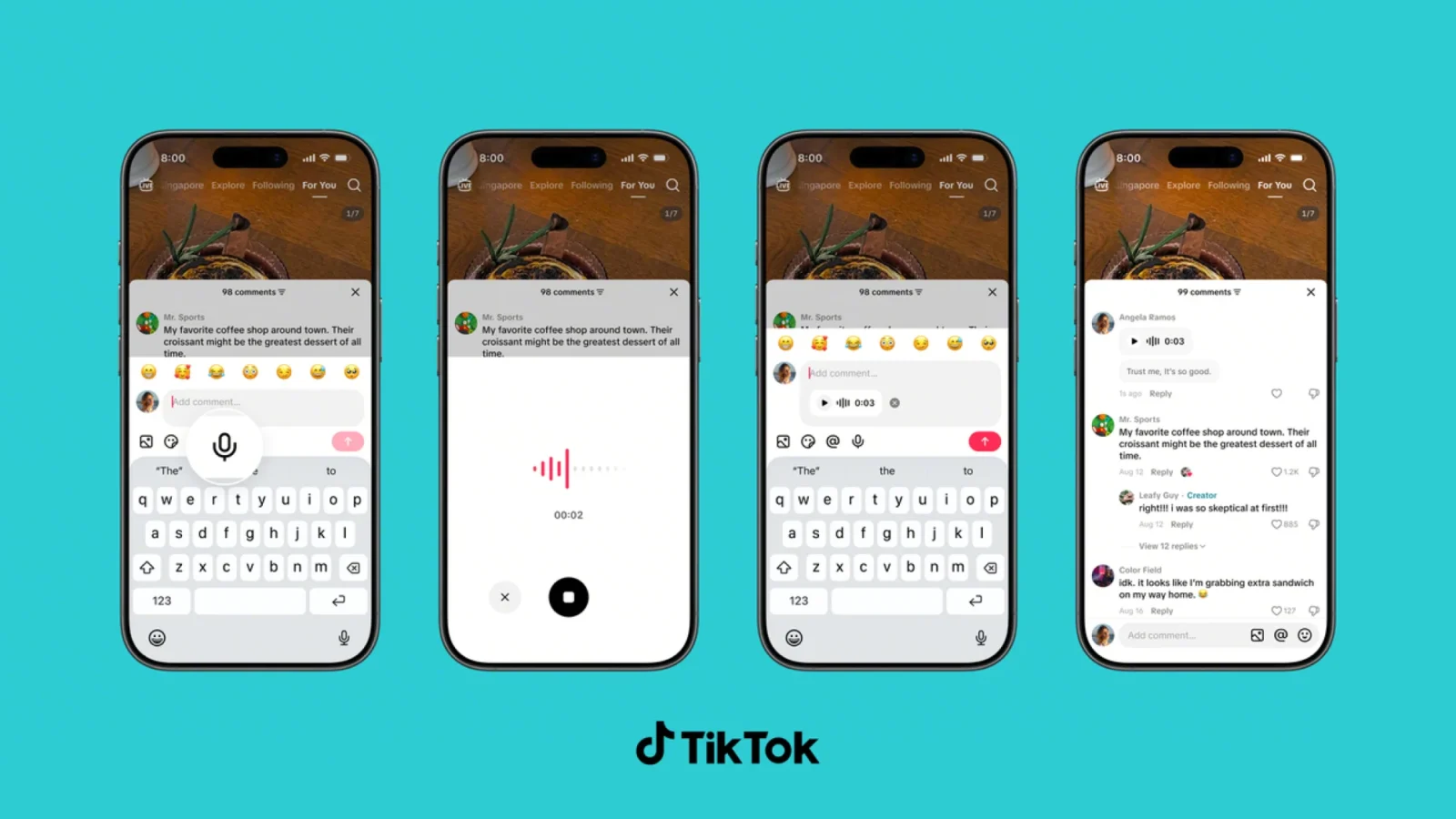
TikTok says Voice Comments will follow the same Community Guidelines as other content. Moderation will involve automated systems and human reviewers, with speech-to-text transcription helping the platform identify potentially violating audio.
That moderation layer will be important. Audio comments create a different problem from text because potentially abusive material cannot always be identified simply by scanning what appears on screen. TikTok already handles an enormous volume of conversation — the company says users post more than 1.7 billion comments every day — and adding minute-long audio clips introduces another format that needs to be monitored at scale.
Voice Comments are scheduled to roll out globally over the next month and will initially be restricted to users aged 18 and older.
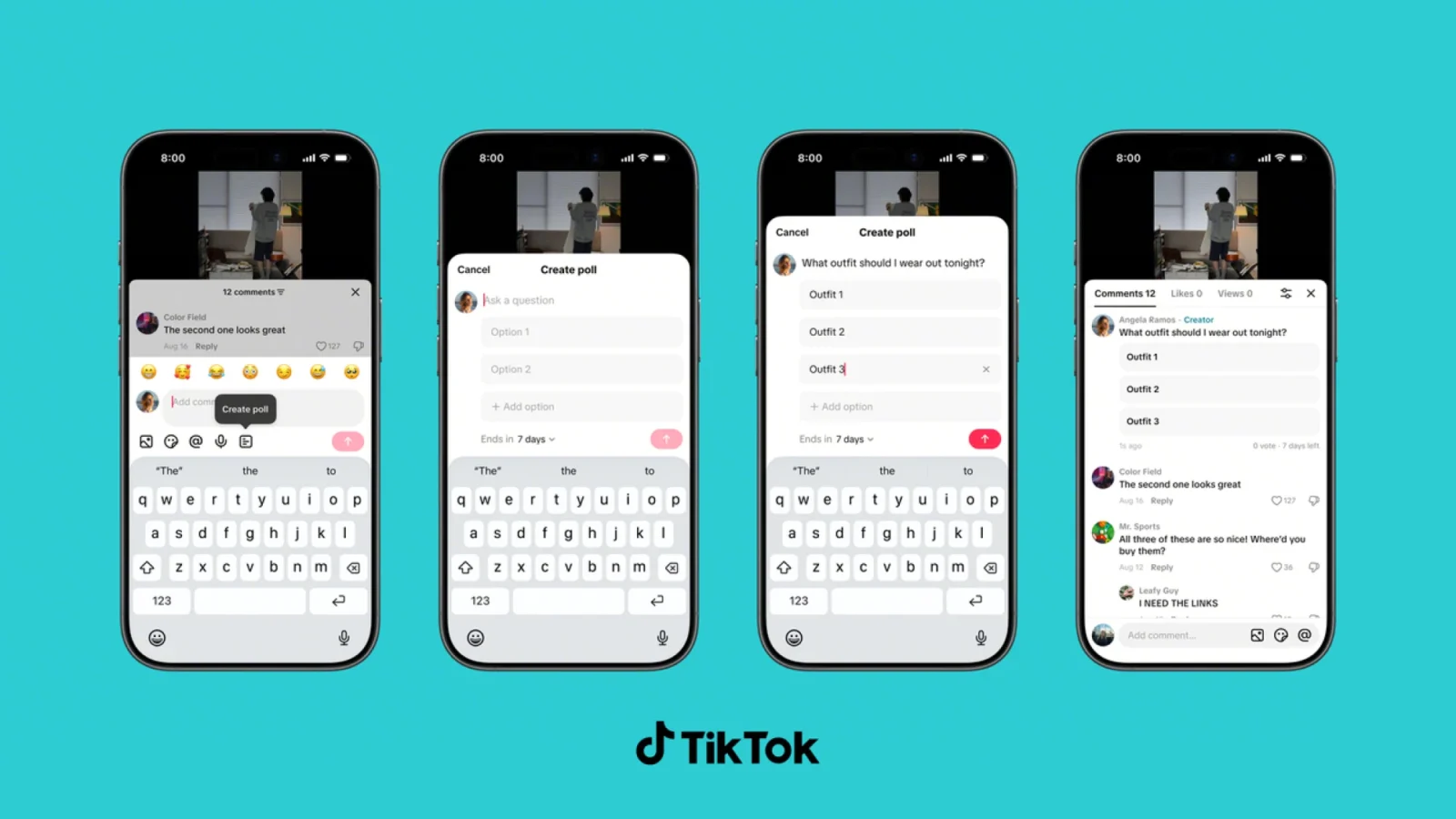
Creators are also getting Comment Polls. Rather than publishing a separate video asking audiences what they think, creators can insert a poll directly into a video’s comments. That could be used for everything from deciding what to post next to asking viewers to vote on a debate started by the original video. Comment Polls are available globally from September 3.
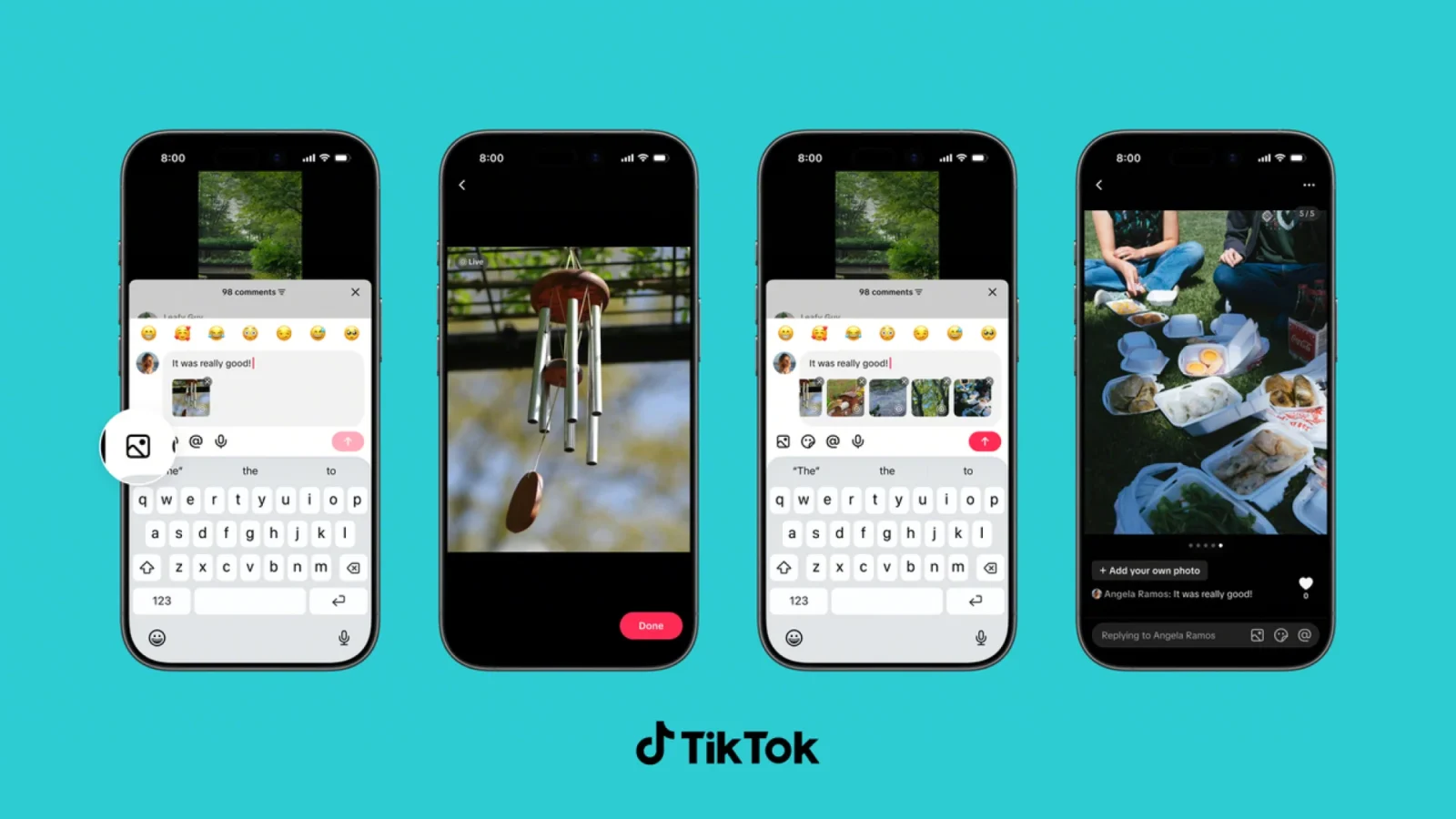
Photo replies are becoming more flexible as well. Photo Carousel Comments let users attach as many as nine images to a single response, effectively bringing the familiar social-media photo dump into TikTok’s comment threads. The feature will roll out globally during the next month.
Live Photo Comments, meanwhile, allow users to upload Live Photos from their camera rolls, preserving the brief movement captured alongside the image rather than converting everything into a static picture. TikTok says that feature is available globally from September 3.
Taken individually, none of these additions fundamentally changes what TikTok is. Together, though, they show how the platform increasingly treats comments as another layer of entertainment rather than simply feedback attached to a video.
That makes sense for TikTok, where comments regularly extend jokes, add context and inspire creators to make follow-up videos. Polls and richer image replies give creators more ways to interact with audiences, while voice comments push the experience closer to a giant public group chat.
Whether users actually want strangers leaving 60-second voice notes beneath viral videos is another question. TikTok is betting that making comments louder, richer and more interactive will keep people engaged. Its moderation systems may be about to get considerably busier too.