


TL;DR: Gallipoli combines grounded WW1 gunplay, excellent class teamwork and clever suppression mechanics with atmospheric Middle Eastern Front battlefields. Its deliberate realism won’t suit everyone, but coordinated matches can be outstanding.
There is an uncomfortable contradiction at the heart of any multiplayer shooter built around the First World War: the game needs to be entertaining while representing warfare that was anything but. Gallipoli tackles that problem by making the battlefield itself hostile to the usual power fantasies of the genre. Weapons demand discipline, exposed ground is terrifying, teamwork matters more than padding a kill count, and even bullets that miss can make life considerably harder for whoever is receiving them.
As the fourth entry in BlackMill Games’ WW1 series, Gallipoli shifts the fighting to the Middle Eastern Front, primarily framing battles between the Ottoman and British Empires. It also represents a notable step forward for the series, with striking environments, expanded class roles and systems that make suppression and battlefield confusion meaningful parts of play rather than decorative military-shooter theatre.
The result is a multiplayer FPS that deliberately refuses to behave like the shooters dominating the mainstream. Gallipoli wants squads to function like squads, weapons to feel constrained by their historical purpose and objectives to matter more than somebody’s glorious K/D ratio. That makes it less immediately accessible than an arcade shooter, but considerably more interesting once its rules click.
A battlefield where fear is actually a mechanic
Gallipoli’s smartest addition may be its suppression and panic system because it gives missed shots tactical value.
Sustained incoming fire can push a soldier into panic, interfering with vision and the ability to aim steadily. Suddenly, a machine gunner hammering a position isn’t simply hoping that one of those rounds finds a target. They can actively reduce the enemy’s ability to respond while friendlies move forward. Suppression also awards experience, reinforcing the idea that helping create an opportunity for the squad is worthwhile even when the kill feed remains unimpressed.
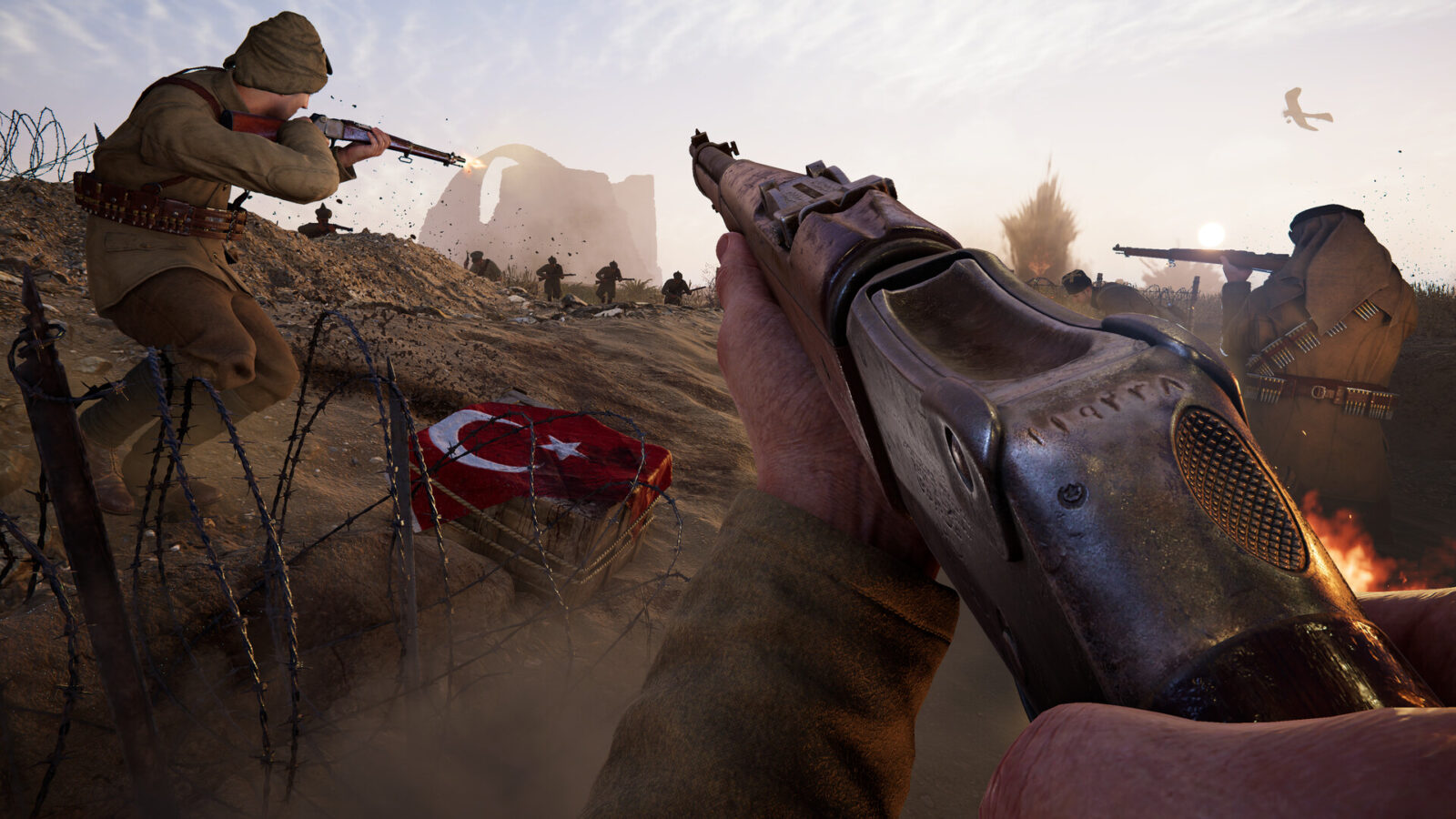
That small change has enormous consequences for how firefights work. Most shooters train us to judge every bullet as either hit or miss; Gallipoli recognises the enormous tactical space between those two outcomes. Putting rounds around an enemy position can be useful precisely because nobody wants to casually poke their head above cover while the landscape is being aggressively perforated.
The mechanic also reinforces what Gallipoli is trying to accomplish tonally. Its realism isn’t simply about modelling old rifles and putting historically appropriate uniforms on soldiers. The systems themselves attempt to communicate vulnerability.
And Gallipoli is considerably stronger for it.
Gunplay that punishes superhero behaviour
Anyone arriving expecting to sprint around hip-firing automatic weapons is going to receive a rapid history lesson, probably followed by a respawn screen.
Weapon behaviour is deliberately restrictive. Rifles have ranges where they are more effective, pistols become challenging at distance, and the light machine gun is not a portable delete button designed for action-movie heroics. Trying to spray it from the hip produces wildly ineffective fire. Get into position, deploy yourself properly and use it for sustained support, however, and the weapon begins fulfilling its actual battlefield role.
That distinction matters because Gallipoli makes positioning part of marksmanship. Winning an encounter isn’t exclusively about reaction speed; it is also about whether you brought the appropriate weapon into the appropriate situation and gave yourself the opportunity to use it properly.
The sniper demonstrates the same philosophy from another angle. Gallipoli restricts how many players can occupy most specialised classes, with riflemen and engineers being exceptions. Consequently, an entire team cannot decide that everyone is suddenly auditioning for Enemy at the Gates. Class limits preserve the structure of the battlefield while making specialised roles feel genuinely specialised.
It can undoubtedly feel harsh compared with modern military shooters, particularly for players accustomed to extremely responsive weapons that remain effective while sprinting, sliding or performing other forms of multiplayer gymnastics. But Gallipoli isn’t failing to deliver that fantasy. It simply isn’t interested in it.
Classes turn teamwork into something tangible
Gallipoli introduces four classes: heavy machine gunner, stretcher bearer, ammo bearer and bomber. More importantly, they are not merely different loadouts wearing historical hats.
The heavy machine gunner can construct machine-gun positions, turning the class into a tool for controlling territory. Establishing one in the right location can help defend a line or create the pressure necessary for an advance. Combined with suppression, this role captures one of Gallipoli’s greatest strengths: supporting another player can be as strategically important as personally eliminating the enemy.
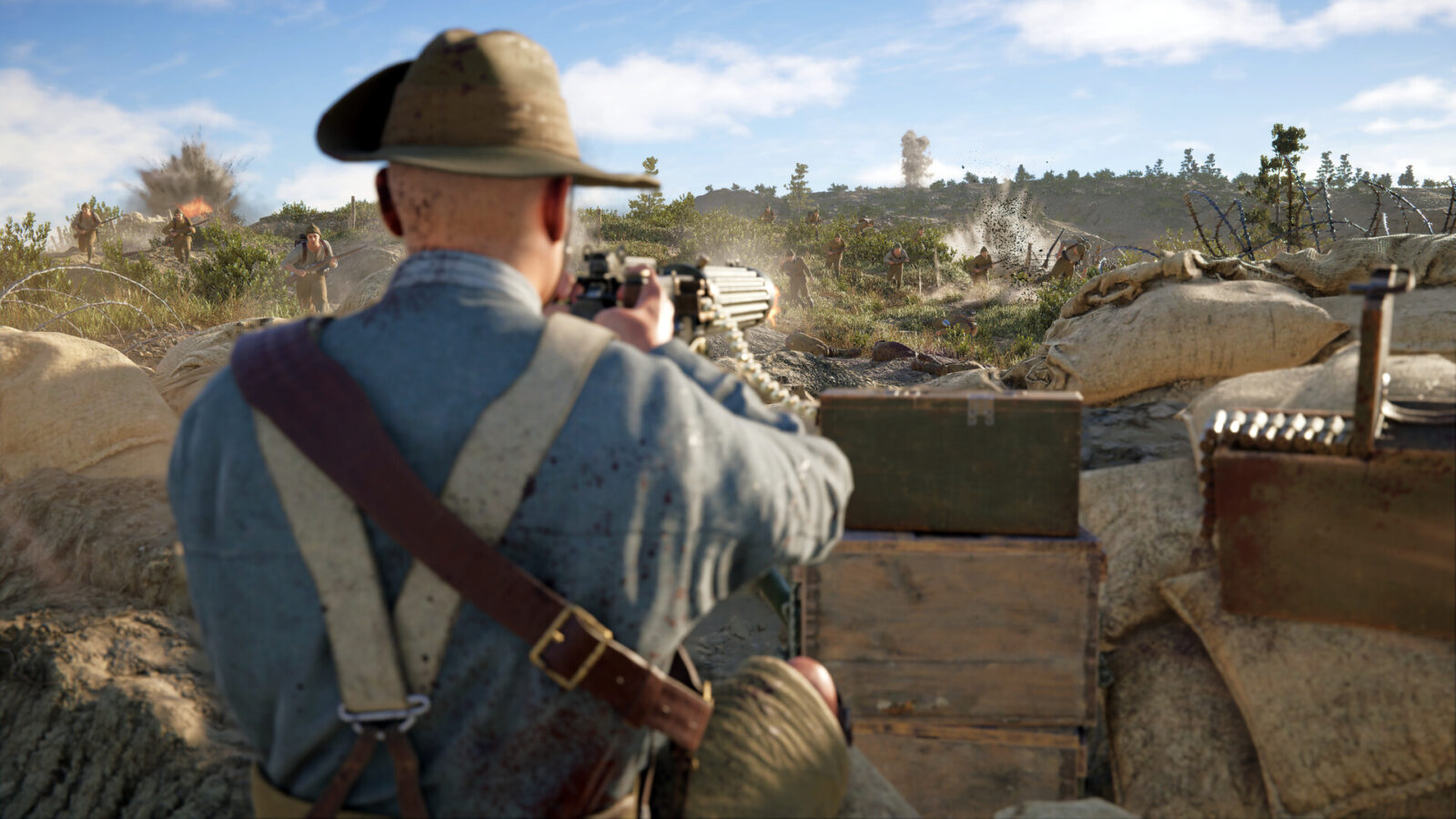
The stretcher bearer similarly gives players meaningful responsibilities beyond shooting. This medic role can heal and revive teammates and construct medical stations, something particularly valuable during prolonged fights around trenches and objectives. Ammo bearers keep squads supplied through ammunition boxes or direct resupply, extending the effectiveness of troops that successfully hold their ground.
The bomber is more situational. Armed with grenades and improvised explosives, the role depends heavily on understanding where enemies are concentrated and finding an opportunity to get explosives there without becoming target practice first. That naturally makes it potentially devastating against clustered troops, but its usefulness can fluctuate depending on whether the battlefield presents those opportunities.
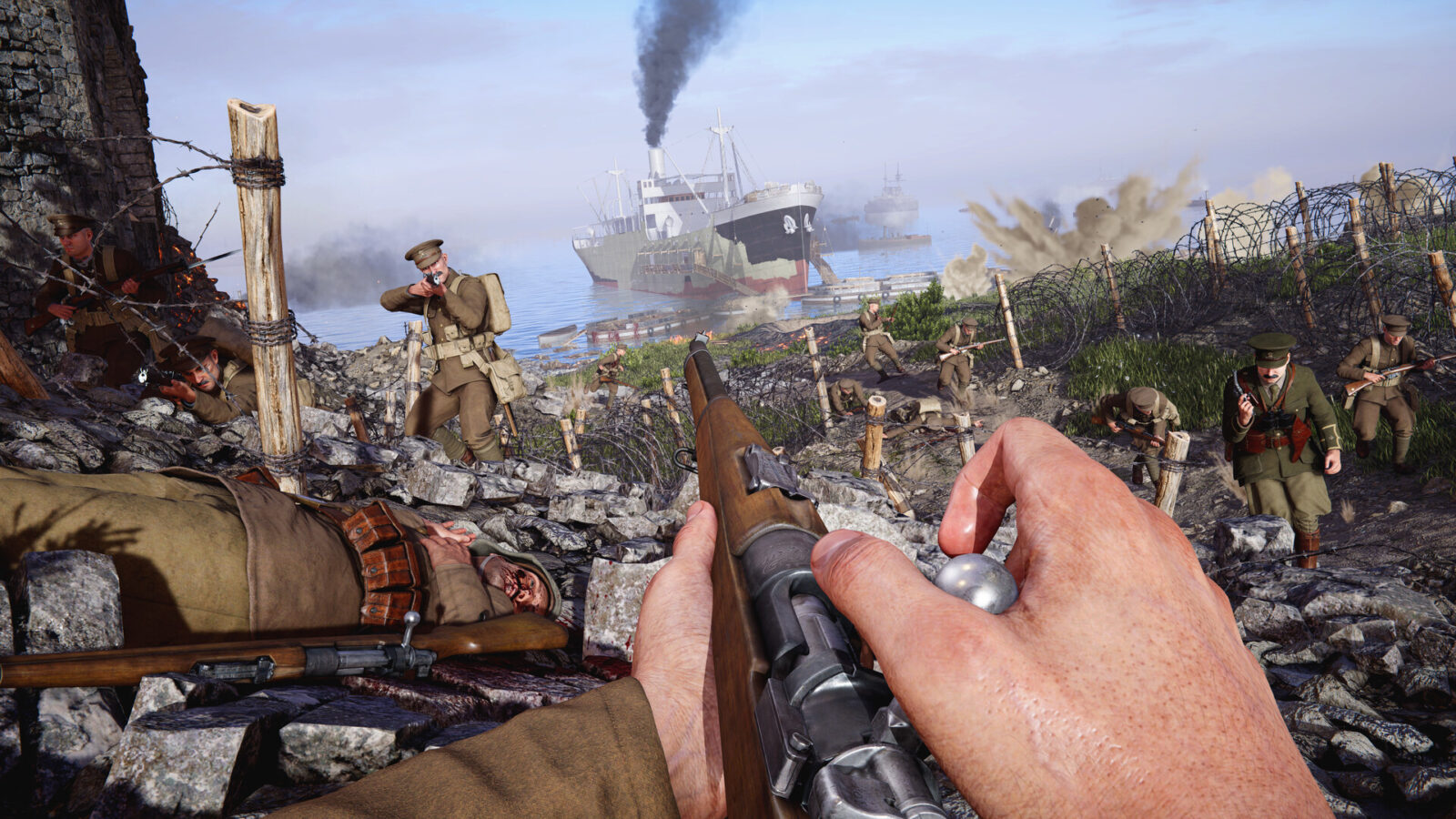
Together, these classes create a satisfying ecosystem. Gallipoli isn’t asking everyone to perform the same basic job with slightly different guns. It wants players to understand what their role contributes to the larger fight.
Dust, artillery and wonderfully terrible visibility
Gallipoli understands something many multiplayer games conveniently ignore: battlefields are messy.
Artillery and mortar impacts can throw huge quantities of dust into the air, dramatically reducing visibility. This isn’t simply a visual effect layered over the action. Dust changes what players know. It can conceal an advance, obscure enemies and turn movement into a nervous gamble as soldiers suddenly emerge from the haze.
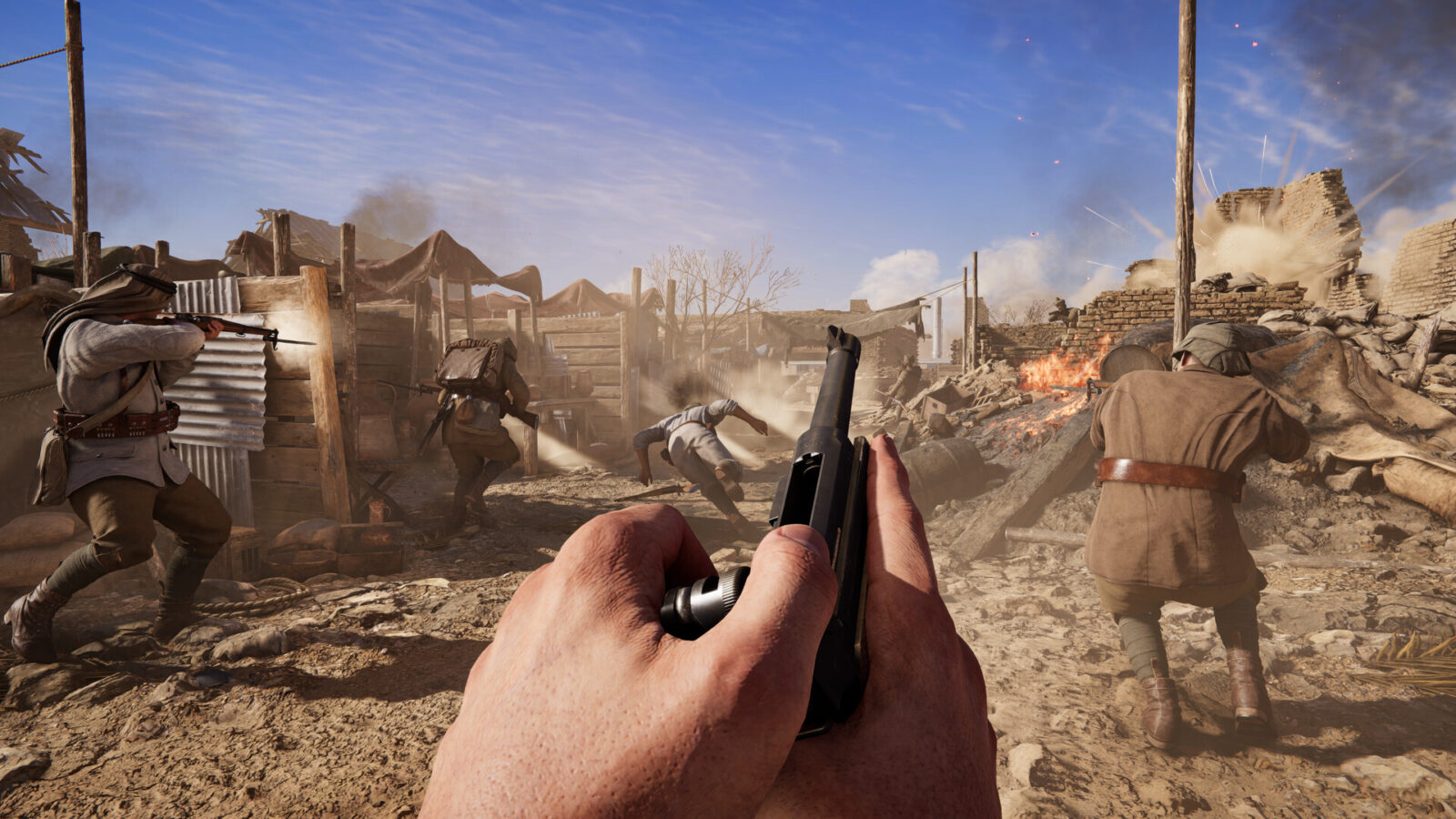
That uncertainty becomes especially effective in confined trenches, where identifying whoever just appeared in front of you can become rather important rather quickly.
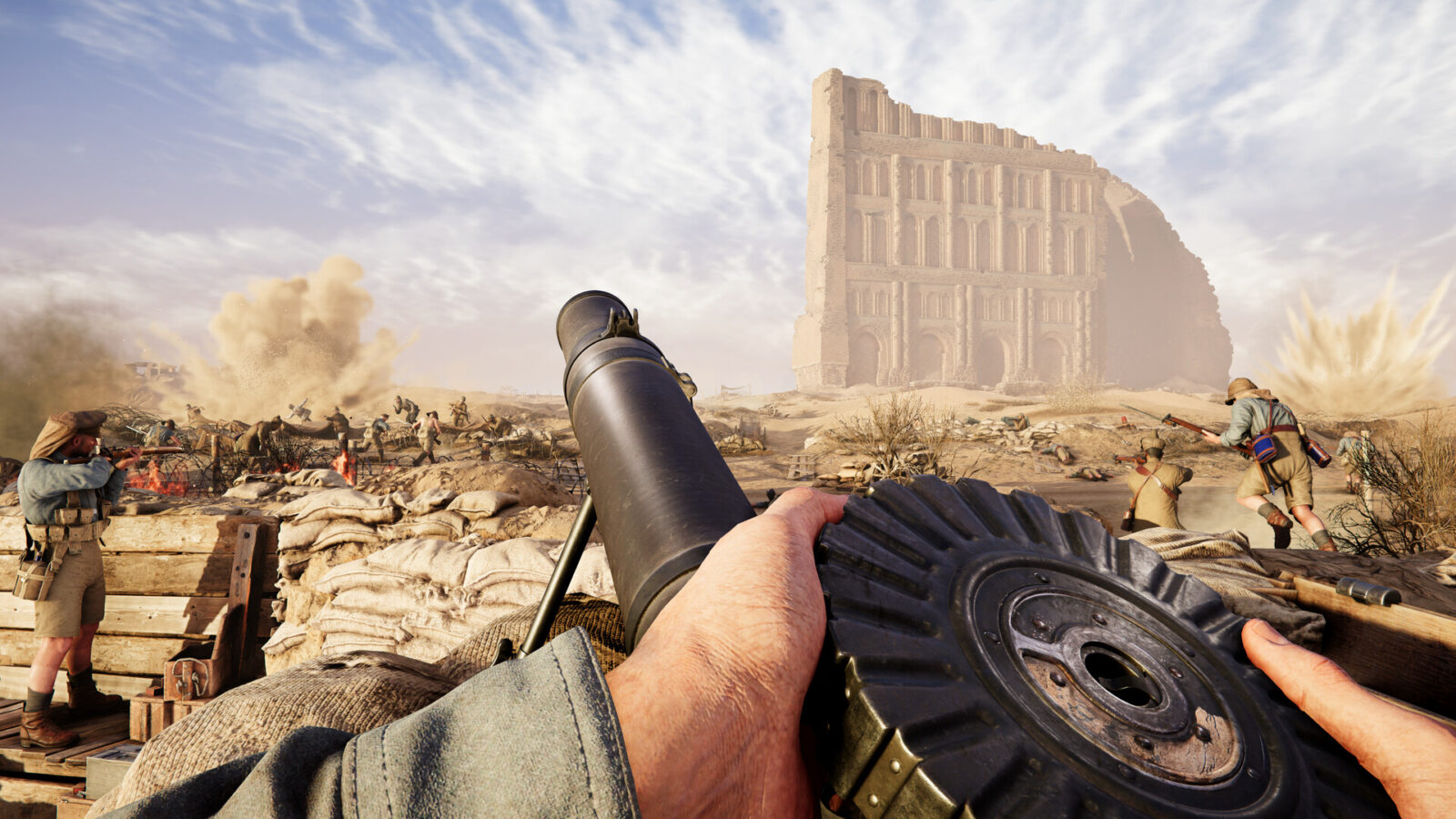
Friendly fire remains active, so panicking and firing at movement can have consequences for your own side. Officers can also call in off-map support including artillery and aircraft, which means powerful tools need to be used with some awareness of where friendlies happen to be standing. The battlefield consequently demands judgement alongside mechanical skill.
The effect is controlled chaos. Gallipoli creates confusion without completely surrendering its tactical structure. Objectives still matter, classes still have clear functions and squads still have jobs to perform, but perfectly readable information isn’t guaranteed.
That gives battles texture. An artillery strike isn’t merely a collection of explosions and screen shake; it can fundamentally change how a section of the map is approached for the next few moments.
Gallipoli’s maps make history mechanically relevant
The setting is much more than a new backdrop for the WW1 series.
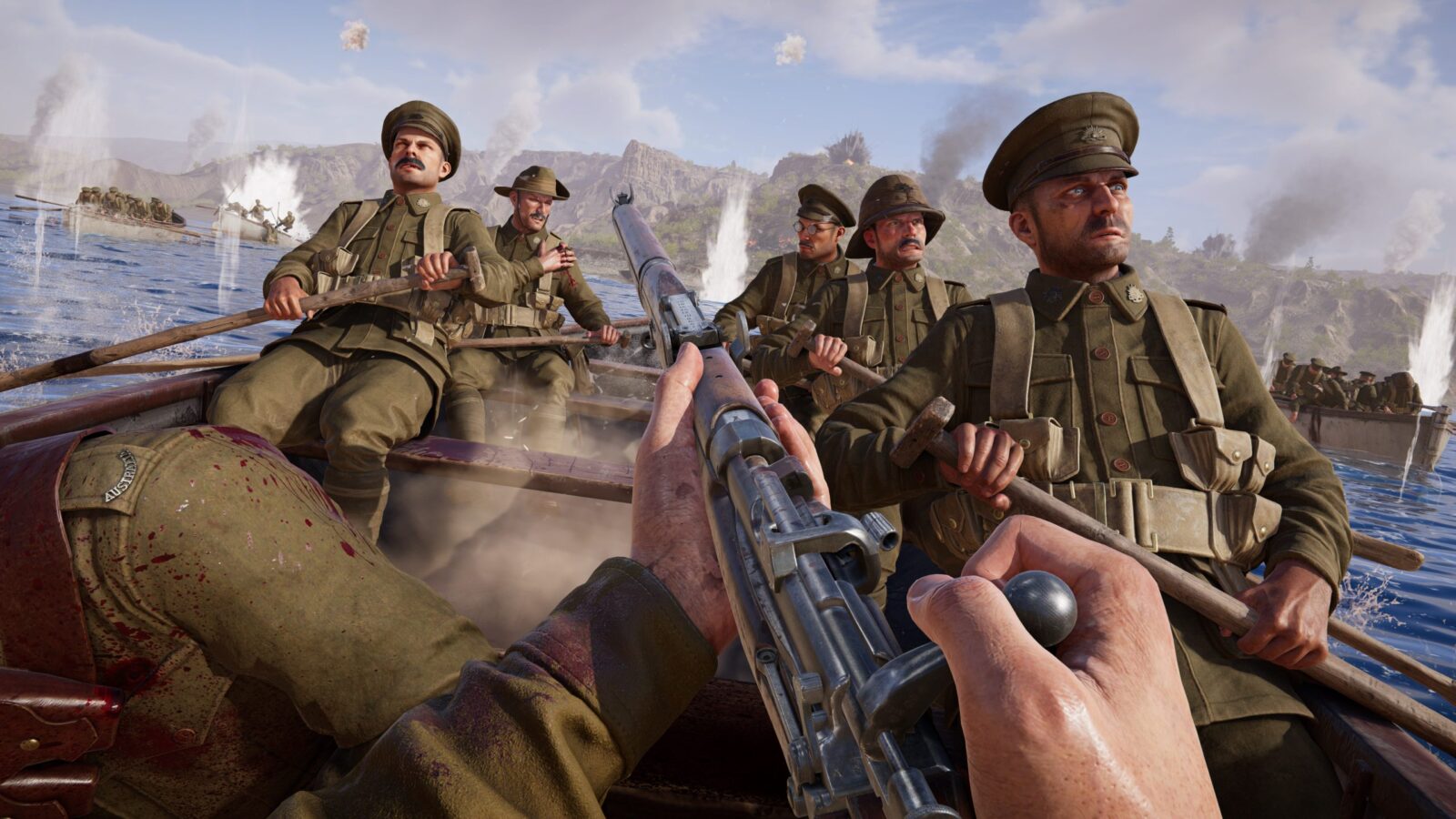
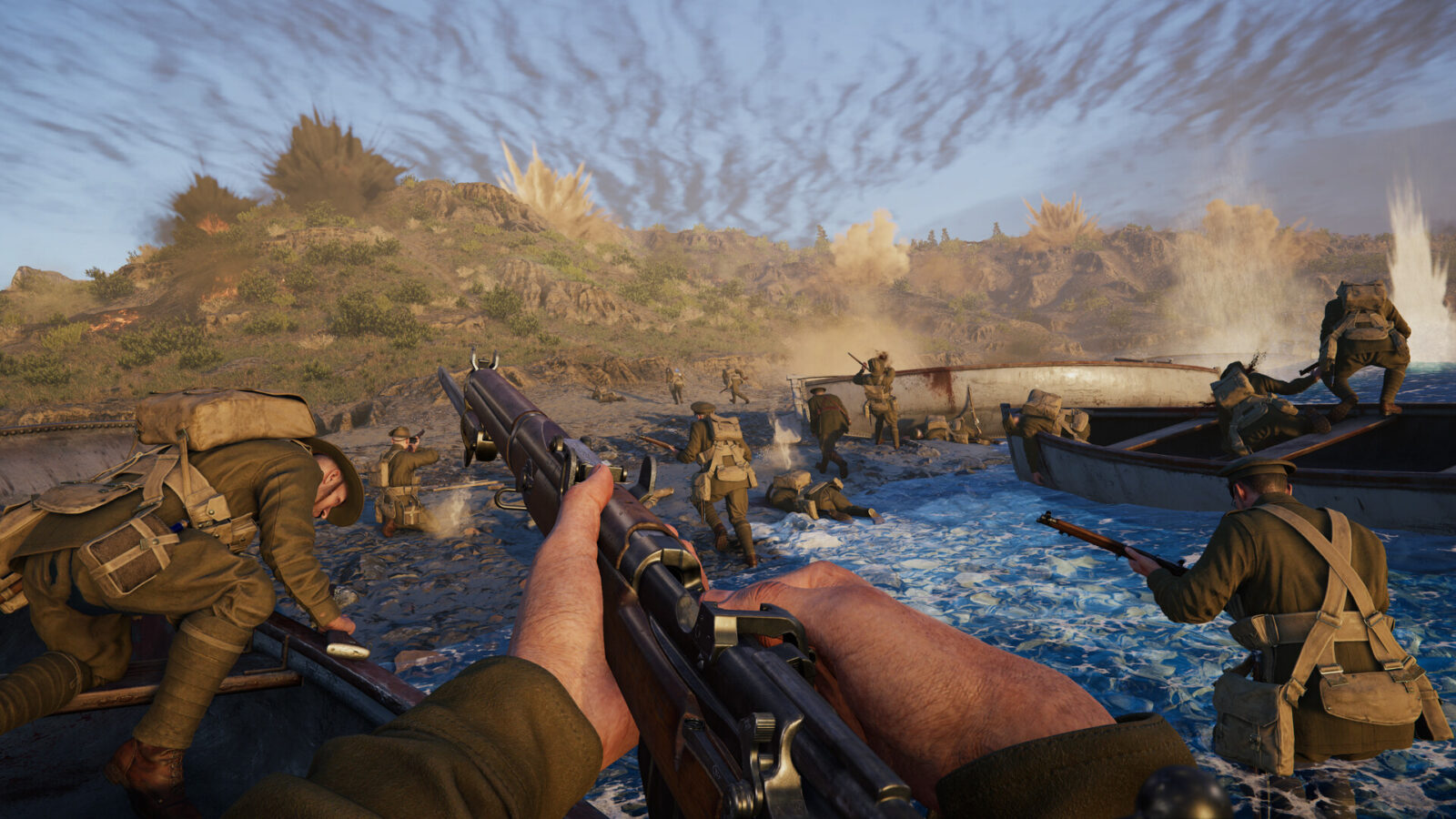
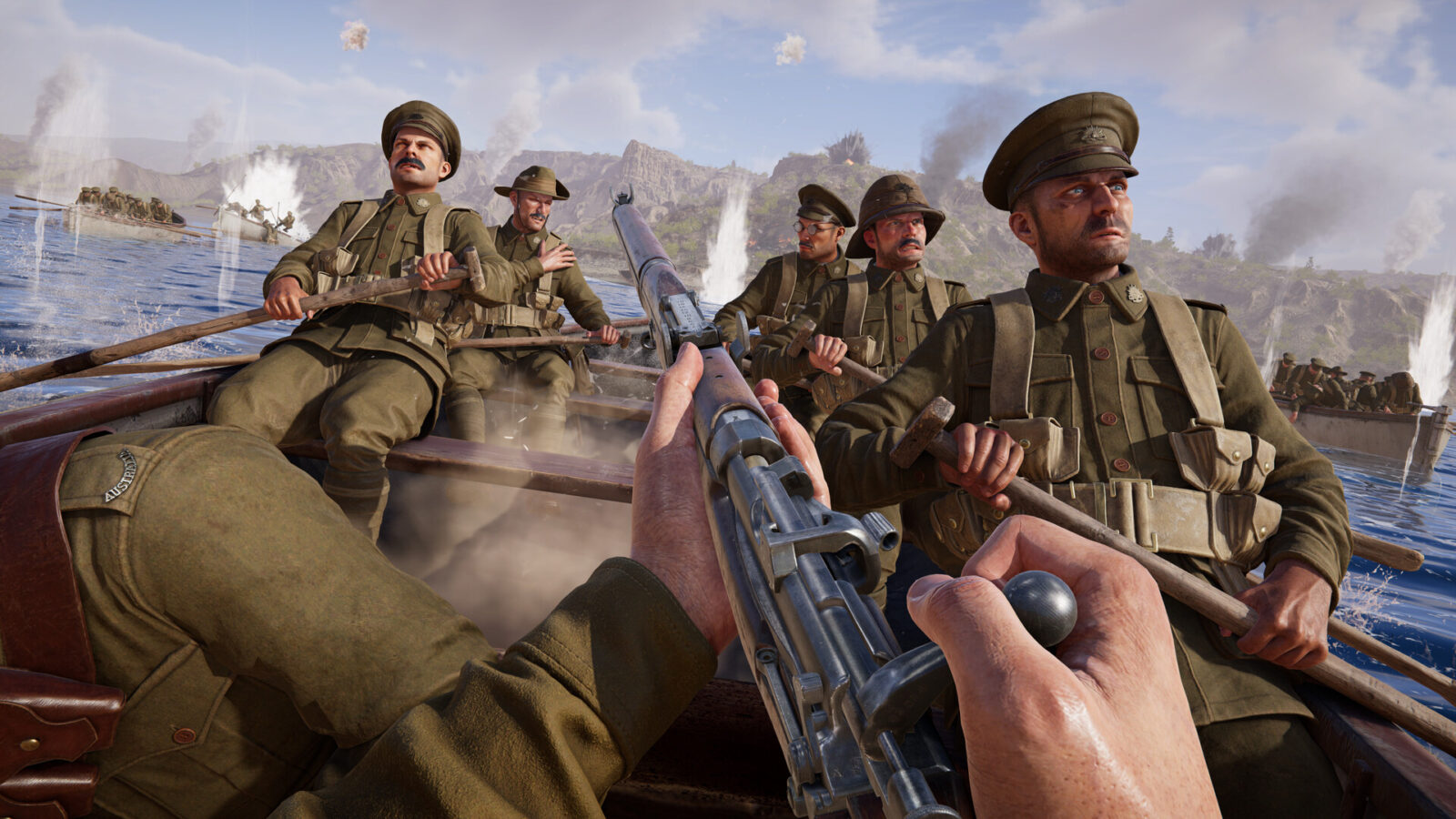
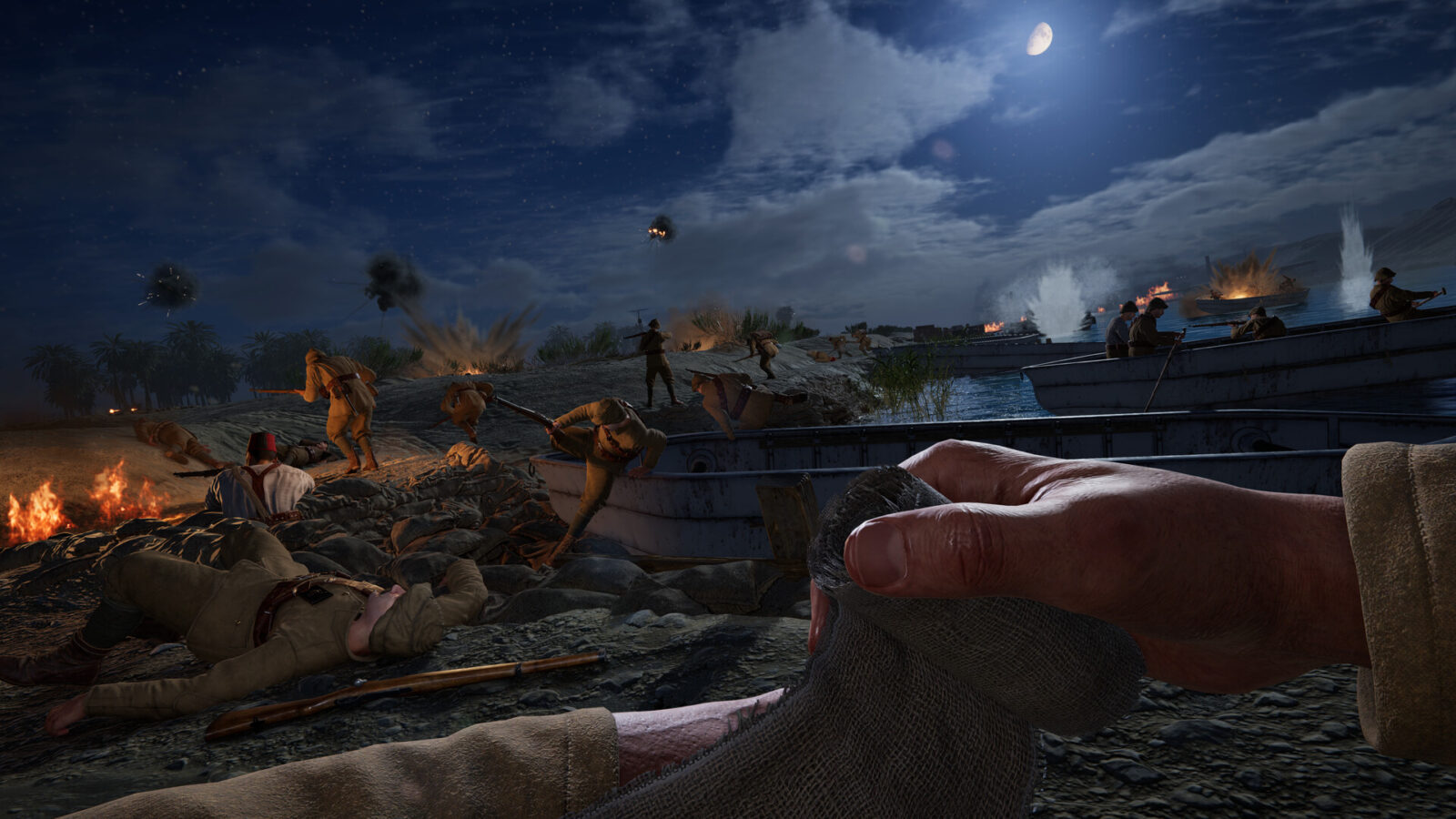
Anzac Cove is perhaps the clearest example. British Empire forces attacking the map arrive in exposed rowing boats before scrambling ashore, immediately establishing how vulnerable an offensive can feel. It creates a very different opening rhythm from the mechanised amphibious assaults that gaming has repeatedly depicted from later conflicts.
The dry landscapes of the Middle Eastern Front also give Gallipoli a distinctive visual identity compared with the muddy European imagery that has become practically synonymous with First World War games. BlackMill uses that setting to explore another part of the conflict while maintaining the brutal positional warfare central to the series.
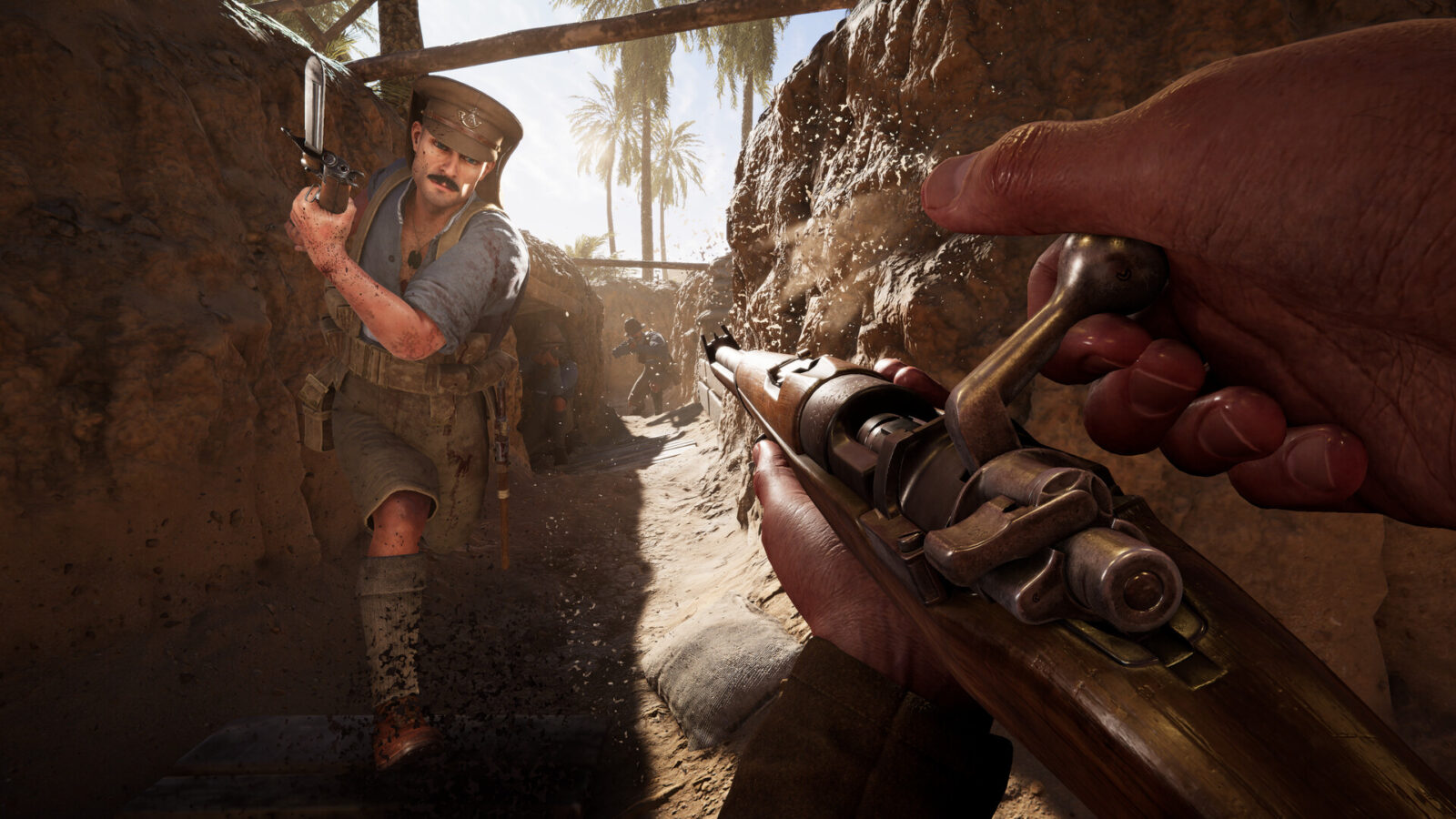
Brief historical information on loading screens provides context for the locations and fighting being represented. It isn’t an exhaustive history lesson, nor should anyone mistake a multiplayer shooter for one, but that contextualisation helps connect the maps to the events inspiring them.
What works particularly well is how often the historical setting informs mechanics. Machine guns dominate exposed approaches. Trenches create claustrophobic encounters. Dust compromises visibility. Support roles become crucial when an attack begins to stall. Gallipoli is at its most convincing when history isn’t something you read between matches but something reflected in why a match unfolds the way it does.
The objective matters more than your highlight reel
All these systems would collapse spectacularly if Gallipoli’s players treated every match as team deathmatch with optional scenery.
Objective-focused play is essential. Charging around independently might occasionally produce kills, but it does little to solve the larger tactical problem. A machine gunner suppressing defenders, a medic maintaining an advancing squad and riflemen actually pushing the objective collectively accomplish far more than one talented player hunting statistics.
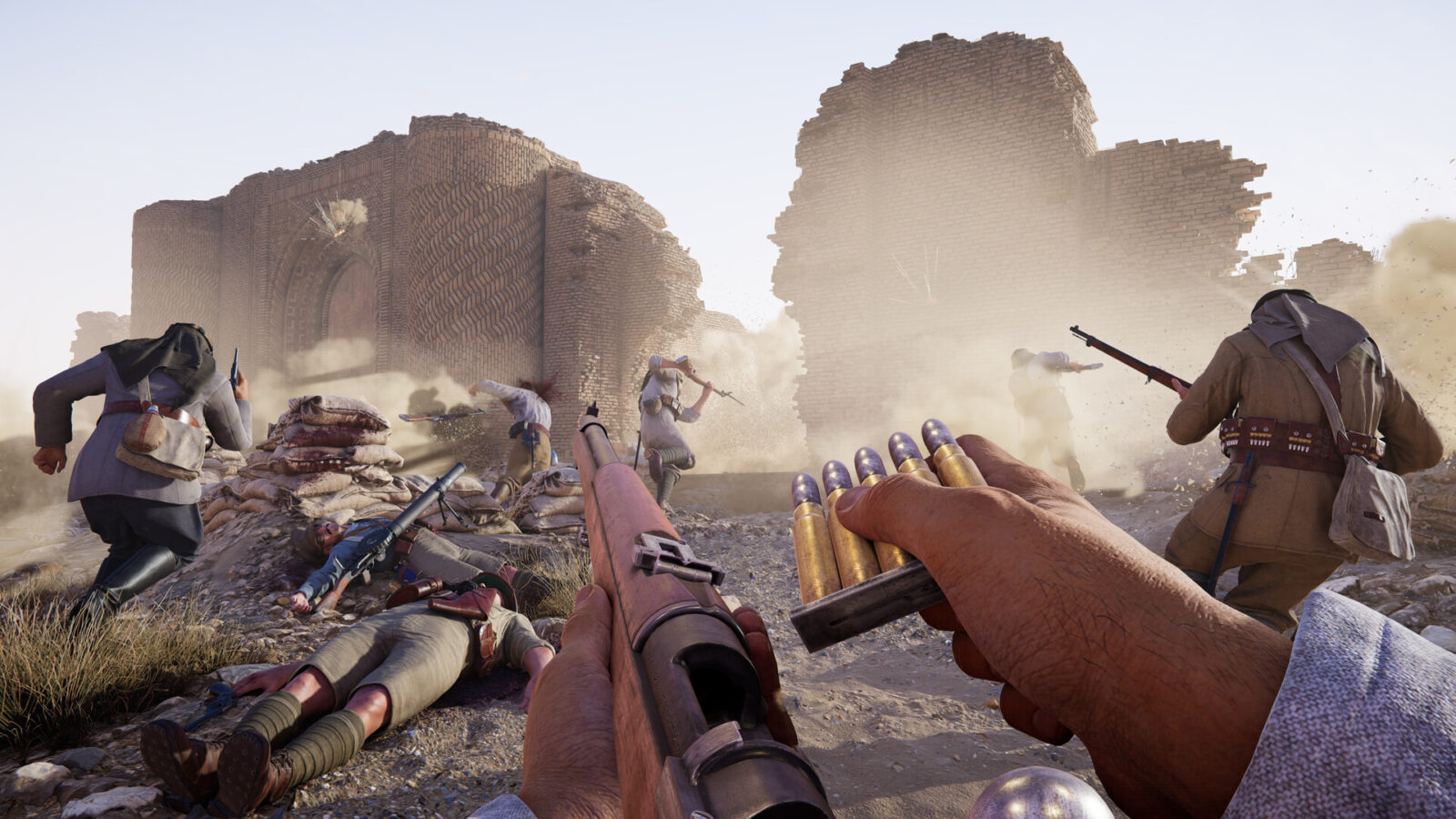
That dependency could make Gallipoli intimidating, particularly for newcomers looking at its realism and assuming they need several military manuals before pressing Quick Play. Yet the supplied multiplayer experience suggests a community largely willing to engage with the game as intended without turning every match into an esports tribunal. Players generally fulfil objectives and work within their roles, while simply staying with a squad and contributing remains a viable way to participate.
That social behaviour isn’t something Gallipoli can guarantee forever, of course. Multiplayer communities evolve, populations change and every online game eventually produces someone convinced that screaming into a microphone constitutes leadership.
But the underlying design strongly encourages cooperation. When enough players accept that invitation, Gallipoli becomes far more than a collection of historically modelled guns and attractive battlefields. It becomes a coordinated struggle where individual actions contribute to something larger.
Gallipoli knows exactly what kind of shooter it wants to be
Gallipoli’s greatest strength is consistency.
Its weapon handling discourages reckless aggression. Its class restrictions preserve battlefield roles. Suppression makes supporting fire valuable. Medics and ammunition carriers reward logistical teamwork. Friendly fire forces greater awareness. Dust makes information unreliable, while map design turns exposed movement into a legitimate tactical decision.
None of those systems exists independently. They reinforce one another.
That also defines Gallipoli’s audience. Someone searching for instant action, forgiving firearms and constant opportunities for spectacular solo plays may find its restrictions irritating. The deliberate weapon handling and dependence on teamwork are features only if you’re interested in the experience Gallipoli is building.
For players who are, those same restrictions become the reason it works. There is satisfaction in doing an unglamorous job properly and watching the team benefit from it. Holding down a dangerous approach with suppressive fire or keeping teammates alive during an advance might not produce the sort of montage accompanied by dubstep and twelve jump cuts, but it makes the battle feel coherent.
Gallipoli isn’t trying to make every soldier the protagonist.
Sometimes you’re part of the machine. That’s precisely the point.
Final Verdict
Gallipoli succeeds because its commitment to historical warfare shapes the multiplayer experience rather than merely decorating it. Suppression and panic give gunfire psychological and tactical weight, specialised classes create genuine interdependence, weapon handling rewards positioning over theatrics, and dust, friendly fire and battlefield support inject uncertainty into otherwise structured objective combat.
There are trade-offs. Its deliberately grounded gunplay will frustrate players expecting the speed and flexibility of mainstream military shooters, while some specialised roles, particularly the bomber, can be more situational than others. Gallipoli also relies heavily on players embracing its objective-focused philosophy; lone-wolf behaviour simply doesn’t complement what its systems are built to achieve.
But when squads cooperate, those systems come together remarkably well. Gallipoli turns teamwork from a suggestion into the foundation of its multiplayer warfare, while its Middle Eastern Front setting gives BlackMill Games a visually distinctive and historically fascinating battlefield to explore. For players who want their military FPS to reward patience, positioning, role discipline and collective success, this is the WW1 series operating at an impressively high level.