
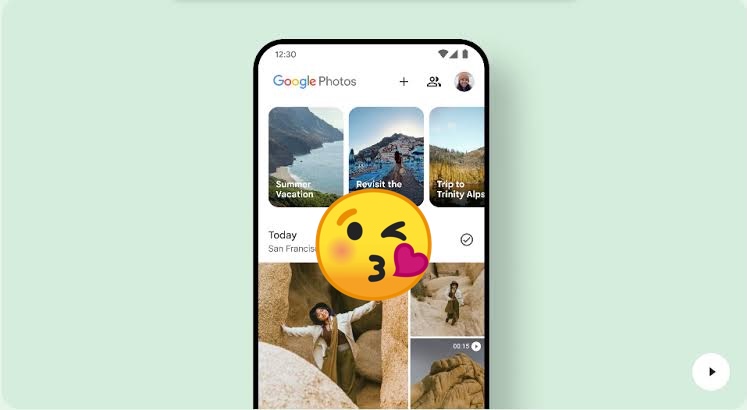
Google Photos could soon make sharing pictures feel a little more like using a messaging app, with Google apparently developing a broader emoji reaction system for photos and videos shared through the service.
The feature has been uncovered in version 7.90 of the Google Photos Android app, where unfinished functionality indicates users may eventually be able to react with virtually any emoji rather than relying on the simple heart reaction currently available. It isn’t publicly available yet, so there is no guarantee Google will release it in its current form.
At the moment, reacting to a shared photo is deliberately basic. Users viewing an image shared with them can hit the Like button, which leaves a heart reaction. Comments provide another way to respond, but the experience remains considerably more restrained than the reaction systems people have become accustomed to in messaging and social apps.
Google’s work-in-progress interface would expand those options. The redesigned controls separate liking, emoji reactions and comments, allowing users to quickly leave the familiar heart or open a dedicated reaction menu.
Selecting the emoji option brings up a floating row of suggested reactions for faster access. More importantly, another button opens the complete emoji picker, potentially allowing any available emoji to be attached as a reaction. That would make reactions considerably more flexible, whether someone wants to laugh at a photo, celebrate it or deploy one of the many emoji whose meanings are best left to the group chat.
It’s a relatively small interface change, but it points toward Google making Photos’ sharing features more conversational. Shared albums have long allowed multiple people to view and interact with memories, and richer reactions could encourage more interaction without requiring users to move the conversation into WhatsApp, Messages or another app.
Google has experimented with expanding reactions before. An earlier implementation discovered in development offered a much smaller selection of five emoji and treated those reactions more like comments. The newer approach appears more polished and more closely resembles the reaction interfaces now common across messaging platforms.
There is also a sensible distinction between keeping the heart button immediately accessible and placing the wider emoji library behind a separate control. Users who just want to acknowledge a picture can still do so with one tap, while those wanting something more specific get considerably more choice without cluttering the main interface.
The important caveat is that this remains an unreleased feature discovered in an app build rather than something Google has formally announced. Features found during APK analysis can change significantly, remain dormant for months or disappear entirely before reaching users.
Still, the apparent maturity of the interface suggests Google has moved beyond merely experimenting with the idea. If it does reach the public version of Google Photos, shared albums could become noticeably more expressive — and perhaps just a little more chaotic once the entire emoji keyboard gets involved.