
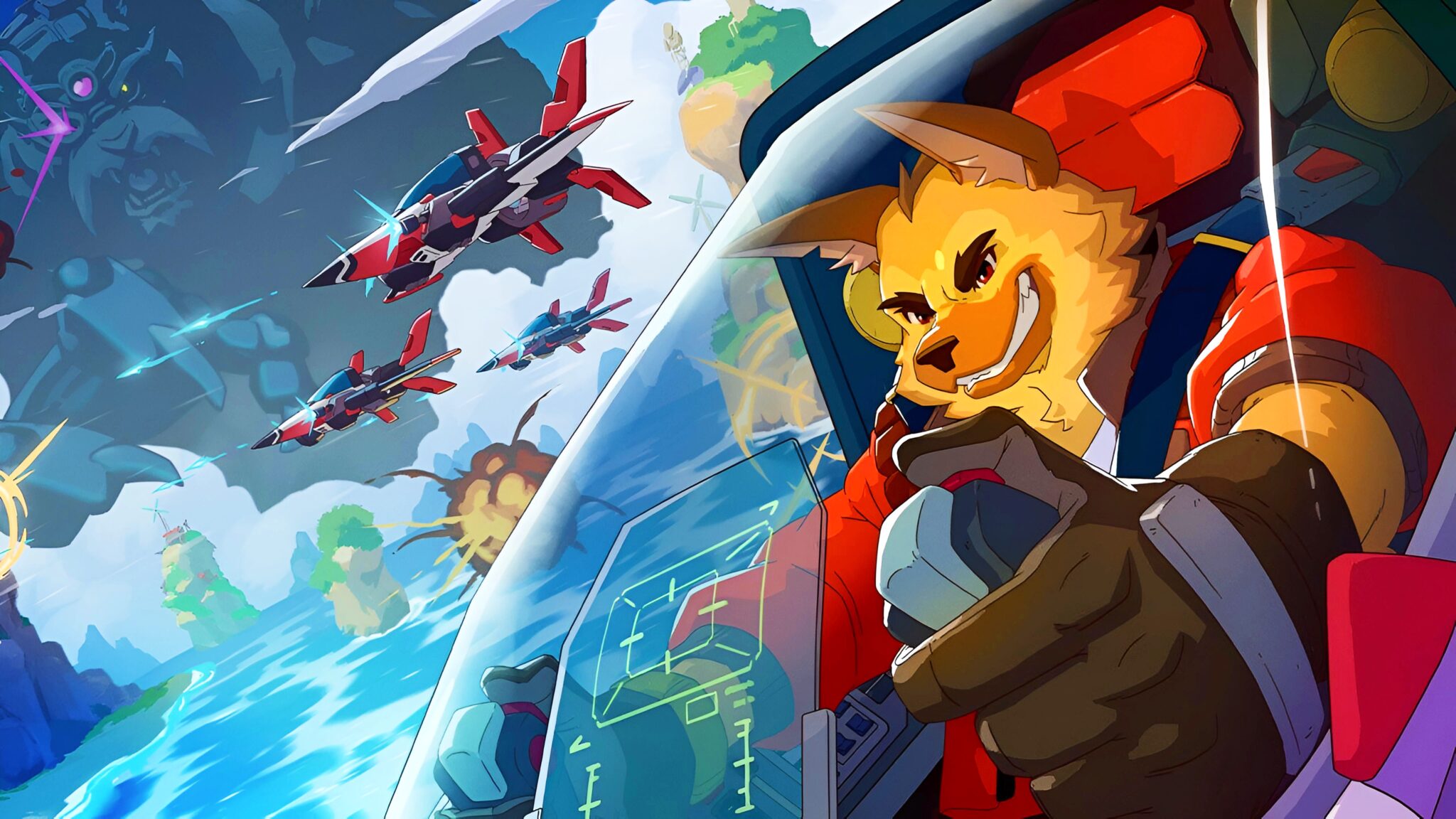
TL;DR: Wild Blue Skies is an enjoyable, replayable rail shooter with strong scoring ideas and flashes of excellent level design, but awkward flying, punitive progression and an overwhelming reliance on Star Fox 64 keep it from establishing an identity worthy of its best moments.
There is something wonderfully uncomplicated about climbing into a fictional cockpit, pointing the nose toward an absurd number of enemy fighters, and turning the sky into a fireworks display. Rail shooters understand a particular gaming pleasure that modern design sometimes overcomplicates: movement, rhythm, reaction, repetition, and the irresistible desire to make the next run cleaner than the last. Wild Blue Skies clearly understands the appeal of that formula, wrapping arcade aerial combat around branching missions, score chasing, colourful anthropomorphic pilots, and enough explosions to make subtlety file a formal complaint. Unfortunately, understanding the shape of a beloved experience is not the same thing as understanding its soul, and Wild Blue Skies spends far too much of its flight time trapped in somebody else’s contrails.
A rail shooter built from very familiar blueprints
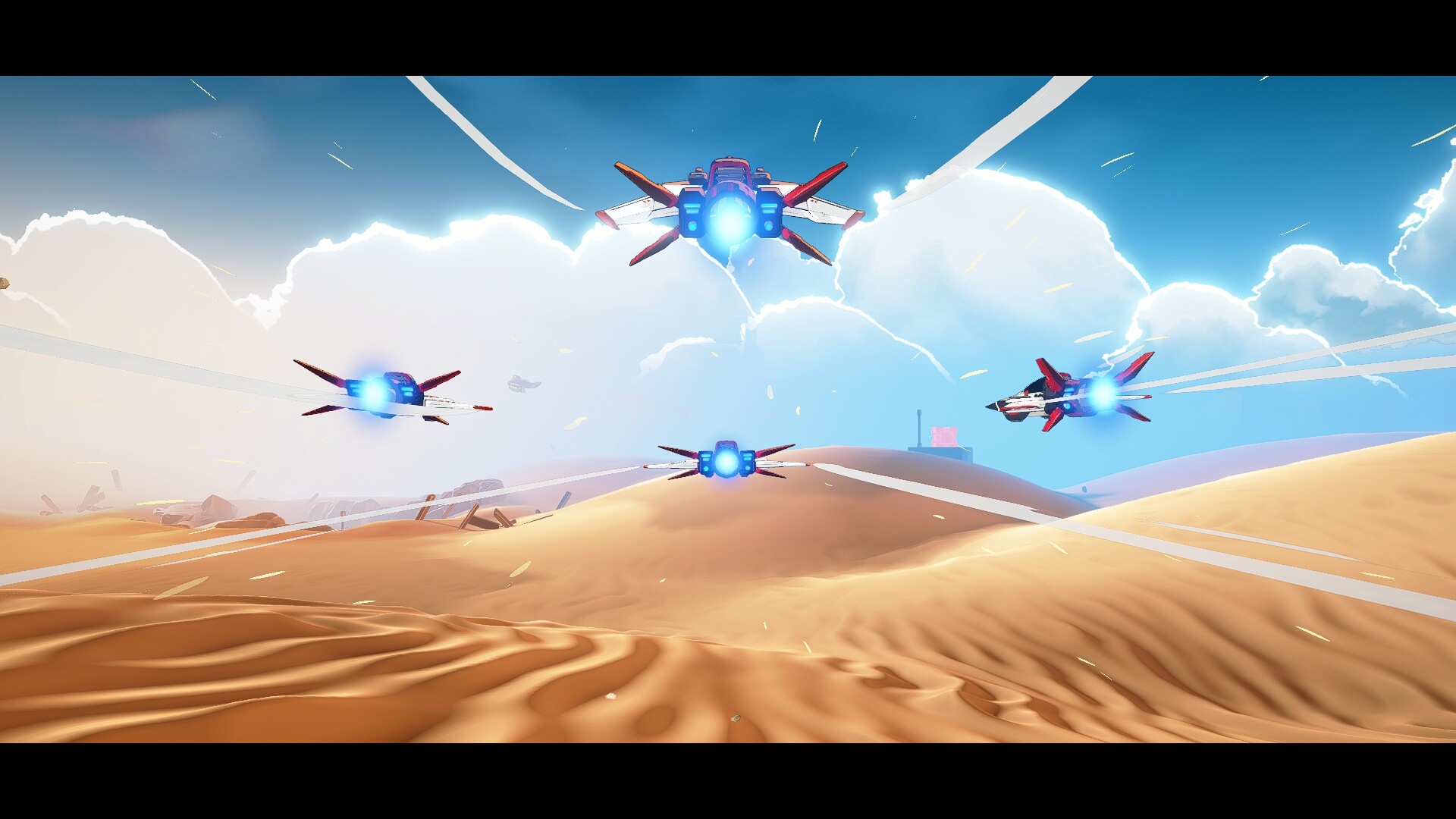
The setup wastes little time getting everyone airborne. The villainous Grimclaw has returned after an earlier defeat, the world needs saving, and a fresh generation of Blue Bombers is tasked with delivering the necessary quantity of airborne justice. Bowie Stray takes the leadership role, supported by the veteran presence of Chuck Barbacoa, the talkative Thorne, and Roe Whitetail, whose cooler personality and strong performance make her easily the most memorable member of the crew. There is enough charm scattered throughout their radio chatter to make the squad likeable, particularly when their personalities are allowed to exist outside familiar archetypes. The problem is that Wild Blue Skies rarely gives its cast enough narrative oxygen to develop into people worth caring about beyond their immediate function inside the cockpit.
That sense of familiarity extends straight into the campaign structure. A complete run takes you through six stages selected from a larger pool of 13, with performance and optional objectives shifting your route between easier and more demanding paths. Missions combine traditional on-rails shooting with occasional arena-style sections where the Cloudcutter gains greater freedom of movement, while bombs, blaster upgrades, charge attacks, score multipliers, wingmates, and hidden objectives encourage repeated attempts. On paper, this remains a fantastic arcade framework because completing the campaign is only the beginning; the real game is learning how every formation, environmental hazard, secret, and scoring opportunity fits together. Wild Blue Skies consequently has a naturally replayable skeleton, even when the flesh wrapped around it feels suspiciously familiar.
Flying should feel better than this
For an aerial arcade shooter, however, everything ultimately comes down to how good it feels to fly, and this is where the Cloudcutter struggles to generate the effortless confidence the genre demands. It has speed, certainly, but directional movement carries an odd sense of weight, making aggressive corrections and quick turns feel less elegant than they should. Tilting and barrel rolling help, and familiarity eventually makes the handling easier to predict, yet there remains a slight disconnect between intention and execution. A great arcade craft should feel like an extension of your thumbs after a few missions, allowing thought to disappear while instinct takes over. Here, the ship too often reminds you that you are operating a controller rather than threading a machine through impossible gaps.
Weapons suffer from a similar lack of tactile satisfaction. Bombs produce large circular blasts but lack the visual precision that would make placing them against clustered formations immediately intuitive, while the basic blaster feels disappointingly anaemic once stronger enemies begin arriving. Charge attacks provide more interesting crowd control and scoring opportunities, and separating charged fire from standard shots is a smart control decision that gives players greater flexibility during hectic encounters. The problem emerges whenever upgraded blasters disappear after taking damage, because returning to the starter weapon can transform an energetic firefight into something resembling an argument with a particularly stubborn printer. Losing power should sting in an arcade shooter, but it should not make the fundamental act of shooting dramatically less entertaining.
Difficulty becomes punishment rather than pressure
Wild Blue Skies clearly wants each mistake to matter, and there is nothing inherently wrong with that philosophy. Arcade games thrive on pressure because the knowledge that one sloppy encounter could compromise a high-scoring run gives every dodge and shot additional significance. The balance becomes shakier when damage begins creating a cascade of disadvantages: healing opportunities are limited, maximum health cannot be expanded, repairs between missions are incomplete, and losing upgraded weaponry can dramatically reduce your effectiveness. Instead of recovering through excellent play, you can find yourself carrying an earlier mistake through multiple encounters like unwanted luggage. Difficulty is most satisfying when it asks the player to perform better; Wild Blue Skies sometimes feels as though it would rather keep reminding you that you performed badly five minutes ago.
That distinction matters enormously during longer runs. Arcade shooters produce some of their greatest moments when disaster appears inevitable and the player somehow claws back control, surviving on instinct, knowledge, and increasingly sweaty palms. Wild Blue Skies allows those recoveries, but success frequently depends more heavily on knowing exactly what is coming next than adapting brilliantly when it arrives. Memorisation has always been part of score-driven games, of course, and pretending otherwise would be silly. The difference is whether knowledge enhances mechanical mastery or replaces it. When an earlier mistake leaves your ship underpowered for a later encounter, restarting can feel more sensible than fighting onward, which drains some of the glorious improvisation from what should be a frantic arcade adventure.
Score chasing gives every mission another purpose
The scoring system does provide a stronger reason to master each stage. Letters spelling WILD are hidden throughout missions, sometimes sitting visibly along the flight path and sometimes tucked inside enemies or destructible objects, rewarding exploration within the limited movement of the rail-shooter format. Medals recognise collecting these letters, while ribbons demand stronger overall scoring performances, creating multiple goals beyond simply reaching the boss alive. Bonuses for protecting teammates, maintaining health, defeating bosses quickly, and chaining effective attacks give ambitious players plenty to juggle simultaneously. When everything aligns and a mission transforms into one uninterrupted sequence of efficient destruction, Wild Blue Skies briefly captures that delicious arcade sensation where playing stylishly and playing intelligently become exactly the same thing.
Eventually, though, chasing perfection exposes another tension in the design. Once collectible locations and enemy appearances have been memorised, improvement can become less about developing a personal combat rhythm and more about executing an increasingly rigid checklist. Restarting or replaying missions helps soften the frustration, although doing so can consume lives and potentially weaken the remainder of a campaign run. That creates meaningful risk, but it can also discourage experimentation at precisely the moment when players should be enjoying the process of optimising their route. Wild Blue Skies clearly understands that replayability requires layers beyond completion, yet its scoring systems occasionally feel constrained by the punitive mechanics surrounding them. The ingredients are right; the recipe simply needs more room to breathe.
Wild Blue Skies struggles to escape Star Fox 64’s shadow
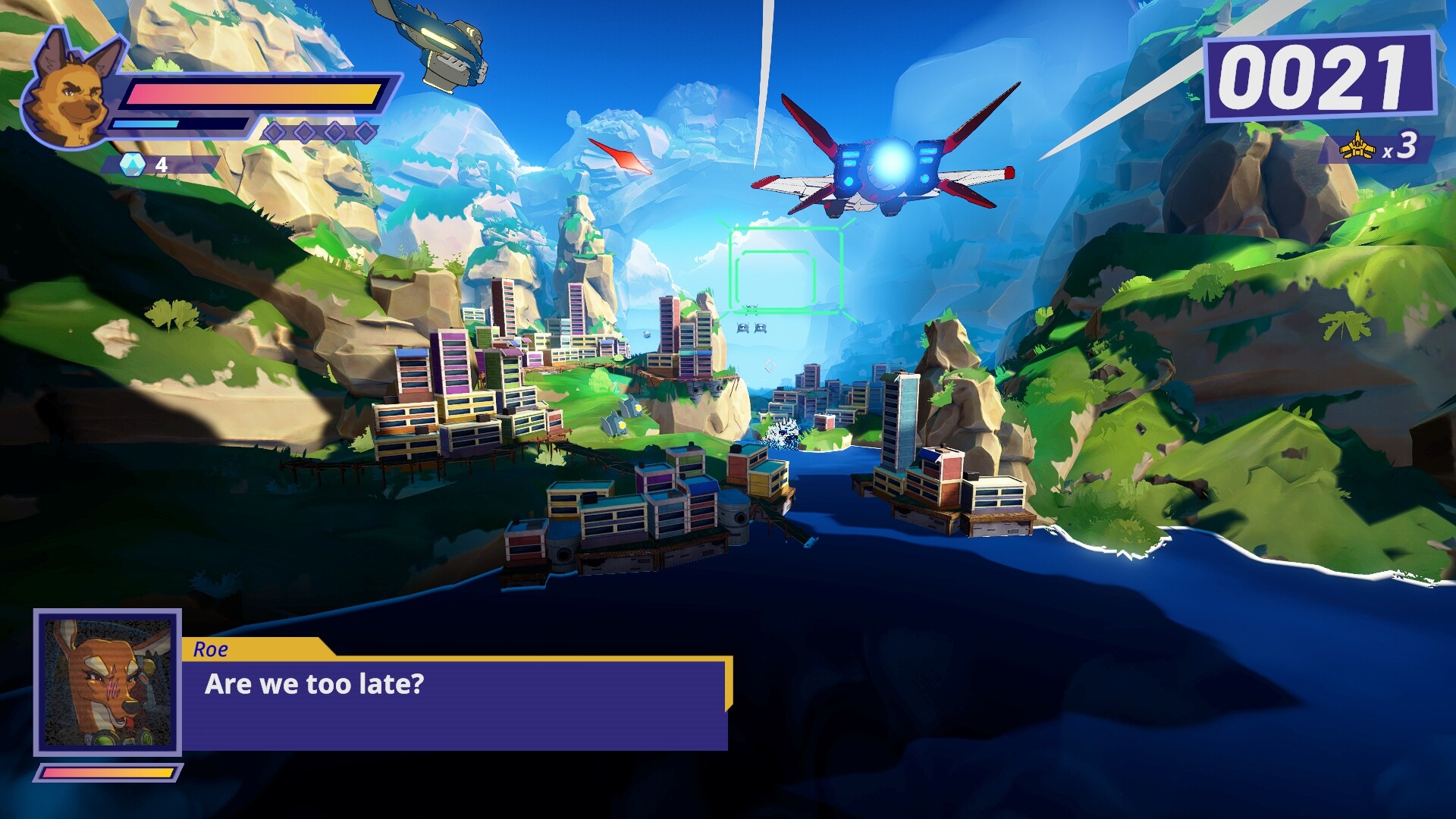
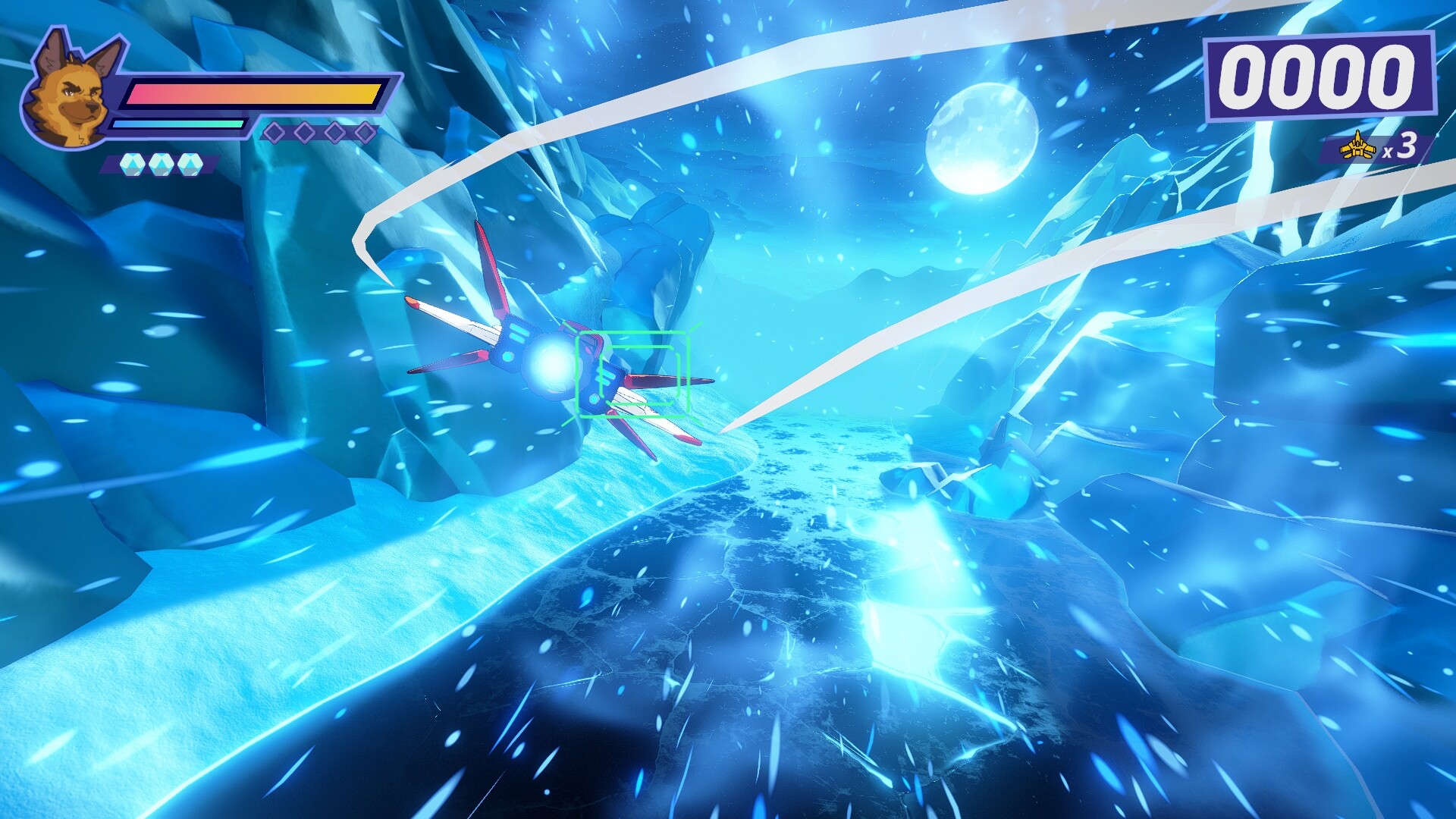
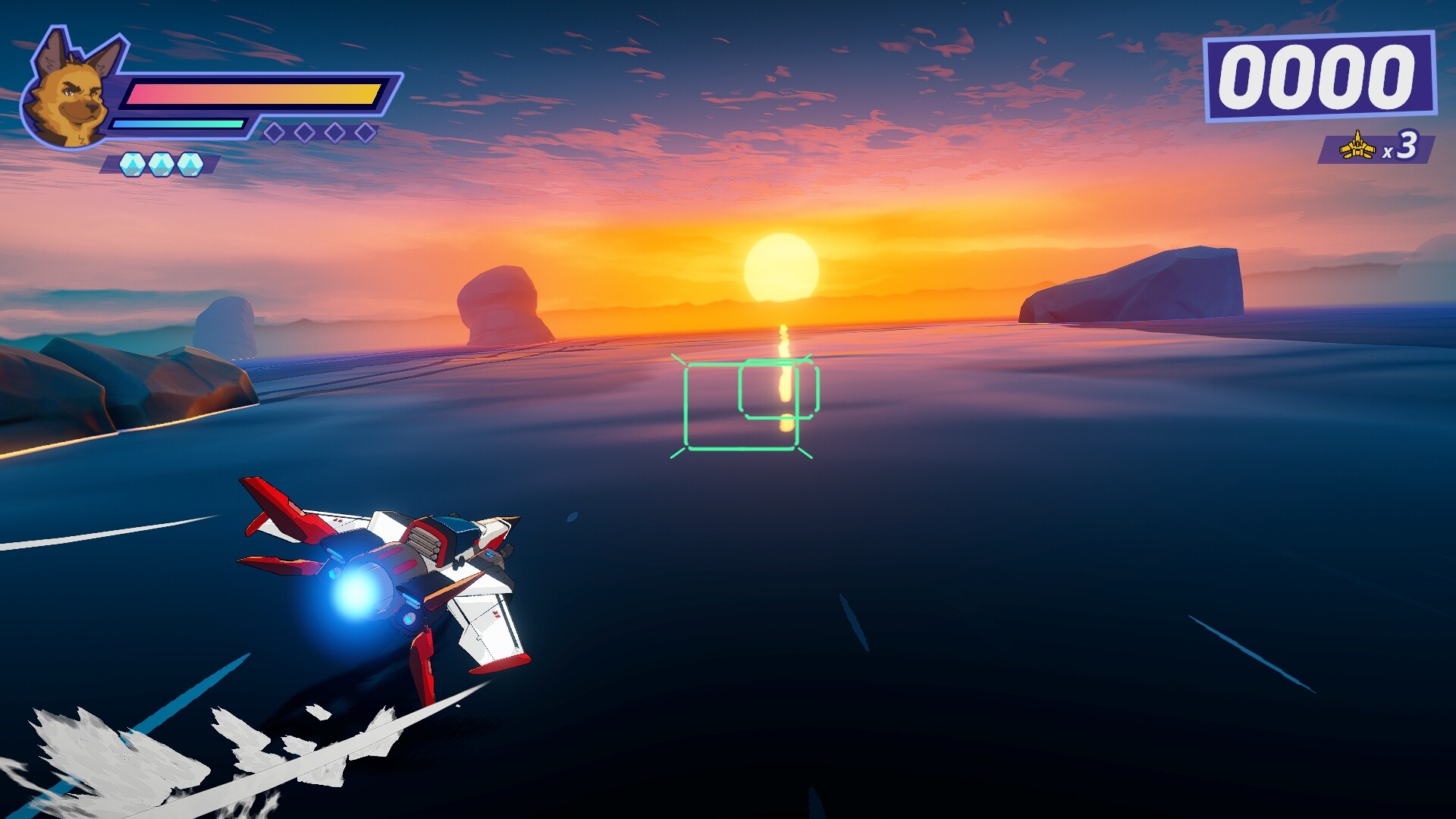
The larger problem is impossible to ignore because so many missions evoke Star Fox 64 with extraordinary specificity. Archipelago echoes the structure and visual beats of Corneria, Iceberg uses searchlights reminiscent of Zoness, Foundry adopts ideas strongly associated with Bolse, and other missions similarly resemble recognisable stages, encounters, routes, or climactic sequences from Nintendo’s classic. Inspiration is obviously fundamental to game development, and entire genres exist because creators saw something brilliant and wondered what else could be done with it. The trouble begins when references stop becoming foundations for new ideas and instead become destinations. Wild Blue Skies repeatedly walks right up to that boundary, leaving its most familiar stages feeling less like affectionate genre archaeology and more like performances of someone else’s greatest hits.
That approach also highlights everything missing from the imitation. Familiar scenarios inevitably encourage familiar expectations, yet the Cloudcutter lacks some manoeuvres that made comparable encounters mechanically exciting elsewhere, while enemy behaviour cannot always compensate for those omissions. Environmental ideas occasionally appear without the contextual purpose that originally made such mechanics memorable, turning potentially meaningful obstacles into additional objects to shoot for points. Narrative rivalries similarly struggle because antagonists need relationships, motivations, and history before repeated confrontations can generate genuine emotion. You cannot manufacture dramatic weight merely by positioning two pilots opposite each other and turning on the boss music. Nostalgia is powerful precisely because memory supplies years of emotional context, which makes it one of the hardest resources for a new game to borrow successfully.
The best missions prove originality was always possible
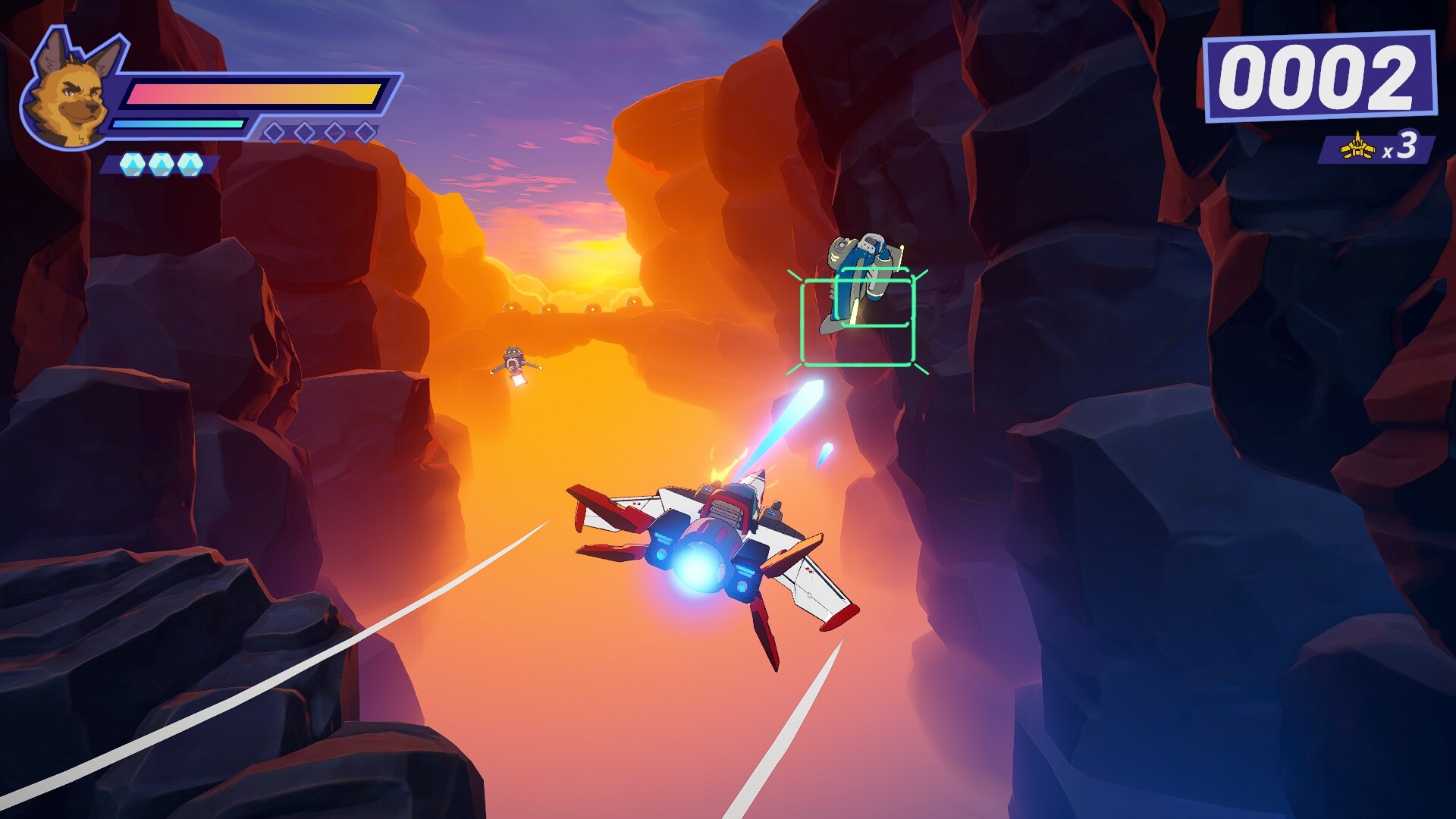
What makes this frustration particularly painful is that Wild Blue Skies becomes considerably more exciting whenever it stops looking over its shoulder. Canyons is an obvious highlight, combining beautiful scenery with a memorable vertical sequence in which the perspective shifts as the Cloudcutter races upward beside a waterfall while enemies and debris descend toward it. It feels energetic, visually playful, and designed specifically around this game’s world rather than inherited expectations. Even its eccentric boss encounter embraces a sillier personality that suits the colourful cast and arcade format beautifully. These moments suggest a much more confident version of Wild Blue Skies hiding underneath the homage, one capable of taking the broad language of classic rail shooters and speaking with its own accent.
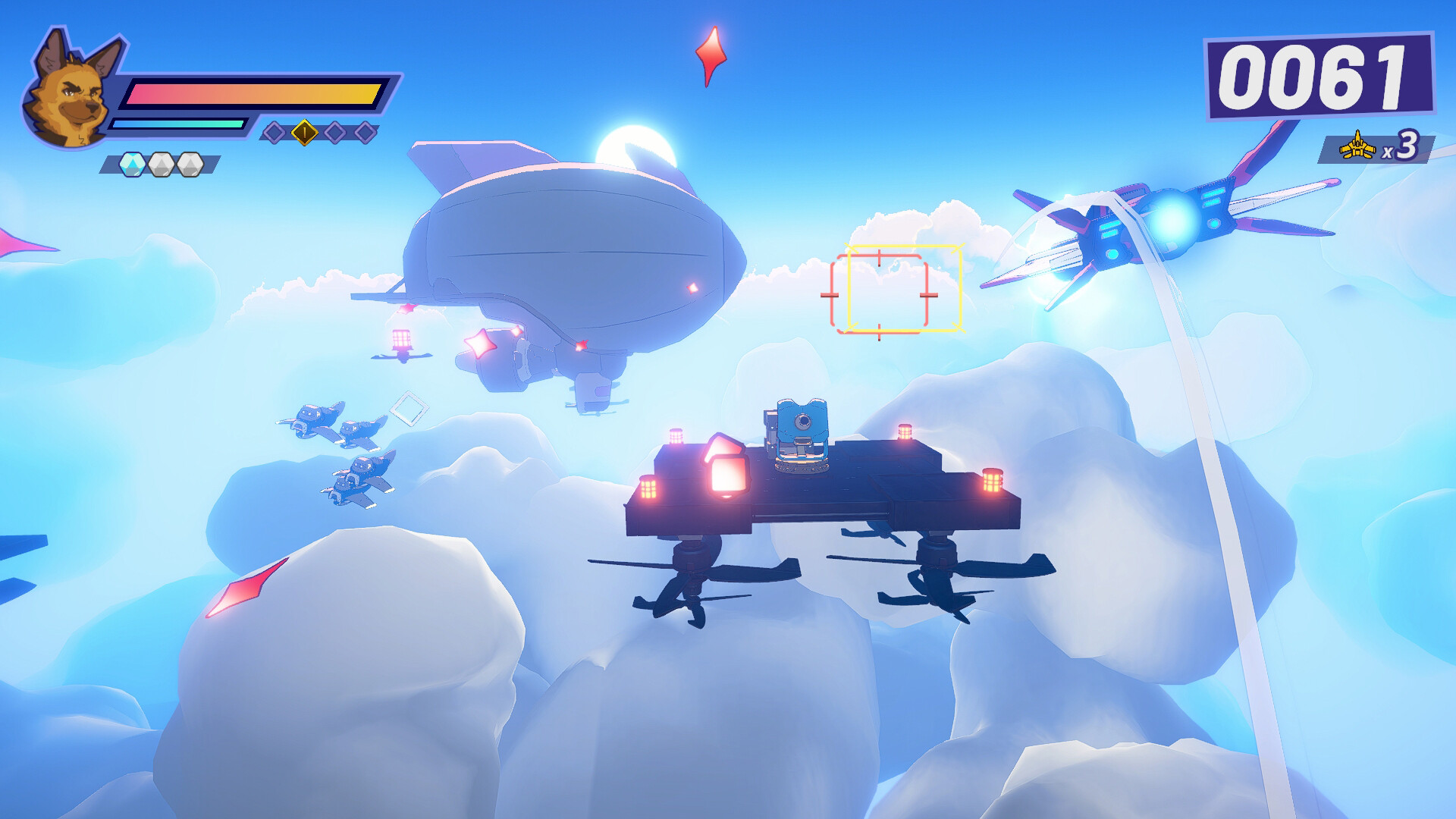
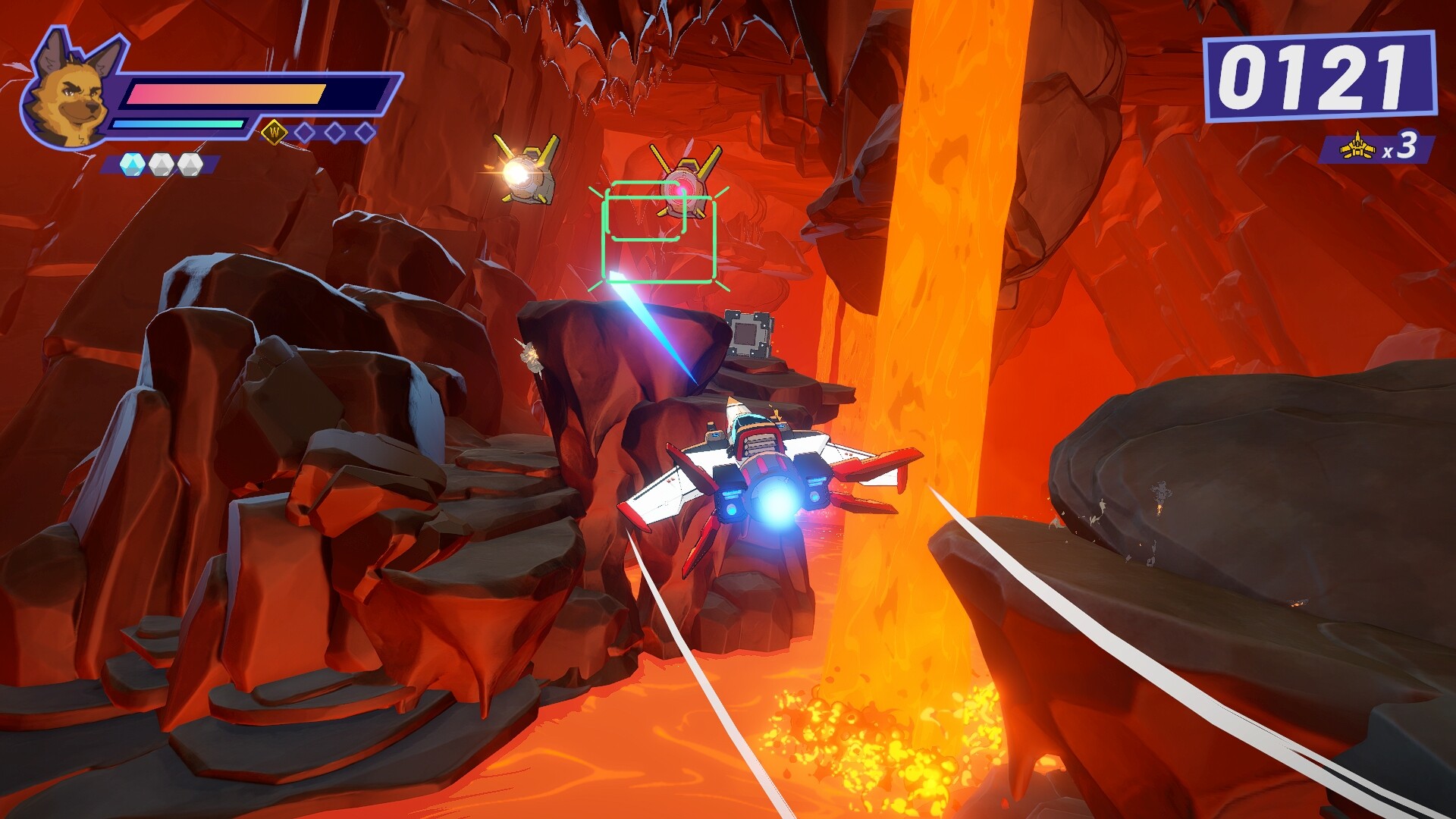
Other missions offer similar glimpses. Skimming through Cloudtop delivers an exhilarating sense of altitude, while Grottos uses increasingly restrictive spaces to make navigation itself part of the tension. Hurricane borrows recognisable genre ingredients without becoming completely defined by them, demonstrating that influence does not have to mean duplication. These stages work because they create memories belonging specifically to Wild Blue Skies, rather than triggering memories of something players might have experienced decades earlier. That distinction sounds philosophical, but it has a direct effect on enjoyment: surprise returns, curiosity returns, and suddenly you are wondering what the developers will attempt next instead of predicting the next encounter from gaming history.
Nostalgia cannot substitute for identity
There is a broader lesson here about retro-inspired games. Recreating old mechanics is relatively straightforward compared with recreating the circumstances that made those mechanics feel revolutionary. We remember classics through an impossible mixture of design quality, personal history, technological context, discovery, and the particular moment in our lives when we encountered them. A modern developer can reproduce branching paths, radio chatter, rival squadrons, charge shots, secret objectives, and polygonal aerial acrobatics, but it cannot reproduce the afternoon when somebody first discovered them. The most successful spiritual successors understand this and use nostalgia as a launchpad rather than a destination, preserving an old design philosophy while creating new experiences capable of generating nostalgia of their own twenty years later.
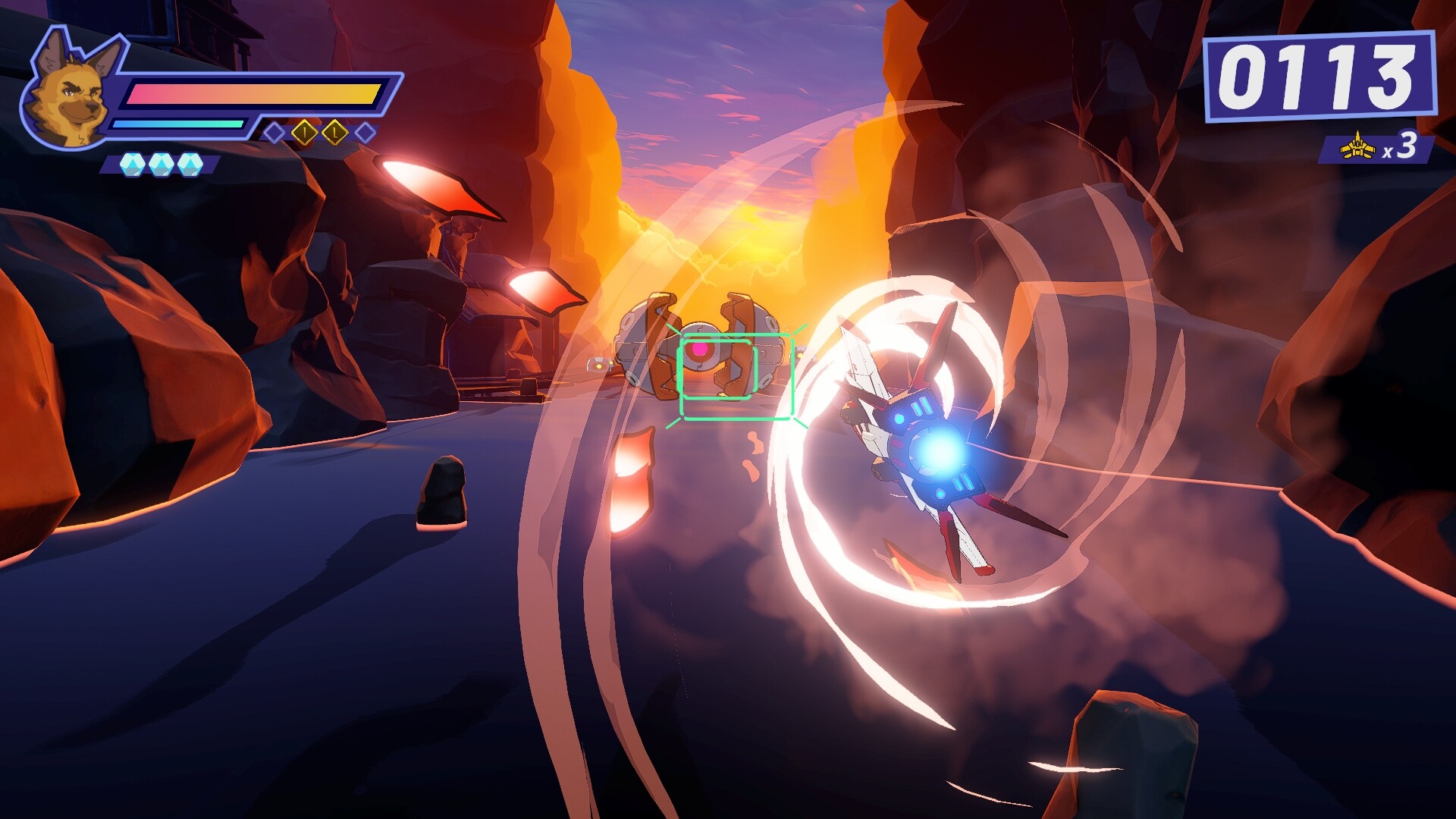
Wild Blue Skies comes frustratingly close to understanding that principle because its strongest material already demonstrates the solution. There is a genuinely enjoyable arcade shooter here, supported by colourful presentation, satisfying score systems, multiple routes, enthusiastic characters, and several excellent sequences that deserve recognition on their own terms. Six-stage runs make repeat play approachable, while the larger mission pool gives completionists enough reason to investigate alternate routes and chase better results. Yet each confident new idea seems surrounded by several moments determined to remind you of another game, and eventually those reminders become creative baggage. Instead of asking what the rail shooter could become today, Wild Blue Skies too often asks how accurately it can reconstruct what players already loved yesterday.
Verdict
Wild Blue Skies is at its best when the sky ahead is completely clear. Its branching campaign, score chasing, hidden WILD letters, energetic presentation, and occasional flashes of inspired level design prove that there is still tremendous life in the arcade rail-shooter formula. Unfortunately, awkward handling, harsh recovery mechanics, underwhelming base weaponry, and an overwhelming dependence on familiar Star Fox 64 concepts prevent those strengths from consistently taking flight. Fans desperate for a modern dose of colourful aerial arcade action will find genuine enjoyment here, particularly if high-score optimisation is their preferred form of self-inflicted suffering. Everyone else may spend too much time recognising the scenery and wishing Wild Blue Skies had been brave enough to chart more territory of its own.