
Google is making Android’s device-to-device sharing a little more physical. A new feature called Tap to Share lets users exchange contact details, photos and videos simply by bringing two compatible Android phones together, offering an experience that will inevitably draw comparisons with Apple’s NameDrop.
Tap to Share is launching first on Google Pixel phones from the Pixel 6 generation onwards. Samsung support is more limited at launch, covering the Galaxy Z Fold8, Galaxy Z Fold8 Ultra and Galaxy Z Flip8. Google says additional devices will gain support before the end of 2026, although it has not provided a complete compatibility list or rollout schedule.
The feature builds on Quick Share, Google’s existing system for transferring files between nearby Android devices and other supported hardware. Instead of finding a recipient manually, Tap to Share uses the physical proximity of two compatible phones to initiate the interaction.
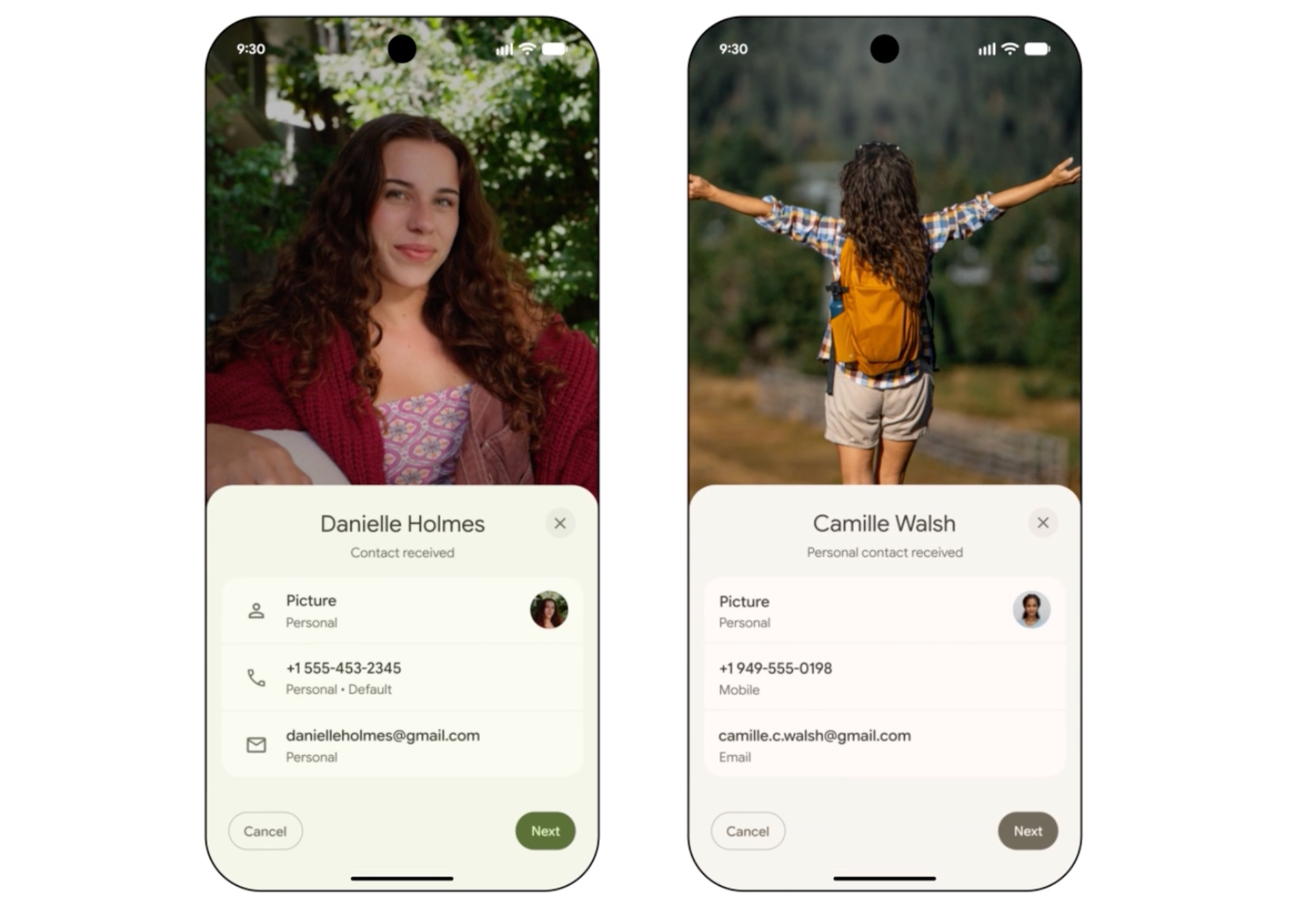
Contact sharing is particularly straightforward. With both phones on their home screens, users bring the devices close together to start an exchange. They can control which fields from their contact card are shared, while there is also an option to receive another person’s information without sending your own.
Photos and videos work slightly differently. Users first select the content they want to send and open Android’s Share Sheet, then bring the two supported phones together. The proximity gesture effectively becomes the final step in establishing the transfer rather than replacing Android’s existing sharing interface entirely.
There are obvious parallels with Apple’s NameDrop, which introduced a similarly physical approach to exchanging contact information between nearby iPhones and Apple Watches. The broader idea is not particularly complicated, but reducing the number of taps involved in sharing something with the person standing beside you can make a familiar smartphone task feel considerably less cumbersome.
Google also appears to have considered users who would rather avoid accidental or unwanted interactions. Tap to Share can be disabled through Settings under Google, Quick Share and Tap to Share, and the ability to restrict what contact information gets exchanged gives users some control over the process.
The bigger question is how quickly Google can expand compatibility. Android features that depend on cooperation between manufacturers can struggle to achieve the consistency of equivalents built for a single hardware ecosystem. Launching across both Pixel and Samsung devices is therefore an important first step, but support across a much wider selection of Android phones will determine whether Tap to Share becomes genuinely useful rather than another feature users rarely encounter in the wild.
For now, Pixel owners with a Pixel 6 or newer device have the broadest access, while Samsung support begins with its latest foldables. If Google follows through on its planned expansion during 2026, tapping two Android phones together could soon become a much more familiar way to swap a photo or contact.