
TL;DR: House of the Dragon season 3 ends with spectacular dragon warfare, devastating character consequences and a chilling evolution for Rhaenyra. Tumbleton delivers the fire, but the finale’s strongest moments come from watching Westeros’ rulers realize far too late that victory and survival are very different things.
House of the Dragon Season 3
House of the Dragon has always been a show about people sitting in beautifully decorated rooms making catastrophically expensive decisions. Season 3 has gradually changed that equation. The conversations still matter, the grudges remain radioactive, and nobody in Westeros has suddenly discovered healthy family communication, but the Dance of the Dragons now feels like an actual war rather than a collection of threats waiting for the budget department’s approval. The season 3 finale capitalizes on that momentum with an episode that is brutal, visually enormous and surprisingly intimate when it needs to be. It also leaves several characters in fascinatingly ugly places ahead of the fourth and final season, particularly Rhaenyra, whose pursuit of legitimacy has begun transforming into something far more dangerous.
Rhaenyra gets the crown and loses something more important
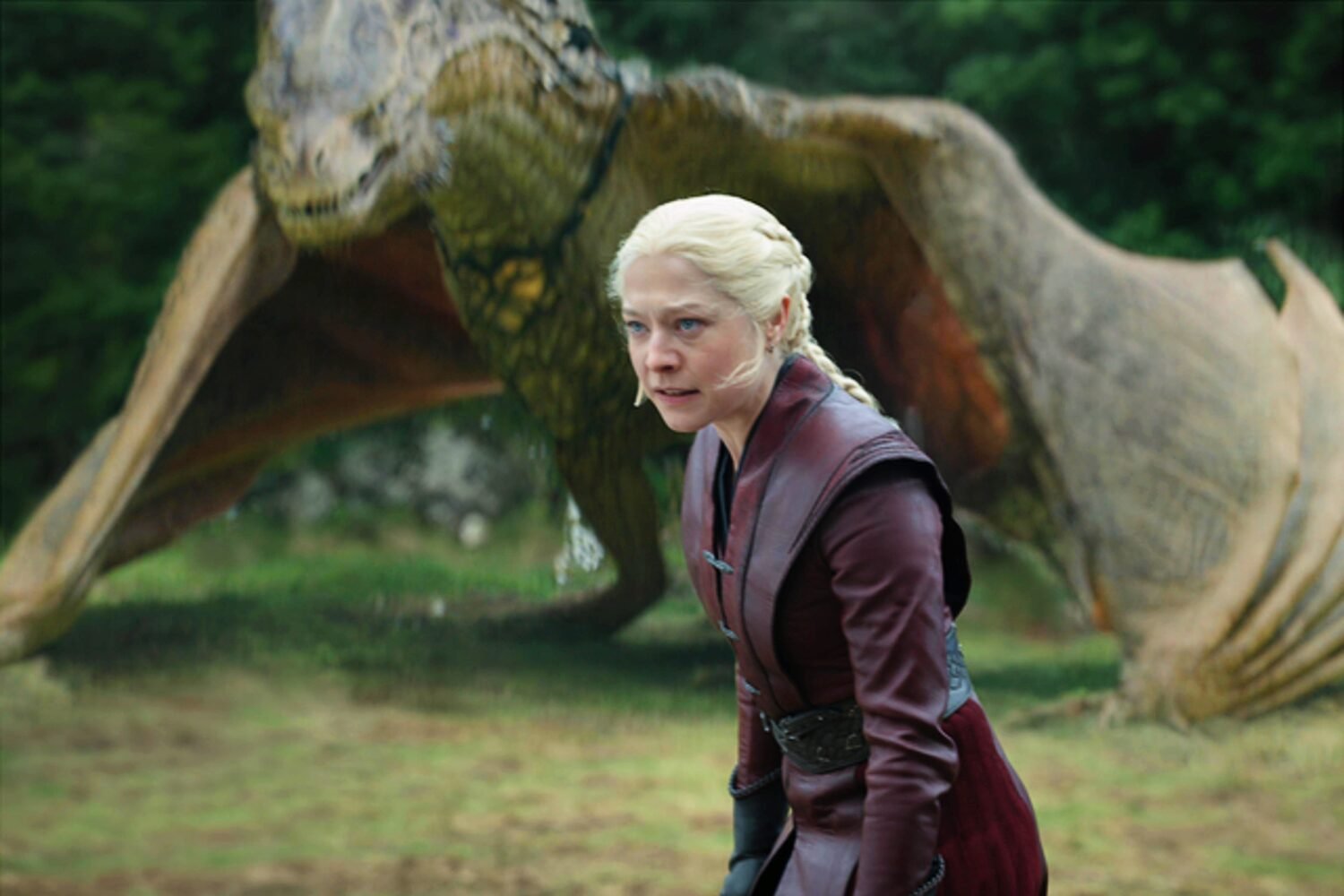
Emma D’Arcy has been the gravitational center of House of the Dragon for years, but season 3 gives them particularly nasty material to play with. Rhaenyra finally possesses much of what she once desperately wanted, yet victory has done absolutely nothing to make her feel secure. News that Aegon and Sunfyre remain alive turns that insecurity into paranoia because Aegon’s existence is not merely a military problem; it is a living contradiction of the story Rhaenyra needs Westeros to accept. D’Arcy handles this evolution beautifully, avoiding the temptation to suddenly play Rhaenyra as an obvious tyrant. She still sounds like someone capable of explaining every terrible decision to herself, which is precisely what makes her increasingly frightening.
That deterioration becomes especially uncomfortable through Rhaenyra’s treatment of the people closest to her. Mysaria is pushed away despite the intimacy they have shared, while Helaena’s imprisonment becomes increasingly cruel as Rhaenyra prioritizes control over compassion. Her confrontation with the religious establishment pushes the same idea further, turning a demand for recognition into an assertion that obedience can simply be manufactured through fear. Even Rhaenyra’s embrace of the prophecy feels different now. What was once inherited knowledge begins resembling ideological armor, allowing her to position personal ambition as cosmic necessity. Westeros has never lacked rulers convinced that destiny conveniently agrees with them, and House of the Dragon understands how dangerous that conviction becomes when dragons are available to settle theological disagreements.
Tumbleton turns political failure into spectacular destruction
The Battle of Tumbleton is the finale’s enormous centerpiece, and it delivers the kind of dragon warfare this series can stage better than practically anything else on television. Yet the spectacle works because it never becomes clean or heroic. Tumbleton is chaos generated by terrible leadership, conflicting loyalties and people discovering that giving unstable personalities access to airborne flamethrowers may have been a questionable military strategy. Ormund Hightower’s desperation infects everything around him, while Daeron and Gwayne increasingly understand the hopelessness of their situation. Corlys, meanwhile, remains one of the few people attempting to introduce reason into a conflict that has long since decided reason is for peasants without dragons.
Ulf is the perfect ingredient for this particular disaster. Tom Bennett has made him simultaneously funny, irritating and genuinely dangerous, which means his presence creates tension even before Silverwing enters the equation. His unpredictability demonstrates one of the Dance’s fundamental problems: possessing a dragon does not magically produce discipline, loyalty or political intelligence. When Tumbleton erupts, allegiances become almost secondary to survival, and the resulting destruction feels appropriately uncontrollable. Tommy Flanagan’s Ser Roderick Dustin provides some gloriously ferocious energy amid the carnage, while Caraxes remains less a dragon than a flying declaration that subtlety has officially left the battlefield. The visual-effects work sells the scale, but the choreography deserves equal credit for keeping the human stakes visible underneath all that fire.
The finale remembers that dragons aren’t the real tragedy
The most effective counterpoint to Tumbleton’s spectacle comes through Hugh Hammer. Kieran Bew has spent the season giving Hugh enough humanity that his story never feels like another dragonseed subplot inserted purely to move pieces around George R.R. Martin’s increasingly bloody chessboard. His desperate search for Kat cuts through the military strategy surrounding Tumbleton and reminds us what these battles actually mean to ordinary people caught underneath them. The eventual emotional payoff is devastating precisely because the episode refuses to romanticize warfare. Lords can discuss territories, succession and strategic victories all they want; somewhere beneath those maps are people whose entire lives can disappear because somebody with a surname containing too many vowels decided to unleash a dragon.
That perspective is important because House of the Dragon occasionally becomes so fascinated by Targaryen mythology that everyone outside the royal family risks feeling like scenery. Season 3 has been stronger whenever it remembers that the Dance isn’t tragic simply because a famous dynasty destroys itself. It is tragic because thousands of people with absolutely no interest in prophetic dreams or Valyrian bloodlines pay for that destruction. Tumbleton captures this better than a pristine fantasy battle ever could. The fighting is messy, loyalties fracture, civilians suffer and supposed victories immediately acquire an aftertaste of catastrophe. Nobody truly wins a battle like this; some characters simply survive long enough to participate in the next one.
Aegon and Aemond remain Westeros’ worst sibling reunion
Elsewhere, Aegon and Aemond’s reunion at Harrenhal delivers a completely different flavor of tension. Tom Glynn-Carney and Ewan Mitchell have built one of the show’s most compelling relationships because hatred between these brothers is tangled with humiliation, rivalry, family history and the uncomfortable reality that they still need one another. Aegon’s survival alongside Sunfyre changes the balance between them considerably. He now has every reason to seek revenge against the brother who tried to destroy him, yet political necessity makes murder inconvenient. In Westeros, apparently, attempted fratricide can be overlooked provided everyone signs the appropriate strategic partnership agreement.
The scene works because reconciliation is never genuinely on the table. Their proposed cooperation feels transactional, poisonous and temporary, exactly as it should. Glynn-Carney continues to find unexpected dimensions inside Aegon, a character who could easily have remained nothing more than an entitled monster. His suffering has not magically redeemed him, nor should it, but it has reshaped him into someone sharper and harder to dismiss. Mitchell plays Aemond with the same unnerving stillness that has made him such an effective presence throughout the series. Putting these two damaged men back on the same side creates one of the finale’s most intriguing promises for season 4 because everybody involved knows the alliance probably comes with an invisible expiration date.
Helaena’s story delivers the episode’s cruelest blow
For all the dragonfire at Tumbleton, the finale’s most painful sequence belongs to Helaena. Phia Saban has consistently played her as someone existing slightly outside everyone else’s understanding, burdened by visions that other characters either dismiss or fail to comprehend until events have already caught up with them. Her captivity under Rhaenyra strips away what little agency she has left, making her eventual fate horrifying rather than merely shocking. The visual echoes surrounding her death carry an unavoidable Game of Thrones resonance, but Helaena’s tragedy belongs firmly to this story. She has spent much of the series surrounded by people treating her as a daughter, wife, queen, hostage or prophetic curiosity before treating her as a person.
The aftermath gives the episode some of its strongest imagery, particularly the tapestry that transforms Helaena’s visions into something physical and deeply unsettling. Rhaenyra discovering herself represented on the Iron Throne and surrounded by blood is hardly subtle symbolism, but subtlety would almost feel dishonest at this stage. The realm is drowning in consequences that its rulers continue to describe as destiny. Alicent’s comparatively limited presence in the finale is therefore disappointing, especially given how directly Helaena’s fate affects her. Olivia Cooke has been fundamental to the show’s emotional architecture, and sidelining Alicent during such an important chapter creates a noticeable absence. The imagery surrounding her is effective, but the episode leaves you wanting substantially more from her perspective.
Season 3 finally gives the Dance its momentum
What makes this finale work is not simply the scale of its battle or the number of pieces it moves into position. House of the Dragon season 3 has finally developed the forward momentum that season 2 sometimes lacked, allowing political decisions to produce immediate and increasingly irreversible consequences. Rhaenyra’s transformation, Aegon’s resurgence, Aemond’s shifting position and the instability of the dragonseeds now feel like parts of the same accelerating catastrophe. There is still an occasional sense that characters arrive exactly where the plot requires them, and some developments could benefit from more connective tissue, but the overall storytelling is far more confident about turning tension into action.
The production remains astonishing. Dragons possess distinctive movement and personality rather than functioning as interchangeable visual-effects monsters, while the environments retain that wonderfully miserable Westerosi texture where even royalty appears permanently one cold evening away from pneumonia. The editing during the battle sequences keeps geography surprisingly readable, and the score understands when to amplify the spectacle and when silence carries more weight. More importantly, the finale does not allow technical grandeur to overpower character. Every burst of violence emerges from choices people have made, grudges they have nurtured or compromises they refused to consider. That is when this franchise works best: not when dragons are merely impressive, but when watching them burn something makes us understand exactly who lit the match.
Verdict
The House of the Dragon season 3 finale sends the series toward its final season with Westeros bloodied, unstable and spectacularly incapable of learning anything from its mistakes. Tumbleton provides the blockbuster fantasy warfare viewers have been waiting for, but Emma D’Arcy’s increasingly disturbing Rhaenyra remains the episode’s most compelling development, supported by excellent work from Tom Glynn-Carney, Ewan Mitchell, Phia Saban and the wider ensemble. Alicent deserved considerably more room, and a handful of narrative connections feel less convincing than the show’s strongest material, yet those weaknesses do little to undermine an episode that understands spectacle is meaningless without consequences. Season 3 leaves the Dance of the Dragons exactly where it should be: no longer approaching disaster, but trapped inside one, with everyone convinced they can still somehow control the flames.