
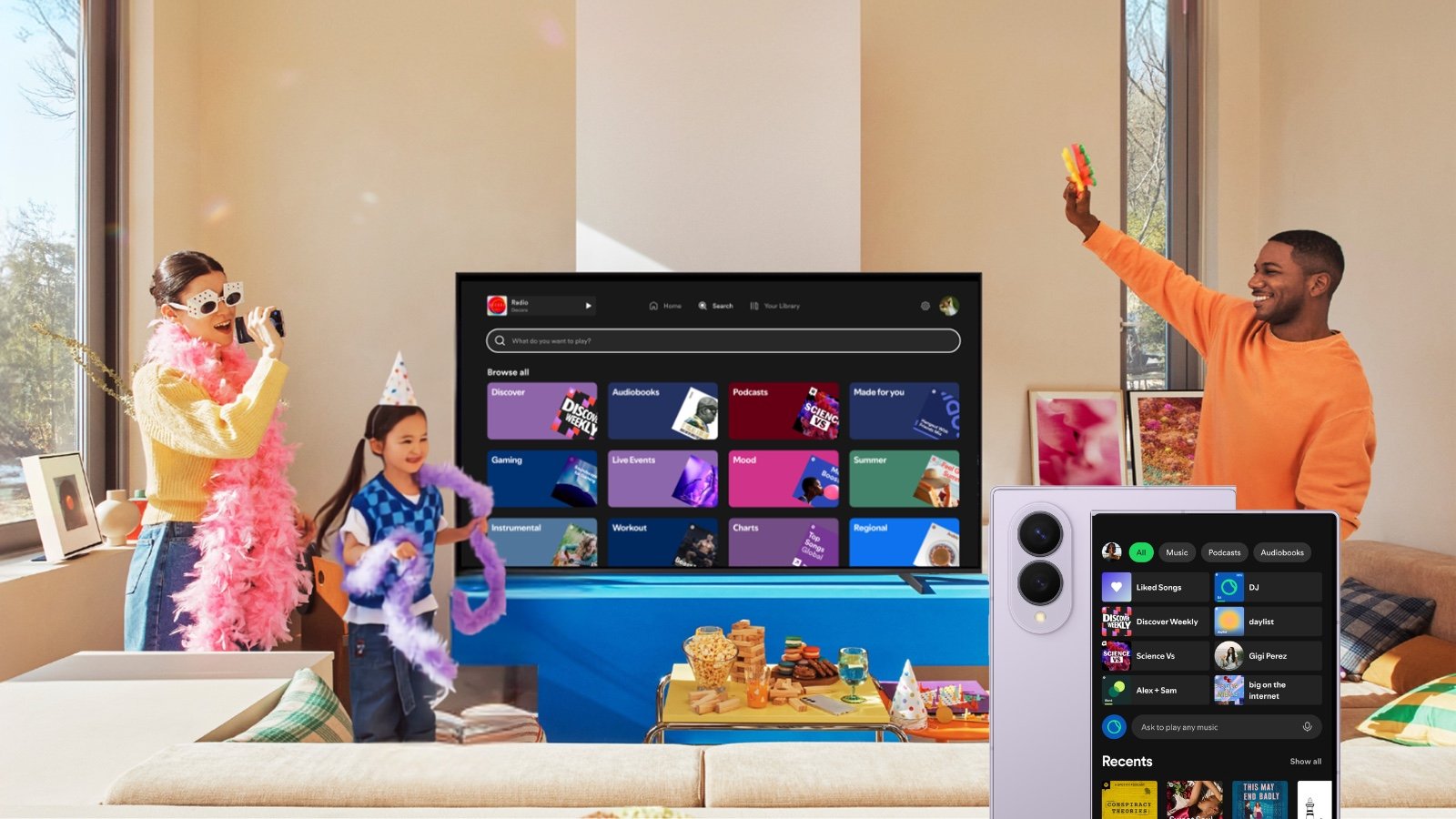
Samsung and Spotify have struck a regional partnership covering the Middle East, North Africa and Türkiye that ties Spotify Premium trials to the purchase of selected Samsung devices. Eligible buyers can receive up to four months of the paid service, with the offer structured differently by market and product. In Saudi Arabia, the UAE and Türkiye the full four months applies to any OLED or 98-inch television and to Galaxy S or Z series phones. Redemption runs through the Samsung Promotion and Samsung Members apps at retail outlets or on samsung.com.
The practical aim is continuity of playback across the company’s hardware range. A track started on a Galaxy phone paired with Galaxy Buds can shift to a Samsung television and soundbar, then continue under control from a Galaxy Watch. Tablets, other sound devices and certain digital appliances sit inside the same circle. Spotify Premium itself supplies the usual paid features—ad-free streams, offline downloads and higher-quality audio—while the shared-queue tool known as Jam lets groups build playlists together. None of this requires new hardware protocols; it simply routes Spotify’s existing service through Samsung’s device network.
Device-linked streaming promotions of this kind have become routine in consumer electronics. Phone and television makers have long used limited free periods of music or video services to tip purchase decisions and to encourage users to remain inside one brand’s ecosystem once the trial ends. The present arrangement follows that pattern rather than inventing a new model. Its reach is regional rather than global, and the value for buyers depends on whether they already prefer Spotify and intend to keep multiple Samsung products in daily use. Outside those conditions the free months function mainly as a marketing incentive.
Spotify data for the broader region shows that nearly seven in ten streams already come from listeners aged 18 to 34. The partnership therefore leans into an existing demographic concentration rather than attempting to create one. For Samsung the deal supplies another content layer that can be marketed alongside its hardware; for Spotify it expands the surfaces on which its service appears without requiring the company to build or distribute devices of its own. Both sides gain distribution and visibility, yet the underlying relationship remains a commercial exchange of trial access for preferred placement across Samsung’s product lines.