


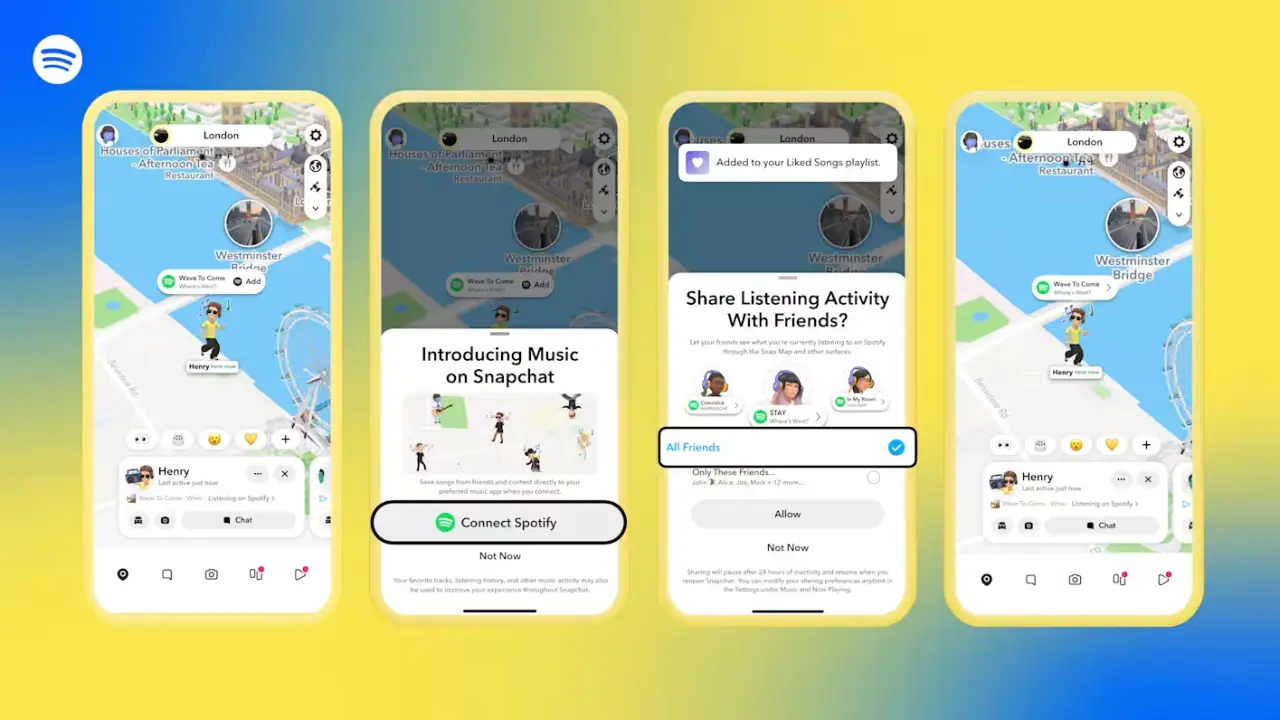
Snapchat has started rolling out a feature called Now Playing that displays a user’s current Spotify track on the Snap Map. Once a Spotify account is linked, friends can see the song or playlist being played in real time. Tapping the track opens options to browse Spotlight videos that use the same audio, launch the song inside Spotify, or add it directly to Liked Songs. The same save function works from Spotlight videos and Sound Pages elsewhere in the app, not only from the map.
Privacy controls determine who sees the activity. Users can limit visibility to all Snapchat friends, only those already sharing location on the map, a custom list of selected friends, or no one at all. The settings sit alongside the existing location-sharing tools that already power Snap Map, so the music layer inherits the same circle of contacts rather than creating an entirely separate audience.
Music sharing itself is not new. Instagram has long allowed posts and Stories built around Spotify tracks, and WhatsApp recently added the ability to place songs on status updates. Snapchat’s version differs mainly in its placement on a live map that already broadcasts physical location. Combining the two creates a denser stream of personal information: where someone is and what they are listening to at that moment. The privacy toggles mitigate some of that exposure, yet the default temptation remains to leave the feature visible to a broad friend group.
For the moment Spotify is the only supported service. Snapchat has left the door open to other platforms later, which could eventually include Apple Music, but no timeline has been given. Until then the feature strengthens Spotify’s presence inside another social app while giving Snapchat another data point that keeps users inside its own ecosystem of discovery tools. Real-time listening status may help friends find new tracks through people they already know, yet it also turns a private listening session into a public signal that can be monitored continuously.
The addition continues a wider pattern in which social platforms treat music as ambient social currency. Whether the map becomes a useful discovery layer or simply another feed of low-stakes oversharing will depend on how carefully users manage the privacy settings and how often they choose to leave the feature switched on.