


TL;DR: Star Trek: Strange New Worlds Season 4 offers a dazzling, genre-hopping sci-fi spectacle packed with incredible visual flare, but its episodic structure holds the crew back from achieving real emotional depth.
Star Trek: Strange New Worlds Season 4
Look, I am the first nerd in line to throw hand science at the screen whenever a space show decides to throw out the rulebook and go completely off the rails. I love high-concept swings, I live for wild narrative gambits, and I will defend weird television experiments until the thermal death of the universe. But watching the opening stretch of Star Trek: Strange New Worlds Season 4 feels like watching an elite athlete perform flawless Olympic gymnastics while completely forgetting how to run a basic track lap. The show has reached a bizarre evolutionary crossroad where its production value and creative ambition are firing on absolute god-tier cylinders, yet its fundamental core—the actual emotional connective tissue holding the crew of the USS Enterprise together—is slowly evaporating into ambient space dust.
visual spectacle vs emotional amnesia
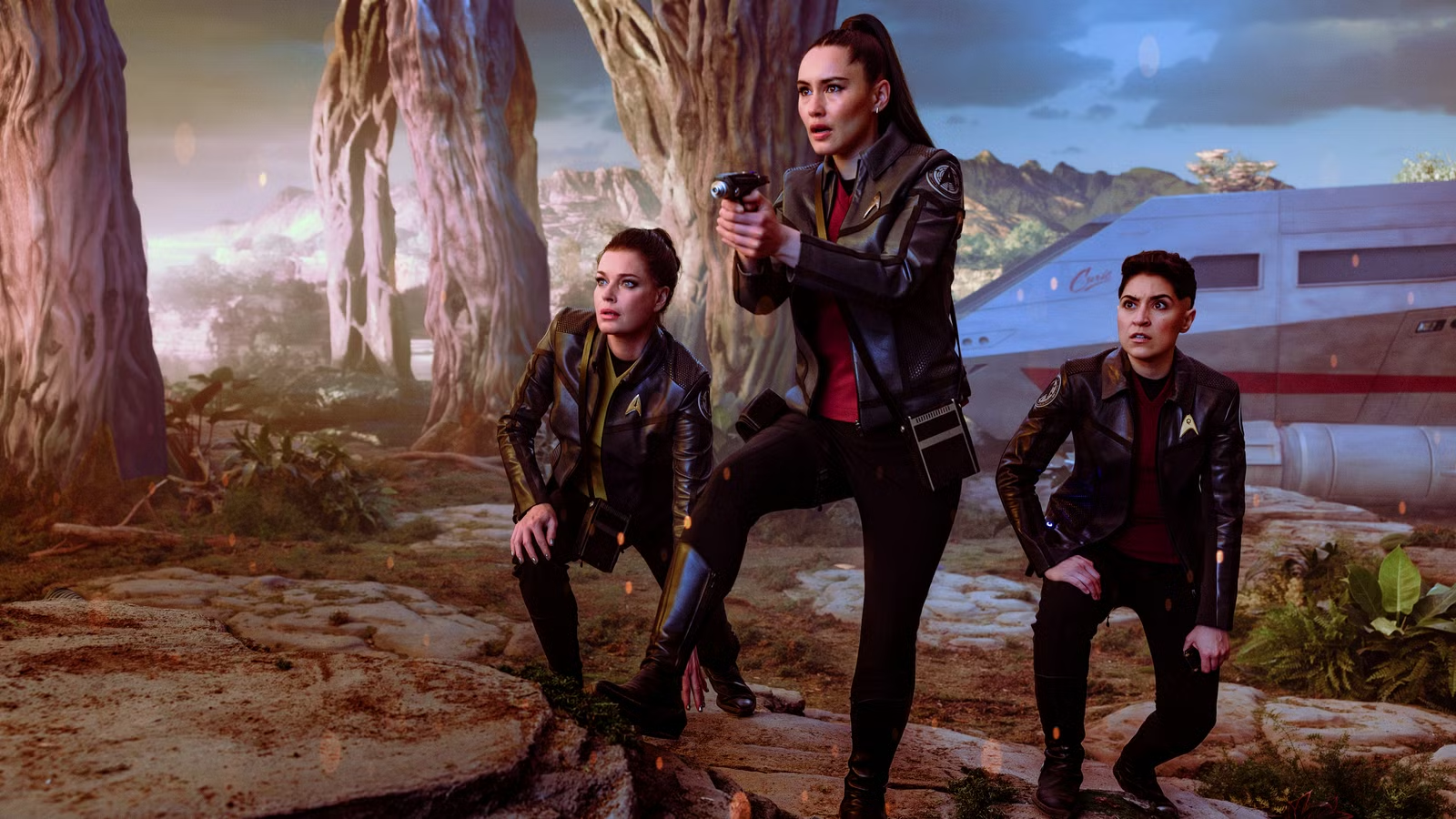
Let us give credit where the starfleet engineers deserve it: visually and stylistically, Star Trek: Strange New Worlds Season 4 is an absolute jaw-dropper. We are talking about a television budget stretched so far that each individual hour feels less like an episode of a weekly show and more like a standalone summer blockbuster. The creative team throws everything at the wall, leaping across genres with manic, glorious energy—hopping from skin-crawling psychological horror to classic noir, buddy comedy hijinks, and even full-on puppet-fueled madness. The practical effects, creature designs, and cinematic camera work are operating at a level that puts most actual theatrical sci-fi releases to shame.
The core structural problem plaguing Star Trek: Strange New Worlds Season 4 is how stubbornly it insists on pushing the reset button on its own ensemble. In classic television from thirty years ago, an episodic reset was necessary because audiences tuned in randomly, but in the modern era of serialized storytelling, watching characters survive cataclysmic emotional trauma only to show up the next week acting like nothing happened creates a massive psychological disconnect. Major character beats and devastating losses are brushed under the rug like minor maintenance reports, leaving Captain Pike looking less like a haunted, complex leader and more like a cheerful advice dispenser who exists primarily to spout heroic monologues and deliver plot exposition before the next commercial break.
When the series allows its cast to actually sit in a room and bounce off one another, the magic is undeniably still there. Watching Kirk, Spock, and La’an navigate a terrifying horror scenario yields genuine sparks, while the burgeoning dynamic between Scotty and Ortegas provides a hilarious, warm-hearted anchor that feels like a classic sci-fi duo in the making. The performances remain top-notch across the board, with the actors doing heroic heavy lifting to inject genuine humanity into whatever wild genre sandbox the writers happen to drop them into each week.
Yet for all those bright spots, Star Trek: Strange New Worlds Season 4 suffers from a severe case of emotional sterility. Romance is practically nonexistent, interpersonal relationships feel like they are being conducted via brief, professional memos, and the most pivotal character developments somehow keep happening off-screen, inside dreams, or through heavy-handed exposition dumps after the fact. Everyone on the starship is drop-dead gorgeous, highly capable, and utterly devoid of genuine romantic or emotional friction. It is as if the writers are so terrified of altering the sacred canon timeline before these characters reach their eventual legacy destinations that they have locked everyone into a permanent status quo holding pattern.
The ultimate paradox of Star Trek: Strange New Worlds Season 4 is that its greatest strength—its reckless, joyfully unpredictable episodic nature—is directly undermining its long-term storytelling potential. The vintage planetary adventure format simply collides head-first with short, ten-episode streaming seasons that lack the breathing room or filler episodes required to build authentic, slow-burn character growth. You can have all the dinosaurs, noir lighting, and genre parodies in the galaxy, but if the people riding inside the starship do not feel like real human beings growing together through shared trauma, the whole enterprise starts to feel a bit like an overly expensive theme park ride.
None of this makes Star Trek: Strange New Worlds Season 4 bad television; in fact, as pure visual popcorn, it remains one of the most wildly entertaining rides on the airwaves. If you tune in purely to see what wild planet-of-the-week setup the crew will stumble into next, you are going to have an absolute blast with this fresh batch of episodes. But for those of us hoping to see these legendary figures dig beneath their shiny uniforms and evolve into a true family, this beautiful, frustrating, and wildly erratic season leaves us staring out the viewscreen, wishing the series would finally dare to go where no narrative has gone before.
Verdict
Star Trek: Strange New Worlds Season 4 delivers a breathtaking, genre-bending visual feast that pushes sci-fi television production to its absolute limits, even as its stubborn reliance on episodic resets robs its core crew of meaningful, lasting character development. It is an undeniably fun cosmic roller coaster that excels at standalone spectacle, but its shallow interpersonal dynamics keep it from reaching true narrative greatness.