

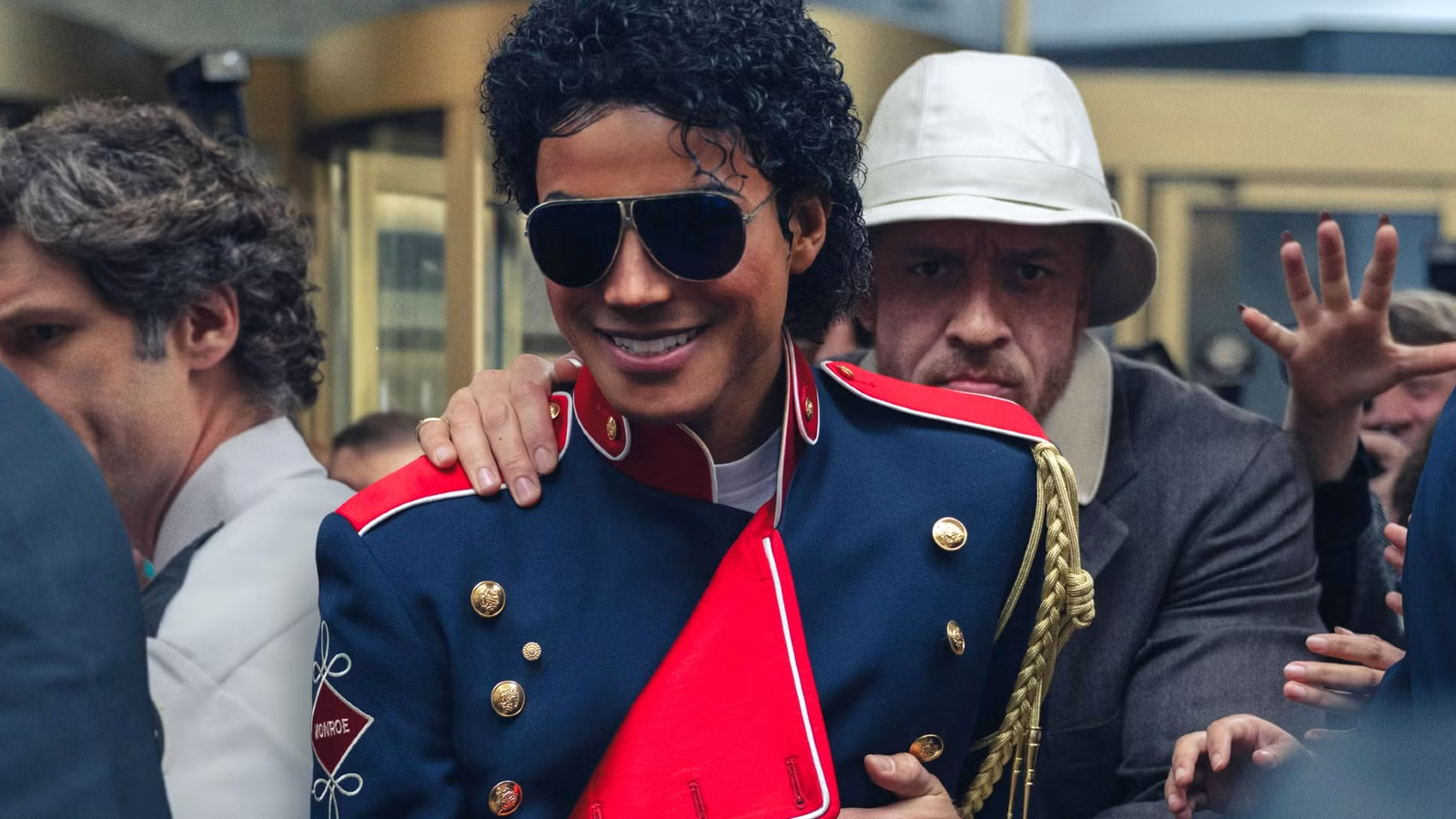
The Michael Jackson biopic has crossed the $1 billion mark at the global box office, becoming the first film in its genre to reach that threshold despite significant controversy surrounding its handling of the singer’s legacy. Directed by Antoine Fuqua and starring Jaafar Jackson as his uncle, the movie also features Colman Domingo, Miles Teller, Nia Long, Laura Harrier, and Mike Myers. It now stands as the highest-grossing biopic ever, surpassing Oppenheimer’s $975.8 million, and the top-earning music biopic, ahead of Bohemian Rhapsody’s $911 million.
This achievement arrives in a theatrical landscape where billion-dollar totals remain rare—only 62 films in history have reached the milestone without inflation adjustment. The film’s run has benefited from a late expansion into Japan, adding tens of millions more, even as it became available on video on demand in early June and prepares for physical media release this week. For Lionsgate, it marks their first title to hit the billion-dollar club, eclipsing previous highs like The Hunger Games: Catching Fire.
Yet the commercial success invites scrutiny. Critics and audiences have repeatedly noted the film’s decision to largely sidestep Michael Jackson’s well-documented allegations of child sexual abuse. That omission has fueled debate about how Hollywood portrays complex figures, especially when estate involvement shapes the narrative. In an era when other recent biopics have faced similar pushback for selective storytelling, Michael demonstrates that star power and cultural nostalgia can still drive massive turnout, even amid ethical questions. Music biopics, in particular, have a mixed track record; while Bohemian Rhapsody proved the format’s potential, few others have come close to $300 million worldwide, underscoring how rare this level of resonance is.
The production brought together established talent behind and in front of the camera, with producer Graham King returning to the music biopic space after his work on the Queen film. Its theatrical endurance, extending into a 12th weekend, highlights the persistent draw of the big-screen experience for event-style releases, even as streaming and VOD options proliferate. Still, crossing the billion-dollar line this late in the run suggests sustained but perhaps polarizing interest rather than universal acclaim.
This milestone reflects broader patterns in contemporary cinema, where nostalgia for icons from previous decades continues to translate into ticket sales. Jackson’s enduring global stature clearly played a role, drawing diverse audiences across generations and regions. However, the film’s approach also raises ongoing questions about accountability in biographical storytelling—whether commercial triumphs should overshadow unresolved cultural reckonings. As it winds down its theatrical chapter, Michael cements itself among the biggest hits of the 2020s, yet its legacy will likely remain as divided as the conversations it avoided.