
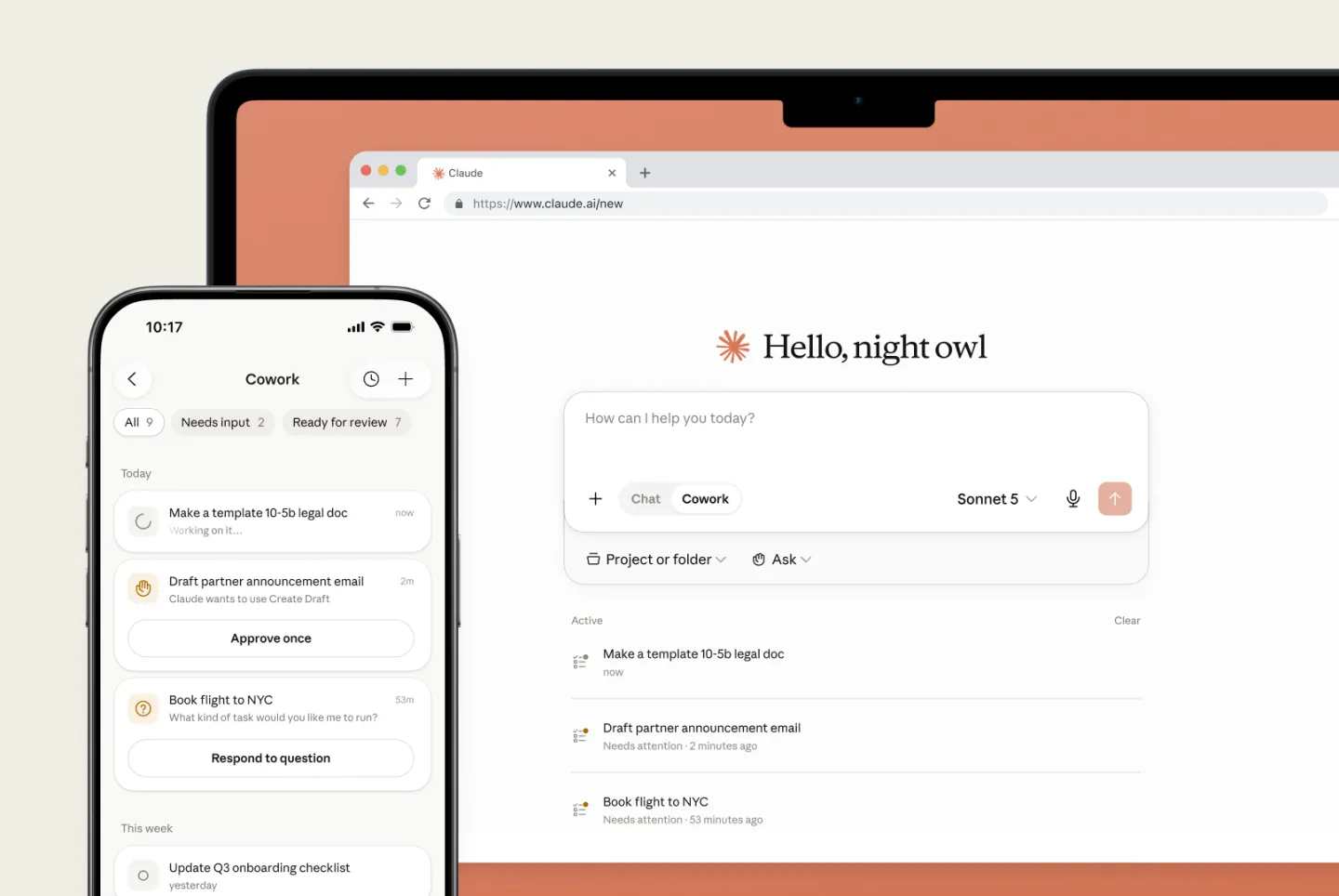
Anthropic has broadened access to its Claude Cowork platform, making it available on mobile devices and the web for the first time. Previously limited to the desktop app on macOS and Windows, the expansion targets users seeking greater flexibility in how they interact with the AI assistant for ongoing tasks. The rollout begins with Max subscribers and is expected to reach other plans in the coming weeks. While this move aligns with the industry’s push toward seamless, multi-device AI experiences, it also highlights ongoing trade-offs between convenience and the depth of features available across platforms.
Claude Cowork now defaults to cloud processing, allowing sessions to persist and continue across devices even when a laptop is closed. Users can schedule tasks that run independently of active devices, and the system will send phone notifications for items requiring review or approval. This cloud-centric approach supports background operation and continuity, addressing a common frustration with tools that previously demanded constant device availability. Desktop users retain the option to switch to local processing for specific workloads, preserving some control over data handling and potentially lower latency in certain scenarios. However, the company notes that the complete experience, including local file access, remains anchored to the desktop application, suggesting mobile and web versions serve more as companions than full replacements.
The update arrives alongside an extension of doubled usage limits for Cowork through August 5, providing temporary relief for heavier users exploring the platform’s capabilities. In practice, these agent-like functions aim to handle structured workflows and multi-step projects, building on Claude’s underlying language model strengths. Yet, as with many current AI coworker systems, real effectiveness often depends on clear task definitions and user oversight. Complex projects can still encounter inconsistencies or require manual intervention, reflecting the technology’s maturing but not yet fully autonomous state.
Anthropic’s emphasis on cloud execution raises familiar considerations around data privacy and processing location. While local options mitigate some concerns for privacy-conscious users, the default cloud behavior fits a broader trend where convenience drives adoption across consumer AI tools. Competitors have pursued similar agent expansions, turning isolated chat interfaces into persistent digital assistants capable of operating over time. For professionals managing repetitive or research-heavy work, the added mobility could reduce friction in daily routines. At the same time, reliance on cloud infrastructure introduces dependencies on connectivity and service availability that may limit utility in offline or low-bandwidth situations.
Overall, the launch reflects incremental progress in making AI agents more integrated into everyday workflows rather than a revolutionary shift. It positions Claude Cowork as a more accessible option within Anthropic’s ecosystem, though users will likely continue evaluating it against alternatives based on accuracy, cost, and how well it handles their specific needs over extended periods. The coming weeks will show how smoothly the mobile and web implementations perform in real-world conditions beyond the initial subscriber group.