

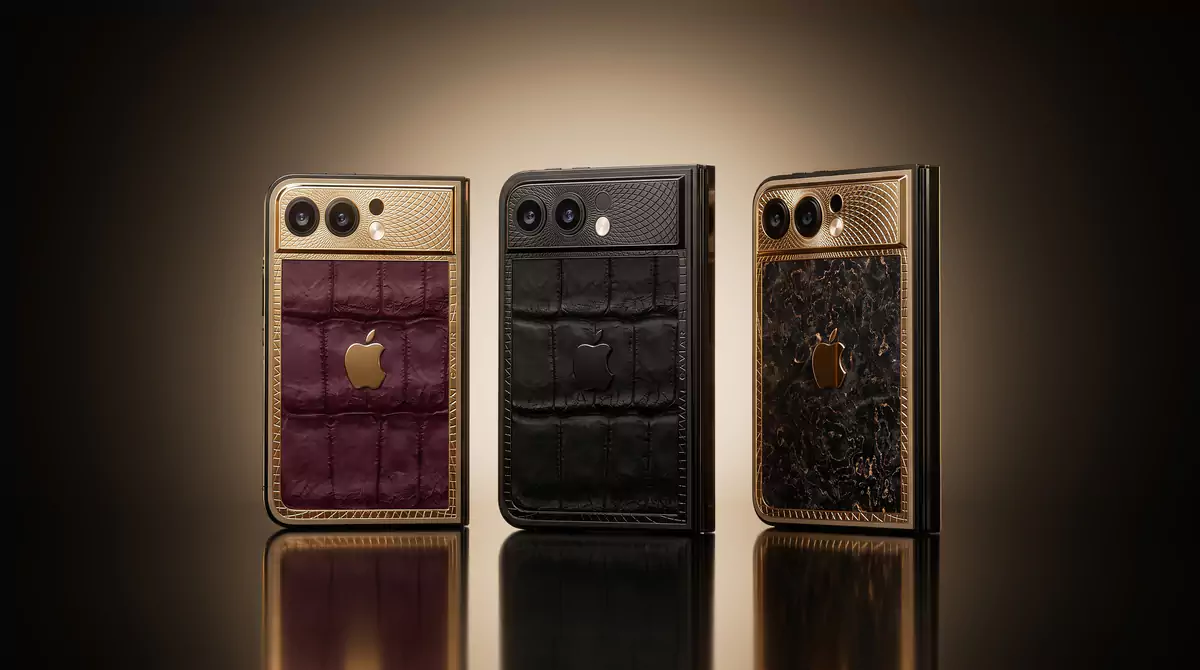
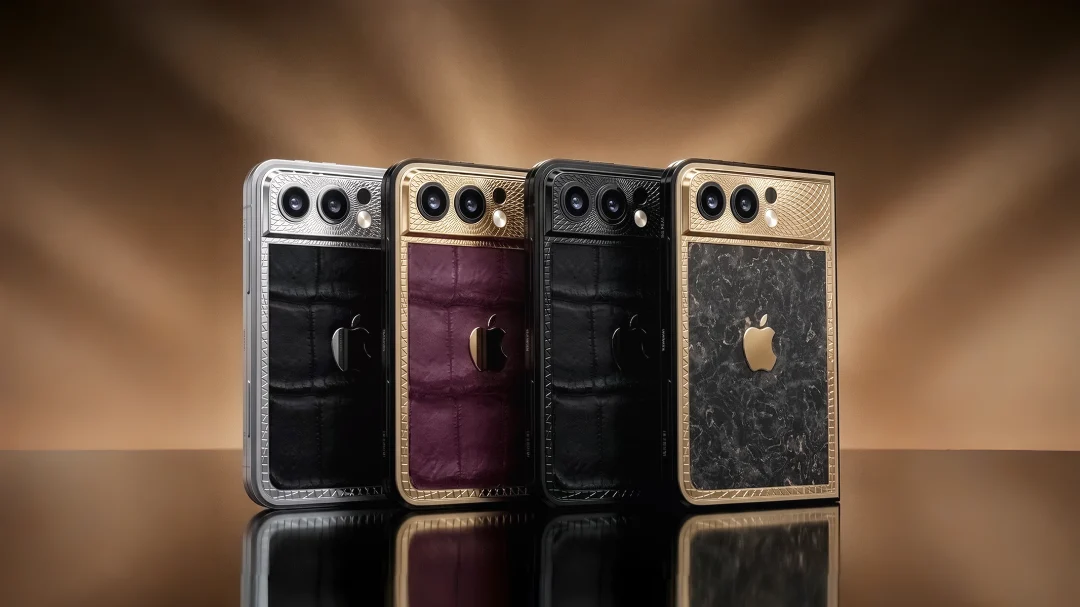
Caviar, a luxury device customizer, has introduced a new “Flagship” collection based on unconfirmed rumors and leaked designs of a potential foldable iPhone, referred to internally as the iPhone Ultra. While Apple has yet to acknowledge development of a folding smartphone, the company’s history of entering established categories only after thorough refinement makes such speculative projects common in the accessory market. Caviar’s lineup consists of four distinct variants, each produced in a limited run of just 19 units, featuring premium materials and a prominent three-dimensional Apple logo on the rear.
The most accessible option in the collection is the Titan model at $13,840. It employs a black PVD-coated titanium body combined with black crocodile leather. The Dark Cherry edition, priced at $14,270, incorporates wine-purple crocodile leather with 24K gold-plated accents, anticipating the rumored color options for future standard iPhone Pro models. Moving further up, the Silver version at $15,270 substitutes part of the titanium structure with sterling silver while maintaining the leather grip and adding a solid sterling silver logo. At the top sits the Gold model for $15,560, which uses a carbon fiber composite interwoven with gold threads, a 24-karat gold-plated frame, and an 18-karat solid gold Apple logo. Caviar links this particular design to Apple’s upcoming 50th anniversary.
These prices reflect the use of exotic materials and meticulous craftsmanship typical of high-end customization. However, they also highlight the premium that enthusiasts pay for personalization on devices that do not yet exist in official form. Apple has traditionally favoured minimalist, restrained aesthetics in its products, which contrasts with the bold, three-dimensional branding and lavish finishes applied here. The collection raises familiar questions about the balance between genuine luxury and ostentatious modification, especially for a product category still surrounded by speculation regarding durability, usability, and mass-market viability of folding mechanisms.
Caviar currently accepts inquiries through its website, allowing interested buyers to explore availability. The announcement aligns with the company’s recent activity, including magnetic backplates for the iPhone 17 Pro Max, one of which incorporates a genuine T-Rex fossil. Such projects cater to a narrow segment of affluent collectors who view smartphones as status symbols or canvases for extreme customization rather than everyday tools.
In the broader context of mobile design, rumors about Apple’s foldable ambitions have circulated for years, often focusing on hinge durability, display quality, and integration with existing ecosystems. Until official confirmation arrives, efforts like Caviar’s collection serve more as conceptual explorations than practical precursors. They underscore the persistent demand for individuality in a market dominated by uniform flagship designs, yet they also risk appearing premature given the uncertainties around Apple’s actual plans and timelines. As the company approaches its 50th anniversary, any eventual foldable iPhone will likely prioritise seamless engineering over decorative flair, potentially leaving room for aftermarket creators to fill the gap with bolder interpretations.